Why Anthropic’s $1.8 billion Akamai deal is a warning sign
Anthropic’s $1.8 billion Akamai deal shows AI demand is now being won by infrastructure scale, not just model quality.

Anthropic’s $1.8 billion Akamai deal shows AI demand is now being won by infrastructure scale.
Anthropic’s reported $1.8 billion computing deal with Akamai is not just a capacity purchase; it is proof that the AI race is being decided by access to compute, network reach, and the ability to lock in supply before demand outruns the market. That is a bad sign for anyone still treating model performance as the main moat. When a startup commits at this scale, it is telling the market that inference and training demand are no longer edge cases. They are the business.
First, compute scarcity is now a strategic constraint
Get the latest AI news in your inbox
Weekly picks of model releases, tools, and deep dives — no spam, unsubscribe anytime.
No spam. Unsubscribe at any time.
The easiest way to read this deal is as a procurement headline, but the real story is scarcity. A $1.8 billion commitment implies Anthropic expects sustained, heavy usage that cannot be served by opportunistic cloud shopping. In practice, that means the company needs guaranteed throughput, predictable pricing, and enough headroom to avoid service bottlenecks when product adoption spikes.

This is the same pattern that has already reshaped the hyperscaler market. Microsoft, Amazon, and Google have spent years turning compute into a bundled strategic asset, and now AI labs are forced to play the same game. The companies that secure capacity early get to move faster, ship more aggressively, and avoid the operational drag that kills momentum. Everyone else gets rationed.
Second, the economics of AI are shifting from software margins to infrastructure commitments
AI companies love to talk about model intelligence, but their balance sheets tell a different story. A multibillion-dollar compute deal means the cost structure is becoming more like industrial production than software. The winners will not be the teams with the cleverest demos. They will be the teams that can convert demand into enough revenue to justify massive fixed infrastructure spend.
That matters because infrastructure commitments change how a company behaves. Once you lock in a deal like this, you are under pressure to keep utilization high, push product adoption, and monetize every workload you can. It also narrows strategic flexibility. If the demand curve softens, the company is still on the hook for the compute. That is not a minor detail. It is the new center of gravity in AI economics.
The counter-argument
Defenders of this kind of deal will say it is exactly what a fast-growing AI company should do. If demand is real, then securing compute early prevents outages, preserves customer trust, and protects revenue. They will also argue that large commitments can lower unit costs over time, especially if the provider is willing to trade price certainty for scale. On that view, the deal is disciplined planning, not panic buying.
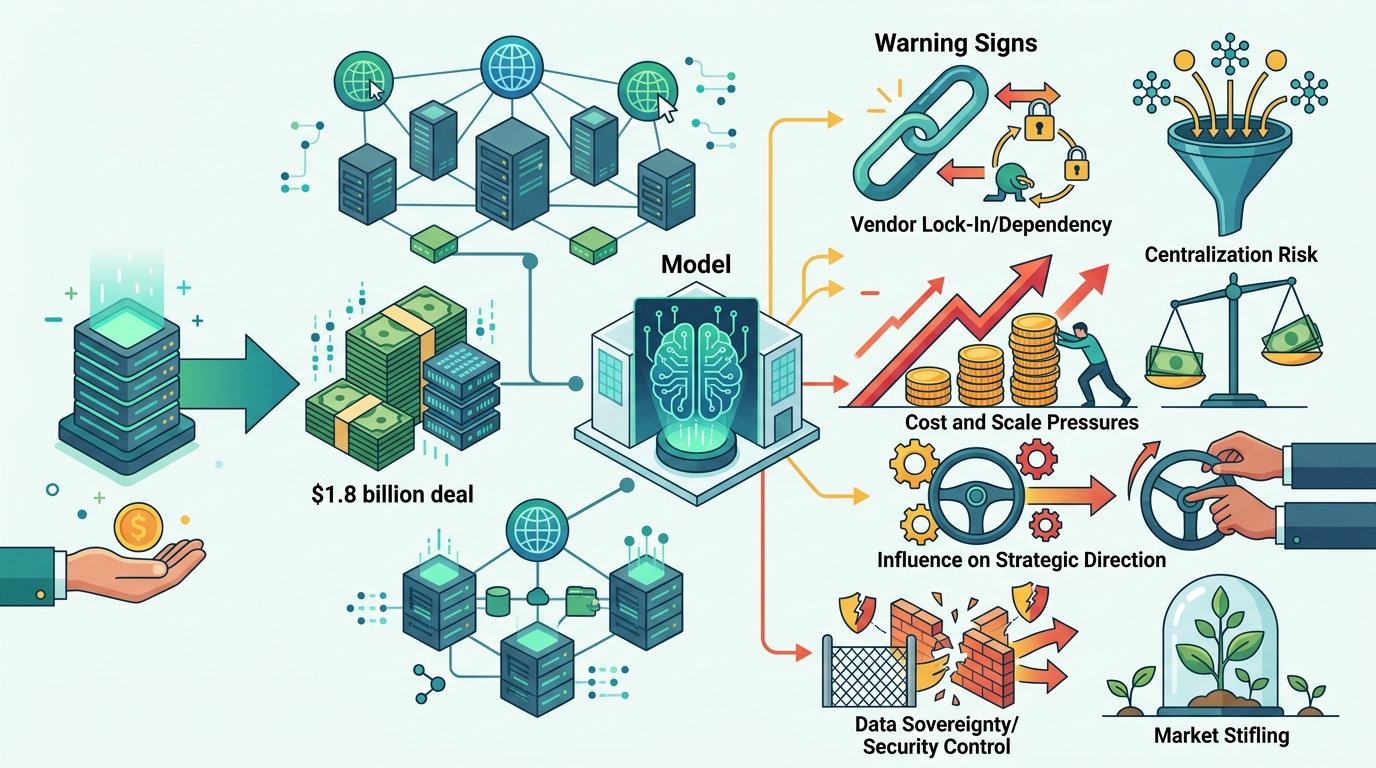
That argument is strong, and it is not wrong. Anthropic cannot serve enterprise demand on hope and spot capacity. But the scale of this commitment still exposes the deeper truth: AI leadership now depends on who can finance and operationalize infrastructure at industrial scale. That is a valid strategy, but it is also a warning that the market is consolidating around capital intensity. The limit is not the deal itself. The limit is that this model favors the best-funded players and makes the industry less forgiving for everyone else.
What to do with this
If you are an engineer, stop assuming model quality alone will carry your product. Design for compute efficiency, workload smoothing, and graceful degradation from day one. If you are a PM or founder, treat infrastructure as part of the product strategy, not a back-office concern. Lock in capacity before you need it, measure unit economics at the workload level, and build pricing that can survive real usage. The lesson from Anthropic’s Akamai deal is simple: in AI, distribution matters, but compute is the gate.
// Related Articles
- [IND]
Why AI infrastructure is now the real moat
- [IND]
Circle’s Agent Stack targets machine-speed payments
- [IND]
IREN signs Nvidia AI infrastructure pact
- [IND]
Circle launches Agent Stack for AI payments
- [IND]
Why Nebius’s AI Pivot Is More Real Than Hype
- [IND]
Nvidia backs Corning factories with billions