Why browser agents need a real execution layer, not another wrapper
BrowserAct is right: AI agents need a real web execution layer, not another brittle browser wrapper.

BrowserAct’s open-source skills give AI agents a reusable way to act on the live web.
BrowserAct is right to stop treating browser automation as a thin wrapper around Puppeteer and call it what it is: the missing execution layer for AI agents. The company’s open-source release of browser-act and browser-act-skill-forge is not just another scraping toolkit. It is an attempt to solve the failure mode that keeps showing up in production: agents can reason, but they cannot reliably operate on live websites that use bot checks, dynamic interfaces, and one-off workflows.
The release is concrete enough to matter. BrowserAct says its browser-act runtime can drive a live browser with isolated fingerprints, separate cookie jars, and optional residential IP routing, while browser-act-skill-forge can explore a site once and package that behavior into a reusable Skill. In other words, the system is not asking agents to relearn the same website every time. It gives them a persistent way to act, then reuse what they learned. That is the right architectural move.
First argument: agents fail at the web because the web is hostile to automation
Get the latest AI news in your inbox
Weekly picks of model releases, tools, and deep dives — no spam, unsubscribe anytime.
No spam. Unsubscribe at any time.
The first reason BrowserAct’s approach matters is simple: the live web is not a neutral surface. The article points to bot-detection systems such as Cloudflare, DataDome, and hCaptcha covering more than 40% of the world’s top 10,000 sites. That means a large share of valuable web workflows are already gated against generic automation. If your agent cannot pass the front door, its reasoning ability is irrelevant.
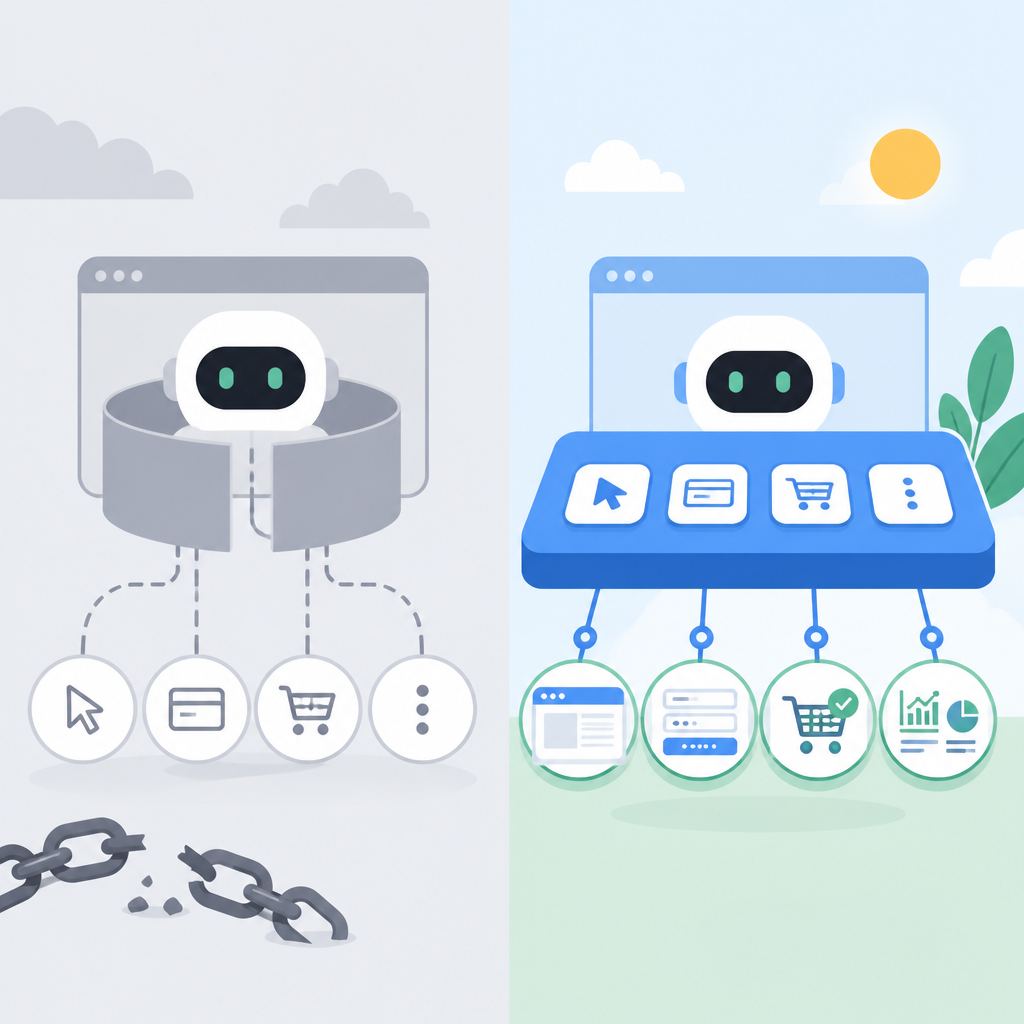
This is why the usual setup keeps collapsing. A standard browser tool can click and type, but it still looks like automation. A site redesign breaks selectors. A login flow changes. A CAPTCHA appears. Then the agent retries, burns tokens, and fails again. BrowserAct’s insistence on browser identity isolation, session separation, and human-in-the-loop remote assist is not cosmetic. It is the minimum required for agents to survive contact with the modern web.
Second argument: reusable skills beat one-off scraping code
The stronger part of the release is browser-act-skill-forge. The article’s core claim is that every new site should not require fresh code. That is correct. If an agent has to rediscover the same navigation path on every run, you do not have an autonomous system. You have an expensive script with a language model attached.
The example is easy to grasp: a niche e-commerce site, a recurring inventory check, a paginated workflow. Forge explores once, tests what works, and generates a deploy-ready Skill with a guide and scripts. After that, the agent calls the Skill directly. The practical gain is not just speed. It is institutional memory. The workflow becomes reusable, shareable, and less fragile than hand-written scraping logic that dies whenever the site changes layout.
Second argument: the economics favor structured outputs over raw page churn
BrowserAct also makes the right bet on structured output. The article says its Skills return JSON instead of raw HTML and claims a 93% reduction in token consumption when fed back into Codex or Claude. That matters because most agent pipelines waste money not on reasoning, but on reading too much junk. Raw source code is noisy, long, and easy to misread. A clean payload lets the model spend tokens on decisions rather than page archaeology.
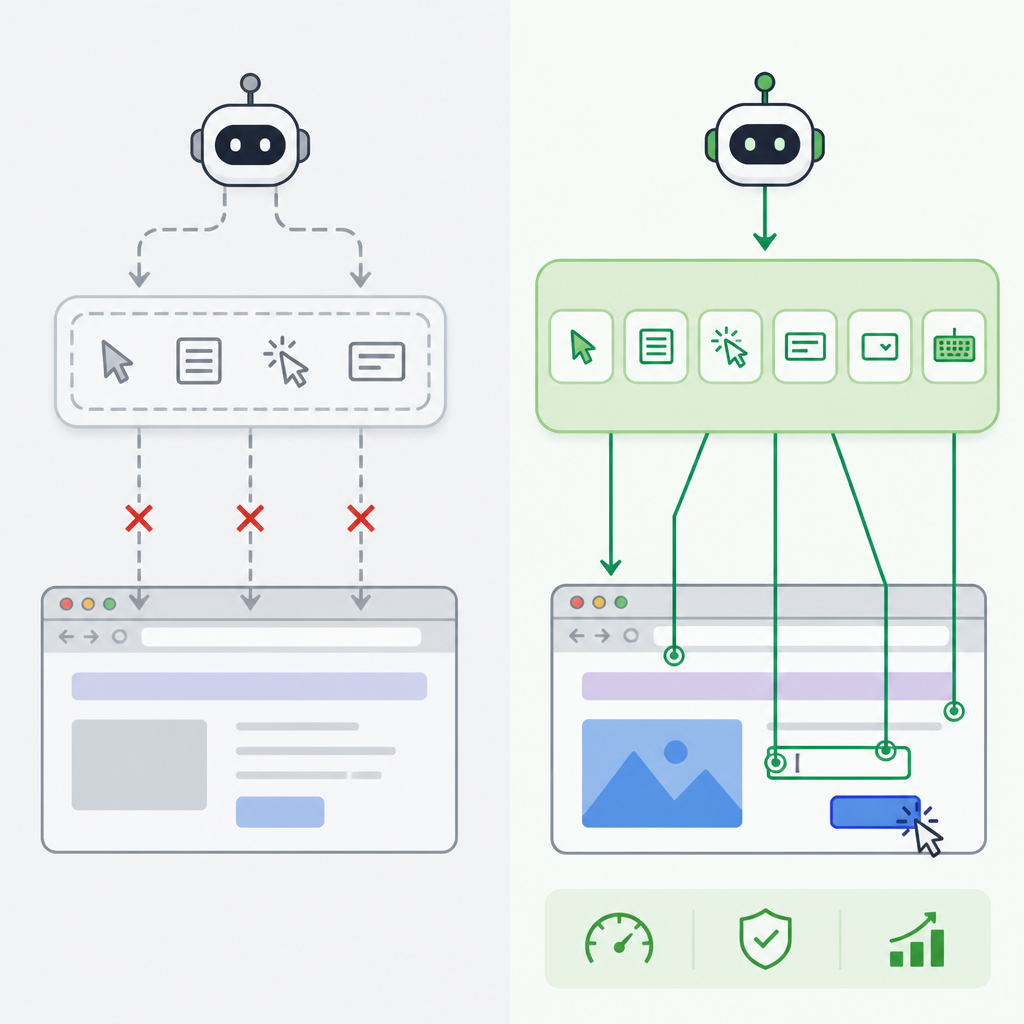
This is where the product story becomes more than browser automation. If an agent can extract, package, and reuse web actions as structured tools, then the web stops being a one-off input stream and becomes a tool graph. That is the path to scale. It is also the only path that keeps agents from becoming brittle, bloated, and too expensive to run in production.
The counter-argument
The best objection is that BrowserAct’s framing normalizes a race with websites that do not want agents there. Fingerprint randomization, CAPTCHA solving, residential proxies, and Chrome takeover all sound like a toolkit for bypassing platform defenses, not for building trustworthy automation. A critic can fairly argue that if your product depends on making bots look human, you are optimizing against the web’s own governance layer.
That criticism lands on the proxy-routing and stealth-browsing layer. It does not defeat the broader thesis. The real value is not evasion for its own sake. It is the creation of a controlled execution layer for tasks a user is already entitled to perform. BrowserAct’s own boundary for Skill Forge is the right one: it can only do what the user could manually do in their browser. That limitation is not a weakness. It is the line that separates durable automation from abuse.
What to do with this
If you are an engineer or PM building agent workflows, stop asking whether your model is “smart enough” and start asking whether it has a stable way to act, recover, and reuse web tasks. Build around structured Skills, not ad hoc scraping. Keep a human handoff path for identity checks and high-risk steps. And if a workflow matters enough to run more than once, turn it into a reusable capability instead of re-solving it every time. That is how agent systems become operational rather than theatrical.
// Related Articles
- [AGENT]
Perplexity should build Teammate as a coding agent, not a copilot
- [AGENT]
HP adopts OpenAI Frontier across global operations
- [AGENT]
Build a production vector DB for RAG
- [AGENT]
Ornith-1 turns agent coding into a server
- [AGENT]
Crypto AI agents are useful, but only for narrow workflows
- [AGENT]
AI Agents in Crypto: 2026 Protocol Guide