5 open source AI agents to know
5 open source AI agents worth knowing, from coding copilots to research bots, with notes on what each is best for.

This list explains five open source AI agents and what each is best for.
Open source AI agents now span coding, research, browser work, and workflow automation, with one benchmark note showing success rates dropped after 35 minutes of human interaction.
1. Open Interpreter
Get the latest AI news in your inbox
Weekly picks of model releases, tools, and deep dives — no spam, unsubscribe anytime.
No spam. Unsubscribe at any time.
Open Interpreter is the most direct way to turn natural language into local computer actions. It is useful when you want an agent that can write code, run commands, and explain what it is doing while staying close to the terminal.

Its appeal is simplicity: you ask for a task, it plans the steps, and it executes them in a visible loop. That makes it a good fit for developers who want an assistant that can inspect files, edit code, and automate repetitive shell work without a large framework in the middle.
- Best for: local coding help and command-line automation
- Typical use: file edits, script runs, quick debugging
- Why it matters: low setup compared with larger agent stacks
2. AgentGPT
AgentGPT is built for people who want to spin up autonomous task loops in a browser. It is a straightforward entry point for experimenting with goal-based agents that break work into steps and keep going until they finish or fail.
Compared with coding-first tools, AgentGPT is more about showcasing agent behavior than embedding deeply into a production app. That makes it useful for prototypes, demos, and teams that want to test how far an agent can get on open-ended tasks before adding stronger controls.
- Best for: browser-based agent demos and prototypes
- Typical use: task decomposition, iterative execution, simple research
- Watch for: limited reliability on complex, long-running jobs
3. BabyAGI
BabyAGI is one of the early names in autonomous task management. It became popular because it showed how an agent can generate tasks, prioritize them, and feed results back into the next step.
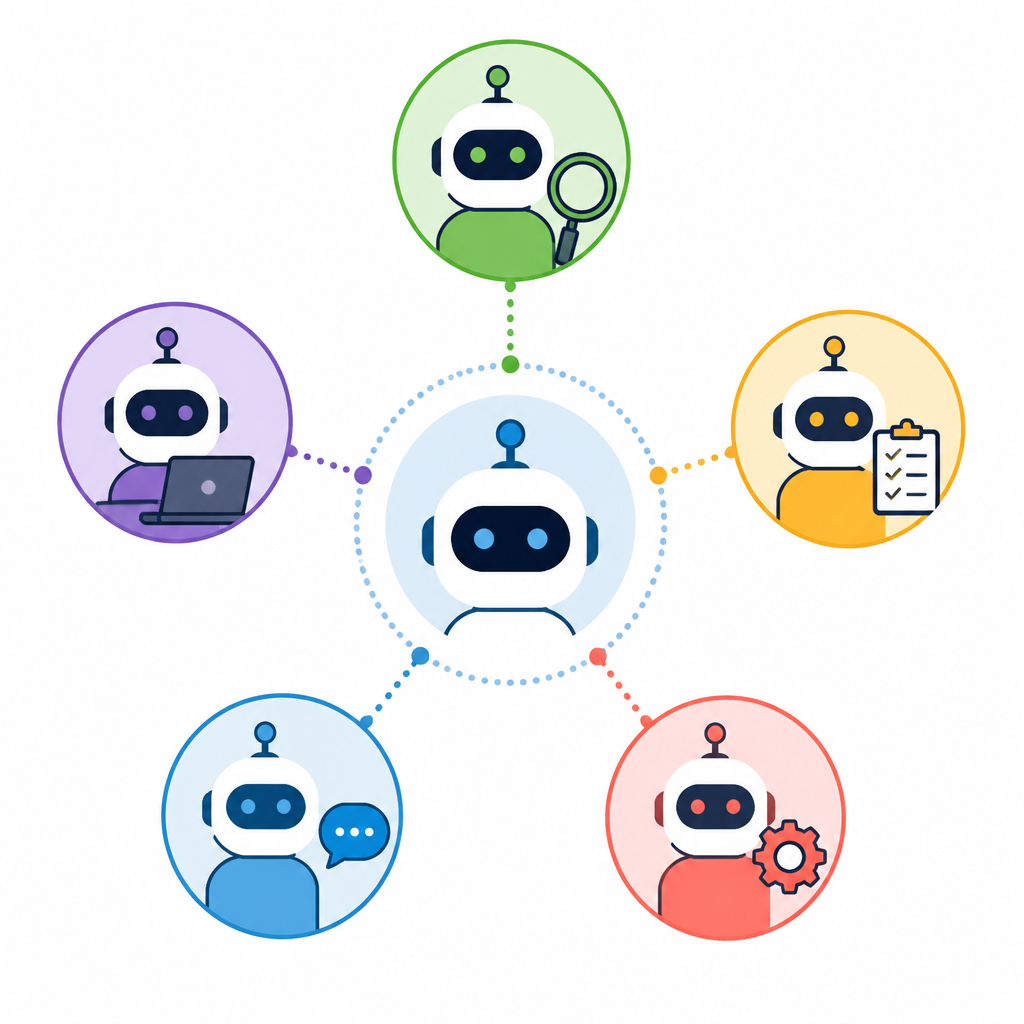
Today, its main value is as a compact pattern for understanding agent loops. If you are building your own system, BabyAGI is a clear reference for task queues, memory, and self-directed iteration without needing a full enterprise platform.
- Best for: learning agent architecture
- Typical use: task creation, prioritization, result chaining
- Good to know: more educational than polished for production
4. PR-Agent
PR-Agent focuses on one narrow job: helping with pull requests. It reviews code changes, summarizes diffs, and can suggest improvements, which makes it practical for teams that want AI support inside the Git workflow.
Because it is domain-specific, PR-Agent avoids some of the uncertainty that comes with general-purpose agents. That narrow scope is a strength for engineering teams that want faster reviews, better issue spotting, and less time spent on repetitive pull request reading.
- Best for: code review and pull request support
- Typical use: diff summaries, review comments, change explanations
- Why teams like it: focused scope and easy workflow fit
5. GPT Researcher
GPT Researcher is designed for multi-source research jobs. It searches, gathers information, and organizes findings into a report, which is handy when the task is less about action and more about synthesis.
This kind of agent is a good match for analysts, marketers, and product teams that need structured summaries from many sources. It is also a useful example of where agentic systems shine: tasks with branching paths, changing evidence, and a need to keep context across several steps.
- Best for: research summaries and report generation
- Typical use: source gathering, citation-style synthesis, topic briefs
- Watch for: quality depends on source selection and prompt scope
How to decide
If you want local automation and code execution, start with Open Interpreter. If you want a simple agent demo, AgentGPT is easier to explore. If your goal is to understand agent loops, BabyAGI is the clearest reference. For team workflows, PR-Agent is the most practical, and for multi-source writing, GPT Researcher is the strongest fit.
The right choice depends on where you want the agent to work: terminal, browser, pull request, or research pipeline. In general, pick the narrowest tool that matches the job, because agent systems add memory, orchestration, and failure handling that are not worth the cost for every task.
// Related Articles
- [IND]
WebX 2026 turns speaker hype into a conference brief
- [IND]
AI Weekly: 2026-07-06 ~ 2026-07-13
- [IND]
The AI Act should be treated as Europe’s operating system for AI
- [IND]
Booz Allen’s OpenAI Deal Is Real Advantage, Not Hype
- [IND]
OpenSearch’s vector search benchmark in 5 parts
- [IND]
Vector Databases That Work in Production