Chris Wright's AI energy loop, decoded
I break down NVIDIA’s AI-energy pitch into a practical template for building compute, power, and infrastructure together.
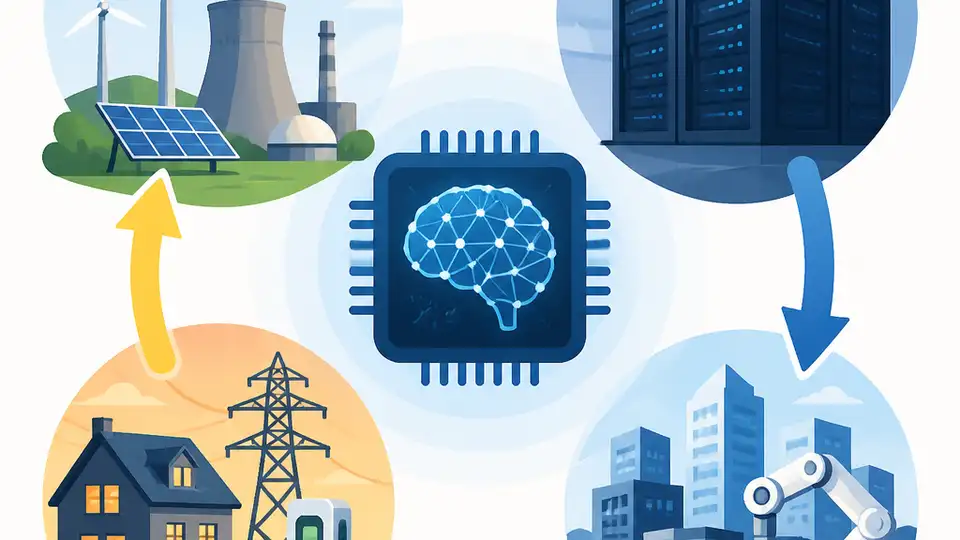
I turn NVIDIA’s AI-energy pitch into a copyable infrastructure planning template.
I've been watching AI infrastructure conversations get weirdly abstract lately. Everyone wants to talk about models, agents, and “the next wave,” but the part that keeps biting teams in the real world is boring stuff: power, grid access, cooling, interconnects, land, permits, all the unglamorous plumbing. That’s the part that decides whether your shiny AI plan ships this year or becomes a slide deck that dies in procurement.
So when I saw NVIDIA’s Latest News page surface the May 7, 2026 piece about U.S. Energy Secretary Chris Wright and NVIDIA VP Ian Buck talking at the SCSP AI+ Expo, I stopped and read it like a builder, not a fan. The headline idea is simple, and honestly, it’s the first version of this argument that doesn’t feel hand-wavy: AI will help build the energy it needs. That’s not a slogan. It’s a constraint statement.
What I took from it is that the old order of “get power first, then maybe think about AI later” is too slow for what’s happening now. If AI is going to keep expanding, the infrastructure has to be planned as a loop: compute drives demand, demand justifies energy buildout, and energy buildout unlocks more compute. That loop is the real story here, not the press-release gloss.
The pitch is not “AI will save energy.” It’s “AI will force the buildout.”
Get the latest AI news in your inbox
Weekly picks of model releases, tools, and deep dives — no spam, unsubscribe anytime.
No spam. Unsubscribe at any time.
“AI will help build the energy it needs.”
That line is doing a lot of work. It doesn’t mean AI magically generates electricity. It means the pressure from AI demand can justify faster investment in generation, transmission, storage, and the industrial capacity around them. In other words, AI becomes one of the economic reasons to expand the power system instead of waiting for power policy to catch up on its own.
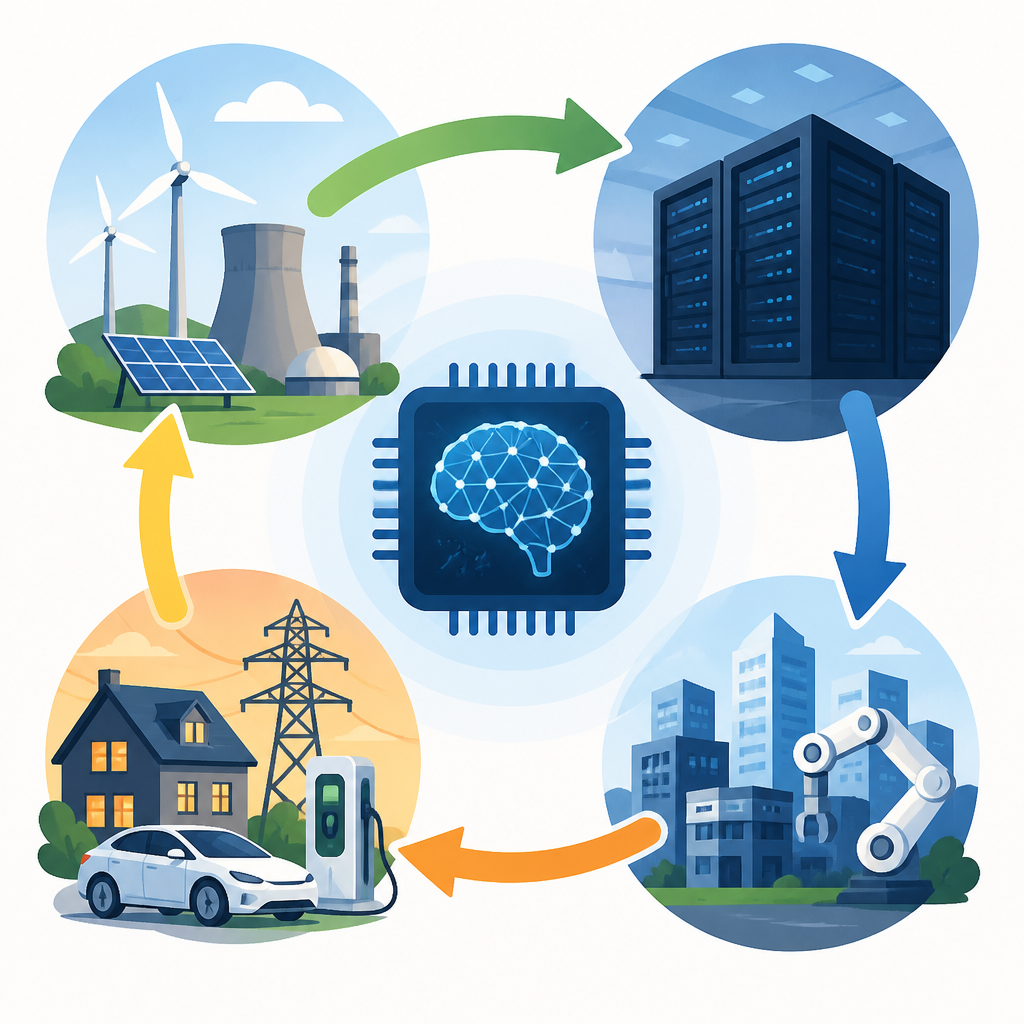
I’ve seen teams miss this because they treat power as a background utility. It isn’t anymore. If you’re planning serious AI infrastructure, electricity is part of your product roadmap whether you like it or not. That’s true for a startup trying to rent GPUs and even more true for anyone building clusters, factories, or sovereign compute.
What this actually means is you should stop writing infrastructure plans that begin with “we need X GPUs” and end there. That’s incomplete. The real question is: what power envelope, cooling model, and deployment geography can actually support those GPUs at scale?
How to apply it: when I scope an AI deployment now, I write three numbers together: target compute, target power draw, and target time-to-power. If one of those is missing, the plan is fake. If you can’t answer them, you don’t have an infrastructure strategy, you have a wish.
- Compute: what workload are you actually serving?
- Power: how much load can the site support today?
- Timeline: how long until the site is energized and usable?
AI infrastructure planning has to start upstream, not at the rack
The NVIDIA post frames the conversation around the Genesis Mission and a broader national buildout mindset. That matters because most AI plans start too late. People start at the server rack, then discover the site can’t support the load, then discover the interconnect is months behind, then discover the permitting path is even slower.
I ran into this exact failure mode on a deployment where the hardware plan was immaculate on paper. The cluster design looked clean. The vendor quotes looked clean. The deployment calendar was not clean. The site power upgrade alone turned into a schedule hostage situation. That’s when I learned the annoying truth: rack-level optimization is a consolation prize if upstream infrastructure is blocked.
What this actually means is you need to plan from the grid inward, not from the GPU outward. That sounds backwards if you come from software, but it’s the only way the math works once power becomes the bottleneck.
How to apply it: build your project plan in this order: site power, cooling, networking, hardware, software. If you reverse that order, you’ll end up redesigning the first three after the fourth is already purchased.
For reference, the companies and institutions in this conversation sit in the middle of the actual infrastructure stack: NVIDIA, the U.S. Department of Energy, and the Special Competitive Studies Project. That’s the right level for the discussion. If you stay only at the app layer, you miss the bottleneck entirely.
The loop only works if AI helps operators make better decisions
The source article doesn’t spell out a technical architecture, but the implication is obvious to anyone who’s had to run real systems: AI has to help with planning, forecasting, optimization, and operations if it’s going to accelerate energy buildout. Otherwise it’s just another consumer of scarce power.
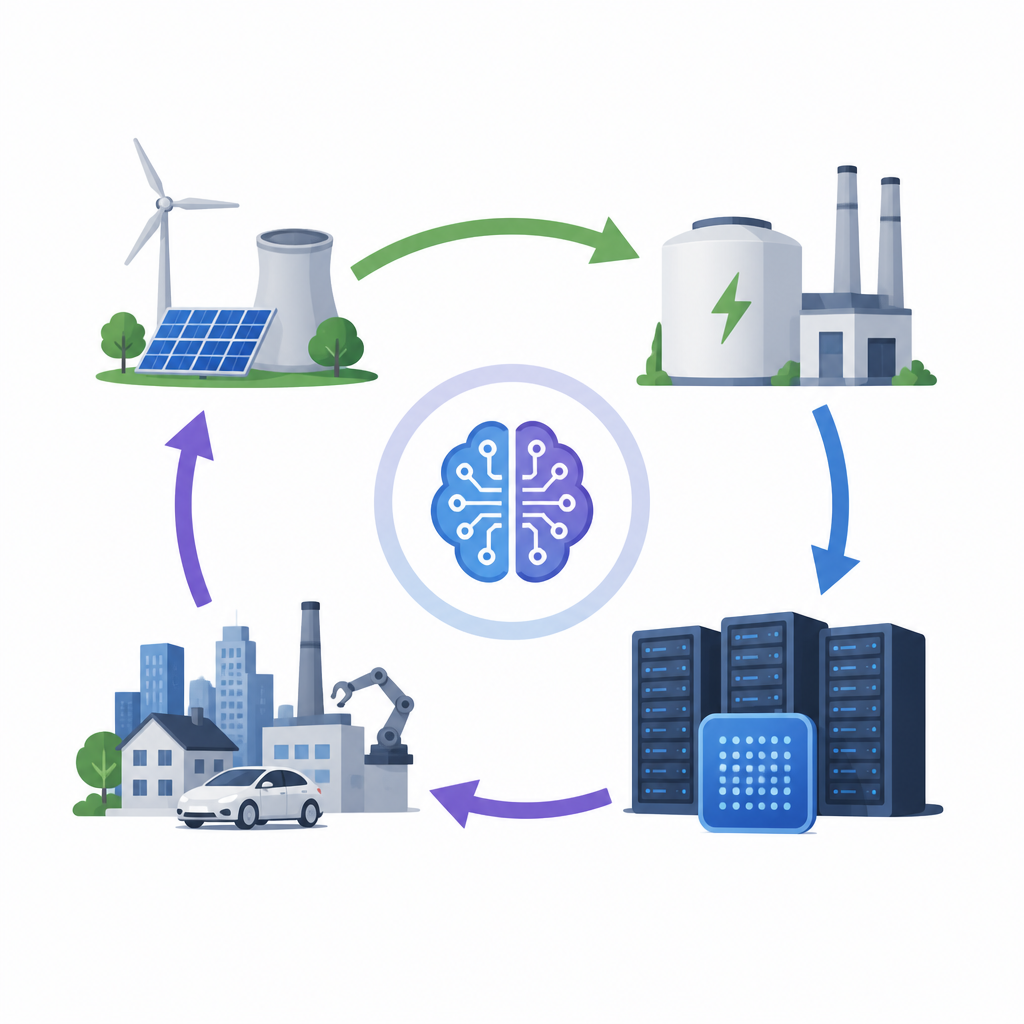
That’s the part I like, because it makes the argument operational instead of ideological. AI can help grid operators forecast load, help utilities plan upgrades, help industrial sites optimize consumption, and help data center teams avoid dumb inefficiencies. If it does that well, it frees capacity. If it doesn’t, it just eats capacity and asks for more.
I’ve seen this in smaller form with internal capacity planning. The teams that use prediction well stop wasting money on overprovisioning or emergency purchases. The teams that don’t keep buying slack because they’re afraid to be wrong. AI should reduce that fear by improving signal quality.
What this actually means is the value of AI in energy isn’t some vague “intelligence” claim. It’s decision quality under constraint. Better forecasts. Better dispatch. Better maintenance timing. Better load shaping. Less idle waste.
- Forecast demand before it hits the ceiling.
- Predict failures before they take out capacity.
- Shift load before the grid gets expensive.
- Use site telemetry to find waste you were ignoring.
How to apply it: pick one operational decision that is currently made by spreadsheet, gut feel, or ritual. Then define the exact data needed to improve it. If you can’t name the decision, you’re not ready to add AI to the workflow.
The real product is not just compute, it’s industrial coordination
The NVIDIA piece sits alongside a bunch of other recent newsroom items about infrastructure, partnerships, and enterprise deployment. That’s not accidental. NVIDIA is clearly pushing the idea that AI is no longer just software you run; it’s an industrial system that has to be coordinated across chips, networking, power, cooling, and supply chains.
This is where a lot of AI writing gets lazy. It talks about “scaling” like scale is a software setting. It isn’t. Scale is a coordination problem. If one part of the chain moves faster than the others, the whole thing jams.
I’ve worked with enough systems to know that coordination failures look boring until they cost real money. A delayed transformer, a late switchgear delivery, a bad fiber route, a cooling mismatch, a procurement slip. Any one of those can blow up your timeline. The AI layer doesn’t save you from that. It just raises the stakes.
What this actually means is your AI roadmap should include non-software owners. Facilities. Power engineering. Network operations. Procurement. Legal. Permitting. If those people aren’t in the room early, the project is already behind.
How to apply it: make a one-page dependency map before you buy anything. Put compute in the middle, then draw the upstream blockers around it. If a dependency can’t be solved inside your timeline, move the site, change the architecture, or shrink the scope. Don’t pretend it’ll work itself out.
Why the Genesis Mission framing matters more than the headline
The article references the Genesis Mission, which is the part I’d pay attention to if I were building policy, infrastructure, or long-horizon capacity plans. The name matters less than the model: national-scale coordination around AI and energy instead of isolated projects trying to out-muscle the bottleneck alone.
That’s a healthier framing than the usual “more GPUs, more power, more everything” noise. It suggests a system view: if AI is going to keep expanding, then energy policy, industrial planning, and compute deployment have to be treated as one problem set.
I’m not romantic about this. Coordination is slow. Government is slow. Large vendors are slow. But the alternative is worse, which is every company pretending it can solve grid-scale constraints with a cloud invoice and a good attitude.
What this actually means is the winners will be the teams that can translate between software goals and infrastructure reality. The people who can talk model throughput and substation capacity in the same meeting.
How to apply it: if you’re a developer or tech lead, get comfortable asking infrastructure questions that used to feel “someone else’s job.” Ask where the power comes from. Ask what the cooling ceiling is. Ask what happens if demand doubles. Those questions are now part of the job.
The template you can copy
# AI Infrastructure Planning Template

## 1) Workload
- What are we building?
- Who uses it?
- What does success look like?

## 2) Compute
- Target model / service:
- Expected GPU count:
- Expected CPU / memory footprint:
- Peak throughput target:

## 3) Power
- Current site power available:
- Required power at full deployment:
- Power gap:
- Time to energize:
- Backup / redundancy plan:

## 4) Cooling
- Cooling method:
- Thermal ceiling:
- Air / liquid requirements:
- Constraints at peak load:

## 5) Network
- Primary connectivity:
- Latency target:
- Bandwidth target:
- Fiber / routing constraints:

## 6) Supply Chain
- Long-lead items:
- Procurement risks:
- Alternate vendors:
- Delivery milestones:

## 7) Operations
- Who owns capacity planning?
- Who owns incident response?
- Who reviews telemetry weekly?
- What is the escalation path?

## 8) AI-for-operations opportunities
- Forecast demand:
- Predict failures:
- Optimize load:
- Reduce waste:

## 9) Decision gate
- Can the site support the target load?
- Can it do so on schedule?
- If not, what changes: site, architecture, or scope?

## 10) One-paragraph project statement
We are building [workload] on [site/region] with [compute] under a power budget of [X] MW, a cooling plan of [Y], and a deployment timeline of [Z]. If any upstream constraint changes, we will re-scope before procurement.
This is the version I’d actually use in a planning doc. It forces the team to stop hand-waving around the parts that usually kill the schedule. Fill it out honestly, and you’ll know in one pass whether the project is real or just expensive.
If you want the original context, start with NVIDIA’s newsroom item here: Powering the Next American Century. I’ve reworked the idea into a builder-friendly template, but the source framing belongs to NVIDIA and the speakers at SCSP AI+ Expo.
For more background on the organizations involved, see energy.gov and scsp.ai. I’m not claiming this template is original to them; it’s my practical decomposition of their argument into something you can use on a real project.
// Related Articles
- [IND]
WebX 2026 turns speaker hype into a conference brief
- [IND]
AI Weekly: 2026-07-06 ~ 2026-07-13
- [IND]
The AI Act should be treated as Europe’s operating system for AI
- [IND]
Booz Allen’s OpenAI Deal Is Real Advantage, Not Hype
- [IND]
OpenSearch’s vector search benchmark in 5 parts
- [IND]
Vector Databases That Work in Production