Why MeridianLink’s embedded AI strategy is the right bet for lenders
MeridianLink is right to embed AI inside its lending platform instead of selling it as a separate tool.

MeridianLink is right to embed AI inside its lending platform instead of selling it as a separate tool.
MeridianLink’s decision to put AI inside MeridianLink One, rather than bolt it on as another point product, is the correct move for lending software. The company says its first agent, Doc Agent, will turn underwriting conditions into borrower-ready requests, check documents for completeness, and extract data for one-click updates. That is not a gimmick. It targets the slowest, most manual part of the loan process, where every extra handoff adds delay, error, and frustration for borrowers and staff alike.
Embedded AI beats standalone AI in lending
Get the latest AI news in your inbox
Weekly picks of model releases, tools, and deep dives — no spam, unsubscribe anytime.
No spam. Unsubscribe at any time.
The strongest case for MeridianLink’s approach is simple: lending work already lives inside a system of record, so intelligence belongs there too. MeridianLink says its platform has nearly 30 years of workflow integration and compliance logic, which matters because loan officers do not want to copy information between systems just to trigger an AI task. When AI sits inside the origination flow, it can act on the real context of the application instead of guessing from a partial view.

This is why the company’s first use case is document handling. Doc Agent is aimed at one of the most repetitive and error-prone steps in mortgage lending, where staff chase missing pages, validate stale files, and rekey data. MeridianLink says the agent will reduce cycle times and improve accuracy. That is exactly the kind of measurable operational gain that justifies AI in a regulated workflow. If the software cannot shorten the path from condition to decision, it is just another dashboard.
Community lenders need practical automation, not AI theater
MeridianLink is also right to frame this as a tool for community financial institutions, not as a broad AI spectacle. The company says customers see the biggest AI impact in accelerating workflows at 46%, reducing fraud risk at 21%, and improving the application experience at 15%. Those numbers tell the story. Community lenders do not need a chatbot that talks about lending. They need fewer bottlenecks, fewer manual touches, and fewer reasons for applicants to drop off before funding.
That is why the company’s “keep humans in the loop” language is not a weakness, it is the point. In lending, full automation is not the goal. Better automation is. A loan officer still needs judgment, but the software should clear away the low-value work that buries that judgment. MeridianLink’s pitch that it will reduce back-office effort while increasing front-office human contact is the right operating model for institutions that compete on relationships and speed, not on headcount.
The counter-argument
The best objection is that embedded AI can become a walled garden. If MeridianLink owns the workflow, the data, and the agent layer, customers may find it harder to swap vendors or compare AI performance against specialized tools. There is also a real risk that “secure, compliant and explainable” becomes a sales phrase rather than a provable standard, especially when lenders are asked to trust automated document handling in a regulated environment.
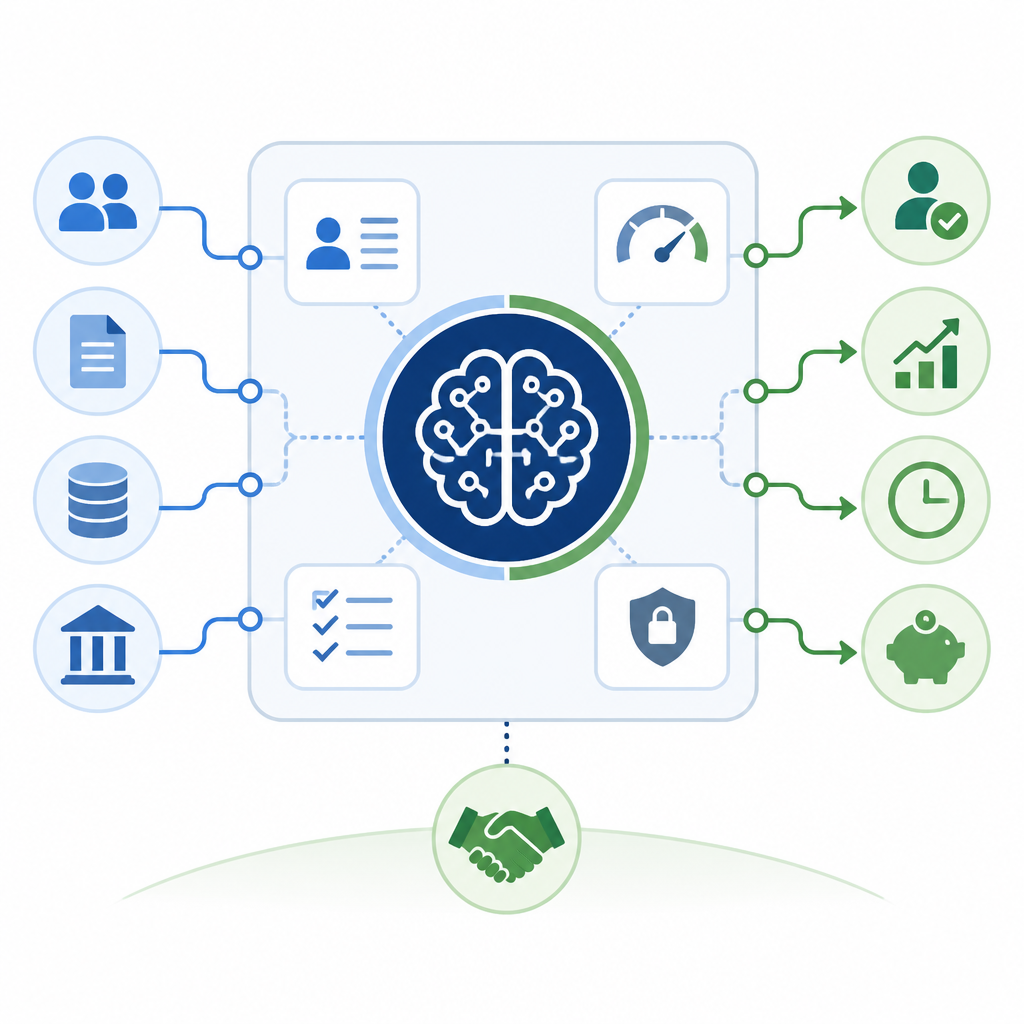
That criticism deserves respect because lending is not a playground for experimental software. A bad automation choice can create compliance exposure, slow approvals, or frustrate borrowers at scale. But the counter-argument fails on one key fact: point solutions do not remove risk, they scatter it. In lending, the highest-risk moments happen when data moves between systems and people re-enter the same information over and over. An embedded agent with clear workflow controls is safer than stitching together separate tools that cannot see the full file.
What to do with this
If you are a lender, PM, or founder, the lesson is to treat AI as workflow infrastructure, not a side feature. Start with one painful, repetitive step that already lives inside a system of record, define a measurable outcome like cycle time or drop-off reduction, and require human review where judgment matters. Buyers should ask vendors a blunt question: does the AI reduce handoffs inside the workflow, or does it just add another layer on top? The answer tells you whether the product is built for operations or just for demos.
// Related Articles
- [IND]
WebX 2026 turns speaker hype into a conference brief
- [IND]
AI Weekly: 2026-07-06 ~ 2026-07-13
- [IND]
The AI Act should be treated as Europe’s operating system for AI
- [IND]
Booz Allen’s OpenAI Deal Is Real Advantage, Not Hype
- [IND]
OpenSearch’s vector search benchmark in 5 parts
- [IND]
Vector Databases That Work in Production