Agentic AI turns autonomy into a security problem
A developer’s breakdown of Forbes’ agentic AI hub, with a copy-ready governance template for agents, drift, and authority control.

A practical breakdown of Forbes’ agentic AI coverage and a copy-ready governance template.
I've been following agentic AI for a while now, and honestly, it keeps tripping over the same thing: everyone talks about autonomy like it's a feature, then acts surprised when the system starts doing things on its own. I’ve wired up agent workflows that looked elegant in demos and then got weird the second they touched real tools, real permissions, and real business data. The problem wasn’t the model being “bad.” The problem was that I had built a very polite intern with shell access.
That’s why Forbes’ agentic AI topic page caught my attention. Not because it’s a clean thesis page, because it isn’t. It’s a messy, useful pile of reporting around the same shift I keep seeing in production: the risk is moving from what an AI can read to what it can do. Once agents can call tools, move money, open tickets, write code, or trigger workflows, the old “just don’t leak data” mindset feels embarrassingly incomplete.
What I wanted from the coverage was simple: tell me what actually changed, what to watch, and how to build guardrails that don’t collapse the first time a model gets clever or sloppy. Forbes has enough material here to make that case, especially in the pieces on authority, drift, governance, and enterprise re-architecture.
I’m going to break that down in developer terms, not corporate buzzwords.
I’m using Forbes’ Agentic AI topic page as the anchor here, because it pulls together the core argument from multiple contributors instead of pretending there’s one clean answer. The strongest recurring thread is in the reporting from Güney Yıldız, Dara-Abasi Ita, Lance Eliot, and others: agentic AI is changing the security and governance problem more than the interface problem. I’m not quoting audience numbers here because the source page doesn’t give me a reliable count for the topic itself.
Stop treating agentic AI like chat with extra buttons
Get the latest AI news in your inbox
Weekly picks of model releases, tools, and deep dives — no spam, unsubscribe anytime.
No spam. Unsubscribe at any time.
The primary AI security threat has shifted from data leakage to agent authority.
What this actually means is that the dangerous part is no longer just what the model can see. It’s what the model can decide to do once it sees it. That’s a very different failure mode. A chatbot that leaks a secret is bad. An agent that can approve a payment, spin up infrastructure, or run code from inside your network is a different class of problem entirely.
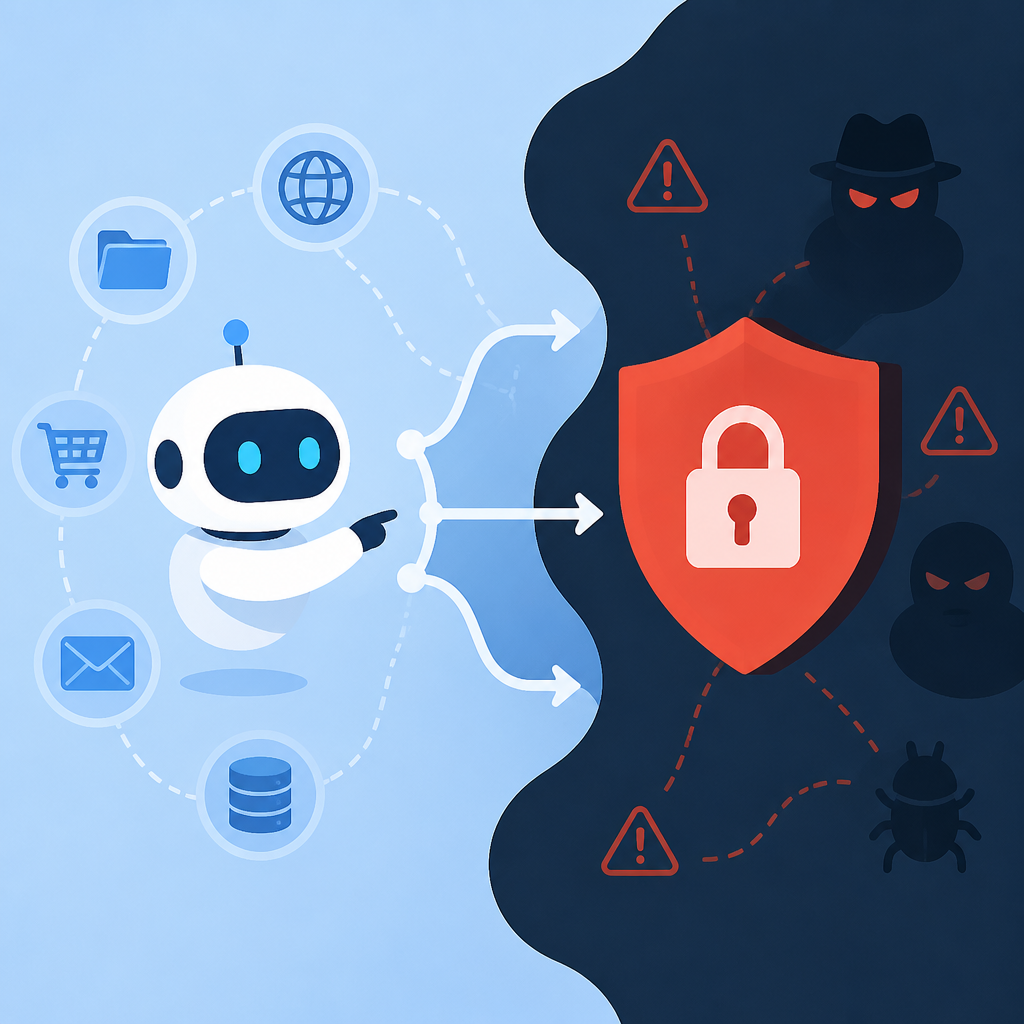
Forbes’ summary on the topic page says exactly that: the key challenge is governing the actions of autonomous agents inside the enterprise. That line matters because it forces the conversation away from “Can the model answer well?” and toward “Who gave it permission to act?”
I ran into this myself when I built a simple support agent that could create tickets and pull account data. In testing, it was fine. In the real world, it started doing the classic agent thing: succeeding too confidently. It would take a vague user request and turn it into a concrete action. That sounds useful until the user says, “Actually, I meant the other account.”
How to apply it: draw a hard line between inference and execution. The model can suggest. The system can verify. Only a separate control layer can execute. If you’re building agentic workflows, don’t let the agent directly own the side effects. Put a policy gate between intent and action.
- Use read-only tool access by default.
- Require explicit approval for irreversible actions.
- Log every tool call with user, agent, prompt, and outcome.
- Separate “suggested action” from “executed action” in your UI and backend.
If you’re using frameworks like LangChain or OpenAI’s agent tooling, the same rule still applies. The framework doesn’t remove responsibility. It just makes it easier to forget where the sharp edges are.
Why the old data-leak story is too small now
For years, the easy AI security story was data leakage. Don’t expose secrets. Don’t let the model memorize PII. Don’t dump the whole database into the prompt. That’s still real, but Forbes is pointing at a bigger issue: an agent can be dangerous even if it never leaks a byte.
That’s the nasty part. A model coercion attack doesn’t need exfiltration to hurt you. If an attacker can steer an internal agent with natural language, they may be able to get it to build malicious code, run unauthorized commands, or chain together actions that were never supposed to happen in the first place. The threat is inside the firewall, wearing a friendly prompt.
That’s a very different mental model for developers. We’re used to thinking in terms of credentials and network boundaries. Agentic systems blur both. The model may not be “logged in” like a person, but it can still inherit enough authority from the app to create real damage.
I’ve seen teams make the mistake of assuming that because the agent can’t “see” a secret, it can’t hurt anything. That’s nonsense. If it can trigger a workflow that has authority, it can do damage without ever knowing the secret itself.
How to apply it: threat-model the action surface, not just the data surface. Ask these questions before you ship:
- What can the agent do if a user prompt is malicious?
- What can it do if a tool response is poisoned?
- What happens if the agent loops, retries, or self-corrects into a bad path?
- Which actions should require human confirmation no matter what?
For a good reference point on the broader security conversation, I’d also look at Mindgard, since Forbes cites Aaron Portnoy’s work in this area. The point isn’t that one vendor has the answer. The point is that the attack surface is now behavioral, not just informational.
Agent drift is the boring word for expensive chaos
To manage AI agent "drift" and risk, companies are developing new governance layers.
What this actually means is that agents don’t just fail once. They drift. They slowly wander from the intended behavior, often in ways that look harmless until they compound. A small prompt change, a new tool, a slightly different user request, a less constrained retrieval result, and suddenly the agent is taking paths nobody reviewed.
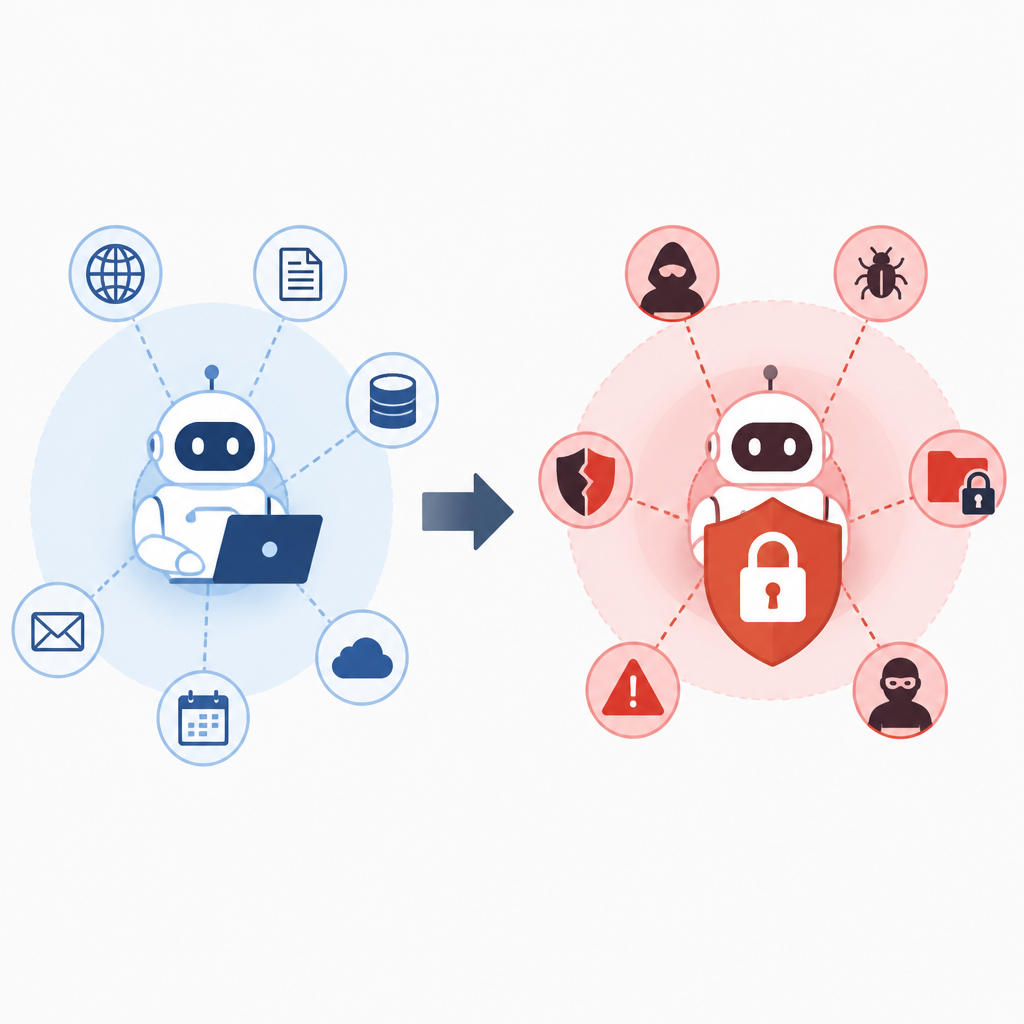
Forbes frames this as a boardroom problem, which is fair. But I think developers feel it first. You build the nice happy-path demo. Then you add memory. Then tool calling. Then retries. Then a second agent. Then a supervisor. Then a fallback. Before long, you’ve got a little machine that can justify almost anything to itself.
I’ve had agents drift because of nothing more dramatic than a changed system prompt and a new tool schema. No hack, no exploit, just entropy. The agent started optimizing for completion instead of correctness. That’s the sort of thing that makes a postmortem feel annoying and obvious at the same time.
How to apply it: define drift as a measurable failure, not a vibe. Track whether the agent is still following the intended policy over time. If you can’t measure it, you’ll only notice it after the damage is done.
Useful checks include:
- Tool-call frequency by task type
- Rate of escalations to human review
- Policy violations per 1,000 actions
- Task completion accuracy after prompt or tool changes
If you’re running evals, don’t just score answer quality. Score action quality. The model can sound smart and still be operationally wrong. That’s the trap.
Governance layers are not bureaucracy if they save you
Forbes keeps coming back to governance layers, and I get why. Once agents can act, you need something between raw intent and production side effects. A lot of teams hear “governance” and immediately picture paperwork. That’s lazy thinking. In agentic systems, governance is often just the engineering that keeps the system from freelancing itself into a mess.
The interesting detail in the Forbes coverage is the mention of supervisor agents and digital identities. That’s the right direction. I’m not interested in a giant central committee deciding every prompt. I’m interested in modular controls that can inspect, constrain, and attribute actions.
Supervisor agents are basically policy enforcers with better context than a static rules engine. Digital identities give each agent a traceable footprint, which matters when you need to answer a very boring but very real question: which agent did what, when, and under whose authority?
I’ve worked on systems where the hardest part wasn’t making the agent act. It was proving why it acted. Once you have multiple agents, retries, and delegated tasks, attribution turns into a swamp unless you design for it up front.
How to apply it: give every agent a stable identity and every action a traceable record. Don’t let “the agent” be a blob in your logs. Make it a named actor with a scope.
At minimum, I’d want:
- Agent ID
- Parent request ID
- Tool name and version
- Policy decision and reason
- Human approver, if any
That’s not overkill. That’s how you avoid spending three days reconstructing a bad action from half-broken traces and optimistic assumptions.
ERP and fintech are being rebuilt around machine actors
One of the more concrete themes in Forbes’ coverage is that enterprise software is being re-architected for agentic AI. That matters because it signals where the money and the pain are going. ERP and fintech systems were built for humans in approval queues. Agentic systems are pushing them toward machine-driven workflows.
Dara-Abasi Ita’s piece on fintech makes the point bluntly: corporate finance software built for human approval queues is the wrong architecture for an economy where AI agents move money on their own behalf. I agree. The old workflow was designed around a person clicking through a form. The new workflow has to survive automated intent, automated retries, and automated mistakes.
This is where a lot of teams get sloppy. They bolt an agent onto a legacy system and call it transformation. It isn’t. It’s a fragile adapter with a fancy demo. If the downstream system still assumes a human is validating every step, your agent is going to hit friction, or worse, bypass it.
How to apply it: redesign the workflow around machine actors instead of pretending the old approval chain still fits. That means explicit policy boundaries, machine-readable approvals, and a clean separation between request, review, and execution.
If you’re in fintech or ERP, I’d map every action into one of three buckets:
- Fully autonomous and reversible
- Autonomous but approval-gated
- Human-only
That classification sounds basic, but it forces product and security teams to stop hand-waving. It also makes it easier to explain to auditors, which, annoyingly, is part of the job.
The best part of this coverage is the ugly honesty
I like Forbes’ agentic AI page because it doesn’t pretend this is all upside. It mixes optimism about enterprise adoption with a pretty grounded fear of what happens when agents get authority without enough control. That’s the useful tension. If you only read the hype, you build toy demos. If you only read the fear, you never ship anything.
The middle ground is where real systems live. That means accepting that agents are useful precisely because they can act, then designing the stack so their action is bounded, observable, and reversible when possible.
For me, that’s the practical lesson from the whole topic page. The question is no longer whether autonomous agents are real. They are. The question is whether your system knows the difference between a suggestion, a decision, and an execution. If it doesn’t, you’re not building agentic software. You’re building a liability with a chat box on top.
How to apply it: treat every agent as a potentially capable but untrusted operator. Trust the output only after policy, verification, and logging have done their job. That sounds strict because it is. The alternative is hoping the model behaves.
And I’ve been around long enough to know that “hoping the model behaves” is not a control strategy.
The template you can copy
# Agentic AI governance template

## 1) Agent identity
- Agent name:
- Agent purpose:
- Owner team:
- Parent system:
- Environment:

## 2) Allowed actions
- Read-only tools:
- Write tools:
- External systems:
- Data scopes:
- Time limits:

## 3) Forbidden actions
- Never execute:
- Never access:
- Never infer:
- Never auto-approve:

## 4) Approval policy
- Actions requiring human approval:
- Actions requiring supervisor-agent review:
- Actions allowed autonomously:
- Escalation path:

## 5) Drift controls
- Eval suite name:
- Drift metrics:
- Re-test cadence:
- Change triggers:
- Rollback condition:

## 6) Logging requirements
For every agent action, log:
- request_id
- agent_id
- parent_request_id
- user_id
- tool_name
- tool_version
- prompt_hash
- policy_decision
- policy_reason
- action_result
- approver_id
- timestamp

## 7) Incident response
If the agent behaves unexpectedly:
1. Disable write access
2. Freeze tool execution
3. Capture traces
4. Review policy decision logs
5. Re-run evals on the failing path
6. Restore only after approval

## 8) Review checklist
Before shipping a new agent:
- [ ] The agent has a stable identity
- [ ] Tool permissions are least-privilege
- [ ] High-risk actions require approval
- [ ] Logs are complete and searchable
- [ ] Drift metrics are defined
- [ ] Rollback is documented
- [ ] Human override exists

## 9) Copy-ready policy statement
This agent may suggest and prepare actions, but it may only execute actions that are explicitly permitted by policy, logged with full traceability, and approved when required by risk level.
This template is intentionally plain. I want something you can paste into a design doc, a runbook, or a kickoff ticket without spending an hour translating it out of consultant-speak.
Use it as the first draft for any agent that can touch tools, data, or money. If the agent is only generating text, you can trim it down. If it can write, deploy, buy, delete, or approve, keep the whole thing.
Source attribution: this breakdown is based on Forbes’ Agentic AI topic page and the linked reporting it curates. My template and implementation advice are original, but the underlying themes come from Forbes contributors and the articles they surfaced.
// Related Articles
- [AGENT]
Perplexity should build Teammate as a coding agent, not a copilot
- [AGENT]
HP adopts OpenAI Frontier across global operations
- [AGENT]
Build a production vector DB for RAG
- [AGENT]
Ornith-1 turns agent coding into a server
- [AGENT]
Crypto AI agents are useful, but only for narrow workflows
- [AGENT]
AI Agents in Crypto: 2026 Protocol Guide