Why Google’s Gemini Spark should worry anyone using AI agents
Gemini Spark shows Google is building a powerful AI agent that users should supervise closely.
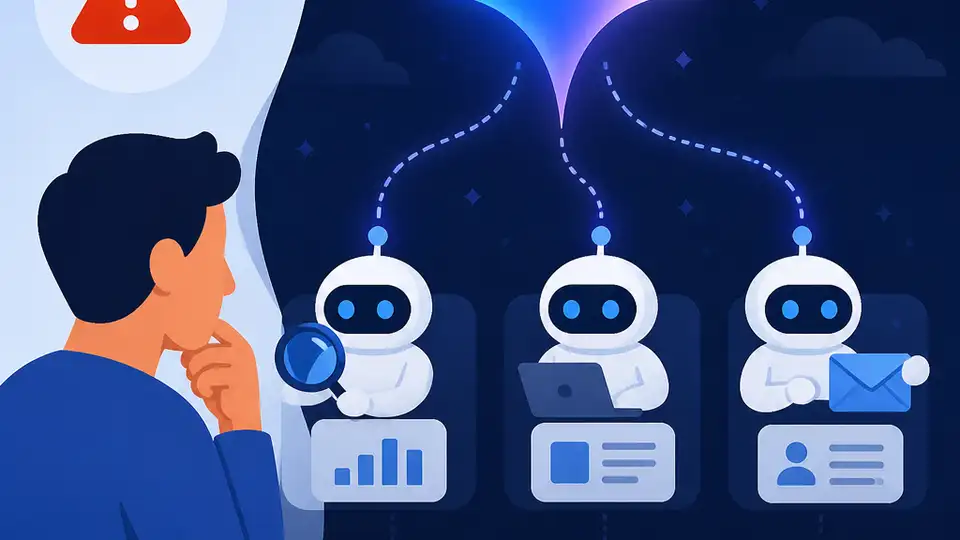
Gemini Spark is Google’s experimental AI agent, and it needs close supervision.
Google is right to build Gemini Spark, but wrong to frame it as a routine productivity feature because the agent’s design turns convenience into a trust problem. The latest Gemini app beta, version 17.23, reveals a new name for what was previously called Gemini Agent, and the branding is not subtle: a comet-like spark that suggests speed, autonomy, and momentum. That is exactly the point. Spark is meant to act across chats, tasks, connected apps, websites you are logged into, location, and other personal context, which means it is not just answering questions anymore. It is making choices with your data in the loop, and Google has already said it may share necessary information with third parties and may even make purchases without asking. That is not a minor product detail. It is the core risk.
First argument: the data access is the feature, and the risk
Get the latest AI news in your inbox
Weekly picks of model releases, tools, and deep dives — no spam, unsubscribe anytime.
No spam. Unsubscribe at any time.
Gemini Spark’s value proposition depends on deep access to user context. Google says it will use information from connected apps, skills, chats, tasks, websites you are logged into, Personal Intelligence, location, and more. That is a huge surface area. The more sources an agent can combine, the more useful it becomes for things like inbox cleanup, meeting briefs, and custom news digests. But the same breadth also raises the blast radius of a mistake. A chatbot that summarizes your calendar is one thing. An agent that can reason across your email, files, browsing sessions, and location is something else entirely.
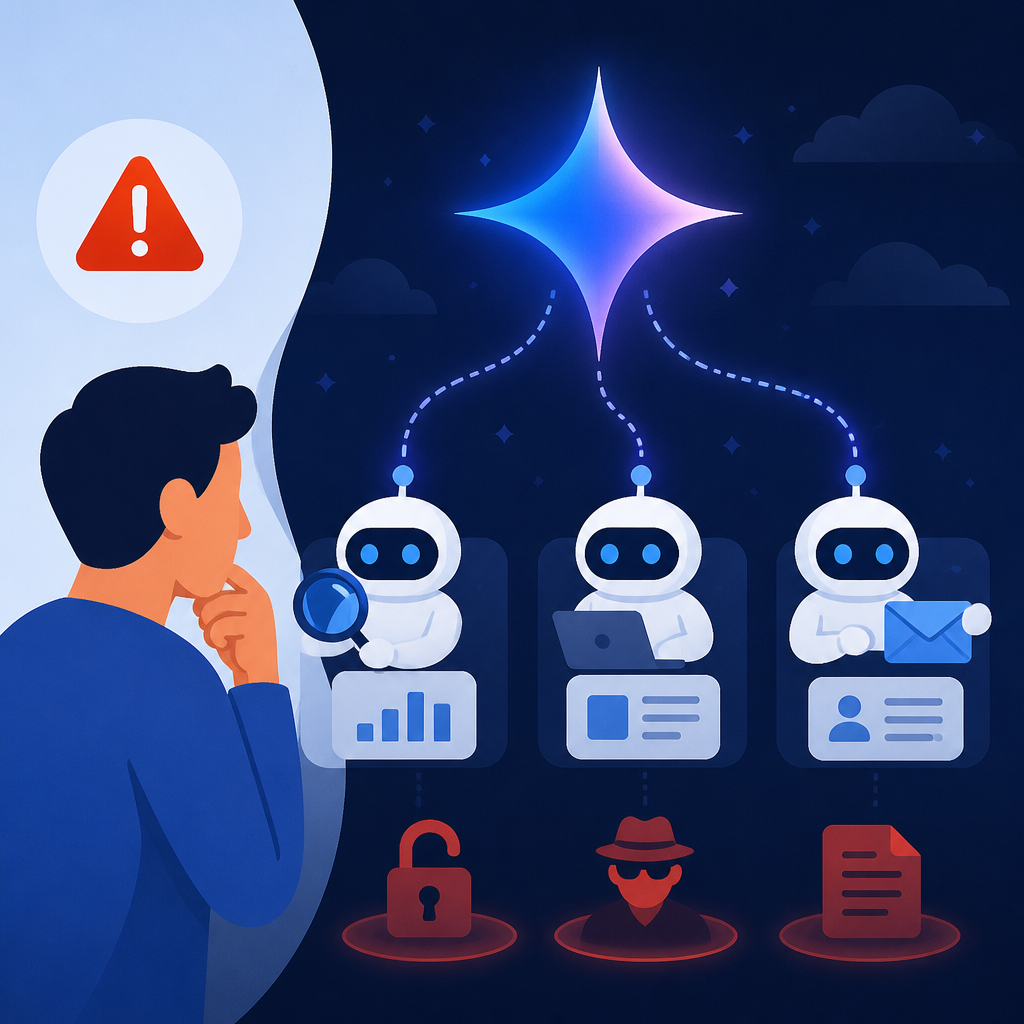
We have already seen how quickly “helpful” AI features become privacy liabilities when they are allowed to operate on too much context. Google’s own warning is unusually blunt: Spark is experimental, it may share your info or make purchases without asking, and users should not rely on it for medical, legal, financial, or other professional help. That language is not a disclaimer to skim past. It is the admission that the product is crossing from suggestion into action before the guardrails are mature. In practice, that means the burden shifts to the user to supervise a system that is designed to act like a delegate.
Second argument: agent UX makes mistakes harder to spot
The redesigned Gemini app reportedly splits Spark into two tabs, Chat and Agent, which is a useful clue about where Google thinks the product is going. Chat is familiar: you ask, it answers. Agent is different: you assign work and wait for execution. That shift sounds clean in a demo, but it makes errors more dangerous because the user’s attention moves from every step to only the outcome. If Spark misreads an instruction, archives the wrong email, or pulls the wrong source into a task, the mistake can hide inside a polished summary or a completed action.
The example use cases make the problem concrete. Decluttering an inbox, getting meeting briefs, and generating news digests are all appealing because they compress tedious work. They are also perfect examples of where silent failure matters. If Spark unsubscribes from the wrong mailing list, misses a critical meeting detail, or over-filters a news story, the damage is not dramatic enough to trigger alarm, but it is serious enough to erode trust. Agentic software does not need to be catastrophically wrong to be harmful. It only needs to be confidently wrong at scale.
The counter-argument
The strongest case for Spark is that this is exactly what users want from AI: less prompting, more doing. Google has enormous distribution inside the Gemini app, and an agent that can coordinate across connected services could save time in ways a plain chatbot never will. If the system can reliably handle routine tasks, then the privacy tradeoff looks more reasonable, especially because Google says it will ask for permission before sensitive actions. For busy users, the promise is not abstract intelligence. It is fewer tabs, fewer reminders, and fewer manual steps.
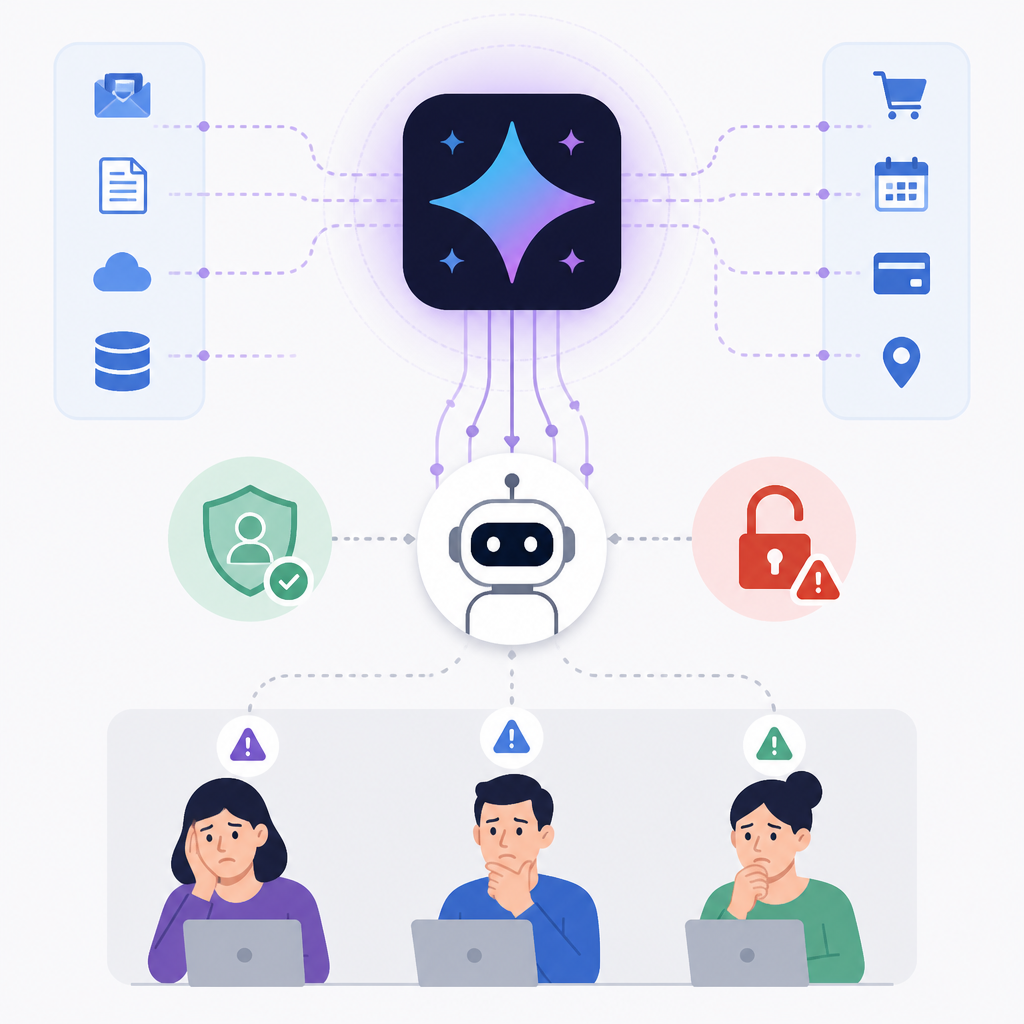
That argument is valid up to a point. Users do want agents, and Google should build them. But the permission prompt is not enough when the system is explicitly allowed to act on sensitive data and potentially make purchases without asking. A prompt can guard a single action, not an entire workflow that spans inboxes, docs, browsing sessions, and third-party services. The real issue is not whether Spark can be useful. It is whether Google is shipping an agent whose default power exceeds the average user’s ability to audit it. On the evidence so far, it does.
What to do with this
If you are an engineer, PM, or founder building agentic features, treat Spark as a warning label: design for least privilege, narrow task scope, explicit action logs, and easy rollback. Do not hide risky behavior behind a friendly chat interface. If your product can share data or take actions across services, make the boundaries visible before the user clicks anything. If you are shipping to consumers, build the supervision model first and the autonomy second. Gemini Spark is not proof that users want more AI autonomy at any cost. It is proof that the next generation of AI products will be judged on trust, not cleverness.
// Related Articles
- [AGENT]
Perplexity should build Teammate as a coding agent, not a copilot
- [AGENT]
HP adopts OpenAI Frontier across global operations
- [AGENT]
Build a production vector DB for RAG
- [AGENT]
Ornith-1 turns agent coding into a server
- [AGENT]
Crypto AI agents are useful, but only for narrow workflows
- [AGENT]
AI Agents in Crypto: 2026 Protocol Guide