Blockchain in AI: Real Use Cases Across Industries
Real blockchain-AI deployments in healthcare, finance, and supply chains show how trusted data improves audits, forecasting, and automation.
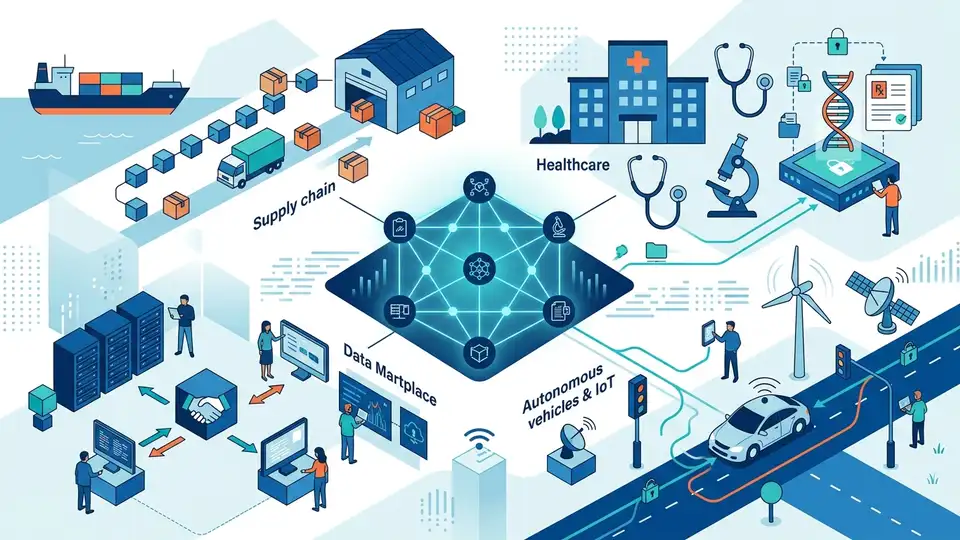
In healthcare, finance, and supply chains, the same problem keeps showing up: AI needs data it can trust, and organizations need a record of who touched that data and when. That is where blockchain and AI meet in practice, not theory.
The most useful deployments do two things at once. Blockchain keeps records time-stamped and harder to tamper with, while AI turns those records into predictions, flags, and automated decisions. The result is less guesswork in systems where bad data can become a regulatory headache or a patient-safety issue.
This matters because the strongest blockchain-AI projects are not flashy demos. They are systems built around audit trails, access control, and data provenance, then paired with models that can detect fraud, forecast shortages, or triage clinical risk. That combination is already visible in real deployments, and the pattern is consistent across industries.
Why blockchain and AI fit together
Get the latest AI news in your inbox
Weekly picks of model releases, tools, and deep dives — no spam, unsubscribe anytime.
No spam. Unsubscribe at any time.
AI systems fail fast when the underlying data is messy, incomplete, or impossible to verify. Blockchain does not fix every data problem, but it gives teams a shared record of events, permissions, and updates that is much easier to audit than a stack of disconnected databases.
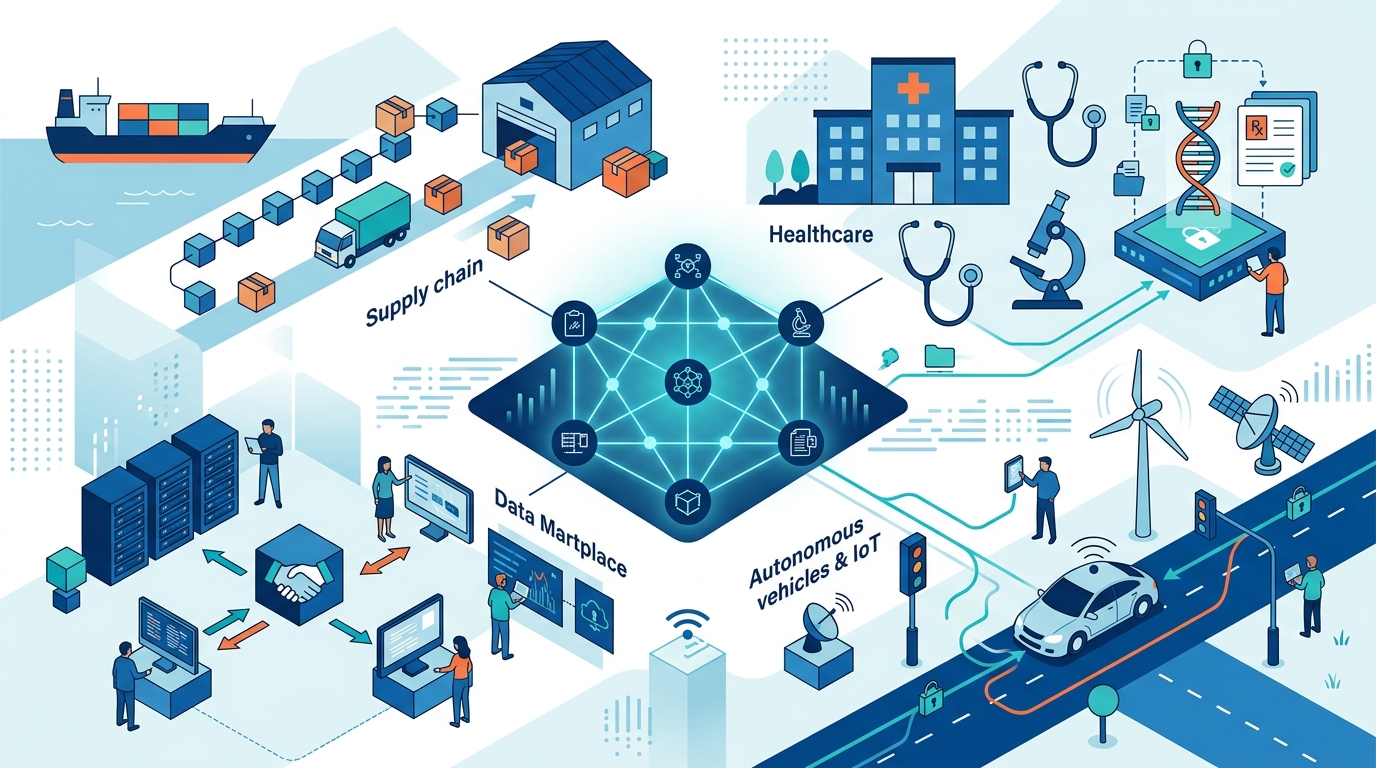
In production environments, that matters more than the marketing pitch. A hospital, bank, or logistics firm needs to know where a record came from, who changed it, and whether the change was authorized. AI then uses that trusted trail for classification, anomaly detection, forecasting, and workflow automation.
The practical value usually comes from four things: data integrity, consent management, operational automation, and security monitoring. Put together, those capabilities make it easier to use sensitive data without handing over control of it.
- Immutable logs create tamper-evident history for records and events.
- Permissioned access lets organizations share only what is allowed.
- AI can scan the same event trail for fraud, drift, or unusual behavior.
- Smart contracts can trigger policy-based actions with fewer manual steps.
That combination also helps with compliance. In systems designed with least-privilege access, encryption, and clear stewardship rules, blockchain-backed audit trails can support privacy obligations tied to frameworks such as GDPR and HIPAA.
Healthcare: where trust in data matters most
Healthcare is one of the clearest places to study blockchain in AI because the data is sensitive, fragmented, and constantly moving between providers, labs, payers, and researchers. A system that can record consent and access while still letting AI analyze verified data has obvious value.
One common pattern is to store hashes, references, and access policies on-chain while keeping large files off-chain in secure storage. That gives teams a tamper-evident ledger without forcing clinical images or records directly onto the chain. AI can then use verified data for radiology triage, risk scoring, and population health analysis.
Patient-controlled consent is another major use case. In healthcare, consent is a technical rule, not a paperwork form. Blockchain-based permissioning can log every access attempt, while AI monitors for strange access patterns that may signal insider risk or compromised credentials.
“The future of healthcare is not about replacing doctors with machines, but about using data and AI to augment human judgment.” — Dr. Eric Topol, Deep Medicine
That quote fits the blockchain-AI story well. The goal is not to turn medical records into a public database. The goal is to make verified data usable without stripping away consent, provenance, or accountability.
Real-world healthcare implementations often focus on patient-owned records and decentralized sharing. Companies such as Akiri have worked on secure healthcare data exchange, while Medicalchain has promoted patient-controlled medical records. The details differ, but the logic is the same: trusted data first, AI second.
- Blockchain-backed EHR systems can reduce record manipulation risk.
- Consent logs help hospitals show who accessed data and why.
- AI can use longitudinal records for more personalized clinical analysis.
- Trial logs can preserve timestamps for consent, protocol changes, and results.
Clinical trials are another good example. Immutable logging helps preserve trust in consent, protocol updates, and outcomes, while AI can analyze validated trial data for safety signals and dropout risk. Pharmaceutical supply chains also benefit because counterfeit drugs and missed handoffs are both traceability problems and data quality problems.
Finance: shared records, faster checks
Finance uses blockchain and AI for a simpler reason: too many parties spend too much time reconciling the same facts. Banks, insurers, and payment firms all need shared history, and AI can help them spot fraud or route exceptions faster when that history is trustworthy.
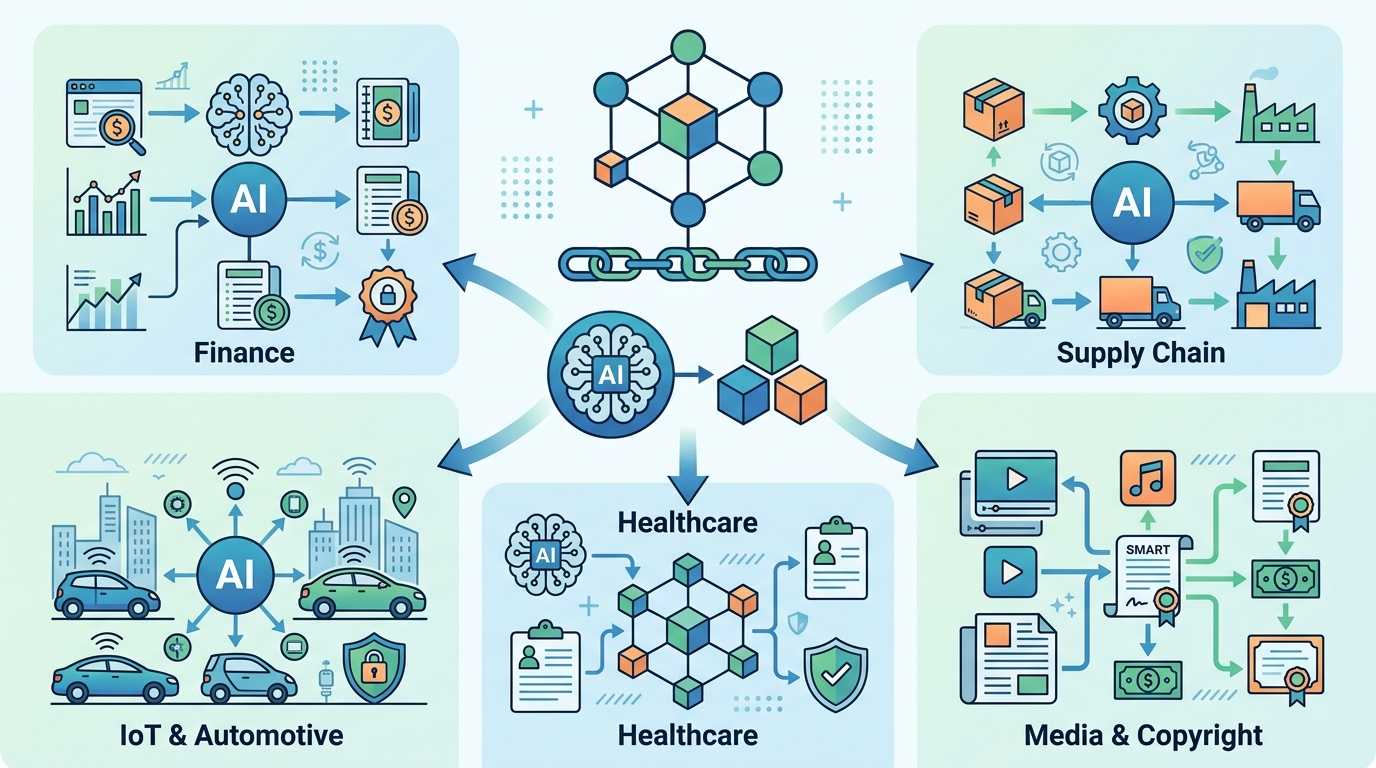
Fraud detection is the obvious starting point. Traditional systems often work with partial event histories, which makes anomaly detection noisy. A shared ledger gives AI a fuller transaction trail, so unusual behavior is easier to compare against known patterns.
Insurance claims processing shows the same dynamic. Smart contracts can automate eligibility checks, pre-authorization logic, and payment triggers, while AI classifies claims and predicts which ones need human review. That lowers friction without removing oversight.
Programmable stablecoins are another area getting attention because they can reduce cross-border payment delays and add policy controls. AI can support sanctions screening, risk scoring, and transaction monitoring, which helps compliance teams deal with scale and false positives.
- Blockchain gives finance teams a shared transaction trail with audit value.
- AI improves fraud monitoring by reading the trail in context.
- Smart contracts can cut manual steps in claims and settlement workflows.
- Programmable payments can be paired with AI-based compliance checks.
The difference between a good pilot and a useful production system often comes down to permissioning. Finance rarely wants public visibility into everything, so most serious deployments rely on permissioned networks where each participant sees only what it is allowed to see.
Supply chains: the best test for provenance
Supply chains are where blockchain’s recordkeeping value becomes very concrete. Every handoff matters, every scan matters, and every delay matters. AI can only forecast well if the event data is reliable, which is why blockchain is such a natural fit here.
Pharmaceutical traceability is the clearest example. Blockchain can record product lineage and custody changes from manufacturer to distributor to provider. AI then looks for suspicious route changes, repeated scan anomalies, or improbable timing that might point to counterfeit insertion or diversion.
Healthcare logistics adds another layer. Shortages can come from demand spikes, manufacturing problems, or transport bottlenecks. AI can forecast risk from historical consumption and delivery performance, but blockchain makes the operational events more dependable across organizations.
- Traceability improves recall handling and product authenticity checks.
- AI can flag route deviations and scan patterns that look suspicious.
- Shared records help procurement teams spot shortage risk earlier.
- Immutable event trails make supplier disputes easier to audit.
For teams building in this area, the lesson is simple: if the event trail is weak, the model will be weak too. Better provenance does not guarantee better predictions, but it gives AI a fair shot at producing something useful.
What teams should watch next
The biggest obstacle is not the idea. It is integration. Legacy systems, inconsistent schemas, cost, and governance issues can sink a project before the first model reaches production. That is why many deployments use off-chain storage for large files, permissioned networks for access control, and middleware for older systems.
There is also a timing issue. A lot of teams want AI results quickly, but blockchain projects often need careful design around identity, retention, and revocation rules. If those are vague, the system becomes hard to trust even if the model itself is accurate.
Looking ahead, the most practical growth areas are medical imaging, compliance automation, verifiable credentials, and sensor-driven monitoring. If organizations can pair trusted event data with domain-specific AI, they will get better decisions in places where mistakes are expensive.
My take: the next wave will not be about putting more data on-chain. It will be about proving which data can be trusted, which decisions can be automated, and which ones still need a human to sign off. If you are building in healthcare, finance, or logistics, that is the question worth asking first.
For a deeper look at how blockchain projects are being applied across industries, see our related OraCore.dev coverage on blockchain use cases and AI in enterprise workflows.
// Related Articles
- [CHAIN]
UAE Web3 setup turns crypto rules into a checklist
- [CHAIN]
Five AI Futurist features shaping Futurist 2026
- [CHAIN]
Regulation Now Moves Bitcoin and Ethereum More Than War
- [CHAIN]
The SEC Crypto Rule Proposal Will Clean Up Crypto, Not Kill It
- [CHAIN]
Web3 platforms need fee discipline, not token theatrics, to make money
- [CHAIN]
Riyadh’s blockchain show proves Web3 is now infrastructure