Ethereum builders propose EEZ for rollup unity
Gnosis and Zisk want an Ethereum Economic Zone to connect rollups in one transaction, as L2BEAT tracks over 20 networks and nearly $40B TVL.
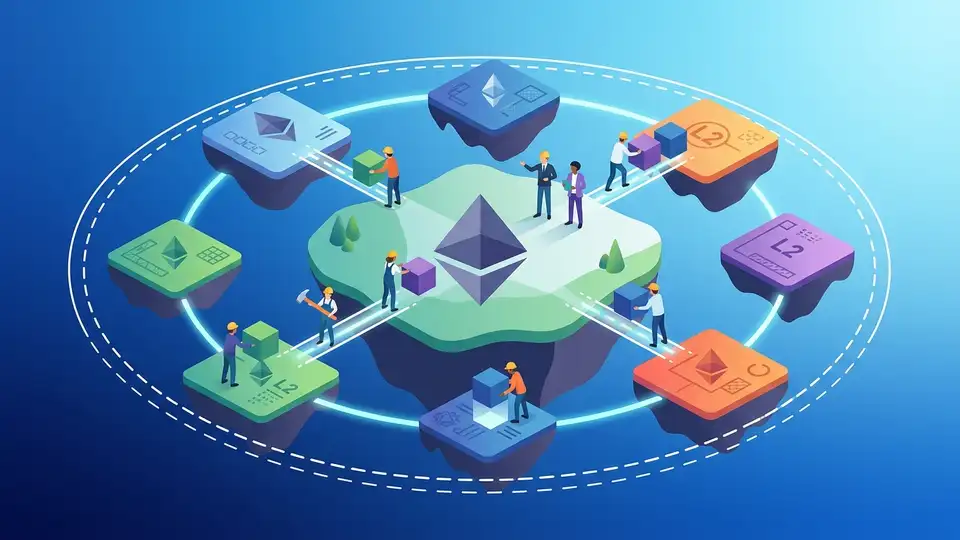
Ethereum’s layer-2 world has grown fast enough to create its own problem. L2BEAT tracks more than 20 active L2 networks with nearly $40 billion in total value locked, but that money and activity are spread across separate rollups instead of moving like one market.
Now builders from Gnosis and Zisk, with support from the Ethereum Foundation, want to fix that with a new framework called the Ethereum Economic Zone, or EEZ. The pitch is simple: let rollups talk to each other and to mainnet in a single transaction, without the usual bridge gymnastics.
What the Ethereum Economic Zone is trying to solve
Get the latest AI news in your inbox
Weekly picks of model releases, tools, and deep dives — no spam, unsubscribe anytime.
No spam. Unsubscribe at any time.
Ethereum’s scaling plan worked in the narrow sense. Rollups made transactions cheaper and faster. But the side effect is obvious if you use the ecosystem every day: liquidity is split, app state is split, and users often need to hop across chains just to do something that should feel local.
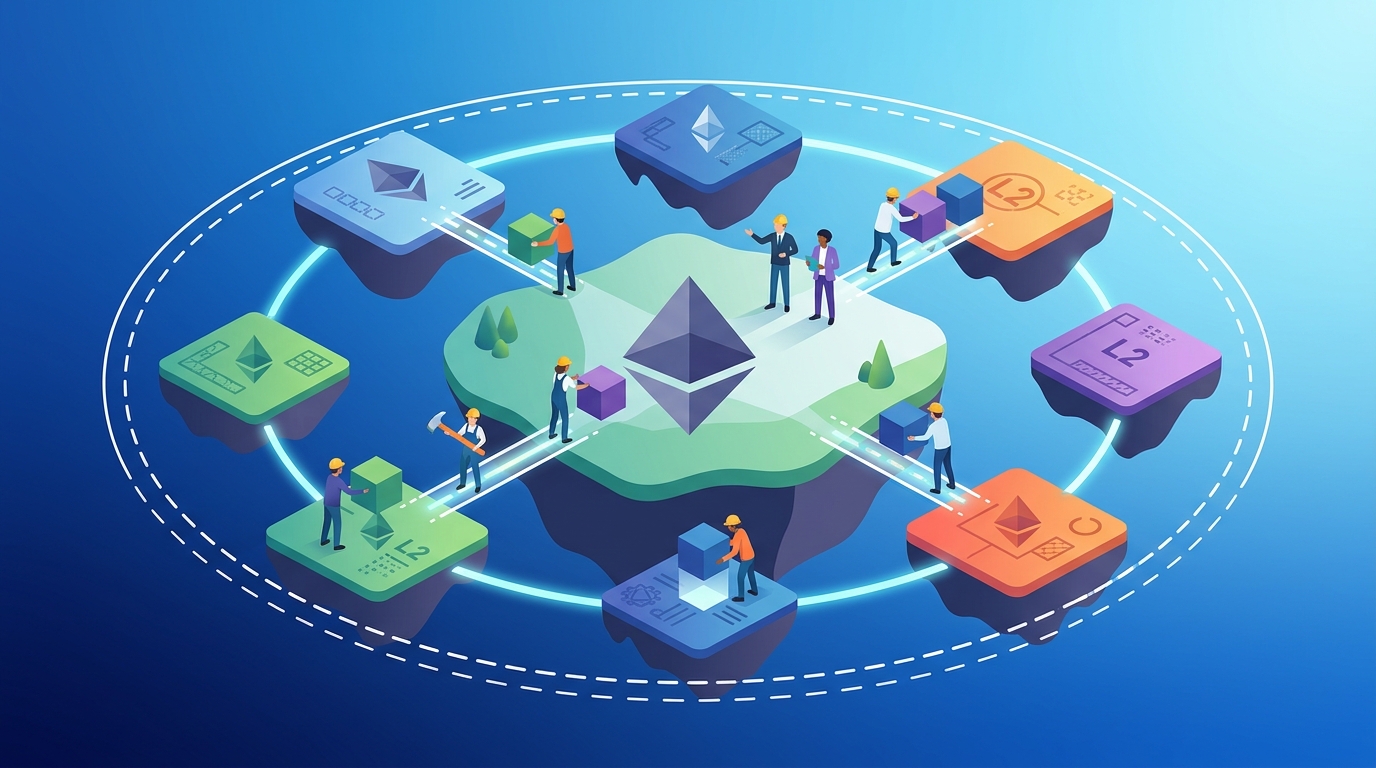
The EEZ proposal tries to make rollups behave more like parts of one economic system. Smart contracts on different rollups would execute synchronously, and applications could share infrastructure while still settling back to Ethereum. That matters because the current setup often forces developers to duplicate liquidity pools, deployment pipelines, and user-facing tooling across multiple networks.
- More than 20 active L2s are already tracked by L2BEAT.
- Nearly $40 billion in TVL sits across Ethereum rollups.
- Arbitrum, Base, and Optimism hold major shares of that activity.
- The EEZ aims to reduce bridge use by enabling cross-rollup execution in one transaction.
That last point is the one that matters most. Bridges are still one of the messiest parts of crypto UX and one of the most common attack surfaces. If EEZ can reduce how often users and apps need to rely on them, that alone would be a meaningful improvement.
The proposal also includes an EEZ Alliance, a coordination group for ecosystem participants who want to help define standards and push adoption. That detail matters because interoperability in Ethereum rarely fails for lack of ideas. It usually fails because nobody agrees on the same implementation path.
Why builders are pushing back on fragmentation now
This proposal lands in the middle of a long-running argument inside Ethereum: should rollups mainly scale the network, or should they become something closer to a shared execution layer with stronger coordination? The answer changes how apps are built, where liquidity lives, and how much complexity users have to absorb.
Vitalik Buterin has been unusually direct about his concerns. In a Feb. 3 post on X, he wrote:
“The original vision of L2s and their role in Ethereum no longer makes sense, and we need a new path.”That is a strong signal from the person who helped define Ethereum’s direction, and it explains why proposals like EEZ are getting attention now.
Buterin’s critique is not that rollups failed. It is that some of them depend on centralized sequencers and trusted bridging setups that may not fit the long-term design goals of Ethereum. If the ecosystem keeps adding rollups without better coordination, it risks turning scaling into sprawl.
That concern has created a split among builders. Some see L2s as a temporary scaling layer that still needs deeper integration. Others treat them as the main execution surface for Ethereum users. The EEZ proposal is clearly on the first side of that debate.
How EEZ compares with the current rollup model
Today, a user moving from one rollup to another usually needs a bridge, some waiting time, and a bit of trust that the transfer path is behaving correctly. Developers also have to think about where liquidity is parked, which chain hosts which app logic, and how to keep the experience from feeling like a patchwork of separate systems.

The EEZ idea changes the unit of work. Instead of treating each rollup like a mostly isolated environment, it would let contracts coordinate across rollups while still anchoring final settlement to Ethereum. That could lower the cost of fragmented liquidity and make cross-rollup apps easier to reason about.
- Current model: separate rollups, separate liquidity, separate bridging steps.
- EEZ model: coordinated rollups, shared infrastructure, direct cross-rollup execution.
- Current risk: more user friction and more bridge exposure.
- EEZ goal: fewer transfers between chains and tighter app coordination.
There is also a developer economics angle here. If apps can share infrastructure across rollups, teams may spend less time rebuilding the same stack for every chain and more time shipping features. That is the kind of change that can matter more than raw throughput numbers, especially for DeFi protocols that depend on deep liquidity and predictable execution.
For context, Arbitrum, Base, and Optimism already show how different rollups can attract distinct user bases and app ecosystems. The EEZ proposal is trying to make those differences less expensive to live with.
What happens next for Ethereum builders
The group behind EEZ says technical details and performance benchmarks are coming in the next few weeks. That is where this proposal either becomes real engineering work or stays a good idea on paper. The important questions are straightforward: can synchronous cross-rollup execution work without adding too much latency, and can it be adopted without forcing every rollup into the same design?
My read is that EEZ will matter most if it becomes a standard that app teams can use without waiting for every rollup operator to move in lockstep. If the framework needs universal adoption before it works, it will probably stall. If it can start with a few high-activity networks and prove useful, it could reshape how Ethereum apps think about chain boundaries.
For builders, the practical takeaway is simple: watch the benchmarks, watch the alliance members, and watch whether major L2s treat EEZ as a coordination layer or as another optional experiment. If the next round of specs shows lower friction for cross-rollup apps, the question stops being whether Ethereum has too many L2s and becomes which ones can cooperate well enough to feel like one system.
For now, the proposal is a reminder that Ethereum’s scaling story is moving from raw capacity to coordination. The next big test is whether the ecosystem can make rollups feel connected without erasing what makes them useful in the first place.
// Related Articles
- [CHAIN]
UAE Web3 setup turns crypto rules into a checklist
- [CHAIN]
Five AI Futurist features shaping Futurist 2026
- [CHAIN]
Regulation Now Moves Bitcoin and Ethereum More Than War
- [CHAIN]
The SEC Crypto Rule Proposal Will Clean Up Crypto, Not Kill It
- [CHAIN]
Web3 platforms need fee discipline, not token theatrics, to make money
- [CHAIN]
Riyadh’s blockchain show proves Web3 is now infrastructure