Ethereum’s EEZ Wants to Fix Layer 2 Fragmentation
EEZ aims to link Ethereum Layer 2s with synchronous cross-rollup calls, as $40B sits across 20+ networks.
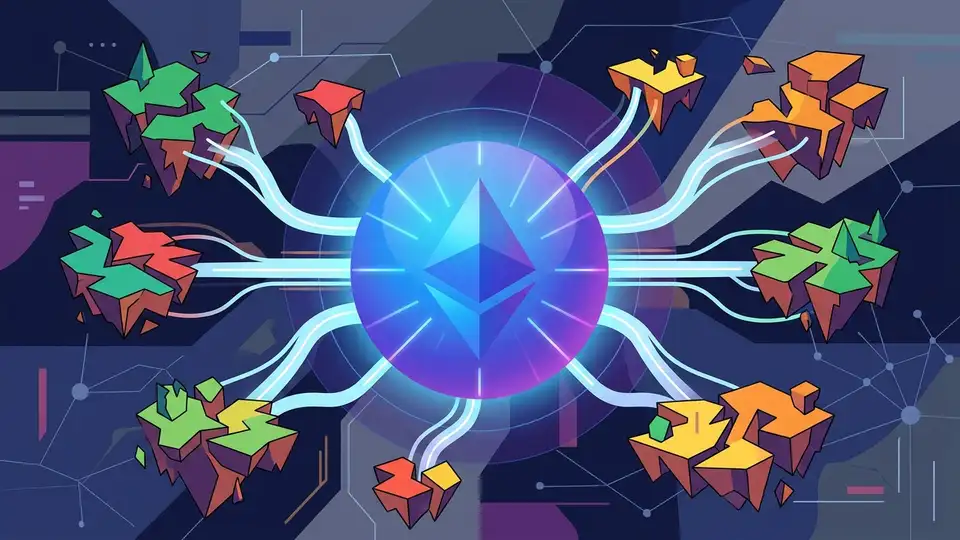
Ethereum’s Layer 2 world has grown fast, but it has also split into more than 20 separate networks holding roughly $40 billion in value. Now a new proposal called the Ethereum Economic Zone wants to make those rollups feel less like isolated islands and more like one shared system.
The pitch is simple to understand and hard to build: let smart contracts on chains like Arbitrum, Optimism, Base, zkSync, and Scroll talk to each other synchronously, without the usual bridge hops and message delays. If that works, Ethereum DeFi could regain some of the composability that made early on-chain finance so sticky.
Why Ethereum’s Layer 2 success became a problem
Get the latest AI news in your inbox
Weekly picks of model releases, tools, and deep dives — no spam, unsubscribe anytime.
No spam. Unsubscribe at any time.
Ethereum’s scaling strategy worked in the narrow sense: activity moved off mainnet, fees dropped, and users got more options. But the result is a patchwork of rollups with separate liquidity pools, different gas tokens, and app experiences that often do not line up cleanly.
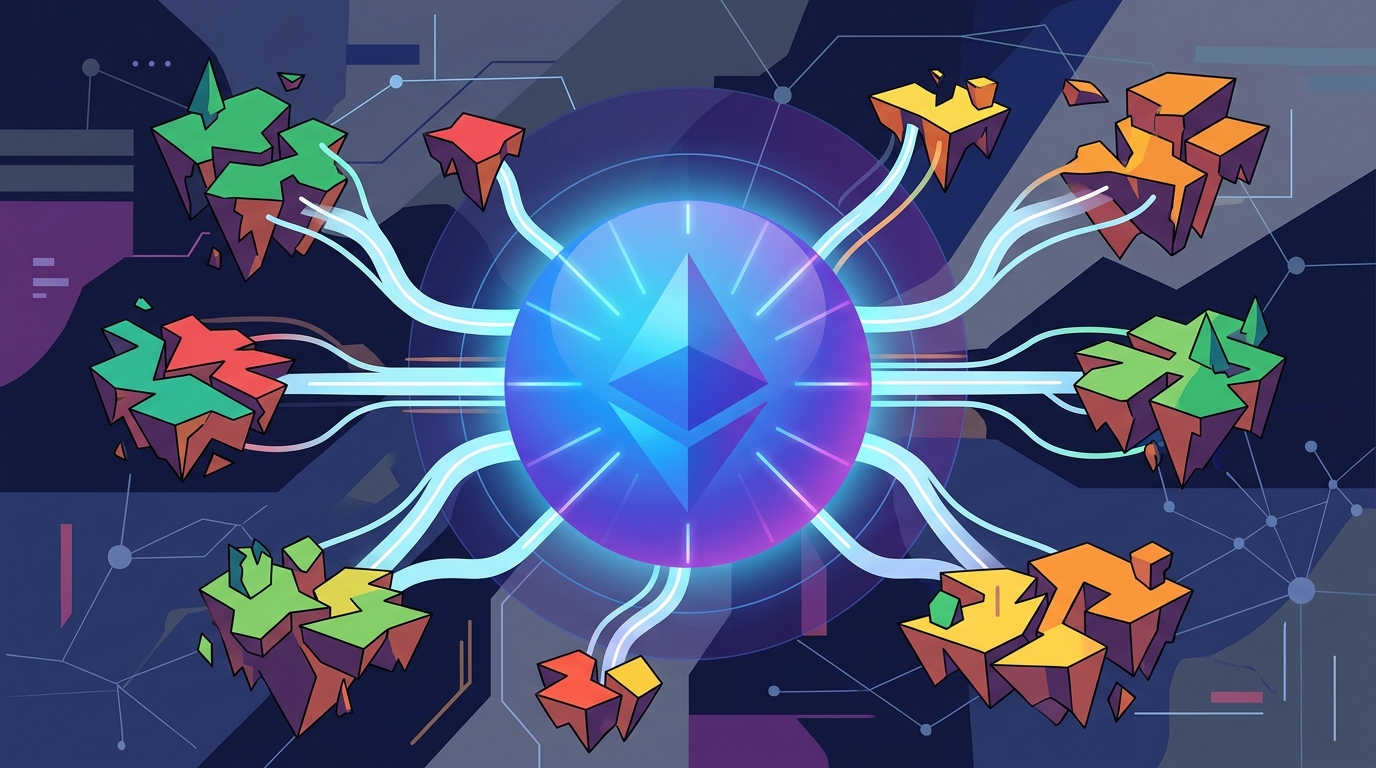
The numbers in the announcement make the issue hard to ignore. Ethereum mainnet still holds about $106.57 billion in total value locked, while the combined TVL across Layer 2s is around $40 billion. That is a lot of capital spread across networks that mostly do not share state in real time.
For developers, this creates practical friction. A lending protocol on one rollup cannot easily call a contract on another rollup in the same atomic transaction. For users, that means more bridging, more waiting, and more chances to make a costly mistake.
- More than 20 Ethereum Layer 2 networks are active today.
- Combined Layer 2 TVL is about $40 billion.
- Ethereum mainnet TVL is about $106.57 billion.
- Cross-rollup actions today usually depend on bridges or delayed message passing.
What the EEZ is trying to do
The EEZ proposal, announced at EthCC in Cannes, is being developed by Gnosis co-founder Friederike Ernst and Zisk founder Jordi Baylina, with support from the Ethereum Foundation. The goal is to create synchronous cross-rollup composability, which is a fancy way of saying contracts on different Layer 2s could interact in one transaction.
That matters because Ethereum’s early DeFi boom depended on atomic execution. One smart contract could call another, and the whole transaction either worked or failed together. Once activity split across rollups, that clean behavior got replaced by slower, messier coordination.
Baylina says Zisk’s proving stack can verify Ethereum blocks in real time, which would provide the technical base for this kind of cross-rollup execution. That is a big claim, and it is one the ecosystem will want to see backed by hard benchmarks rather than slideware.
“Ethereum doesn’t have a scaling problem. It has a fragmentation problem,” Friederike Ernst said in a press release.
That quote gets to the heart of the proposal. The EEZ is not trying to kill Layer 2s or pull everything back to mainnet. It is trying to make Layer 2s cooperate without forcing every team to give up its own product strategy.
The Ethereum Foundation’s own messaging has been moving in the same direction. In its March 23 blog post, the foundation described Layer 1 as a “truly permissionless and maximally resilient global hub for settlement, shared state, liquidity, and DeFi,” while Layer 2s are expected to focus on differentiated features instead of pure scaling.
How EEZ compares with today’s rollup model
To understand why this matters, it helps to compare the current setup with what EEZ promises. Today, most cross-chain actions are asynchronous. They depend on bridges, relayers, or waiting periods that break the feeling of one shared application layer.
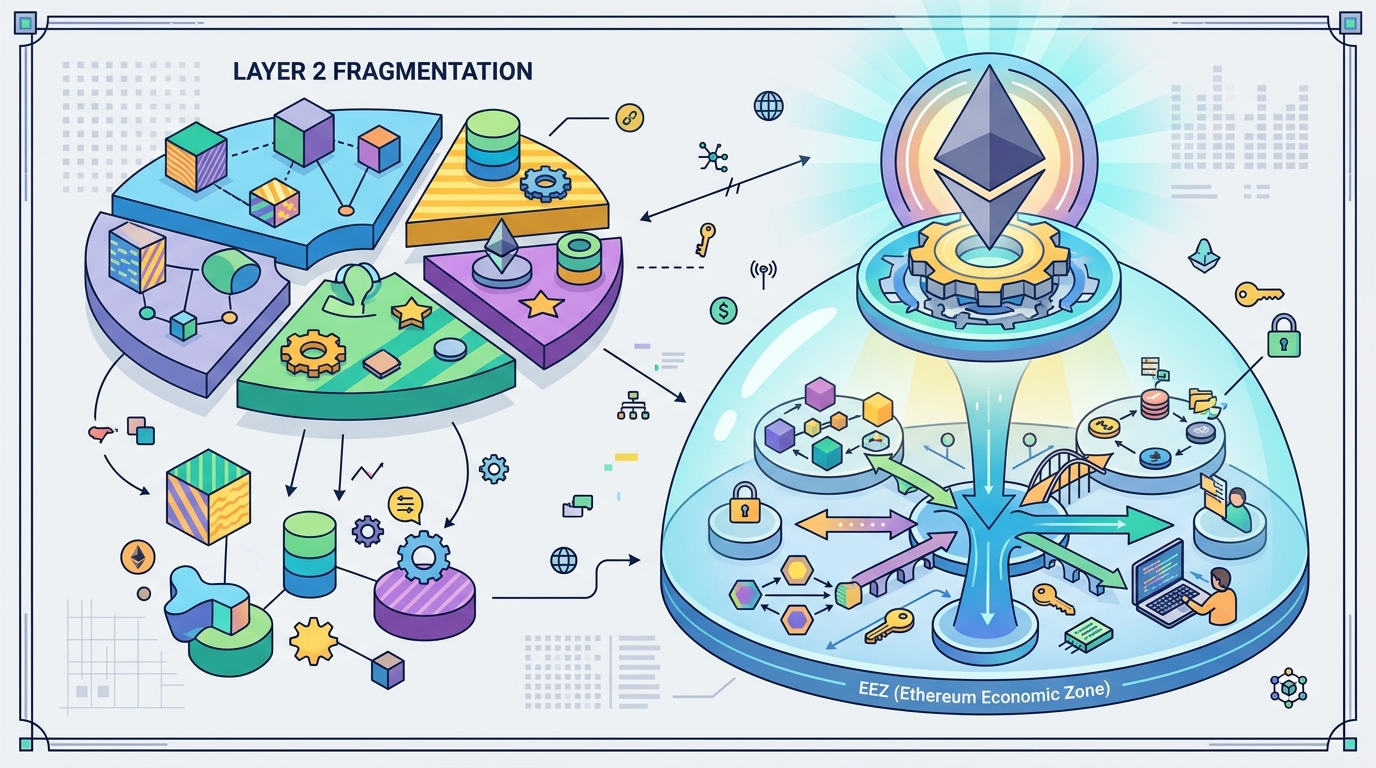
EEZ wants to move that experience closer to what developers are used to on a single chain. The difference is not cosmetic. In finance, atomicity is the difference between a trade that clears cleanly and a trade that leaves users exposed to timing risk.
- Today: cross-rollup interactions usually require bridges or delayed messages.
- EEZ goal: synchronous contract calls across rollups in one transaction.
- Today: liquidity is split across many isolated pools.
- EEZ goal: a shared economic layer with less capital trapped in silos.
The comparison with monolithic chains like Solana is obvious. Solana sells a simpler user experience because state lives in one place. Ethereum’s answer has been modular scaling, but modular systems can become harder to use when the modules do not coordinate well enough.
That is why the EEZ idea is interesting even if it is still early. It tries to keep Ethereum’s modular design while reducing the user pain that modularity created.
The real test is coordination, not branding
The hard part is adoption. Independent Layer 2 teams have spent real money and time building their own brands, governance, and ecosystems. Asking them to align around a shared framework is a political problem as much as a technical one.
The announcement says an EEZ Alliance has already formed to drive adoption, with technical specs and performance benchmarks expected in the coming weeks. That next release matters more than the slogan. If the benchmarks show real-time verification at useful throughput, the proposal gets serious. If not, it becomes another ambitious Ethereum coordination story that never leaves the conference stage.
There is also market context to consider. At the time of the report, ETH was trading around $1,997, down more than 1% in 24 hours, while the Crypto Fear & Greed Index sat at 9, deep in extreme fear. That tells you traders are focused on macro pressure and risk control, not on long-horizon infrastructure design.
Still, infrastructure shifts often matter most when the market is distracted. If Ethereum can reduce rollup fragmentation without forcing teams into a single winner-take-all chain, it could make DeFi easier to use and easier to build on.
For now, the smartest reading is cautious optimism. The EEZ proposal is important because it names the problem correctly: Ethereum did not run out of demand, it ran into coordination overhead. The next question is whether Zisk’s benchmarks can prove that synchronous cross-rollup execution is practical at the scale Ethereum needs.
If those numbers land well, the conversation changes from “Can Layer 2s work together?” to “Which apps will be the first to build on top of them?”
// Related Articles
- [CHAIN]
Web3 Communication Is Becoming Trust Infrastructure
- [CHAIN]
Why Base’s x402 Protocol Matters More Than the $100M Milestone
- [CHAIN]
Gala Games Finds New Life in Web3 Gaming
- [CHAIN]
Why Lace 2.0 Matters More Than Cardano’s Next Hard Fork
- [CHAIN]
Why Ethereum Treasury Buying Is Becoming a Bad Long-Term Bet
- [CHAIN]
Yakovenko Warns AI Could Crack PQC Wallets