Ethereum’s New Rollup Plan Aims to End L2 Friction
Gnosis, Zisk, and the Ethereum Foundation launched EEZ, a rollup framework that lets chains share composability without bridges.

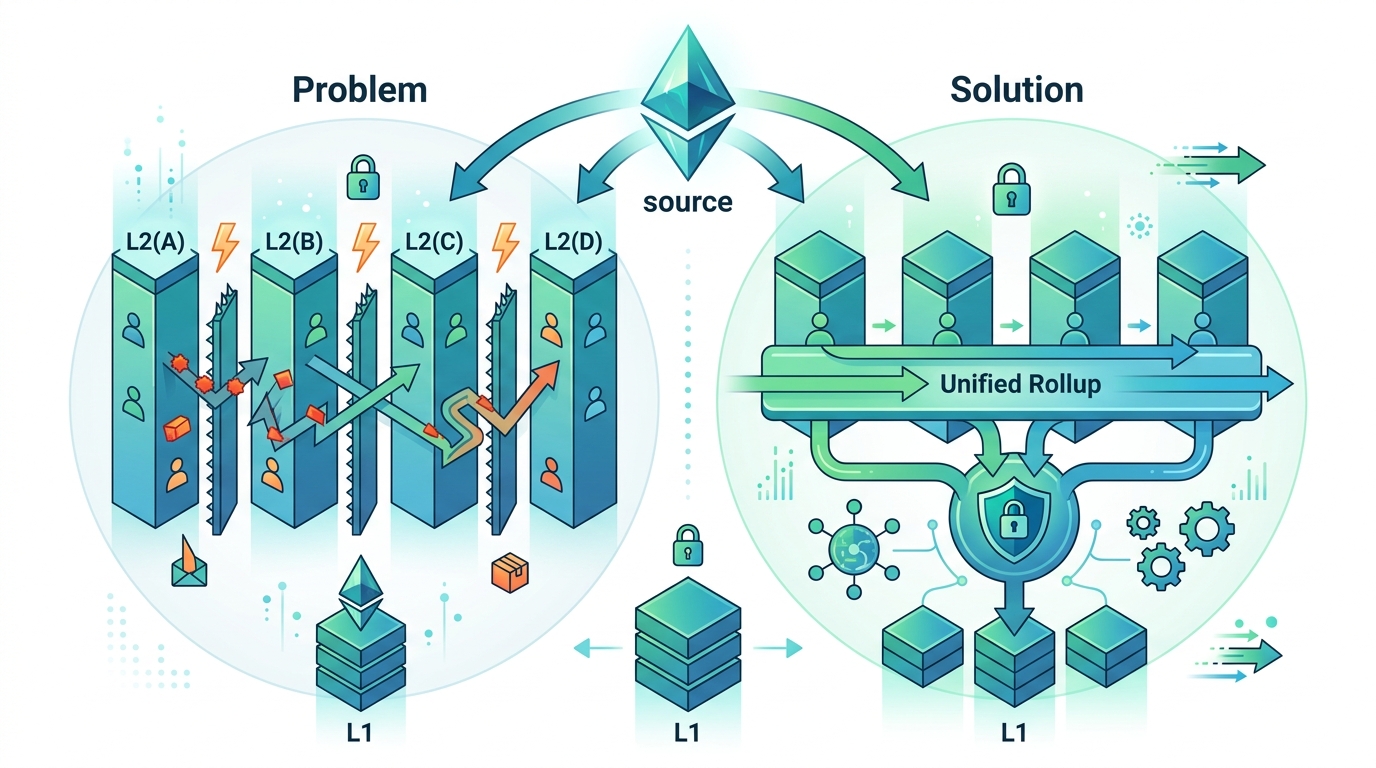
Ethereum’s layer-2 boom solved one problem and created another. The network now has so many rollups that liquidity, apps, and users often feel split across islands, and new L2s have been launching about every 19 days through 2024 and 2025.
At EthCC in Cannes, Gnosis, Zisk, and the Ethereum Foundation introduced a new framework called the Ethereum Economic Zone, or EEZ, that tries to make those islands feel like one system.
What EEZ is trying to fix
Get the latest AI news in your inbox
Weekly picks of model releases, tools, and deep dives — no spam, unsubscribe anytime.
No spam. Unsubscribe at any time.
The core problem is simple: Ethereum scaled by pushing activity onto rollups, but each rollup often behaves like its own mini-chain. That creates friction for users and developers who want apps to talk to each other without extra steps, extra trust, or extra waiting.

EEZ tries to make contracts on connected rollups call contracts on mainnet or other EEZ chains inside a single transaction. In plain English, that means a user could move through multiple apps without bouncing through a bridge in the middle.
This matters because bridge flows are where a lot of crypto UX goes to die. They add delays, extra fees, and a bigger attack surface. If EEZ works as advertised, it removes a layer of ceremony from cross-chain activity.
- Announced at EthCC in Cannes on Sunday
- Backed by Ethereum Foundation co-funding
- Uses ETH as the default gas token
- Requires no new bridging infrastructure
- Designed for synchronous composability across connected chains
Why Zisk matters here
The technical weight behind EEZ comes from Zisk founder Jordi Baylina, who previously created the Circom zero-knowledge programming language and co-founded Polygon’s zkEVM team before launching Zisk as an independent project in 2025. That background matters because EEZ depends on proving and verification speed, not just a branding exercise.
Baylina says his proving stack can verify Ethereum blocks in real time. If that claim holds up in production, it could make synchronous composability feel less like a research goal and more like a usable product.
“No one has the motivation to make your dreams come true. You have to do it yourself.” — Vitalik Buterin
That quote from Vitalik Buterin fits the mood around Ethereum’s scaling story. The ecosystem has spent years outsourcing complexity to rollups, and now it is trying to stitch that complexity back together without giving up the gains.
The timing is also telling. Buterin said earlier this year that the original L2-heavy scaling vision “no longer makes sense,” pointing to slow decentralization progress and the fact that Ethereum base-layer transactions now cost fractions of a cent. EEZ is a direct answer to that tension.
Who is backing the alliance
EEZ is not just a protocol proposal. It comes with an alliance that already includes some recognizable names from DeFi and infrastructure. The founding members include Aave, Titan, Beaver Build, Centrifuge, and xStocks.
That mix is interesting because it spans lending, block building, real-world assets, and tokenized equities. In other words, the people signing up are the ones who care deeply about liquidity routing and transaction ordering, not just abstract interoperability.
The project will be organized as a Swiss non-profit, and all code will be open source. That structure gives EEZ a public-interest story, but it also sets a high bar for transparency and delivery.
- Optimism Superchain already targets cross-rollup coordination
- Polygon AggLayer aims to unify liquidity across chains
- The Ethereum Foundation’s own Interop Layer also targets chain-to-chain communication
- EEZ claims an edge through real-time zero-knowledge proving
- EEZ avoids new bridge infrastructure by design
How EEZ compares with other attempts
EEZ enters a field that is already crowded with serious work. Optimism’s Superchain, Polygon’s AggLayer, and the Ethereum Foundation’s Interop Layer all try to reduce the pain of fragmented rollups. The difference is in how much trust each system asks users to accept.
EEZ’s pitch is that real-time zero-knowledge proofs can remove some of the trust assumptions that other interoperability designs still carry. That is a bold claim, and it is also the kind of claim crypto engineers will stress-test immediately.
Here is the practical comparison:
- Superchain focuses on shared standards and coordination across OP Stack chains
- AggLayer aims to aggregate liquidity and state across many chains
- Interop Layer is Ethereum-native and still evolving
- EEZ wants synchronous composability in a single transaction
- EEZ uses ETH as the default gas token, which keeps it closely tied to Ethereum’s base economics
The most important number in this story may be the launch cadence itself. If a new L2 appears every few weeks, then interoperability is no longer a nice-to-have feature. It is the price of admission for Ethereum’s scaling model.
That also explains why the Ethereum Foundation’s co-funding matters. The foundation paused its open grants program in mid-2025 to reduce annual burn, so any renewed funding effort signals that the team sees fragmentation as more than a minor inconvenience.
What happens next
EEZ will live or die on whether it can prove real-time block verification in a way developers can actually use. The idea is elegant, but Ethereum infrastructure has a long history of elegant ideas colliding with messy production reality.
If Zisk’s proving stack performs as claimed, EEZ could become a template for how rollups coordinate without forcing users through bridge-heavy workflows. If not, it will join the long list of interoperability projects that solved part of the problem and left the hardest bits for later.
My bet: the next six to twelve months will tell us whether EEZ becomes a serious standard for Ethereum apps or just another interoperability layer with good intentions. The real test is simple: will major apps prefer one shared transaction path over the bridge flow they already know?
For now, EEZ is the clearest sign yet that Ethereum’s rollup era is entering a second phase, one where the question is no longer how to add more chains, but how to make them behave like part of the same system.
// Related Articles
- [CHAIN]
Web3 Communication Is Becoming Trust Infrastructure
- [CHAIN]
Why Base’s x402 Protocol Matters More Than the $100M Milestone
- [CHAIN]
Gala Games Finds New Life in Web3 Gaming
- [CHAIN]
Why Lace 2.0 Matters More Than Cardano’s Next Hard Fork
- [CHAIN]
Why Ethereum Treasury Buying Is Becoming a Bad Long-Term Bet
- [CHAIN]
Yakovenko Warns AI Could Crack PQC Wallets