Meta’s Manus breakup proves AI deals don’t outrun regulators
Meta’s Manus unwind shows that AI acquisitions cannot outrun state control or data jurisdiction.

Meta’s Manus unwind shows that AI acquisitions cannot outrun state control or data jurisdiction.
Meta should never have treated Manus as a normal cross-border acquisition, because the deal was always hostage to Chinese regulatory power and data control.
That is the hard lesson in Meta’s June 2026 move to cut Manus off from internal systems after Beijing ordered the $2 billion acquisition unwound. Manus had been folded into Ads Manager, tied into Meta workflows, and promoted as an autonomous agent for reporting, research, and campaign analysis. But the moment China’s National Development and Reform Commission decided the transaction violated foreign investment and technology export rules, the supposed permanence of the deal vanished. A company can relocate its headquarters to Singapore and still remain inside Beijing’s reach.
Regulators now control the end of the deal, not the buyer
Get the latest AI news in your inbox
Weekly picks of model releases, tools, and deep dives — no spam, unsubscribe anytime.
No spam. Unsubscribe at any time.
The first reason this matters is simple: the power to approve a transaction is no longer the same as the power to preserve it. Manus launched in March 2025, Meta acquired it in December 2025, and by April 2026 the NDRC had ordered the parties to unwind the transaction. That is not a routine compliance headache. It is a statement that Chinese authorities can reverse a consummated AI deal after the money has moved and the product has shipped.
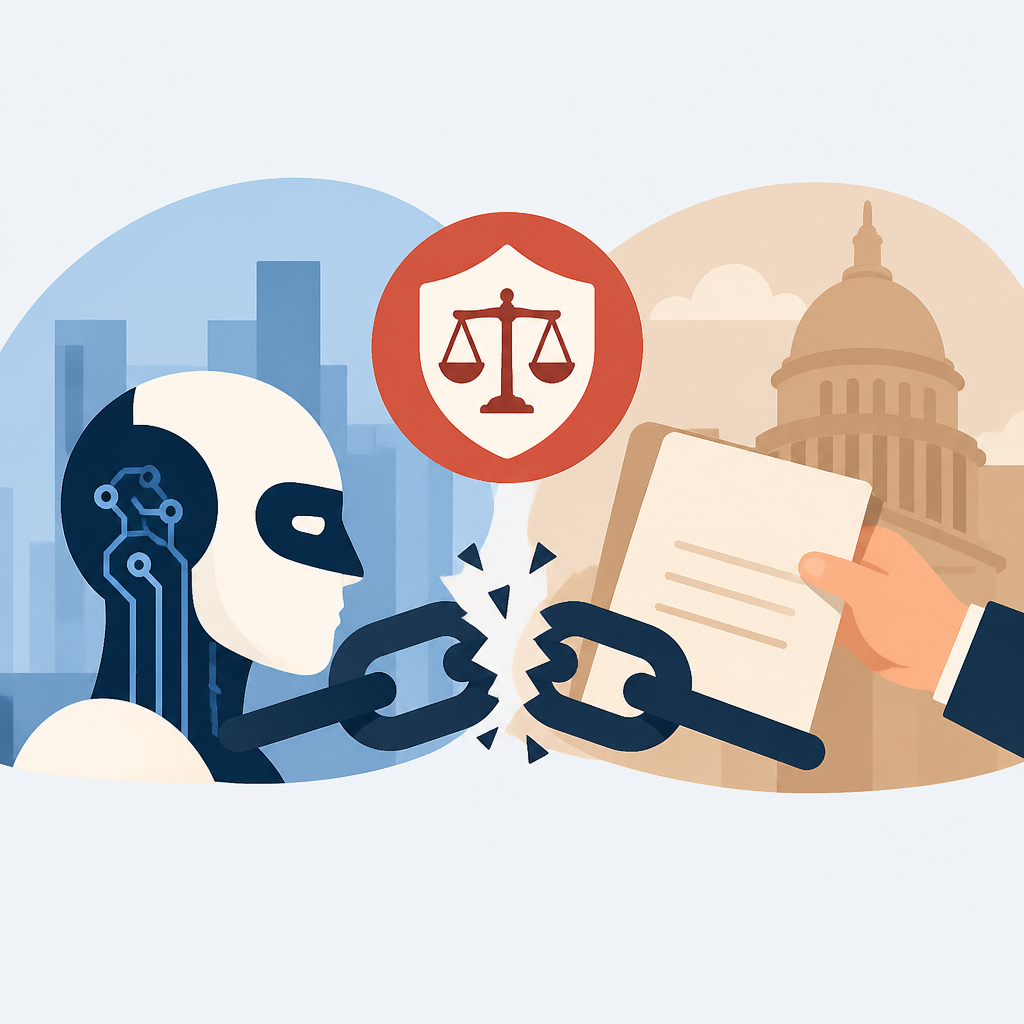
The mechanics of that reversal make the point even sharper. Meta had already integrated Manus into Ads Manager, and the company had already distributed proceeds to investors such as Tencent, ZhenFund, and HSG. Once those cash flows are out the door, unwinding becomes messy, slow, and politically charged. The buyer does not get final say over the fate of the asset. The regulator does.
AI products are now judged as data infrastructure
The second reason is that Manus was never just a product, it was a data pipe. Meta did not buy a chatbot with a nice interface. It bought an agent that could browse the web, write code, manage files, and connect into advertising operations. That is why the shutdown of access to Meta’s internal data systems is so consequential: once an agent sits inside operational workflows, the real asset is not the model alone but the flow of data it can touch.
Meta’s own rollout shows how quickly that data layer mattered. By February 2026, Manus had a dedicated shortcut in Ads Manager, placed alongside core business tools. The platform also connected to Similarweb, Shopify, Gmail, GitHub, Instagram, and Meta’s ad accounts. That web of integrations is exactly why regulators care. The value of agentic AI is not abstract intelligence; it is privileged access to business systems, customer data, and ad operations. When that access is cut, the product loses much of its strategic value.
Offshore incorporation is not a shield
The third reason this case matters is that the old playbook of moving a headquarters abroad to simplify a sale has failed in public. Manus’s parent moved key staff and its corporate base to Singapore to smooth international investment and eventual exit. That maneuver was supposed to create distance from Chinese oversight. It did not work. Beijing treated the transaction as subject to its rules anyway.

That has consequences far beyond Manus. Founders who think a Singapore registration or a U.S. holding structure will neutralize domestic control are reading the map wrong. If the core technology, founders, talent, or IP still originate in China, regulators can assert leverage. The lesson is not that offshore structures are useless. The lesson is that they are no longer enough when national security review becomes the governing frame. For AI companies with cross-border ambitions, jurisdiction follows substance, not branding.
The counter-argument
Defenders of the acquisition will say the market still needs these deals. AI talent is concentrated, product cycles are short, and capital wants exposure to the best agentic systems wherever they are built. From that angle, Meta’s purchase of Manus looked rational: secure a fast-rising agent platform, fold it into a global ad stack, and accelerate commercialization before rivals do. A world this competitive rewards speed, not caution.
There is also a practical argument for cross-border exits. If founders cannot sell to the best bidder because of geopolitical friction, innovation gets trapped inside national silos. That would hurt startups, investors, and users who benefit from broader distribution and deeper capital pools. In that view, Beijing’s order is less a principled intervention than a distortion that punishes efficient allocation.
That counter-argument fails on the central fact of this case: the deal was never free of state power, so pretending it was a clean market transaction was the mistake. AI systems are now strategic infrastructure, and jurisdictions will treat them that way. I accept one limit here - cross-border deals can still work when the technology, ownership chain, and data rights are clearly outside the reach of a hostile regulator. Manus was not that case. It had Chinese origins, Chinese founders, Chinese scrutiny, and a product deeply embedded in business data. Once those conditions existed, the unwind was not an anomaly. It was the predictable outcome.
What to do with this
If you are a founder, stop assuming that incorporation solves sovereignty. Map your real exposure before you sell: where the IP lives, where the founders live, which data the product touches, and which regulators can still pull a lever after closing. If you are a PM or engineer, design your integrations so they can be detached without breaking the product, because the buyer’s dream of seamless embedding can turn into a compliance liability overnight. And if you are a founder planning an exit, price political risk into the deal from the start, because in AI, the closing date is no longer the end of the story.
// Related Articles
- [IND]
Helix brings $10B to AI infrastructure buildouts
- [IND]
DOE should turn its land into AI infrastructure fast
- [IND]
Xiaomi MiMo Code tops Claude Code on 200-step tasks
- [IND]
OpenAI’s Ona buy adds more reach to Codex
- [IND]
The US should set tokenization rules now, or lose the market
- [IND]
SEC Rule Changes Could Unlock Tokenized Stocks