SEC Rule Changes Could Unlock Tokenized Stocks
I break down the SEC’s NMS rule rollback and what it could mean for tokenized stocks, DeFi pools, and best execution.

The SEC’s rule rollback could make tokenized stocks easier to trade in DeFi.
I've been watching tokenized stocks get pitched like they’re already here. Every deck says the same thing: put equities on-chain, let AMMs do the routing, and the market will magically become more open. But when I actually tried to map that idea onto U.S. market rules, it got messy fast. The problem wasn’t the token. The problem was the plumbing around the token. If a tokenized stock is supposed to behave like a stock, then the market structure rules still bite. If it’s supposed to behave like a synthetic asset, regulators get nervous. And if it’s supposed to live inside DeFi without any of the old market constraints, then you’re basically asking the SEC to pretend the last 20 years of equity regulation never happened.
This ForkLog piece, “SEC to Lay Groundwork for Tokenization of Stocks”, is what made the tension obvious for me. It ties the SEC’s proposed rollback of Regulation NMS rules 611 and 610(e) to the tokenized-stocks story, and it also reminds us that Hester Peirce has already cooled expectations around an “innovation exemption” for synthetic assets. That combination matters. It’s not a hype signal. It’s a rules signal. And the rules are where these projects either become real or stay in demo-land.
The real story is market plumbing, not token graphics
Get the latest AI news in your inbox
Weekly picks of model releases, tools, and deep dives — no spam, unsubscribe anytime.
No spam. Unsubscribe at any time.
The SEC has proposed rescinding two key rules of Regulation NMS. The initiative aims to reduce market participants’ costs and encourage innovation.
What this actually means is the SEC is not saying, “Go build tokenized stocks.” It’s saying, “We may stop forcing equity markets to obey two specific constraints that have been in place for 20 years.” That’s a very different statement. Rule 611 is the trade-through rule. Rule 610(e) limits certain quote displays that can block or cross prices on other exchanges. If you’ve ever worked on trading systems, you know this is not some abstract policy tweak. This is the part that decides how orders get routed, what prices count, and who gets to ignore what.

I’ve seen a lot of tokenization pitches hand-wave this part away. They focus on issuance, custody, or “fractional ownership,” then skip straight to the pretty UI. But tokenized stocks don’t become useful because a Solidity contract exists. They become useful when the surrounding execution logic is legally and operationally compatible with the asset. That’s why this proposal matters more than another press cycle about “real-world assets.”
How to apply it: when you evaluate a tokenized-equity project, ask which market rule it depends on. If the answer is “none,” that’s usually marketing. If the answer is “we need a rule change, a pilot, or a no-action path,” now we’re talking about something real.
For the original context on Regulation NMS, I’d keep the SEC’s own overview handy: Regulation NMS. The rulebook is old, but it still controls a lot of the conversation.
Rule 611 is the part DeFi keeps tripping over
“An AMM cannot halt a trade because the price is better on Nasdaq. Once the rules are rescinded, tokenized stocks can legally trade in DeFi pools,” Thorn explained.
That quote from Alex Thorn at Galaxy Digital is the sharpest line in the whole ForkLog article because it gets to the actual friction. AMMs are dumb in the good sense. They don’t look up and ask what Nasdaq is doing. They price against their own pool math. That’s the point. But U.S. equity market structure is built around the idea that you should not execute at a worse price if a better displayed price exists elsewhere. That’s the trade-through problem in plain English.
What this actually means is DeFi liquidity pools and U.S. equity execution rules are philosophically at odds. One system wants local deterministic pricing. The other wants market-wide price protection. You can’t just slap both together and call it a new asset class. If the SEC really rescinds Rule 611, it removes one of the biggest legal blockers to letting tokenized stocks behave like on-chain assets instead of pretending they’re still just off-chain shares with a new wrapper.
I ran into this exact mismatch when I tested an internal prototype for tokenized instruments. The on-chain logic was fine. The execution assumptions were not. The contract could swap. The compliance layer could not explain why a better quote on a traditional venue should be ignored. That’s the kind of problem that kills pilots quietly, long before users ever see them.
- AMMs need deterministic execution rules.
- Equity markets need best-price protections.
- Tokenized stocks sit awkwardly between those two models.
How to apply it: if you’re building tokenized-equity infra, design for the compliance story first. Don’t ask, “Can this pool swap shares?” Ask, “What rule am I relying on to make this execution acceptable?” That question is where the architecture gets honest.
If you want a neutral reference point for AMMs, Uniswap’s docs are a decent starting place: Uniswap Docs. They show exactly how far AMM logic is from traditional equity routing.
Best execution is friendlier than it sounds, but it is not a free pass
Instead of strict restrictions, the SEC plans to adopt a flexible approach based on the principle of “best execution” of trades.
“Best execution” sounds like regulatory jazz, but it’s actually the bridge here. It means the party executing the trade has to make a reasonable effort to get the best outcome for the client, considering price, speed, likelihood of execution, and other factors. That’s looser than a hard trade-through prohibition, but it’s not a blank check. It shifts responsibility from “obey this exact routing rule” to “prove your execution logic was reasonable.”
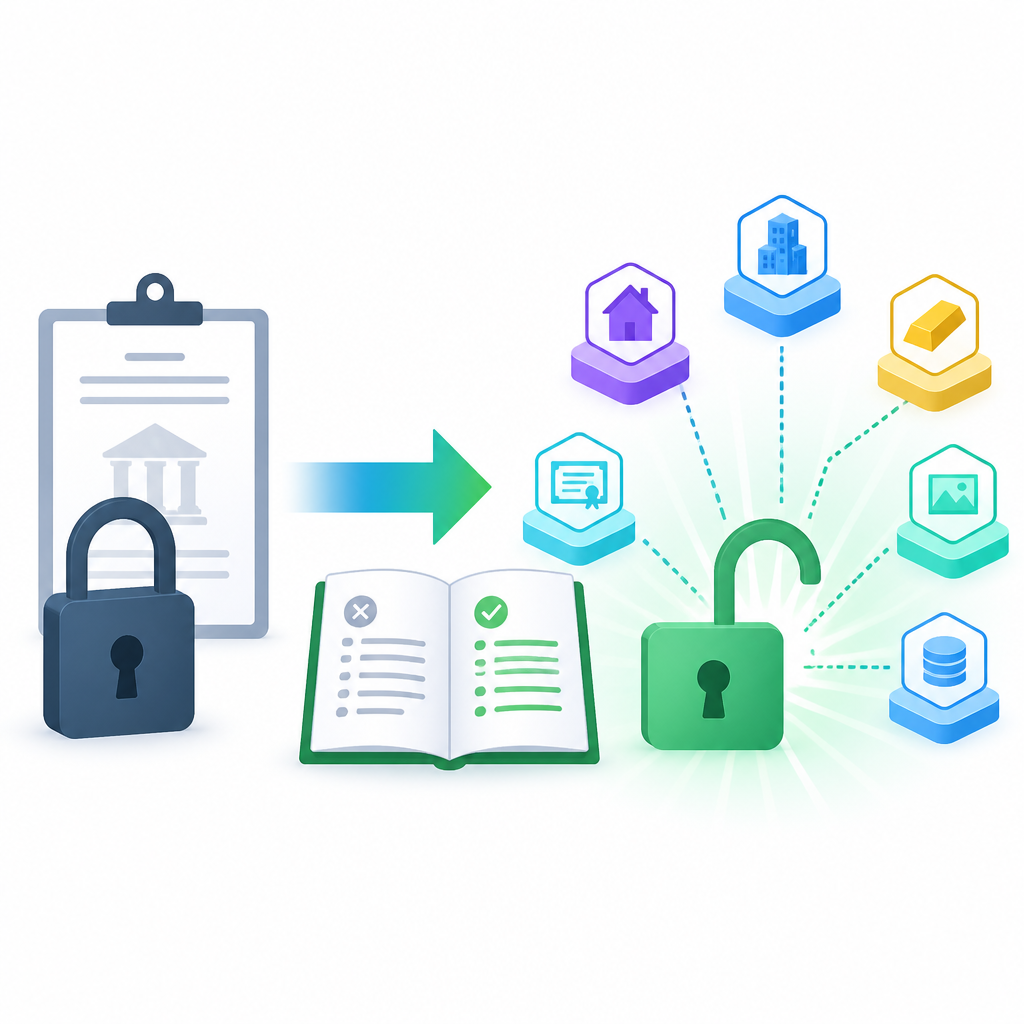
That matters a lot for tokenized stocks because it changes the question from “Is DeFi banned?” to “Can a DeFi venue show it acted responsibly?” That is a much more buildable problem. It opens space for pilot programs, venue-specific controls, and execution policies that can be audited after the fact. I actually prefer this framing because it forces teams to document their decisions instead of hiding behind protocol mythology.
Here’s the catch: best execution is not the same as “whatever the smart contract does is fine.” If you’re the venue, broker, or intermediary, you still need a policy. You need monitoring. You need exceptions. You need a way to explain why a tokenized-stock trade was routed to a pool instead of a traditional venue, or vice versa. That’s boring, but boring is what gets financial products through the door.
How to apply it: write your execution policy before you write the token contract. Seriously. Decide what counts as a better outcome, how you measure slippage, what venues you compare, and when the system falls back to a safer path.
- Define your routing inputs.
- Define your fallback venues.
- Define your audit trail.
For a practical reference on best execution in U.S. markets, the SEC’s investor material is a useful anchor: SEC Best Execution.
Hester Peirce is warning people not to overread the signal
In May, SEC Commissioner Hester Peirce urged the crypto industry to temper expectations regarding an “innovation exemption” for trading tokenized stocks. She stated that the regulator does not plan to allow the issuance of synthetic assets.
This is the part people keep trying to skip. Peirce is not promising a blanket permission slip. She’s pushing back on the idea that the SEC will simply bless synthetic stock exposure because the word “innovation” got attached to it. That’s the important distinction. Tokenized stocks can mean actual shares represented on-chain, or they can mean synthetic exposure that tracks a share price. Those are not the same thing, and regulators know it.
What this actually means is the SEC may be open to structural experimentation, but not to pretending synthetic instruments are the same as securities held through proper market rails. That kills a lot of lazy product pitches. Good. A lot of these pitches were just derivatives with a nicer font anyway.
I’ve seen teams blur this line on purpose because it makes the product easier to explain. “Tokenized stock” sounds cleaner than “synthetic exposure instrument with redemption constraints.” But compliance people don’t care about the slide deck. They care about settlement, custody, transfer restrictions, and whether the thing is actually a security, a derivative, or something even uglier.
How to apply it: separate your product into three buckets before you ship anything.
- What is the underlying asset?
- What is represented on-chain?
- What legal claim does the holder actually have?
If you can’t answer those cleanly, your tokenized-stock project is still a brochure. For background on Hester Peirce’s public role, I’d link her SEC profile directly: SEC Commissioner Hester Peirce.
The SEC is hinting at pilots, which is where the real work starts
Until then, the Commission may launch pilot projects on tokenization, granting participants temporary exemptions from existing rules.
Pilots are where regulators stop talking in abstractions and start testing edge cases. And honestly, that’s the only place tokenized stocks are going to get sorted out. A pilot can answer questions that whitepapers never do: Who is the intermediary? What happens when the token and the reference asset diverge? Who bears liability when execution quality degrades? What happens on weekends, during halts, or when the oracle is late?
What this actually means is the SEC may be willing to create a sandbox, but only a narrow one. Temporary exemptions are not permanent permission. They are controlled experiments. That’s good news if you’re building, because pilots create a path. It’s bad news if you were hoping to launch a synthetic stock market on Monday and ask forgiveness on Friday.
I like pilots because they force teams to stop arguing about ideology and start logging behavior. In a pilot, you can see whether the product works under actual market stress. You can measure what the smart contract did, what the compliance layer reported, and where the user experience collapsed. That’s the kind of evidence regulators can use.
How to apply it: if you’re a builder, design your system as if a pilot review packet will exist. Include:
- execution logs
- price comparison records
- custody and transfer controls
- exception handling
That packet is not busywork. It is the product. If you want an example of how regulators think about sandboxing, the SEC’s fintech work is worth reading: SEC FinHub.
What I’d build if I were shipping tokenized stocks tomorrow
If I were building this now, I would stop trying to create a universal tokenized-stock standard and instead build for a very narrow compliance lane. One venue. One asset class. One execution policy. One audit trail. That’s it. The minute you try to support every market and every jurisdiction, you end up with a compliance swamp and a product nobody can approve.
The ForkLog article makes the direction pretty clear: the SEC is exploring structural changes, not issuing a full blessing. So the smartest move is to design something that can survive a pilot, explain best execution, and avoid synthetic-asset confusion. That means hard constraints, not flexible slogans.
How to apply it: build the first version as if it will be reviewed by a very tired lawyer who hates surprises. Because it will.
I’d also keep a close eye on market-structure commentary from places like Galaxy Research and the SEC’s own rulemaking docket, because those are the places where the story will actually move. The hype feeds are usually late.
The template you can copy
# Tokenized Stock Pilot Blueprint

## 1) Asset definition
- Underlying asset: [ticker / security name]
- On-chain representation: [share-backed token / receipt token / synthetic exposure]
- Holder rights: [redemption / transfer / none]
- Custody model: [qualified custodian / broker-dealer / other]

## 2) Execution policy
- Venue list: [DEX / AMM / broker / ATS / exchange]
- Best-execution factors:
  - price
  - speed
  - likelihood of execution
  - fees
  - settlement risk
- Routing rule:
  - compare available venues at order time
  - route to the venue with the best documented outcome
  - log every rejected route and why it was rejected

## 3) Compliance controls
- KYC/AML gate: [yes/no]
- Jurisdiction blocks: [list]
- Transfer restrictions: [list]
- Sanctions screening: [provider]
- Market-hours logic: [24/7 / session-based / hybrid]

## 4) Pilot monitoring
- Price reference source: [primary market / consolidated tape / oracle]
- Slippage threshold: [x%]
- Divergence alert: [token price vs reference price]
- Halt logic: [when to pause trading]
- Incident response owner: [name / team]

## 5) Audit packet
For every trade, store:
- timestamp
- order size
- quoted venues
- executed venue
- execution price
- reference price
- reason for routing decision
- exception notes

## 6) Launch checklist
- Legal review completed
- Custody model approved
- Execution policy signed off
- Pilot exemption documented
- User disclosures published
- Escalation path tested

## 7) Copy-ready disclosure
This product is a pilot for tokenized stock execution.
It does not promise synthetic stock issuance.
All trades are subject to the venue’s execution policy.
Users should understand custody, transfer, and redemption terms before trading.
The reason I’d start here is simple: most tokenized-stock projects fail because they treat compliance like a footer. It’s not a footer. It’s the architecture. If the SEC really keeps moving toward pilot programs and a best-execution model, this is the shape of the system that can actually survive contact with regulators.
Source attribution: I broke this down from ForkLog’s article at forklog.com/en/sec-to-lay-groundwork-for-tokenization-of-stocks/. Anything beyond the quoted material and linked references is my own interpretation, not ForkLog’s wording.
// Related Articles
- [IND]
Anthropic’s suspension turns AI release into policy
- [IND]
Helix brings $10B to AI infrastructure buildouts
- [IND]
DOE should turn its land into AI infrastructure fast
- [IND]
Xiaomi MiMo Code tops Claude Code on 200-step tasks
- [IND]
OpenAI’s Ona buy adds more reach to Codex
- [IND]
The US should set tokenization rules now, or lose the market