Mistral Moves Coding Agents to the Cloud
Mistral’s Vibe now runs coding agents in the cloud with Medium 3.5, async PRs, and sandboxed sessions.

Mistral moved Vibe coding agents into cloud sandboxes with Medium 3.5.
AI coding agents used to feel like a very attentive pair-programmer on your laptop: useful, but always in the way. Mistral changed that on April 29, 2026, when it announced remote coding agents for Mistral's Vibe platform, powered by Mistral Medium 3.5.
The pitch is simple: start work from the Mistral Vibe CLI or Le Chat, let the agent run in the cloud, and review the pull request when it finishes. That shifts coding agents from synchronous babysitting to asynchronous execution, which is a much better fit for refactors, test generation, dependency upgrades, and bug fixes.
| Metric | Value | Why it matters |
|---|---|---|
| SWE-Bench Verified | 77.6% | Shows strong issue-fixing performance |
| API pricing | $1.5 / $7.5 per million tokens | Sets the cost for input and output |
| Self-hosting | As few as 4 GPUs | Makes private deployment realistic |
| Language support | 24 languages | Useful for global teams |
What Mistral changed in Vibe
Get the latest AI news in your inbox
Weekly picks of model releases, tools, and deep dives — no spam, unsubscribe anytime.
No spam. Unsubscribe at any time.
Before this update, a coding agent often lived inside your local terminal session. You kicked off a task, watched it work, and stepped in whenever it hit a decision point. That model works for small edits, but it gets messy when the job takes 20 minutes, when you need five tasks running at once, or when you want to leave the machine and come back later.
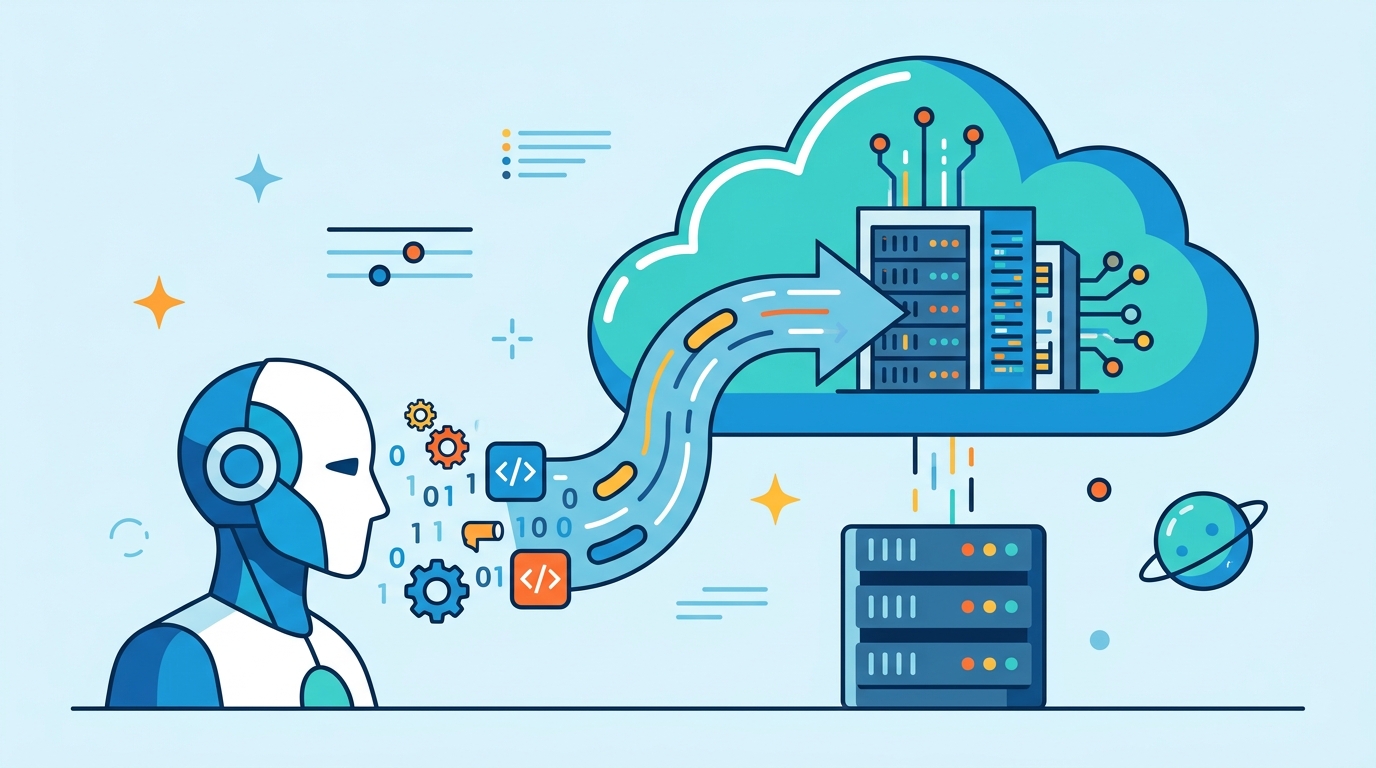
Mistral's new setup moves the execution layer into cloud sandboxes. Each session runs in isolation, so dependency installs, wide file edits, and long-running jobs do not interfere with other work on the machine. The company also added what it calls session teleporting: if you begin locally and then step away, the task state, session history, and pending approvals move to the remote environment.
- Tasks can run asynchronously while you do something else.
- Multiple sessions can run in parallel.
- Finished work lands as a GitHub pull request.
- Session state transfers from local terminal to cloud infrastructure.
That last part matters more than it sounds. A lot of agent demos look good until the user has to restart a session because the terminal closed, the laptop slept, or the context went stale. Mistral is trying to remove that friction by making the cloud the default execution home while keeping the CLI as the control surface.
Medium 3.5 is the model behind the switch
Mistral Medium 3.5 is now the company's flagship dense model for chat, reasoning, coding, and agentic work. That is a shift from Mistral's earlier pattern of splitting duties across separate models such as Medium 3.1, Magistral, and Devstral 2. In practice, that means one system now handles the broad set of tasks that used to require model switching.
The model includes configurable reasoning effort per request, native function calling, JSON output, and support for 24 languages. Mistral is clearly betting that developers want one model that can answer a quick prompt, inspect a repo, and then carry a coding task through to a pull request without changing tools.
“Mistral's release reflects vendors competing to own the cloud execution surface for coding agents. Async, parallel sessions in isolated sandboxes move agent runtime off the developer's laptop and into infrastructure that procurement, security, and platform teams now have to govern.” — Mitch Ashley, VP and practice lead for software lifecycle engineering at The Futurum Group
Ashley's point gets to the real story. Benchmarks matter, but the operational details matter more once agents start touching production-adjacent codebases. Where the session runs, how it is isolated, and how approvals are tracked are the questions that security and platform teams will ask first.
How Medium 3.5 compares on paper
Mistral says Medium 3.5 scores 77.6% on SWE-Bench Verified, a benchmark built around real GitHub issues in open-source repositories. That puts it ahead of Devstral 2 and models like Qwen 3.5 397B in the company's framing. It is also priced aggressively on the API side at $1.5 per million input tokens and $7.5 per million output tokens.
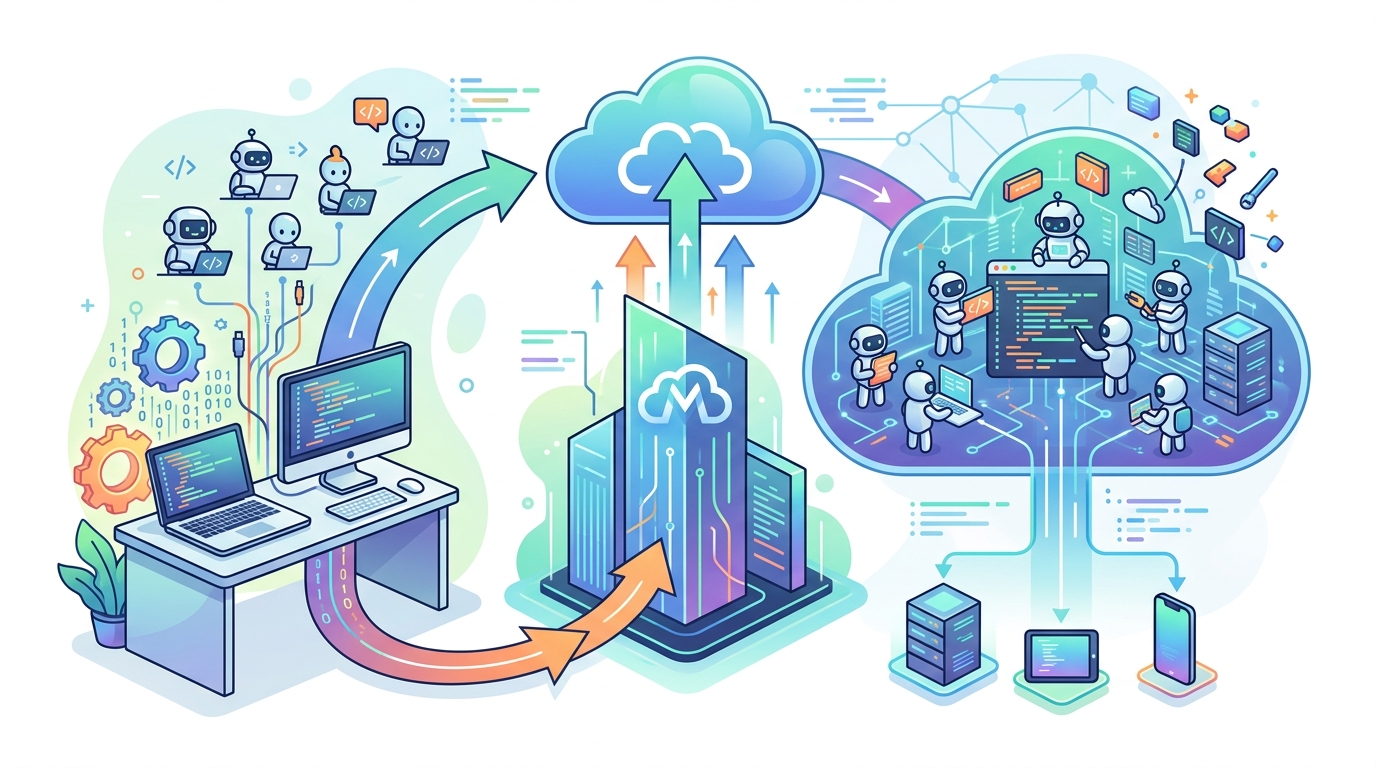
For teams thinking about deployment, the self-hosting number is just as important as the benchmark. Mistral says the model can run on as few as four GPUs, and the weights are available on Hugging Face under a modified MIT license. That license is worth reading closely, because it differs from the Apache 2.0 terms Mistral used before and adds exceptions for high-revenue companies.
- 77.6% SWE-Bench Verified suggests the model is competitive on real issue fixing.
- $1.5 input pricing and $7.5 output pricing keep API use relatively affordable.
- Four-GPU self-hosting lowers the bar for private deployments.
- 24-language support helps distributed teams use one system across regions.
For comparison, the important shift is not just that Mistral has another model. It is that the model now matches an execution model built for enterprise use: isolated sessions, GitHub integration, and a path from prompt to pull request without forcing the developer to babysit every step.
Where Vibe fits in a real engineering stack
Vibe is not trying to replace your issue tracker, chat app, or observability tool. It plugs into GitHub for code and pull requests, Linear and Jira for issues, Sentry for incidents, and Slack or Teams for reporting. The idea is to keep the agent close to the systems teams already use instead of creating a separate workflow island.
The practical use cases are the ones most teams already spend time on: module refactors, test generation, dependency upgrades, CI investigations, and bug fixes. Those jobs are repetitive, but they still need context. By letting agents run longer and in parallel, Mistral is aiming at throughput, not magic. That is why the cloud move matters more than a flashy demo.
If this sounds familiar, it should. OpenAI, Anthropic, and Cursor already push coding help in this direction. Mistral's difference is mostly in how tightly it ties the agent to Le Chat and the CLI while keeping a self-hostable, enterprise-friendly model in the mix.
The unanswered questions are the ones that usually show up after the launch hype fades. Long-running memory across sessions still needs careful handling, especially when work stretches over days. Regulated industries will also care about where code is processed, since remote agents mean code travels through Mistral infrastructure by default.
Why this matters for engineering teams
The big change here is not that Mistral has an agent. It is that Mistral is treating the cloud as the natural place for agent execution, with the laptop reduced to a control panel. That makes coding agents easier to run in parallel, easier to govern, and easier to hand off between humans and machines.
For engineering leaders, the immediate question is whether your team wants agents as helpers or as an execution layer. If you are only using them for quick autocomplete-style tasks, the cloud setup may feel like overkill. If your team wants agents to own entire chunks of routine engineering work, Mistral's model makes a lot more sense.
My read: the companies that get value from this first will be the ones with clear review rules, strong repo hygiene, and a willingness to let agents work while humans do something else. The next test for Mistral is whether teams trust the cloud sandbox enough to let it handle longer tasks without constant oversight, because that answer will decide how far Vibe spreads inside real production workflows.
// Related Articles
- [AGENT]
Perplexity should build Teammate as a coding agent, not a copilot
- [AGENT]
HP adopts OpenAI Frontier across global operations
- [AGENT]
Build a production vector DB for RAG
- [AGENT]
Ornith-1 turns agent coding into a server
- [AGENT]
Crypto AI agents are useful, but only for narrow workflows
- [AGENT]
AI Agents in Crypto: 2026 Protocol Guide