Senate committee advances crypto bill after $119M push
A Senate committee advanced a crypto bill after the industry spent more than $119 million backing pro-crypto candidates in 2024.
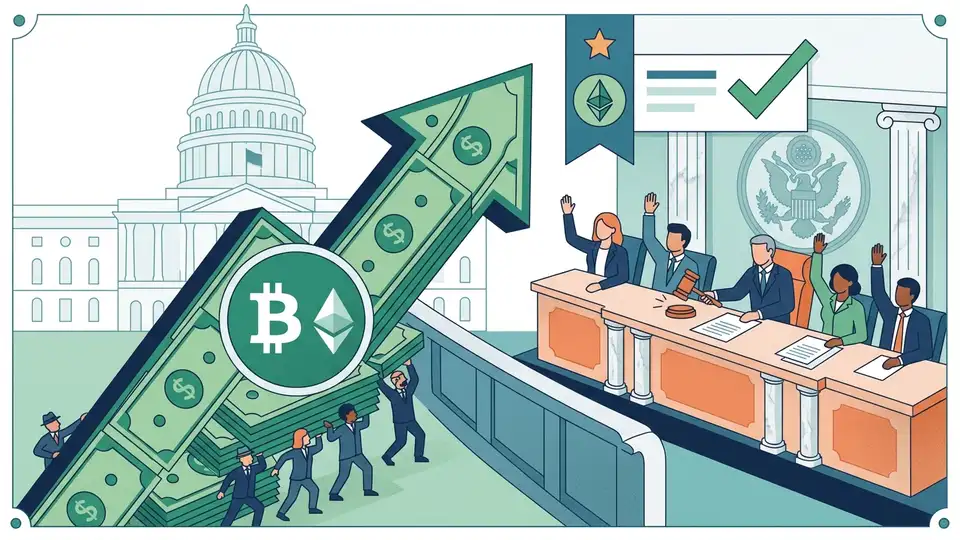
A Senate committee advanced a crypto bill after a $119 million industry push in 2024.
The U.S. Senate committee move marks a real step for crypto policy in Washington, and it comes after the industry poured more than $119 million into backing pro-crypto candidates in the 2024 election cycle. That money was meant to help push the Clarity Act and support wider adoption of dollar-backed tokens, better known as stablecoins.
This is the kind of moment crypto lobbyists have spent years chasing: a committee vote that turns a broad political wish list into a bill with a real path through Congress. The stakes are bigger than one vote, because the rules written now will shape how exchanges, token issuers, and banks handle digital assets for years.
| Item | Number | Why it matters |
|---|---|---|
| Industry spending in 2024 | $119 million+ | Shows how much crypto firms invested in political influence |
| Stablecoin law | Passed last year | Gives dollar-backed tokens a clearer legal path |
| Committee action | Advanced | Moves the bill one step closer to a floor vote |
Why this committee vote matters
Get the latest AI news in your inbox
Weekly picks of model releases, tools, and deep dives — no spam, unsubscribe anytime.
No spam. Unsubscribe at any time.
Committee approval is often where bills either stall out or gain enough momentum to become serious legislation. In crypto, that matters even more because the industry has spent years dealing with a patchwork of agency actions, court fights, and unclear definitions about what counts as a security, a commodity, or something else entirely.
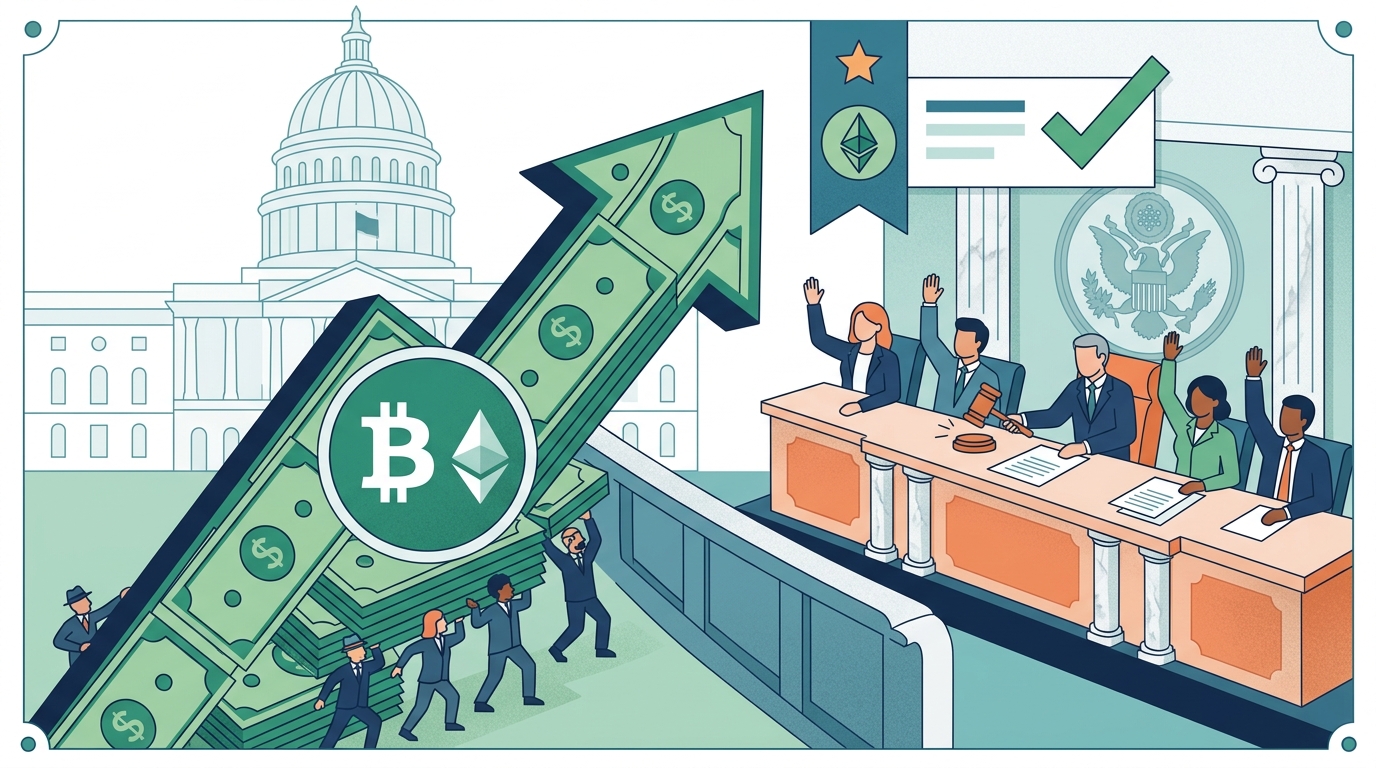
The Clarity Act is meant to reduce that uncertainty by drawing lines around how digital assets are regulated. If lawmakers can agree on those lines, exchanges and token projects get a lot more room to plan product launches, compliance systems, and custody arrangements without guessing what regulators will do next.
That matters for firms that have been sitting on the sidelines. It also matters for banks that want to handle stablecoins without tripping over legal risk. The committee vote does not settle those questions, but it does show that crypto policy is moving from campaign rhetoric into actual legislative drafting.
- More than $119 million went to pro-crypto candidates in 2024.
- The stablecoin bill already became law last year.
- The Clarity Act now has a stronger path than it had a week ago.
- Regulatory certainty is the real prize for exchanges and issuers.
The money behind the push
Crypto’s political spending is no longer a side story. It is part of the strategy. When an industry spends nine figures in an election year, it is making a very specific bet: that Congress is the place where the rules get written, and that the rules are worth paying to influence.
The reported spending figure, more than $119 million, is large enough to rank among the most aggressive issue-based political efforts in recent cycles. It also helps explain why crypto has become impossible for lawmakers to ignore. Even members who are skeptical of digital assets now have to answer to donors, voters, and local business interests that want a clearer framework.
“The industry spent more than $119 million backing pro-crypto candidates in 2024,” Reuters reported.
That quote captures the basic political math behind the bill. Crypto companies want rules that make it easier to operate, while lawmakers want to show they can regulate a fast-moving market without choking off investment.
For readers tracking the policy side of digital assets, this is worth comparing with the stablecoin law passed last year. Stablecoins already got a more direct legislative win, which means the next fight is broader: how to classify tokens, who supervises them, and where the line falls between financial innovation and securities law.
How this compares with the stablecoin win
The stablecoin law is important because it gave dollar-backed tokens a clearer route into the mainstream. That matters for payments, treasury management, and on-chain settlement. A bill like the Clarity Act goes further, because it tries to define the market structure around digital assets more broadly.

Here is the practical difference:
- Stablecoin law: focuses on dollar-backed tokens and payment use cases.
- Clarity Act: tries to sort out the wider crypto market structure.
- Political spending: shows the industry is treating legislation as a long-term business issue.
- Committee advance: gives the bill a better shot at becoming law than a symbolic hearing would.
That distinction matters because stablecoins are already used in real transactions, while broader digital asset rules affect trading venues, token launches, custody, and enforcement. A stablecoin law can help one part of the market. A market-structure bill can change how the whole sector operates.
For more context on how policy and product decisions are colliding in crypto, see our related coverage of crypto policy and stablecoins.
What happens next
The next phase is where the bill either picks up enough bipartisan support to move toward a floor vote or gets slowed by disputes over definitions and agency authority. The most likely flash points are how to classify tokens, how much power the SEC keeps, and whether the bill gives exchanges enough certainty without opening new loopholes.
If lawmakers keep the current pace, the real question is no longer whether crypto gets a hearing in Washington. It is whether Congress can write rules that are specific enough to matter and flexible enough to survive the next market cycle. The committee vote says the conversation has moved forward; the next draft will tell us whether the industry gets the framework it has been paying for.
For developers and founders, the takeaway is simple: keep an eye on classification language and custody rules, because those are the sections most likely to affect product design, exchange listings, and compliance costs.
// Related Articles
- [IND]
WebX 2026 turns speaker hype into a conference brief
- [IND]
AI Weekly: 2026-07-06 ~ 2026-07-13
- [IND]
The AI Act should be treated as Europe’s operating system for AI
- [IND]
Booz Allen’s OpenAI Deal Is Real Advantage, Not Hype
- [IND]
OpenSearch’s vector search benchmark in 5 parts
- [IND]
Vector Databases That Work in Production