US Senators Push Bitcoin Mining Bill and Reserve Plan
Cassidy and Lummis want more Bitcoin mining in the U.S. and a Treasury-run reserve, tying supply chain policy to digital assets.
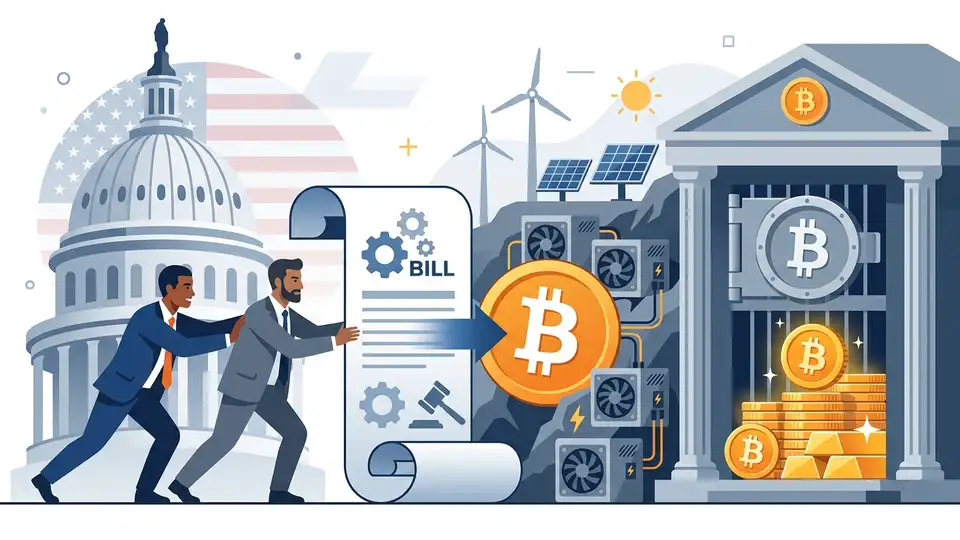
Two U.S. senators just put Bitcoin policy on a more concrete track. On March 30, 2026, Bill Cassidy and Cynthia Lummis introduced a bill that would push more mining into the United States and formalize a Strategic Bitcoin Reserve inside the Treasury Department.
The timing matters. The U.S. already accounts for a large share of global Bitcoin hash rate, yet much of the hardware that keeps those machines running still comes from overseas, especially China. That mismatch is exactly what the new proposal tries to address.
What the new bill is trying to do
Get the latest AI news in your inbox
Weekly picks of model releases, tools, and deep dives — no spam, unsubscribe anytime.
No spam. Unsubscribe at any time.
The legislation, called the Mined in America Act, aims to make domestic mining easier to identify, support, and defend. It does this with a voluntary certification program, supply chain rules, and a Treasury-level reserve framework that gives Bitcoin a more formal role in federal policy.
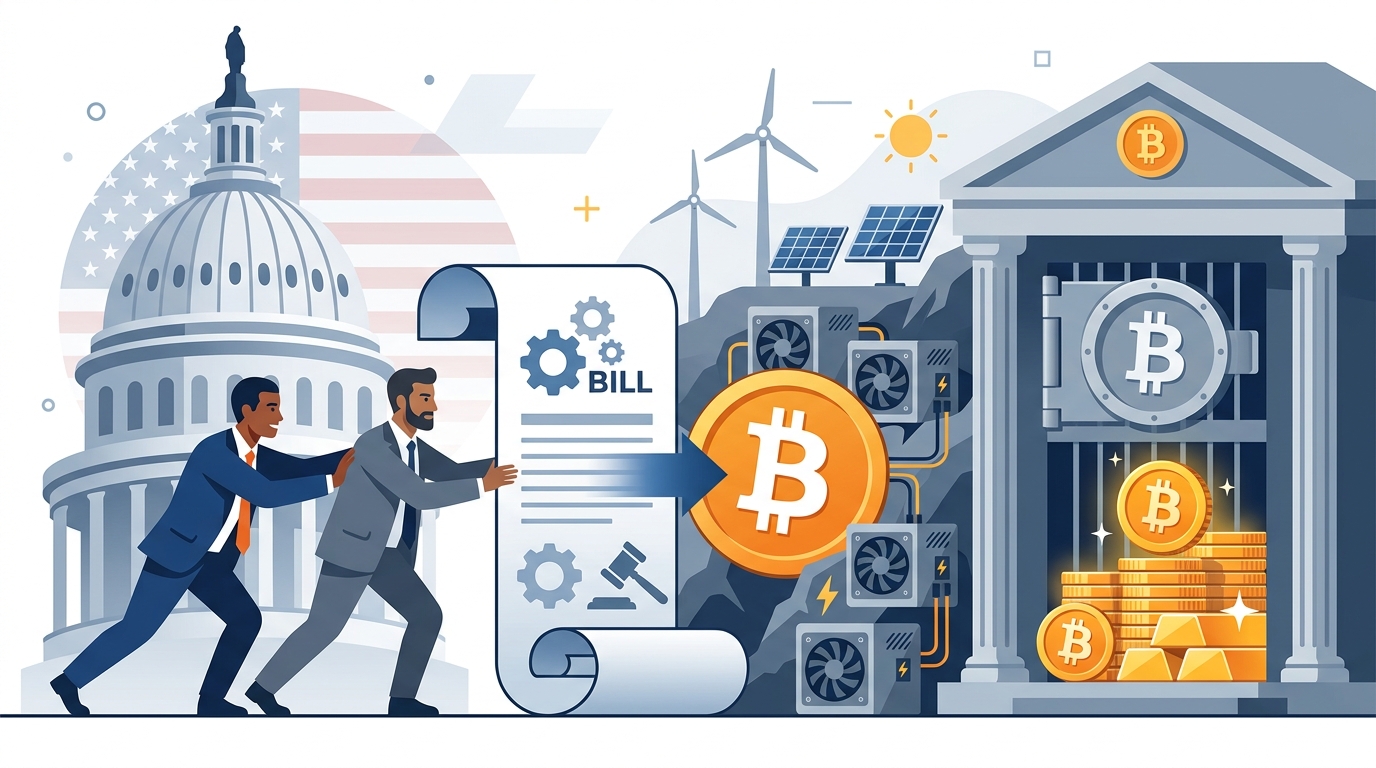
Senator Cassidy framed the bill in plain economic terms: keep the jobs, hardware, and energy use inside the U.S. rather than sending them abroad. That pitch is designed to appeal to lawmakers who care about industrial policy as much as crypto.
Here are the main pieces of the proposal:
- A voluntary “Mined in America” certification run through the Department of Commerce
- A requirement for certified operations to phase out hardware tied to foreign adversaries
- Use of existing federal energy and rural development programs instead of new spending
- Guidance from NIST and the Manufacturing Extension Partnership to support U.S. manufacturing
- Creation of a Strategic Bitcoin Reserve inside the Treasury Department
That mix is telling. The bill does not treat Bitcoin mining as a niche internet business. It treats it like industrial infrastructure, with supply chains, energy policy, and national security all wrapped together.
Why supply chains are the real story
The loudest part of this debate is Bitcoin, but the quiet part is hardware. Mining farms depend on ASICs, power systems, cooling gear, chips, and logistics. If one country controls much of that supply, then the operator buying the machines has a dependency problem.
Dennis Porter, CEO and co-founder of the Satoshi Action Fund, put it bluntly: “If we are serious about leading on Bitcoin, we cannot let adversaries hold the keys to our supply chain.” That quote gets to the heart of the bill better than any press release language.
“If we are serious about leading on Bitcoin, we cannot let adversaries hold the keys to our supply chain.” — Dennis Porter, CEO and co-founder of the Satoshi Action Fund
The policy logic is simple. If the U.S. wants more control over a strategic digital asset, it also needs more control over the machines that produce it. That means domestic assembly, domestic maintenance, and fewer choke points abroad.
There is also a rural angle here. Bitcoin mining often lands where power is cheap and local governments want tax revenue. The bill’s use of existing federal programs suggests lawmakers want to turn that into a broader manufacturing and energy story, not just a crypto story.
How this compares with the current setup
For now, the U.S. mining sector is strong in hash rate terms but still exposed in hardware terms. That split creates a strange policy picture: American companies can dominate a technical process while relying on foreign manufacturing for the devices that make it possible.
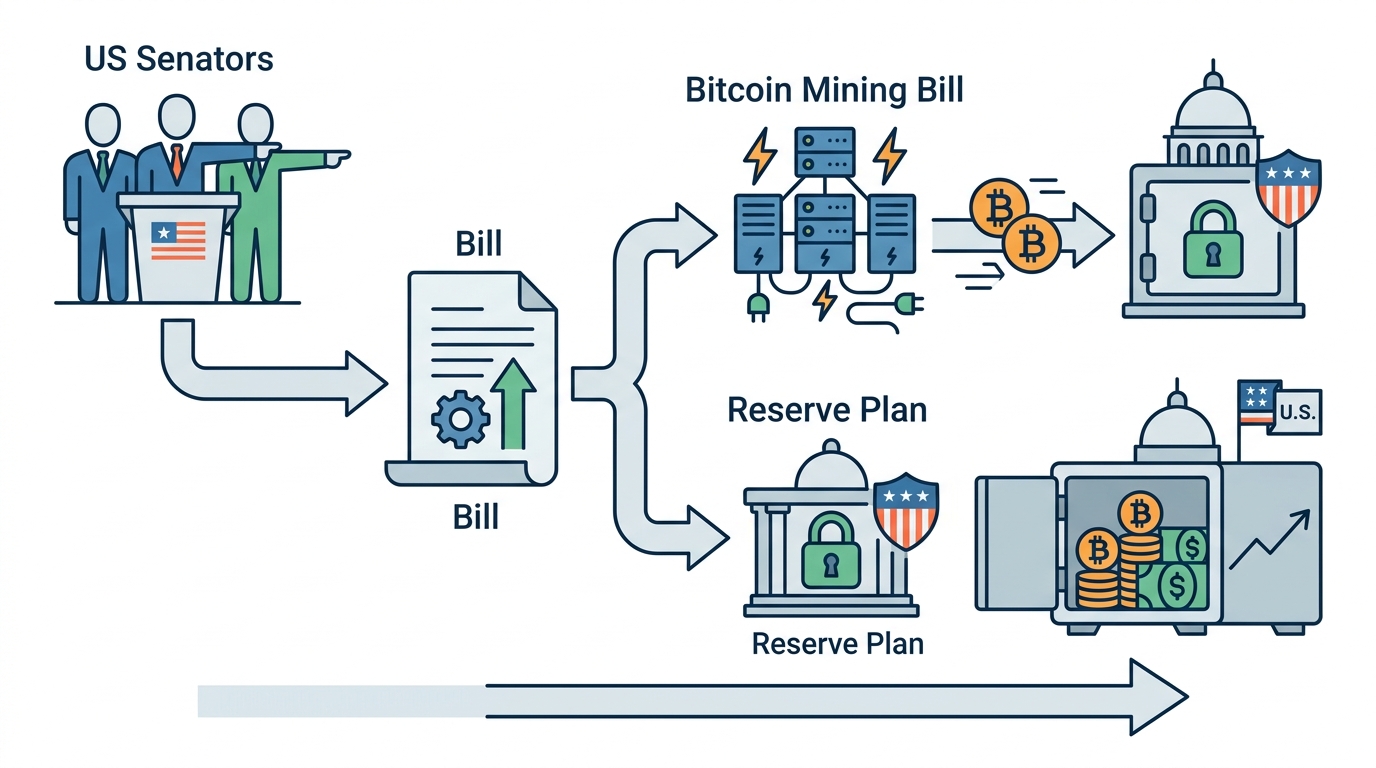
That is why the bill’s design matters more than the headline. It tries to reduce dependence without creating a new subsidy program or a giant federal bureaucracy. In other words, it is a supply chain bill disguised as a crypto bill.
- U.S. Customs and Border Protection has already been part of the broader conversation around imported mining hardware and enforcement risk
- NIST is named in the bill as a source of guidance for domestic manufacturing support
- Department of Commerce would oversee the voluntary “Mined in America” certification
- U.S. Treasury would formalize the Strategic Bitcoin Reserve
There is also a political contrast worth watching. The Bitcoin ETF inflow story is about investor demand through Wall Street products. This bill is about physical infrastructure, federal control, and where the actual mining work happens.
If lawmakers keep moving in this direction, the U.S. could end up with a two-track Bitcoin policy: one track for markets and ETFs, another for mining, energy, and reserves. That would be a more serious policy framework than the usual one-bill-for-everything approach.
What the Strategic Bitcoin Reserve changes
The reserve language is the part that will get the most attention from Bitcoin holders, and for good reason. A formal reserve inside Treasury gives the asset a clearer place in federal strategy, even if the mechanics are still thin.
Cynthia Lummis tied the bill to President Trump’s earlier promise to make the United States the digital asset capital of the world. Her framing suggests this is meant to be a long-term policy anchor, not a short-term campaign gesture.
That matters because reserve policy changes how governments think about an asset. Once an asset is treated as strategic, the conversation shifts from “Should we regulate this?” to “How do we secure and hold it?”
For Bitcoin, that is a meaningful shift. It does not guarantee price appreciation, but it does increase the odds that federal agencies, energy planners, and industrial policymakers will keep treating Bitcoin as something worth protecting.
It also raises a practical question: if Washington wants a Strategic Bitcoin Reserve, how much domestic mining capacity does it need to support that goal without relying on foreign hardware and foreign shipping lanes?
What comes next for miners and investors
The bill still has to move through Congress, and that is never a small step. But the direction is clear: Washington is getting more comfortable treating Bitcoin mining as part of national industrial policy rather than as a fringe power consumer.
For miners, that could mean more attention on where equipment is built, where power comes from, and how facilities prove they are compliant. For investors, it could mean a stronger policy case for Bitcoin as a strategic asset, especially if reserve language gains traction.
My read is simple: if this bill gains momentum, the most important Bitcoin companies in the U.S. will not be the ones with the flashiest branding. They will be the ones that can prove where their machines came from, how they are powered, and whether they can qualify for federal certification.
That is the question to watch over the next few months: does Congress want Bitcoin policy to stay focused on trading rules, or is it ready to treat mining equipment, energy access, and reserve policy as one connected issue?
// Related Articles
- [CHAIN]
Web3 Communication Is Becoming Trust Infrastructure
- [CHAIN]
Why Base’s x402 Protocol Matters More Than the $100M Milestone
- [CHAIN]
Gala Games Finds New Life in Web3 Gaming
- [CHAIN]
Why Lace 2.0 Matters More Than Cardano’s Next Hard Fork
- [CHAIN]
Why Ethereum Treasury Buying Is Becoming a Bad Long-Term Bet
- [CHAIN]
Yakovenko Warns AI Could Crack PQC Wallets