Why AI’s real moat is data extraction, not model size
AI winners are being built on access to real user data, internal workflows, and compute, not just bigger models.
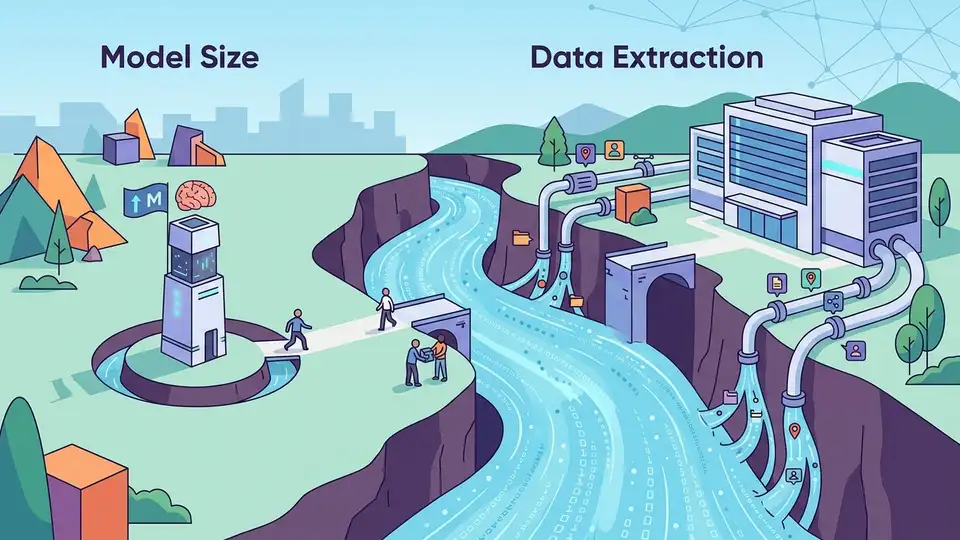
AI winners are being built on access to real user data, internal workflows, and compute, not just bigger models.
AI’s real competitive advantage is no longer model architecture alone; it is control over data, workflow access, and the compute needed to turn both into products.
The week’s headlines make that plain. Meta plans to train on employee mouse movements and keystrokes. Google is pushing AI into Gmail, Workspace, and agent tooling where it can observe how work actually happens. Microsoft is trimming staff while funding massive AI infrastructure. Even the reported SpaceX-Cursor arrangement points to the same logic: the company with the deepest pockets and the most integrated environment wants the best coding system, then wants to own it.
Data access is the new strategic asset
Get the latest AI news in your inbox
Weekly picks of model releases, tools, and deep dives — no spam, unsubscribe anytime.
No spam. Unsubscribe at any time.
Meta’s plan to use employees’ mouse movements and keystrokes for training is ugly, but it is also revealing. The company is not chasing abstract intelligence; it is collecting traces of real work so its models can learn the habits of people using computers. That matters because agents fail when they only know language. They need examples of clicks, dropdowns, switching contexts, and the messy sequence of actions behind everyday tasks.
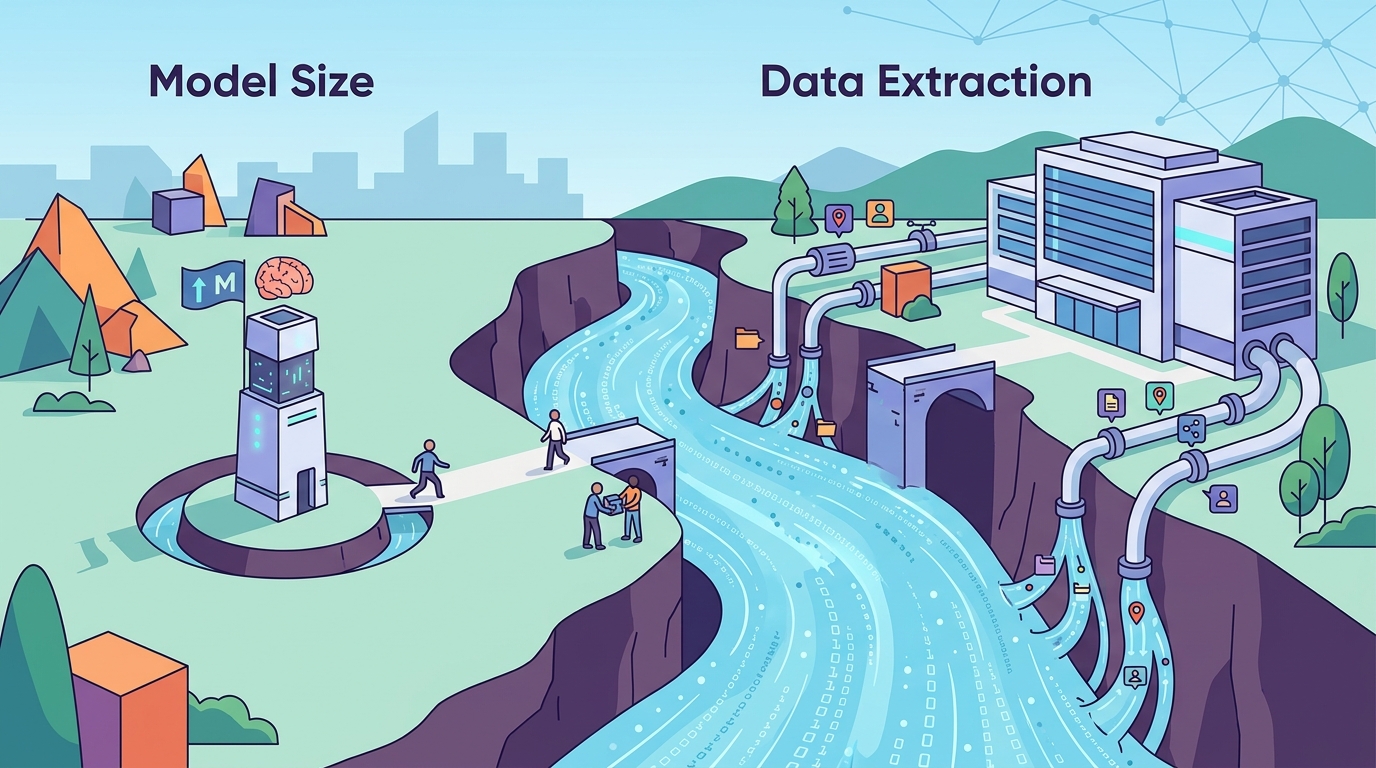
Google is making the same bet from a different angle by bringing AI Overviews into Gmail for work. That move turns a private productivity surface into a training and deployment environment. It gives Google a chance to observe how people search, summarize, and respond inside actual business workflows, which is exactly the kind of operational data that makes assistants less generic and more useful. The companies that sit closest to work will build the strongest systems.
Compute is becoming the price of admission
Microsoft’s buyouts and Meta’s cuts are not signs of caution. They are signs that AI has become a capital-allocation war. Microsoft is offering voluntary retirement to about 7% of its U.S. workforce while it pours money into data centers. Meta is cutting 10% of jobs while continuing heavy AI spending. The message is blunt: headcount is now a funding source for infrastructure, and infrastructure is where the race is being won.
That same dynamic explains why Google is leaning into custom chips and why the SpaceX-Cursor deal matters. If a company can pair a strong coding product with a training supercomputer like Colossus, it can collapse the distance between prototype and scale. The winners will not be the firms with the most polished demos. They will be the firms that can afford to train, serve, and iterate at industrial volume without waiting on outside capacity.
AI agents are only as good as the environments they can read
The push toward agents shows why surface-level intelligence is not enough. Google’s new agent tools, Memory Bank, Memory Profile, and Agent Simulation are all attempts to solve the same problem: agents need context, memory, and a way to test behavior before they are unleashed on real work. That is a sign the market has moved past chatbot novelty. The hard part is not generating text. The hard part is making software that can operate inside a company without breaking trust or losing state.
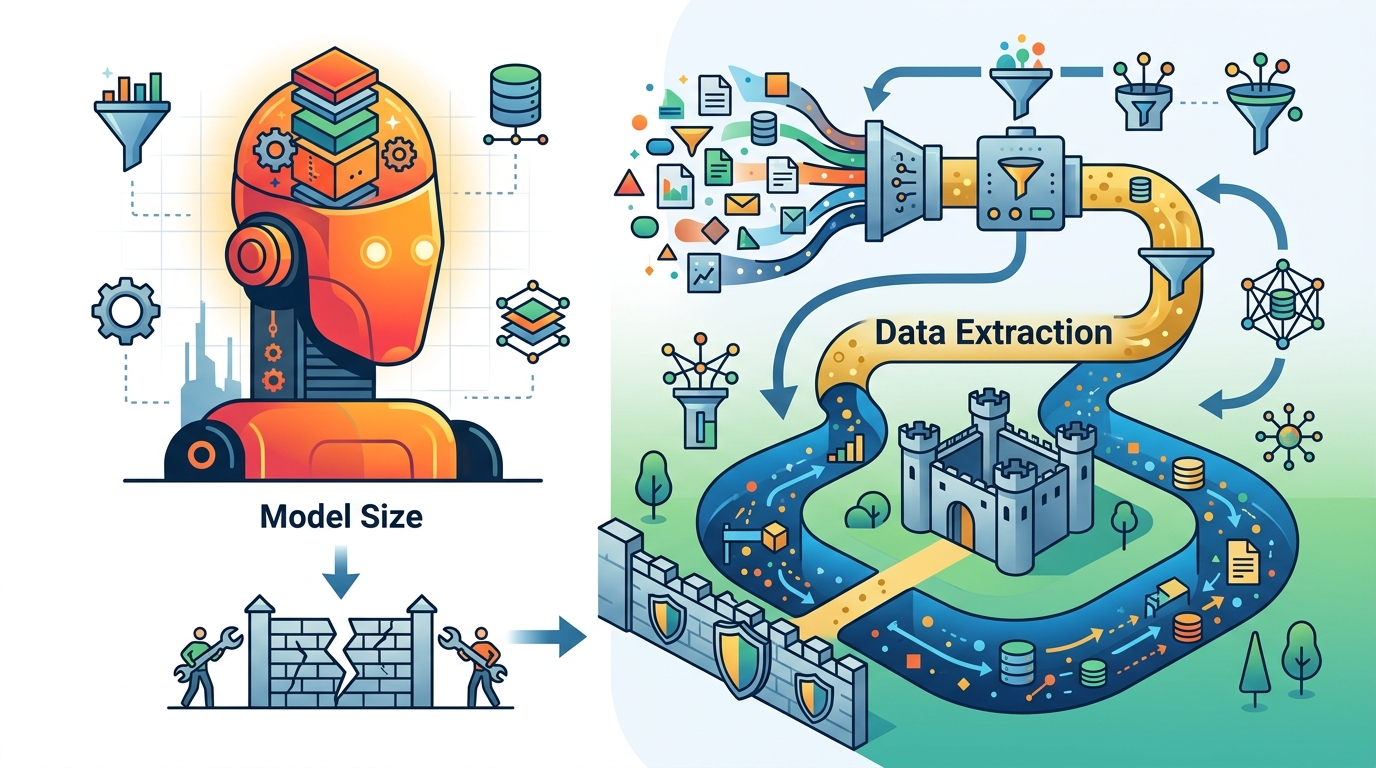
Anthropic’s Mythos access report reinforces the point from the security side. If a restricted enterprise tool can be reached through vendor environments, then the moat is not just model quality, it is control over the operational perimeter. Whoever owns the workflow surface, the identity layer, the logs, and the permissions stack can shape what the model learns and where it can act. Agentic AI is becoming a systems problem, not a prompt problem.
The counter-argument
Defenders of the current AI race say this is all temporary theater. They argue that model quality still matters most, that open source will compress margins, and that the companies buying compute and hoarding data are simply paying a tax to reach the next baseline. In that view, today’s expensive deals and layoffs are just the cost of entering a market where the technical frontier keeps moving.
That argument is half right and still misses the point. Model quality does matter, but quality without proprietary workflow data and deployment control is easy to copy and hard to monetize. Open models can narrow the gap, but they do not erase the advantage of a company that can watch real user behavior, embed itself in daily work, and continuously retrain from those interactions. The moat is not one thing; it is the combination of data exhaust, distribution, and compute. That combination is not temporary.
What to do with this
If you are an engineer, PM, or founder, stop treating AI as a feature layer and start treating it as an operating system for workflow capture. Build products that sit where work already happens, instrument the actions that matter, and design explicit consent and governance from day one. If you do not control the data path, you do not control the model advantage. If you do not control the workflow, you do not control the product.
// Related Articles
- [IND]
WebX 2026 turns speaker hype into a conference brief
- [IND]
AI Weekly: 2026-07-06 ~ 2026-07-13
- [IND]
The AI Act should be treated as Europe’s operating system for AI
- [IND]
Booz Allen’s OpenAI Deal Is Real Advantage, Not Hype
- [IND]
OpenSearch’s vector search benchmark in 5 parts
- [IND]
Vector Databases That Work in Production