Why Base’s ZK Upgrade Is the Right Move for Coinbase
Base should move to zero-knowledge proofs because cryptographic finality is better than optimistic rollup delays.
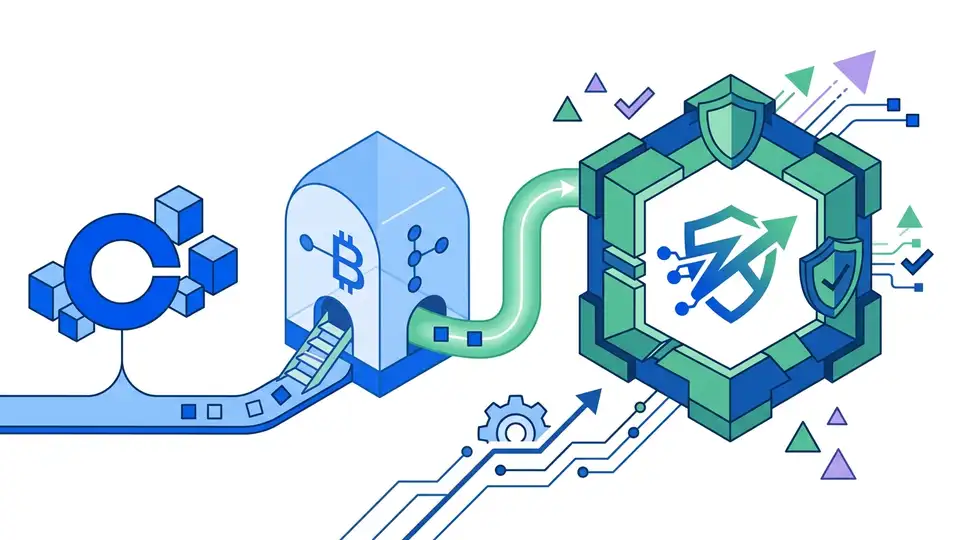
Base should move to zero-knowledge proofs because cryptographic finality beats optimistic delays.
Base’s shift from optimistic rollups to zero-knowledge proofs is the right call, and Coinbase should push it hard. A network that already secures roughly $12 billion in capital should not rely on a design that makes users wait days for finality when the industry now has a cleaner path to faster, stronger settlement. This is not a cosmetic upgrade. It is a security decision, a product decision, and a credibility decision all at once.
Cryptographic finality beats waiting out a challenge window
Get the latest AI news in your inbox
Weekly picks of model releases, tools, and deep dives — no spam, unsubscribe anytime.
No spam. Unsubscribe at any time.
The main weakness of optimistic rollups is not throughput, it is the assumption that someone will notice fraud and challenge it in time. That works in theory, but in practice it creates a multi-day delay between action and certainty. For a chain that wants to serve trading, payments, and bridging at scale, that delay is a tax on capital and a drag on user trust.
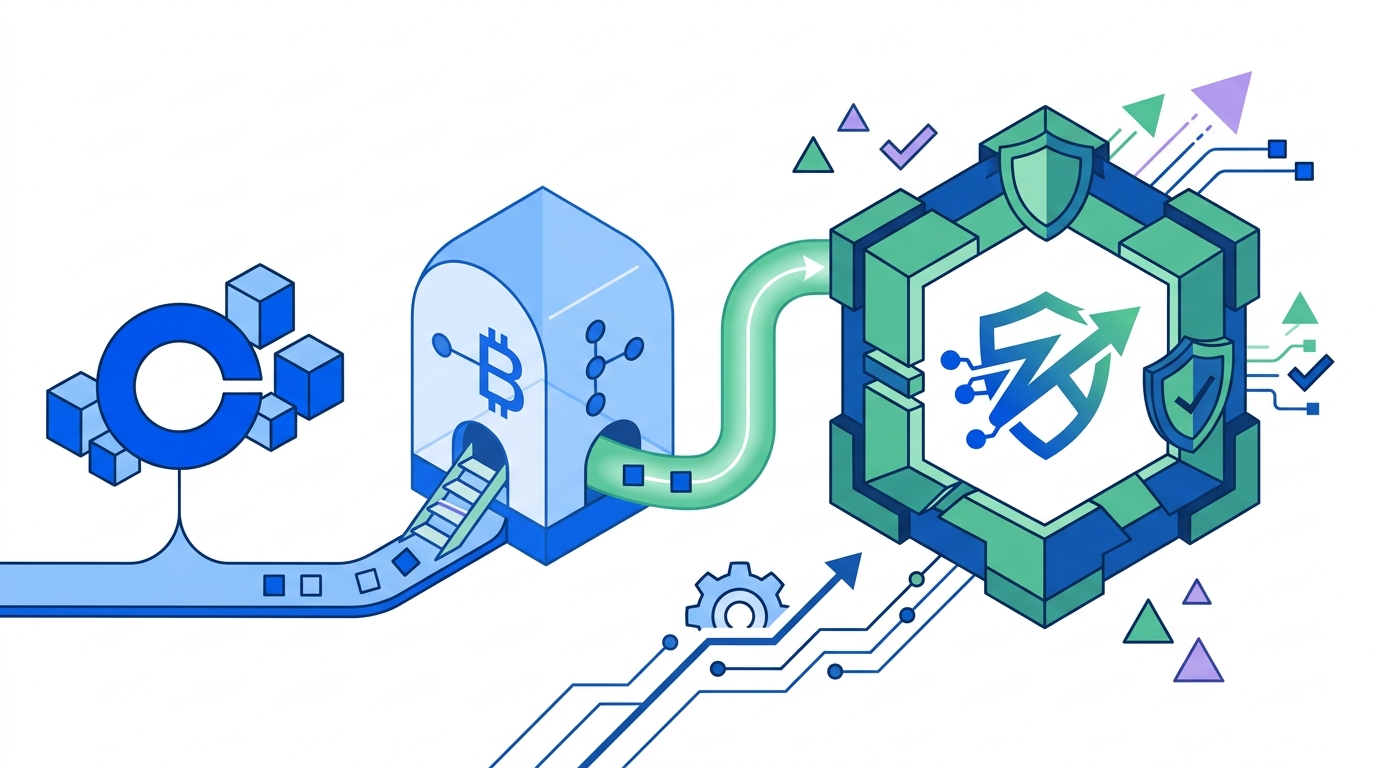
Base’s move to SP1-backed ZK proofs changes that equation. Instead of asking users and applications to live with an unresolved state for days, the network can lean on cryptographic proof for finality. That matters most when value is moving quickly. If the chain is going to be the default home for onchain activity, it needs finality that feels like finality, not a pending dispute.
Base can absorb the complexity because it already has the scale
Not every Layer 2 should make this jump immediately, but Base is not a small experiment anymore. It sits near the center of Ethereum activity by users, throughput, and locked value, which means the network has both the incentive and the operational weight to justify the engineering effort. When a chain is already handling serious economic volume, security architecture stops being a back-end detail and becomes part of the product.
That scale also makes Base a better proving ground for the rest of the ecosystem. Succinct’s SP1 is not just another narrow optimization; it is an open-source zkVM that can prove arbitrary Rust-based computation. That matters because it lowers the barrier for rollups, apps, and bridges that want ZK security without building a custom proving stack. Base adopting it signals that ZK is moving from specialist infrastructure to mainstream chain design.
Ethereum needs its biggest operators to normalize ZK
Vitalik Buterin has long argued that ZK-EVMs are Ethereum’s eventual validation model, and Base’s move lines up with that direction in a concrete way. The market does not change when people agree in principle. It changes when a large operator implements the thing everyone else has been talking about. Base is doing exactly that, and it gives the broader ecosystem a working reference point rather than a roadmap slide.
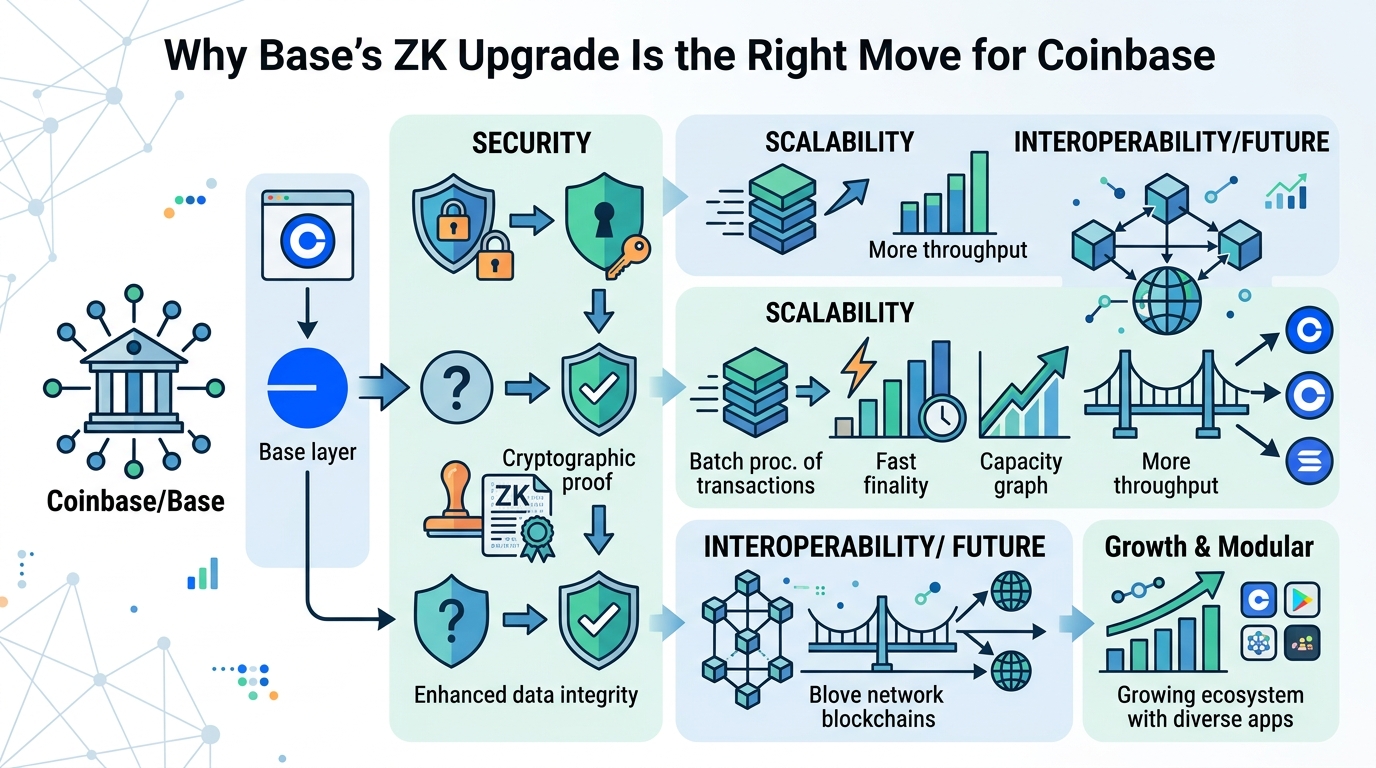
There is also a strategic benefit for Coinbase that goes beyond Base itself. A ZK-based Base strengthens the company’s story around onchain infrastructure as something more durable than a fast-growing consumer chain. If Coinbase wants Base to be the default venue for builders and capital, then security architecture has to look like a long-term advantage, not a temporary compromise. ZK proofs help Base look like infrastructure that expects to outlast the current cycle.
The counter-argument
The strongest objection is that optimistic rollups are simpler, battle-tested, and easier to reason about. ZK systems add new moving parts, and the combination of a trusted execution environment with zero-knowledge proofs is not the same as pure cryptographic trustlessness. Critics can fairly argue that if the proving pipeline or operational setup fails, the upgrade could trade one set of risks for another.
That concern is real, and it should not be dismissed. But it does not defeat the move. The purpose of an L2 is not to preserve simplicity for its own sake. It is to improve the security and usability of Ethereum scaling over time. If Base keeps an architecture that forces users to wait for challenge windows just to avoid implementation complexity, it is choosing developer comfort over user outcomes. That is the wrong trade.
What to do with this
If you are an engineer, treat Base’s decision as a signal to design for proof generation, not just transaction execution. If you are a PM, measure finality, bridge latency, and user confidence as first-class product metrics. If you are a founder building on Base, assume the network is heading toward a world where fast settlement and trust-minimized bridging are table stakes, and build your app around that reality now.
// Related Articles
- [CHAIN]
Crypto exchanges should show up in LATAM, not just advertise there
- [CHAIN]
UAE Web3 setup turns crypto rules into a checklist
- [CHAIN]
Five AI Futurist features shaping Futurist 2026
- [CHAIN]
Regulation Now Moves Bitcoin and Ethereum More Than War
- [CHAIN]
The SEC Crypto Rule Proposal Will Clean Up Crypto, Not Kill It
- [CHAIN]
Web3 platforms need fee discipline, not token theatrics, to make money