Why Web3 Development Company Rankings Are Wrong in 2026
Web3 agency rankings are a weak signal, and buyers should judge firms by shipped systems, not directory placement.

Web3 agency rankings are a weak signal, and buyers should judge firms by shipped systems, not directory placement.
Top Web3 development company lists look useful, but they are a poor way to choose a partner. DesignRush’s 2026 page for Web3 agencies mixes verified reviews, sponsored placements, broad service tags, and marketing copy into one long comparison grid, which means the surface-level ranking can reward visibility as much as capability. A buyer scanning that page sees dozens of firms, hourly rates from under $25 to $195, and portfolio counts ranging from a handful of projects to more than a hundred. That is not a decision framework. It is a directory.
First, rankings confuse attention with competence
Get the latest AI news in your inbox
Weekly picks of model releases, tools, and deep dives — no spam, unsubscribe anytime.
No spam. Unsubscribe at any time.
The first problem is that directory order is not the same as engineering quality. On the DesignRush page, agencies are sorted and filtered by factors like budget, team size, and hourly rate, while some placements are explicitly marked sponsored. That makes the list useful for discovery, but useless as a proxy for technical fit. A company building a custody wallet, tokenized asset platform, or exchange integration needs proofs of security review, chain-specific expertise, and production uptime, not a badge near the top of a page.

Take Goji Labs, which advertises 500+ launched products and more than $1B raised by clients. That is a more meaningful signal than generic “top Web3” placement because it points to shipped outcomes. The same is true for firms that show named projects like crypto exchanges, NFT marketplaces, or real estate tokenization apps. In Web3, the work is too failure-prone to outsource based on reputation by association. If an agency cannot show a concrete deployment path, audit readiness, and post-launch support, the ranking is decoration.
Second, the category itself is too broad to be useful
Web3 is not a single service line. The same directory folds together wallet development, protocol work, exchange builds, NFT products, tokenization, DevOps, mobile apps, and AI add-ons. That breadth creates a false sense of comparability. A firm that is strong at front-end product design is not automatically strong at smart contract security. A team that can ship a polished marketplace UI may still be the wrong choice for consensus logic, bridge infrastructure, or compliance-heavy token issuance.
The DesignRush listings prove the point. One agency may emphasize blockchain software development and DevOps consulting, while another leads with mobile app delivery or eCommerce. Those are different businesses with different risks. A founder who treats them as interchangeable is buying on category labels instead of capability. The right question is not “Who is the best Web3 agency?” It is “Who has shipped the exact class of system I need, on the chain I need, under the constraints I have?”
The counter-argument
The best defense of these rankings is practical: most buyers do not have the time or expertise to evaluate 762 agencies from scratch. A curated directory reduces search costs, surfaces verified reviews, and gives teams a starting shortlist. It also creates a market for smaller firms that would never reach buyers through brand alone. For many companies, especially startups without in-house blockchain expertise, a broad ranking is better than random Google searches and cold referrals.
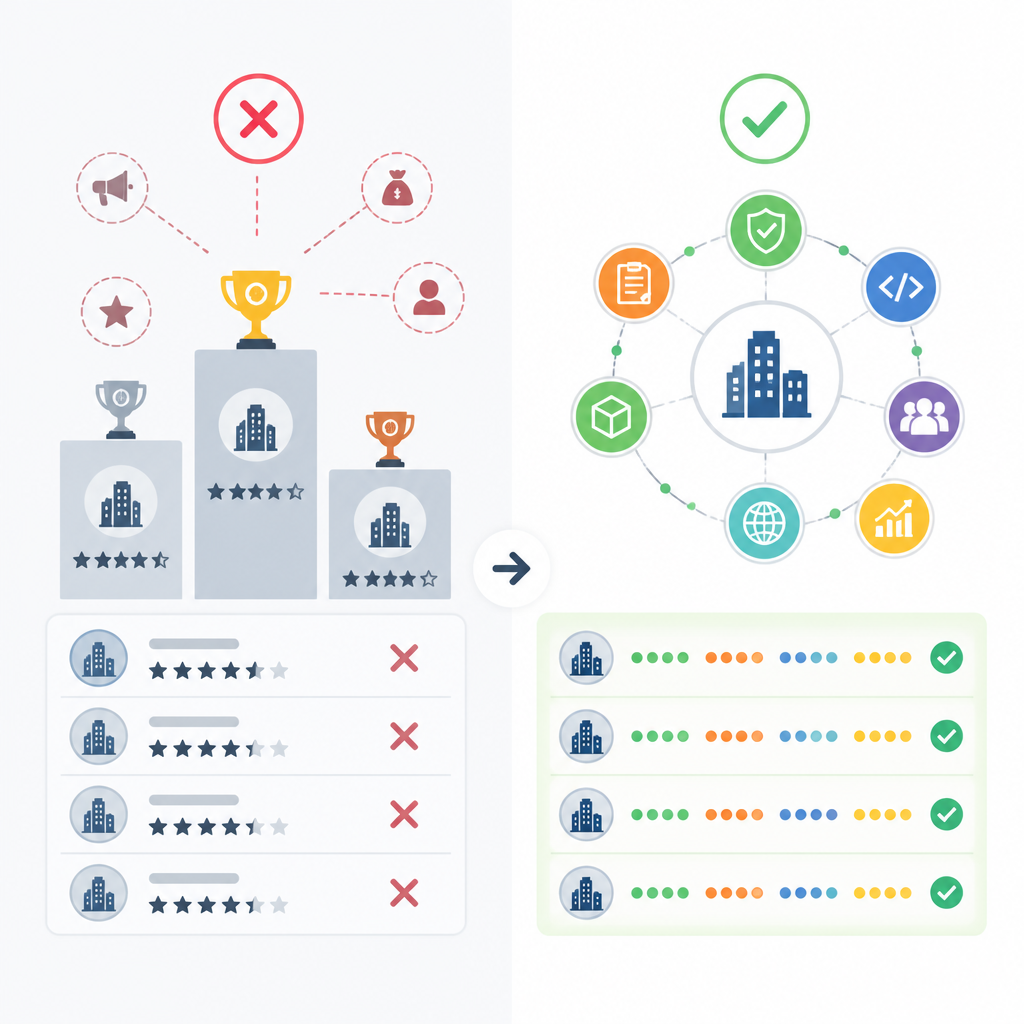
That argument is valid as far as discovery goes. A directory is a lead generator, not a procurement decision. The mistake is stopping at the list. Once a shortlist exists, the buyer must run a technical diligence process: ask for code samples, audit reports, architecture diagrams, incident history, and references from clients with similar regulatory and product constraints. If a firm cannot answer those questions cleanly, its ranking is irrelevant. Discovery is useful. Selection demands evidence.
What to do with this
If you are an engineer, PM, or founder choosing a Web3 partner, use rankings only to build a shortlist, then score each firm on shipped systems, security posture, chain-specific experience, and ability to support production after launch. Ask for one live product, one failed project, and one postmortem. If the agency cannot discuss tradeoffs, audits, and operational ownership in plain language, move on. The best Web3 companies are not the ones that rank highest in a directory. They are the ones that have already survived the hard parts.
// Related Articles
- [CHAIN]
7 Solana APIs that cut weeks off integration
- [CHAIN]
Solana Unchained token sale nears Phase 1 close at $0.05
- [CHAIN]
June 2026 Web3 Signals Founders Should Use Now
- [CHAIN]
Bitcoin DeFi will grow, but not by copying Ethereum
- [CHAIN]
AI-blockchain projects need real utility, not token theater
- [CHAIN]
DMG’s 50 MW AI LOI is a better use of miners’ power assets