ZK Compliance and Layer-2 Push Crypto Casinos Mainstream
Regulated crypto-casinos are adopting ZK proofs, Layer-2 rails, and stablecoins to cut fees, speed payouts, and satisfy AML checks.

Crypto-casinos are getting a lot less experimental and a lot more bureaucratic. In the new playbook, operators want sub-second settlement, lower fees, and compliance checks that can satisfy regulators without exposing player data.
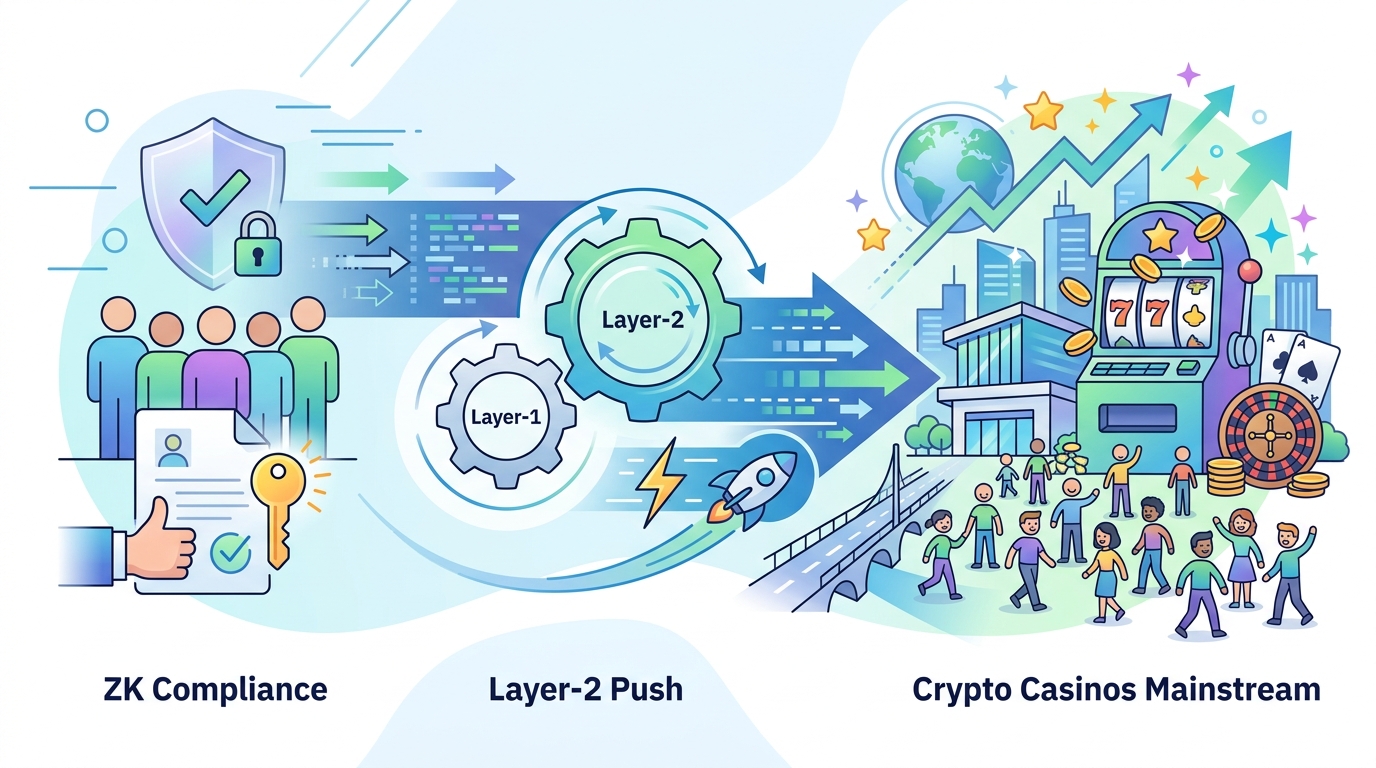
The big shift is happening around zero-knowledge proofs, Layer-2 networks, and stablecoin rails. That mix is changing how regulated betting products are built, audited, and licensed in markets shaped by MiCA, the FATF Travel Rule, and tighter local oversight from regulators like the Curaçao Gaming Control Board.
Why regulated crypto-casinos are changing now
Get the latest AI news in your inbox
Weekly picks of model releases, tools, and deep dives — no spam, unsubscribe anytime.
No spam. Unsubscribe at any time.
The old crypto-gambling model was simple: accept digital assets, move fast, and worry about compliance later. That worked when the sector lived on the edge of regulation. It does not work as well now that licensing bodies want clearer source-of-funds checks, better transaction monitoring, and cleaner segregation of player balances.

What changed is not just regulation. The payment experience also became a problem. On mainnet Ethereum, fees and congestion can make a small wager feel absurdly expensive. For a casino product that depends on fast repetition, that friction hurts retention immediately.
Layer-2 systems solve part of that problem by moving execution off the main chain while keeping settlement tied to it. In practice, that means a player can place bets quickly, while the operator still has a verifiable trail for audits and reporting.
- MiCA now gives stablecoins a clearer legal frame across the EU.
- FATF Recommendation 16 pushes identity checks for transfers above €1,000.
- Curaçao’s new licensing model ends the old master-license structure.
- Operators are pushing toward faster settlement and lower gas exposure.
That combination is why the sector is moving from “crypto-friendly” branding to infrastructure decisions that look a lot more like fintech than hype-driven betting.
Zero-knowledge compliance changes the audit model
The most interesting part of this shift is ZK-compliance. With zero-knowledge proofs, an operator can prove that a user passed KYC, that a transaction met policy rules, or that funds stayed segregated, without dumping personal data into a public ledger or a regulator’s dashboard.
That matters because gambling compliance and user privacy usually pull in opposite directions. Regulators want traceability. Players want discretion. ZK systems let both sides get part of what they want, even if the implementation is still complex and expensive compared with a normal database check.
“We need to know who the customer is, where the money comes from, and where it goes, but we do not need to expose unnecessary personal data to do that,” said FATF in its standards on customer due diligence and transparency.
That quote captures the direction of travel. The compliance stack is becoming more selective. Instead of publishing everything, operators can reveal only the proof that a rule was satisfied.
For casinos, that is a big deal. It turns compliance from a paperwork exercise into something closer to machine verification. The regulator can check whether the system is behaving correctly without needing to see every private detail behind the bet.
Layer-2 networks make the economics workable
Compliance alone would not be enough if the economics still made every wager expensive. This is where Layer-2 networks matter. The article points to Polygon and Arbitrum as examples, and that makes sense: both ecosystems are built to reduce transaction costs and increase throughput for application-heavy use cases.
For regulated iGaming, the key metric is not just speed. It is predictable speed. A casino operator needs to know that a payout, balance update, or bonus trigger will complete fast enough to keep the user experience close to a normal web app.
That is where the numbers start to matter. The source article claims Layer-2 migration has reduced overhead by 40% and pushed payout times below 300 milliseconds for some operators. Those are the kinds of figures that can change product design, because once settlement feels instant, wallet-based play stops feeling like a niche crypto demo.
- Layer-2 rails reduce gas costs and smooth out transaction spikes.
- Sub-300 ms payouts make on-chain play feel close to standard online gaming.
- Gasless betting removes one of the biggest onboarding failures in crypto UX.
- Stablecoins like USDC give operators cleaner accounting than volatile tokens.
There is also a business angle here. If a platform can subsidize transaction fees, it can hide much of the blockchain complexity from the player. That is exactly what white-label products such as gasless betting stacks are trying to do.
Who is building the stack
This shift is not happening in isolation. It is pulling in infrastructure vendors, game studios, and oracles. Pragmatic Play is one of the best-known casino content suppliers, and Chainlink is the obvious fit when a product needs tamper-resistant data feeds for payouts and game logic.
That matters because crypto-casino products need more than a wallet connection. They need reliable randomness, liquidity checks, price feeds for stablecoin handling, and a clean way to prove that the result was not manipulated. A standard casino backend can hide a lot. A blockchain-backed product cannot.
The platform layer is also getting crowded. SOFTSWISS and EveryMatrix are well known in iGaming infrastructure, and their role is becoming more important as operators want payment conversion, tax reporting, and wallet support in the same stack.
That creates a very different supply chain from the one that existed a few years ago. Instead of a casino buying a game and plugging in a payment gateway, it now needs a compliance layer, a wallet layer, a settlement layer, and a reporting layer that all agree with each other.
- Pragmatic Play brings content scale.
- Chainlink brings verifiable data feeds.
- SOFTSWISS and EveryMatrix handle payments and platform plumbing.
- Polygon and Arbitrum make high-volume play cheaper to run.
That is the real story here: the product is becoming less like a token experiment and more like regulated financial software with a casino front end.
What this means for the next phase of iGaming
The regulated crypto-casino sector is moving toward a model where privacy, auditability, and speed all matter at the same time. That is a hard engineering problem, but it is also a market filter. Operators that cannot prove compliance or keep transaction costs under control will have a much harder time competing.
My read is simple: the winners over the next 12 months will be the teams that treat ZK proofs and Layer-2 rails as product infrastructure, not marketing terms. The operators that still depend on slow withdrawals, manual AML checks, and volatile token balances will look dated very quickly.
If you are building in this space, the question is no longer whether blockchain belongs in gambling. The question is which parts of the stack should stay on-chain, which parts should be hidden behind proofs, and which parts regulators will insist on seeing in plain language.
That decision will decide who gets licensed, who gets blocked, and who gets ignored by serious partners.
For more context on the compliance side of crypto infrastructure, see our coverage of ZK-KYC and on-chain audits in regulated finance.
My prediction: the next major casino platform pitch will lead with compliance proofs and settlement speed, not bonus offers. If that sounds boring, it is exactly why regulators may take it seriously.
// Related Articles
- [CHAIN]
Crypto exchanges should show up in LATAM, not just advertise there
- [CHAIN]
UAE Web3 setup turns crypto rules into a checklist
- [CHAIN]
Five AI Futurist features shaping Futurist 2026
- [CHAIN]
Regulation Now Moves Bitcoin and Ethereum More Than War
- [CHAIN]
The SEC Crypto Rule Proposal Will Clean Up Crypto, Not Kill It
- [CHAIN]
Web3 platforms need fee discipline, not token theatrics, to make money