Layer 2 Explained: Why Blockchains Need It
Layer 2 networks now move far more Ethereum activity than mainnet, cutting fees by 90%+ while keeping settlement on-chain.

Layer 2 networks now process more than 58 times as many transactions as Ethereum mainnet, while securing over $40 billion in value. That is a big clue that L2s are no longer a side project for crypto nerds; they are the default answer to blockchain congestion.
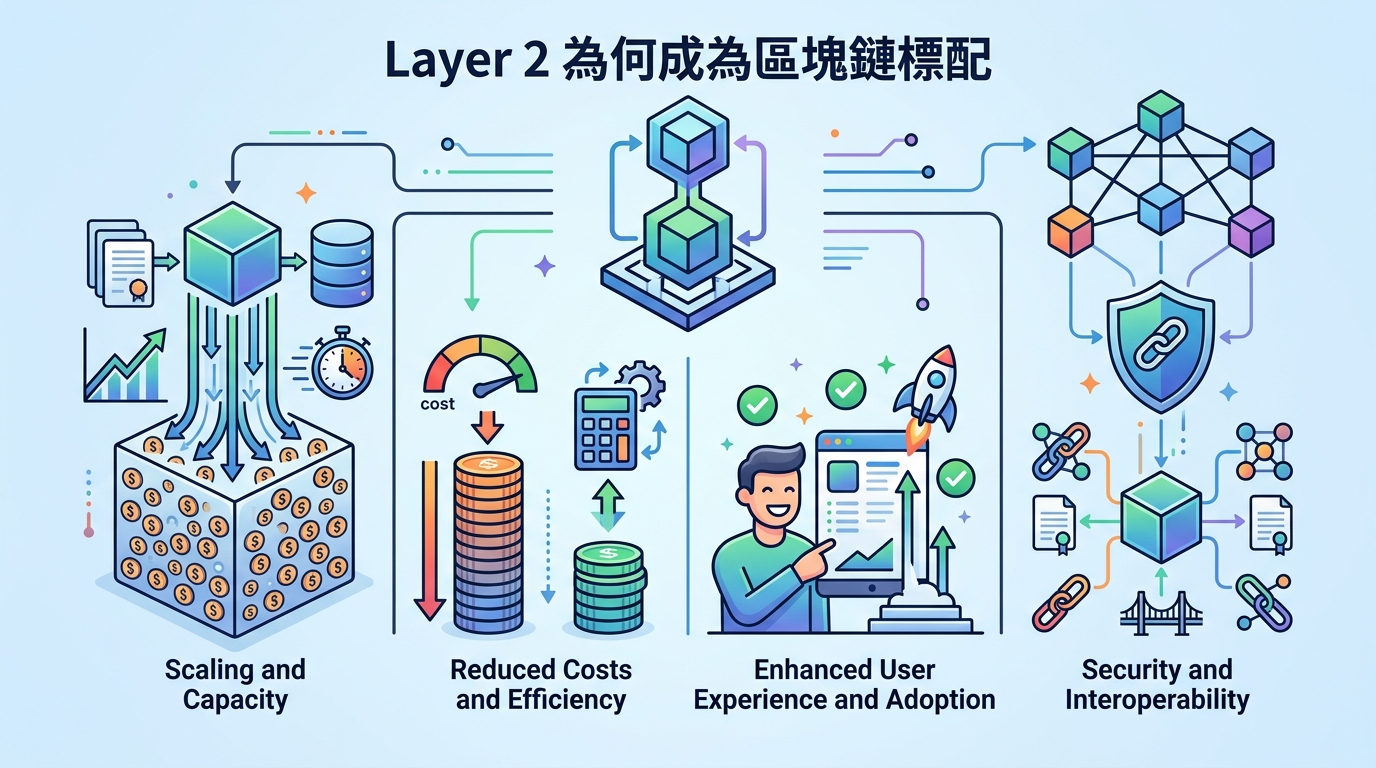
The basic idea is simple: keep the base chain for settlement and security, then move most day-to-day execution somewhere cheaper and faster. That split is why fees on popular rollups can fall by 90% to 99%, and why Ethereum can support internet-scale activity without asking every validator to re-run every transaction.
What Layer 2 Actually Does
Get the latest AI news in your inbox
Weekly picks of model releases, tools, and deep dives — no spam, unsubscribe anytime.
No spam. Unsubscribe at any time.
Ethereum defines Layer 2 as a separate network that extends the base chain and inherits its security guarantees. The key word is inherits. A true L2 is not an independent blockchain with its own trust model. It depends on Layer 1 for final settlement, dispute resolution, and data availability.

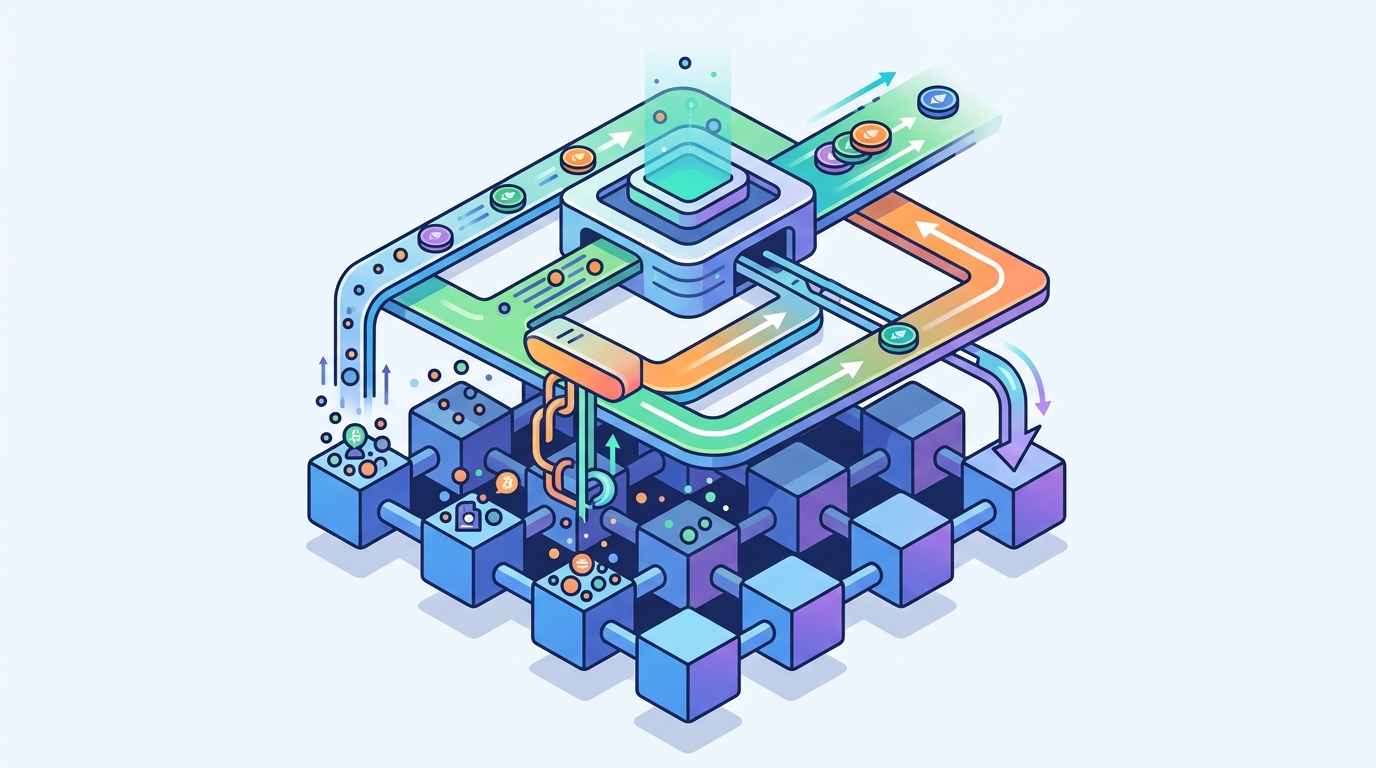
In practice, users send transactions to the L2, where a sequencer orders them quickly. The network bundles hundreds or thousands of transactions into compressed batches and posts them back to Ethereum. The base chain does not re-execute everything. It checks proofs, commitments, or summaries, then finalizes the result.
That design matters because blockchain scaling is mostly a trade-off between speed, cost, and decentralization. If you force every node to verify every transaction, you get excellent security and terrible throughput. If you relax that rule too far, you get speed but lose the properties that made the chain worth using in the first place.
- Ethereum mainnet throughput: roughly 15-30 transactions per second
- Typical L2 throughput: about 1,000-4,000 transactions per second
- Average L2 transaction cost: around $0.01-$0.08
- Average Ethereum mainnet transaction cost in Q1 2025: about $3.78
- Security anchor: roughly one million Ethereum validators
Why Ethereum Needed a Second Layer
The need for L2s comes from the scalability trilemma, a concept Vitalik Buterin described in 2017. The idea is blunt: a blockchain can optimize for decentralization, security, and scalability, but it struggles to maximize all three at once. Ethereum picked strong decentralization and security. That made the base layer reliable, but it also made the chain too expensive for everyday activity during demand spikes.
At peak congestion, Ethereum fees have historically climbed to $50 to $100 for a single transaction. That is fine for high-value settlement, but it is absurd for a coffee purchase, a game move, or a small token swap. L2s exist because the base chain alone cannot handle consumer-scale traffic at acceptable prices.
Buterin has also updated his view over time. In October 2024, he said the trilemma was not a mathematical theorem. By January 2026, he said it had been solved with running code, pointing to EIP-4844, PeerDAS work, and production-quality ZK-EVMs. That is a strong statement, and it reflects how much the Ethereum stack has shifted toward rollups.
"The scaling trilemma is not a theorem." — Vitalik Buterin, October 2024
The practical takeaway is that Ethereum stopped trying to make Layer 1 do everything. Instead, it became a settlement layer, while L2s took over execution. That is the cleanest answer anyone has found so far for a chain that wants both broad participation and real usage.
The Numbers Behind Layer 2 Savings
The reason L2s won attention so quickly is that the math is hard to ignore. Rollups batch transactions, compress data, and post only what the base chain needs to verify correctness. Since the Dencun upgrade in March 2024, they also use blob transactions instead of expensive calldata for data posting. Blobs are temporary 128 KB data chunks that live on Ethereum for about 18 days before being pruned.

That one change cut L2 data costs by roughly 10x to 100x, and the effect showed up fast. Base saw transaction volume jump 224% after Dencun. Arbitrum fees dropped 92%. Fees on L2s averaged around $0.08 compared with $3.78 on Ethereum mainnet in Q1 2025. A DeFi swap on Arbitrum could cost about $0.03, while the same action on mainnet could cost several dollars.
There is also a developer angle. Deploying a contract on L1 used to cost roughly $847. On L2, that same deployment fell to about $42. For builders, that changes the economics of experimentation. You can ship more often, test more ideas, and avoid treating every deployment like a mini capital event.
- After Dencun, L2 data posting costs fell by a factor of 10 to 100
- Base transaction volume rose 224% post-upgrade
- Arbitrum fee reduction: 92%
- Contract deployment cost: about $847 on L1 versus $42 on L2
- Rollups now handle more than 60% of total Ethereum transaction volume
Rollups, ZK Systems, and the Trade-Offs
Arbitrum, OP Mainnet, Base, zkSync Era, and StarkNet all live under the broad Layer 2 umbrella, but they do not work the same way. Optimistic rollups assume batches are valid unless someone challenges them. ZK rollups prove validity mathematically with zero-knowledge proofs. Both models improve throughput, but they make different bets on latency, complexity, and trust.
Optimistic rollups usually include a fraud-proof window of about seven days. That means withdrawals can take longer, because the system waits to see whether anyone disputes the state transition. ZK rollups can finalize much faster because the proof itself confirms correctness. That is why ZK systems are attractive for users who care about quick exits and tighter finality.
The catch is that Layer 2 is not free of trade-offs. Many L2s still depend on centralized sequencers, which creates censorship risk even if it does not create an easy theft path. Liquidity also fragments across chains, so assets and users spread out instead of pooling in one place. Bridge design remains a serious attack surface, and the industry has already seen how expensive bridge failures can be.
- L2Beat tracks security stages and TVL across rollups
- Arbitrum One holds roughly $18 billion in total value secured
- Base accounts for about 46.6% of L2 DeFi total value locked
- OP Stack powers 34 live OP chains under the Superchain umbrella
- StarkEx has processed over $1 trillion in cumulative trading volume
What Users and Builders Should Watch Next
For ordinary users, Layer 2 mostly means lower fees and faster confirmation. For builders, it means a cheaper place to launch apps without giving up Ethereum settlement. For the ecosystem, it means the center of gravity has shifted. The important question is no longer whether Ethereum can scale. It is whether the L2 stack can keep decentralizing enough to match the trust assumptions people think they are getting.
That is why the next phase matters. Ethereum’s long-term roadmap still points toward more data capacity, with full danksharding expected around 2026 to 2027. If that happens, the chain could support dozens of rollups and push aggregate throughput much higher. But the real bottleneck may be social and operational, not technical: sequencer decentralization, bridge safety, and liquidity coordination all need to improve before users can stop thinking about which chain they are on.
If you build in crypto, the smart move is to treat Layer 2 as the default deployment target for consumer apps, while keeping a close eye on security assumptions. If you use crypto, ask a simpler question before every transfer: do I need Layer 1 finality, or do I just need the cheapest path that still settles back to Ethereum? That answer will decide where your money and your attention should go.
For a deeper look at how Ethereum’s scaling roadmap connects to app design, see our explainer on Dencun’s effect on rollup fees.
// Related Articles
- [CHAIN]
Web3 Communication Is Becoming Trust Infrastructure
- [CHAIN]
Why Base’s x402 Protocol Matters More Than the $100M Milestone
- [CHAIN]
Gala Games Finds New Life in Web3 Gaming
- [CHAIN]
Why Lace 2.0 Matters More Than Cardano’s Next Hard Fork
- [CHAIN]
Why Ethereum Treasury Buying Is Becoming a Bad Long-Term Bet
- [CHAIN]
Yakovenko Warns AI Could Crack PQC Wallets