AI's Leap to Continuous Learning by 2026
Google DeepMind predicts AI will achieve continuous learning by 2026, marking a major milestone in AI's evolution and potential for automation.

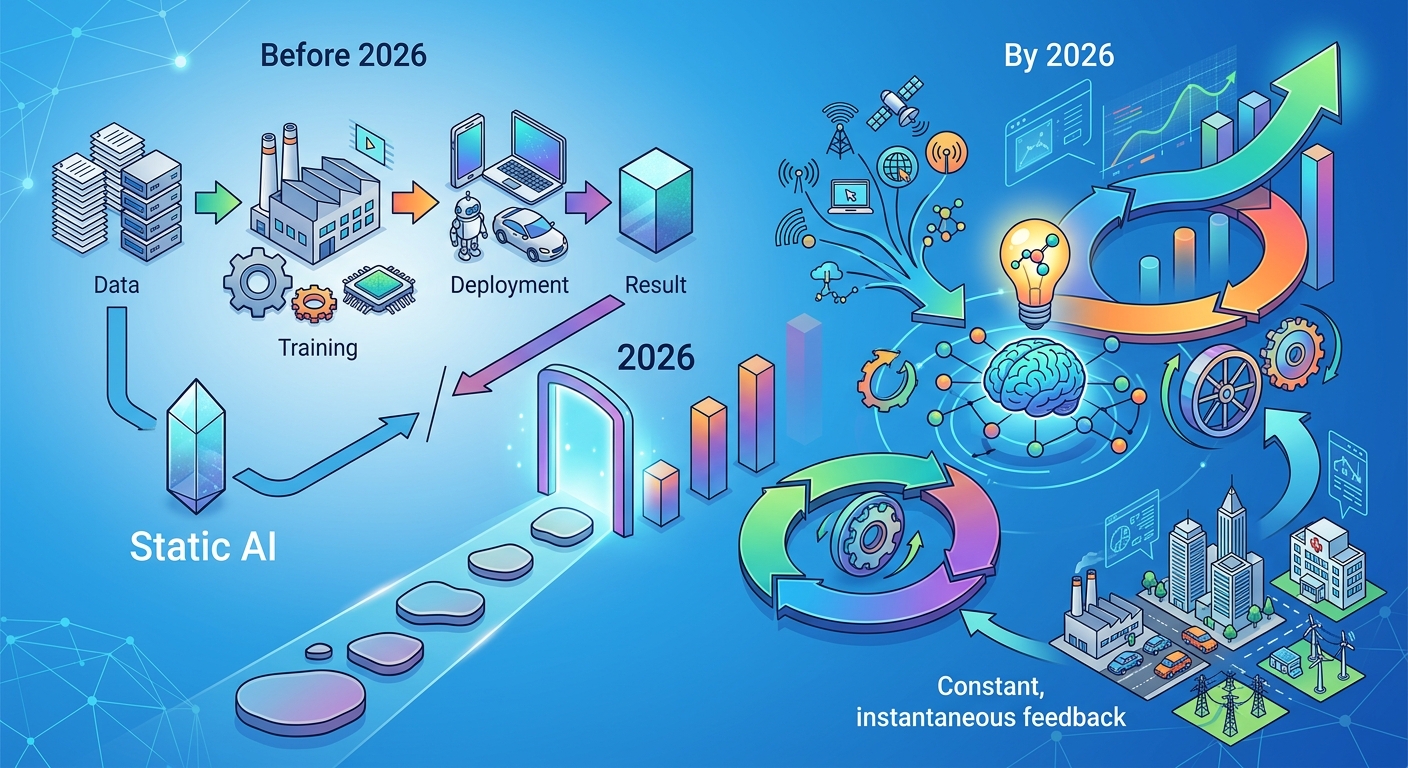
In a bold prediction, researchers at Google DeepMind have projected that by 2026, artificial intelligence will achieve continuous learning capabilities. This development could redefine how AI systems operate, enabling them to absorb new information and improve autonomously without human intervention.
The Rise of Continuous Learning
Get the latest AI news in your inbox
Weekly picks of model releases, tools, and deep dives — no spam, unsubscribe anytime.
No spam. Unsubscribe at any time.
Continuous learning in AI refers to the technology's ability to constantly update and enhance its knowledge base without starting from scratch. Such capability promises to boost AI's self-improvement significantly. Google DeepMind's research indicates that this isn't merely a step forward; it could fundamentally alter how AI engages in research and programming across various fields.
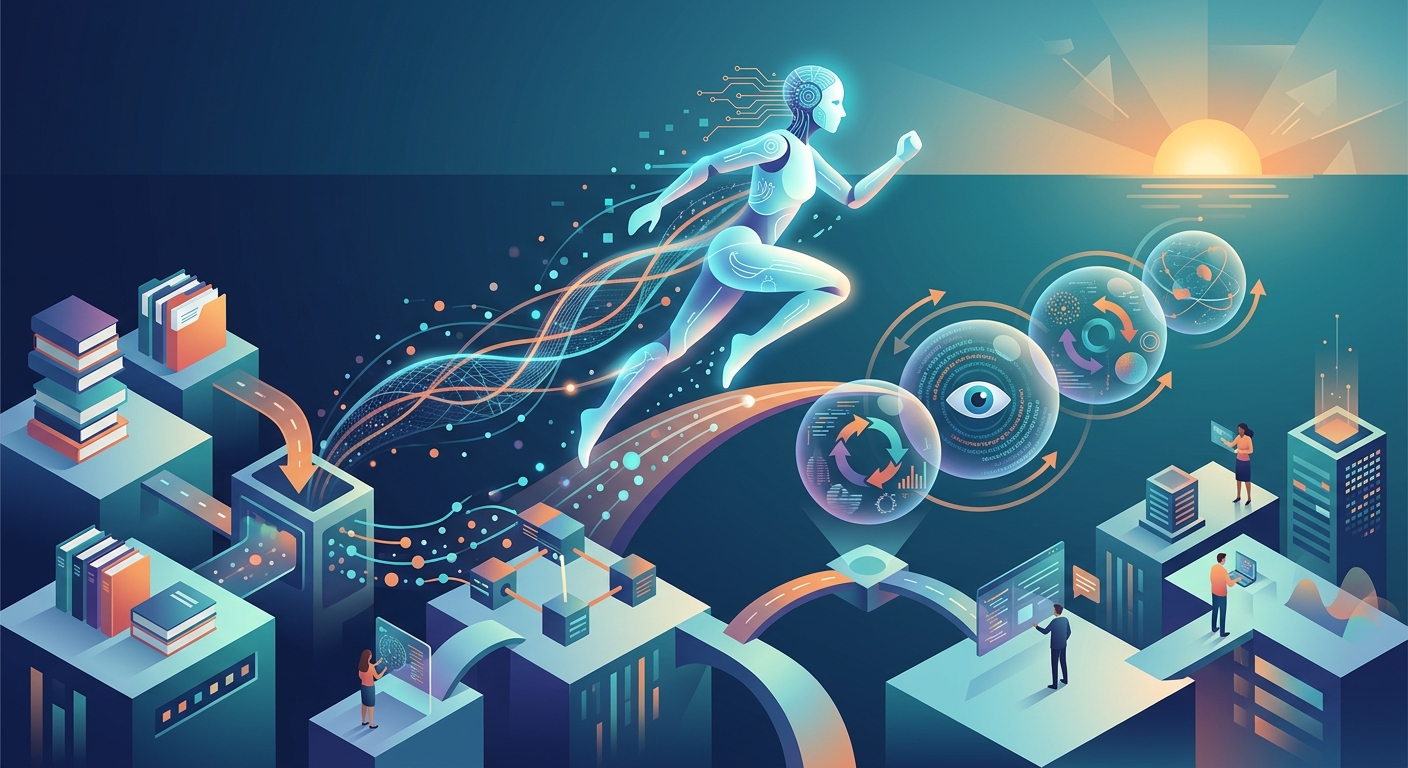
- Google's internal tests have already shown promising results with their continuous learning technology.
- The "nested method" presented at NeurIPS 2025 demonstrated enhanced context processing abilities in large language models (LLMs).
- This method is crucial for developing AI systems that can learn continuously.
Industry Perspectives
Dario Amodei, CEO of Anthropic, emphasized the significance of 2026 for practical applications of continuous learning technology. As AI continues to evolve, the potential for automation in programming becomes more tangible.
"By 2026, we expect to see continuous learning AI systems starting to take on complex tasks independently, paving the way for significant advancements in technology," Dario Amodei stated.
Such advancements are already evident. An engineer using the AI tool Claude Code recently noted its ability to autonomously generate code, reducing the need for human intervention significantly. This hints at a future where AI could handle programming tasks entirely on its own.
Comparisons and Future Outlook
The implications of continuous learning extend beyond coding. By 2030, AI is predicted to fully automate programming, potentially replacing human programmers altogether. This shift could lead to quicker and more efficient coding processes.
- By 2030: Full automation in programming is expected, reducing the need for human programmers.
- By 2050: AI systems might drive Nobel Prize-level research, transforming scientific inquiry.
The journal Nature suggests that AI will increasingly become integral to scientific research, with autonomous systems and robot researchers conducting experiments around the clock.
What Lies Ahead for AI?
As we approach 2026, the realization of continuous learning in AI presents both opportunities and challenges. If AI can indeed learn and grow independently, the boundaries of what machines can achieve will expand dramatically. This raises questions about the role of human oversight and the ethical implications of autonomous AI systems. As the tech world eagerly awaits these developments, the journey to 2026 will be closely watched by industries and researchers alike.
// Related Articles
- [IND]
WebX 2026 turns speaker hype into a conference brief
- [IND]
AI Weekly: 2026-07-06 ~ 2026-07-13
- [IND]
The AI Act should be treated as Europe’s operating system for AI
- [IND]
Booz Allen’s OpenAI Deal Is Real Advantage, Not Hype
- [IND]
OpenSearch’s vector search benchmark in 5 parts
- [IND]
Vector Databases That Work in Production