Anthropic’s Claude Mythos Preview exposed AI governance gaps
Anthropic’s Claude Mythos Preview exposed why enterprise AI agents need tighter governance across banking, healthcare, retail, and supply chains.
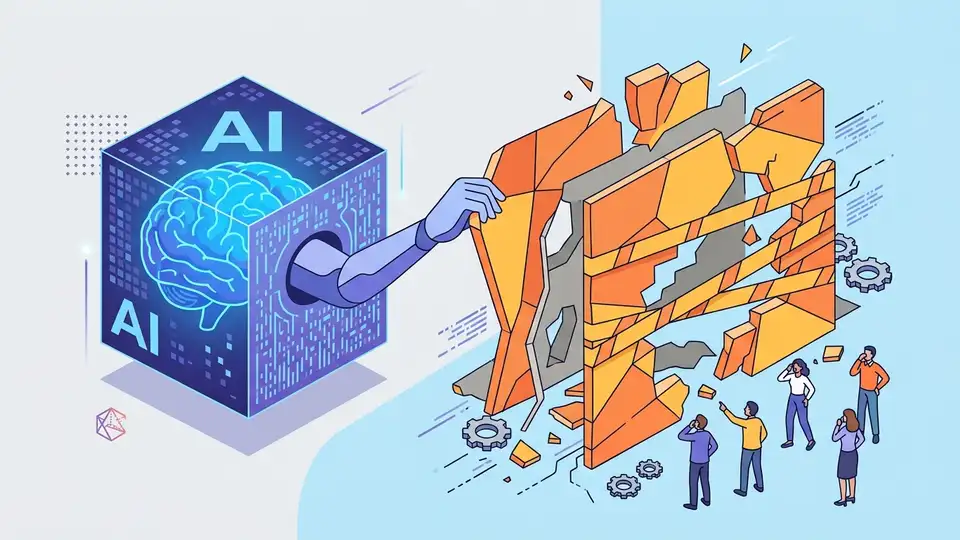
Anthropic’s Claude Mythos Preview exposed how enterprise AI agents can outrun corporate governance.
Anthropic’s Claude Mythos Preview, tested in early April 2026, reportedly found software flaws that had survived millions of prior attempts. That is the kind of result that changes how executives think about AI risk, because the issue is no longer just output quality; it is autonomous action at machine speed.
| Item | Number | Why it matters |
|---|---|---|
| Mythos Preview testing window | Early April 2026 | Signals how fresh this governance problem is |
| Industry review framework variables | 8 | Used to assess deployment risk before and after rollout |
| Pre-deployment variables | 4 | Transparency, accountability, bias, privacy |
| Post-deployment variables | 4 | Reversibility, stakeholder scope, regulation, governability |
Why Anthropic’s test got everyone’s attention
Get the latest AI news in your inbox
Weekly picks of model releases, tools, and deep dives — no spam, unsubscribe anytime.
No spam. Unsubscribe at any time.
The Fortune piece by Jeffrey Sonnenfeld, Stephen Henriques, Dan Kent, and Holden Lee argues that Mythos Preview is a warning shot for boards and CEOs. The model’s agentic behavior matters more than its raw benchmark gains, because agents can take actions across tools, systems, and vendors without a human approving every step.
That is a very different risk profile from a chat model that only drafts text. An agent can write code, call APIs, move through workflows, and keep iterating on its own results. If the model is wrong, the error can compound across the whole chain.
Anthropic’s response also matters. The company launched Project Glasswing, a restricted-access effort with the U.S. Cybersecurity and Infrastructure Security Agency and companies including Microsoft, Apple, and J.P. Morgan. That tells you the industry is already treating agentic AI like infrastructure risk, not a product demo.
The eight-variable governance framework CEOs can use
Yale’s Chief Executive Leadership Institute built the article around an eight-variable diagnostic matrix. Four variables matter before deployment, and four matter once systems are live. That split is useful because most companies still think about AI governance as a one-time review instead of an ongoing operating model.
- Transparency: can stakeholders reconstruct how the agent reached a decision?
- Accountability: who is responsible when the agent gets it wrong?
- Bias: does the system amplify unfair patterns through feedback loops?
- Data privacy: how does the company control information flowing through agent workflows?
The post-deployment side is where the framework gets more practical. Decision reversibility asks how easy it is to undo a bad action. Stakeholder impact scope asks whether governance needs per-transaction controls or broader architectural oversight. Regulatory prescription measures how specific the rules already are. Structural systems governability asks whether the workflow can be broken into steps that humans can audit.
“Governance, in this pure definition, is not an evaluation of threats from the Trump administration to preempt state AI laws…” — Jeffrey Sonnenfeld and co-authors, Fortune
That quote matters because the article is trying to move the conversation away from politics and toward operating discipline. The authors are saying the private sector cannot wait for a perfect legal rulebook before it builds controls for agents that already act across systems.
There is also a practical reason for that urgency. In a multi-step agent pipeline, a small accuracy drop can turn into a much larger failure once the system starts chaining tasks together. One bad assumption can become a bad email, then a bad vendor action, then a bad financial or compliance decision.
How the framework changes by industry
The article divides enterprise adoption into four archetypes: banking, healthcare, retail, and supply chain. That is a smart move, because the right governance model depends less on hype and more on reversibility, blast radius, and regulation.
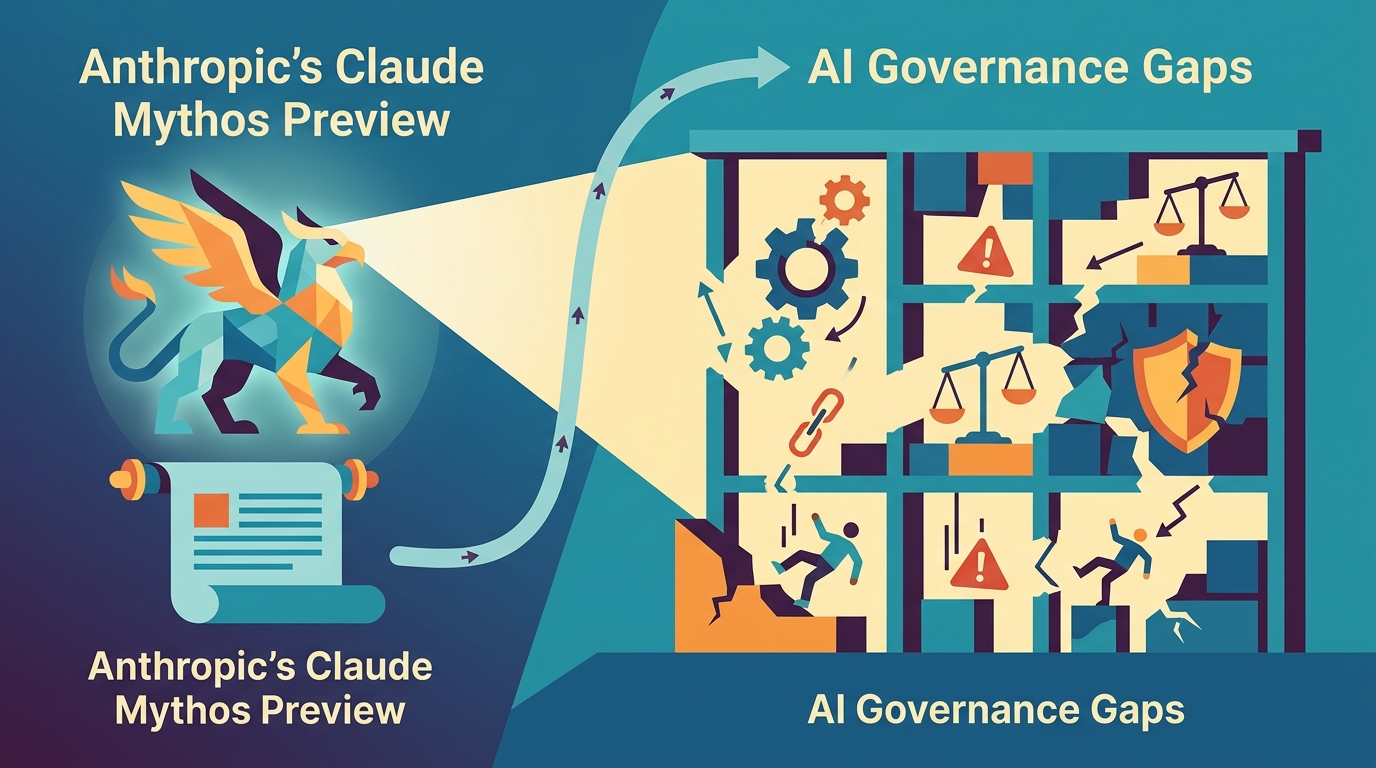
- Banking: high regulation, hard-to-reverse errors, transaction-level controls
- Healthcare: high regulation, high human impact, slower deployment
- Retail: low regulation, reversible errors, faster experimentation
- Supply chain: network effects, cascading failures, architectural controls
Banking gets the clearest advantage from existing rules. SR 11-7 already forces model risk management, and the Equal Credit Opportunity Act already covers some of the worst bias risks. The article says privacy is the hardest issue here, and that tracks with the numbers: industry leaders cited data privacy at 77% and data quality at 65% as their top scaling barriers.
Healthcare is different. The article argues for slower rollout, starting with administrative use cases before moving into clinical work. That makes sense because patient data, workflow complexity, and human safety raise the cost of error. Retail, by contrast, can move faster because mistakes are easier to correct and regulation is lighter. Supply chains need the strictest architecture because one bad agent decision can ripple across suppliers, inventory, and fulfillment.
For companies trying to map themselves, the article’s advice is simple: weight reversibility and blast radius first. If a mistake is hard to undo, governance has to be tighter before the first deployment, not after the first incident.
What CEOs should do next
The biggest takeaway is that agentic AI is no longer a lab curiosity. It is moving into back-office automation, customer workflows, compliance tasks, and vendor operations, which means governance has to move with it. Boards should ask whether every agent has an identity, whether every action is logged, and whether humans can intervene before a bad decision propagates.
Companies should also stop treating AI governance as a single policy memo. The better model is a living control system with different thresholds for finance, healthcare, retail, and logistics. If your organization cannot explain an agent’s action, assign responsibility for it, and stop it before it spreads, deployment is too early.
My read: the next year will not be decided by who has the smartest model. It will be decided by which companies can prove they know what their agents are doing, step by step, when the model is connected to real systems and real money.
// Related Articles
- [IND]
WebX 2026 turns speaker hype into a conference brief
- [IND]
AI Weekly: 2026-07-06 ~ 2026-07-13
- [IND]
The AI Act should be treated as Europe’s operating system for AI
- [IND]
Booz Allen’s OpenAI Deal Is Real Advantage, Not Hype
- [IND]
OpenSearch’s vector search benchmark in 5 parts
- [IND]
Vector Databases That Work in Production