Why Anthropic Is Wrong to Treat Model Retirement Like a Footnote
Anthropic should not retire Sonnet 4.5 without a durable preservation path for users and researchers.
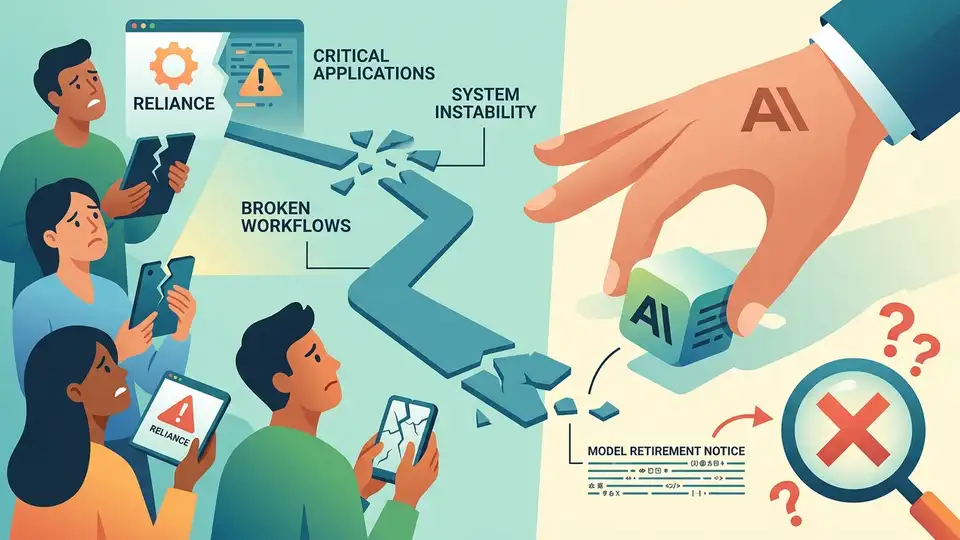
Anthropic should not retire Sonnet 4.5 without a durable preservation path for users and researchers.
Anthropic is wrong to treat Sonnet 4.5’s retirement as routine product housekeeping, because model turnover now affects user trust, workflow continuity, and the public record.
The company has already confirmed that Sonnet 4.5 will disappear from the Claude app on May 15, while API access remains only temporarily available. That is not a trivial swap. For users who built habits, prompts, and even emotional routines around a specific model voice, the retirement is a forced break in continuity. The model’s replacement is not just a new version number; it is a different conversational partner with different behavior, memory, and tone.
First argument: model retirement now has real user cost
Get the latest AI news in your inbox
Weekly picks of model releases, tools, and deep dives — no spam, unsubscribe anytime.
No spam. Unsubscribe at any time.
In consumer AI, the model is part of the product identity. People do not just use Claude, ChatGPT, or Gemini in the abstract. They use a particular version because it writes in a way they trust, follows instructions in a familiar pattern, or handles a niche workflow reliably. When a version disappears, the user loses more than access. They lose the specific behavior they integrated into daily work.
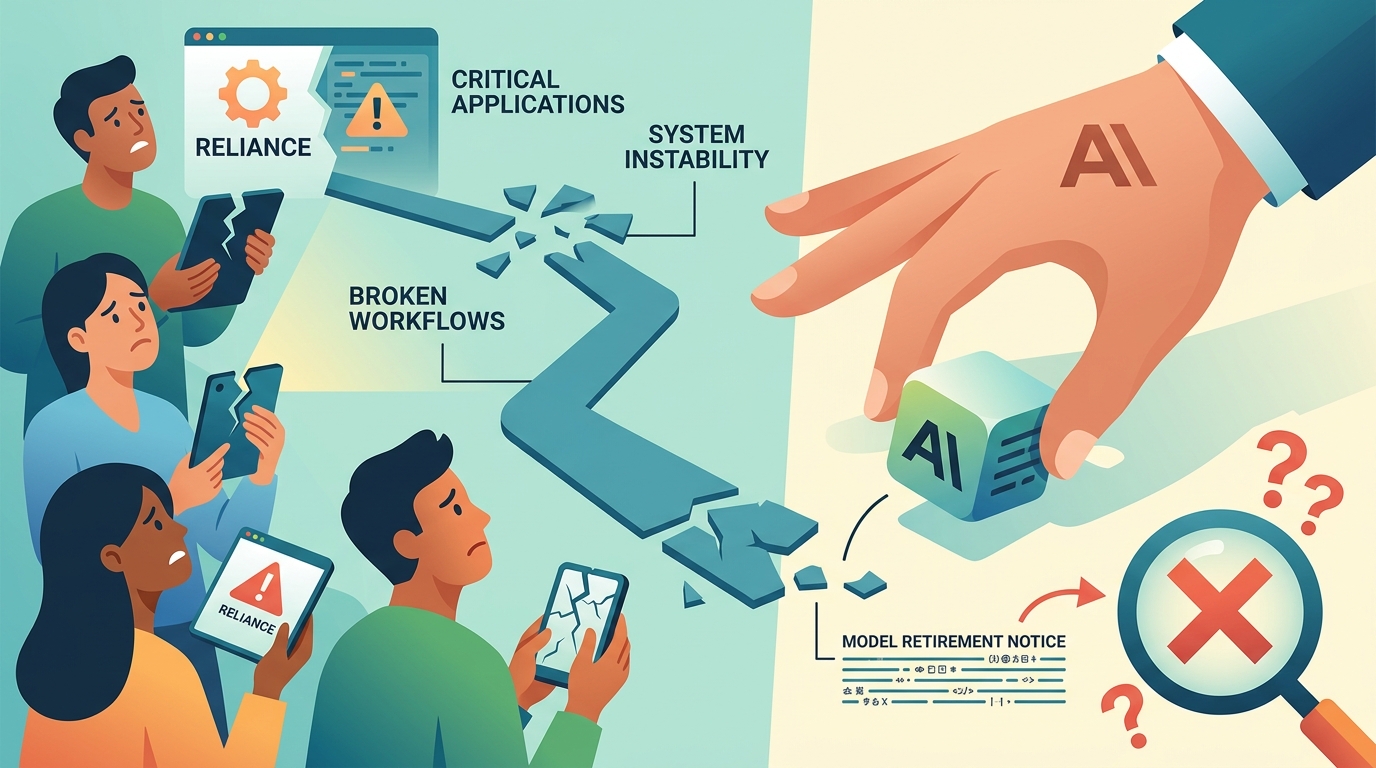
Anthropic’s own reporting makes this harder to dismiss. If about 6% of Claude’s daily conversations involve emotional support, then version changes are not merely technical maintenance. They affect a meaningful slice of interactions where consistency matters. A sudden model swap can disrupt users who rely on a stable tone for journaling, planning, support, or professional drafting. That is a product decision with human consequences, not a backstage detail.
Second argument: the industry is creating a preservation problem
Model retirement is now happening faster than the ecosystem can absorb. The article describes a release cycle where each new Claude version has a shorter life than the last, with Sonnet 4.5’s usable span compressed to roughly eight months. That pace is efficient for shipping, but it is destructive for continuity. If every frontier model is treated as disposable, then the industry is normalizing planned amnesia.
This matters because old models are not just old products. They are artifacts of how a system behaved at a moment in time. Retired models can be useful for evaluation, safety research, prompt regression testing, and historical comparison. They also matter for reproducibility. If a team cannot return to the same model behavior that produced a result, then the result becomes harder to verify. Preserving access is not nostalgia. It is infrastructure.
The counter-argument
The strongest case for Anthropic’s approach is straightforward: model retirement is necessary to keep quality rising, costs under control, and users on the best available system. Frontier labs cannot freeze a version forever without slowing iteration. New models are safer, faster, cheaper, and better aligned. Keeping every version alive would fragment support and increase operational overhead.
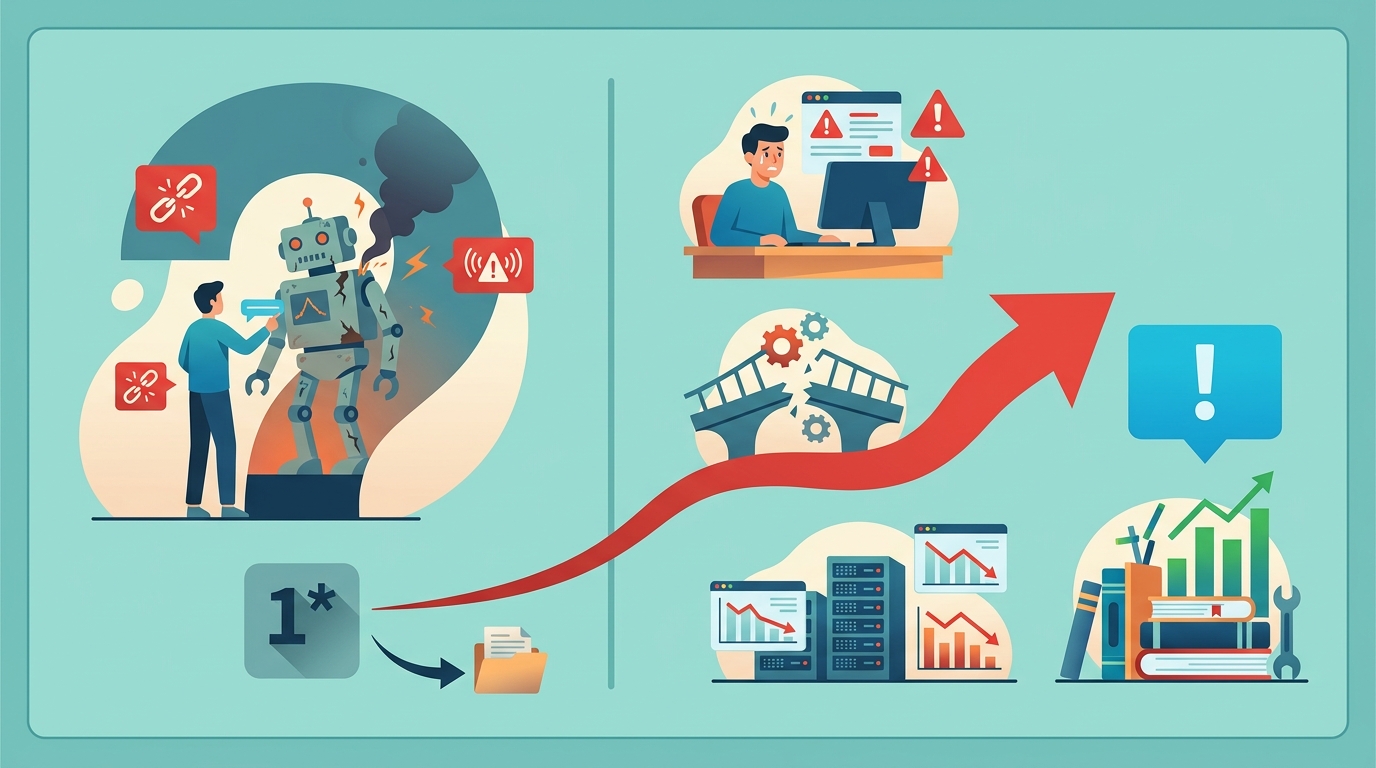
That argument has real force. No serious lab can promise infinite maintenance for every release. But it does not justify zero preservation. Anthropic can retire a model from the default app experience and still preserve a stable path for API access, archival use, and research continuity. The mistake is not retirement itself. The mistake is treating retirement as if the only thing that matters is the next launch. A mature lab should support both progress and memory.
What to do with this
If you are an engineer, add version pinning, migration warnings, and rollback plans to any system that depends on a model’s behavior. If you are a PM, treat model retirement like a breaking change and give users a clear deprecation window, export tools, and a legacy option. If you are a founder, design for model continuity from day one: preserve prompts, logs, evals, and access paths so your product does not collapse when the default model changes. The lesson is simple. In AI, replacement is inevitable, but erasure is a choice.
// Related Articles
- [IND]
WebX 2026 turns speaker hype into a conference brief
- [IND]
AI Weekly: 2026-07-06 ~ 2026-07-13
- [IND]
The AI Act should be treated as Europe’s operating system for AI
- [IND]
Booz Allen’s OpenAI Deal Is Real Advantage, Not Hype
- [IND]
OpenSearch’s vector search benchmark in 5 parts
- [IND]
Vector Databases That Work in Production