Why Anthropic’s SpaceX deal proves AI coding needs more compute, not …
Anthropic’s SpaceX deal shows AI coding progress now depends on massive compute, not product theater.

Anthropic’s SpaceX deal shows AI coding progress now depends on massive compute, not product theater.
Anthropic’s deal to use SpaceX computing resources is the right move, and it proves the AI coding race is now a compute race disguised as a product race. The companies that can train, test, and iterate at scale will ship better coding systems faster, while everyone else will keep talking about agentic workflows and missing the bottleneck that matters most: raw infrastructure.
Compute is the real moat in AI coding
Get the latest AI news in your inbox
Weekly picks of model releases, tools, and deep dives — no spam, unsubscribe anytime.
No spam. Unsubscribe at any time.
AI coding tools are only as good as the volume of experiments behind them. Every meaningful jump in code generation, debugging, repo-level reasoning, and tool use comes from running more training jobs, more evaluation suites, and more reinforcement loops. A company that wants better coding agents needs a lot more than a clever prompt layer; it needs sustained access to chips, storage, and networking that can absorb constant iteration.
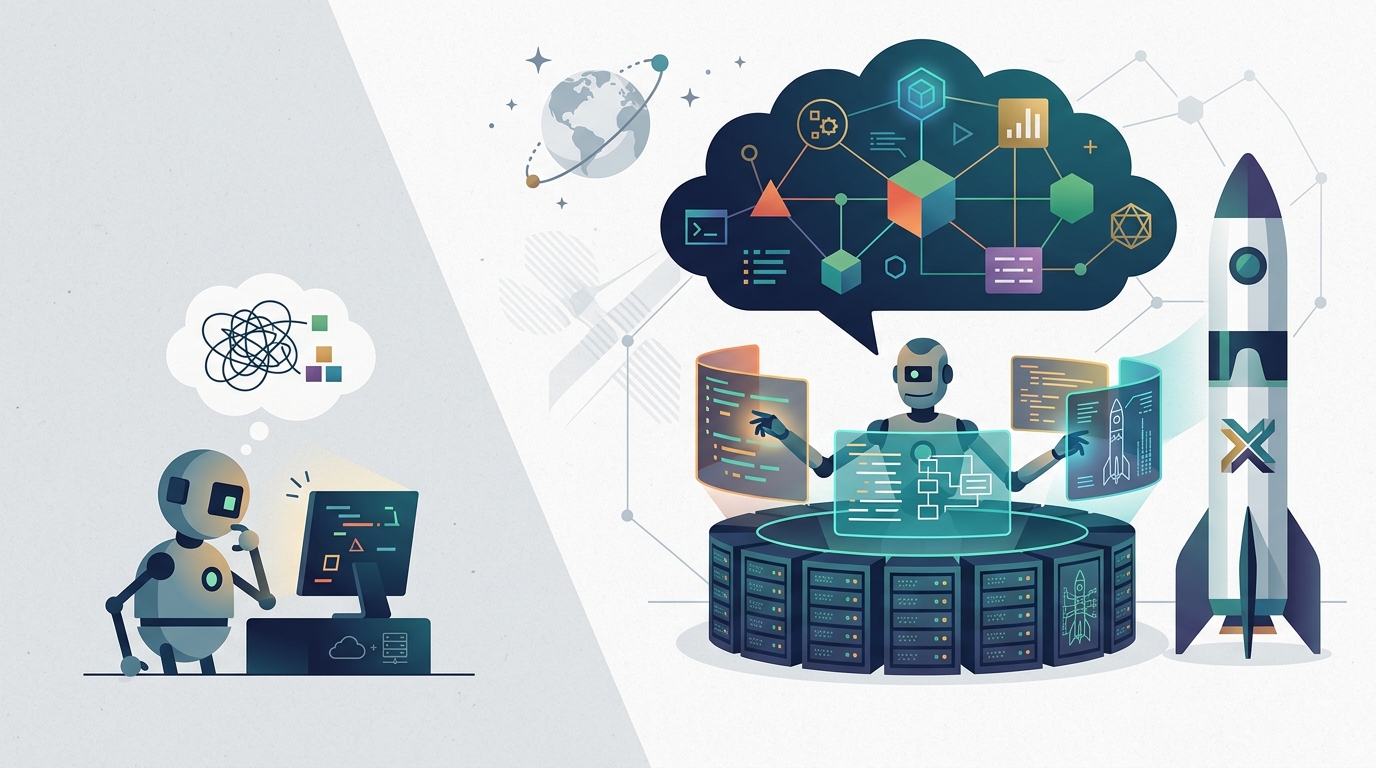
The SpaceX deal matters because it gives Anthropic another path to the one resource that keeps tightening across the AI industry. Reuters framed the agreement as a boost in the high-stakes artificial intelligence contest, and that is exactly right. The firms winning in coding are not the ones with the loudest demos. They are the ones with enough infrastructure to keep improving when model size, context length, and agent reliability all demand more compute.
Partnerships now matter more than pure vertical integration
Anthropic’s move also shows that the best strategy is not owning every layer yourself. In AI, infrastructure alliances beat isolation. If you can secure external compute from a company with deep physical assets and a different strategic profile, you reduce dependency on a single cloud lane and gain leverage in a market where capacity is scarce and expensive.
SpaceX is not a random vendor here. It is a company built around solving hard systems problems at scale, which makes it a fitting counterparty for a model lab that needs reliable, high-throughput compute. The deal is also a signal to the market: frontier AI firms are increasingly forming pragmatic alliances with nontraditional infrastructure players because the old cloud relationships alone are not enough to support the next phase of model development.
The coding product story is still downstream of infrastructure
Anthropic has been pushing hard on AI coding, and that matters because coding is one of the clearest commercial use cases for frontier models. But the product narrative hides the operational truth. Better coding assistants require better retrieval, better long-horizon planning, better sandbox execution, and better post-training. All of that consumes compute at a pace that makes efficiency important, but not sufficient.
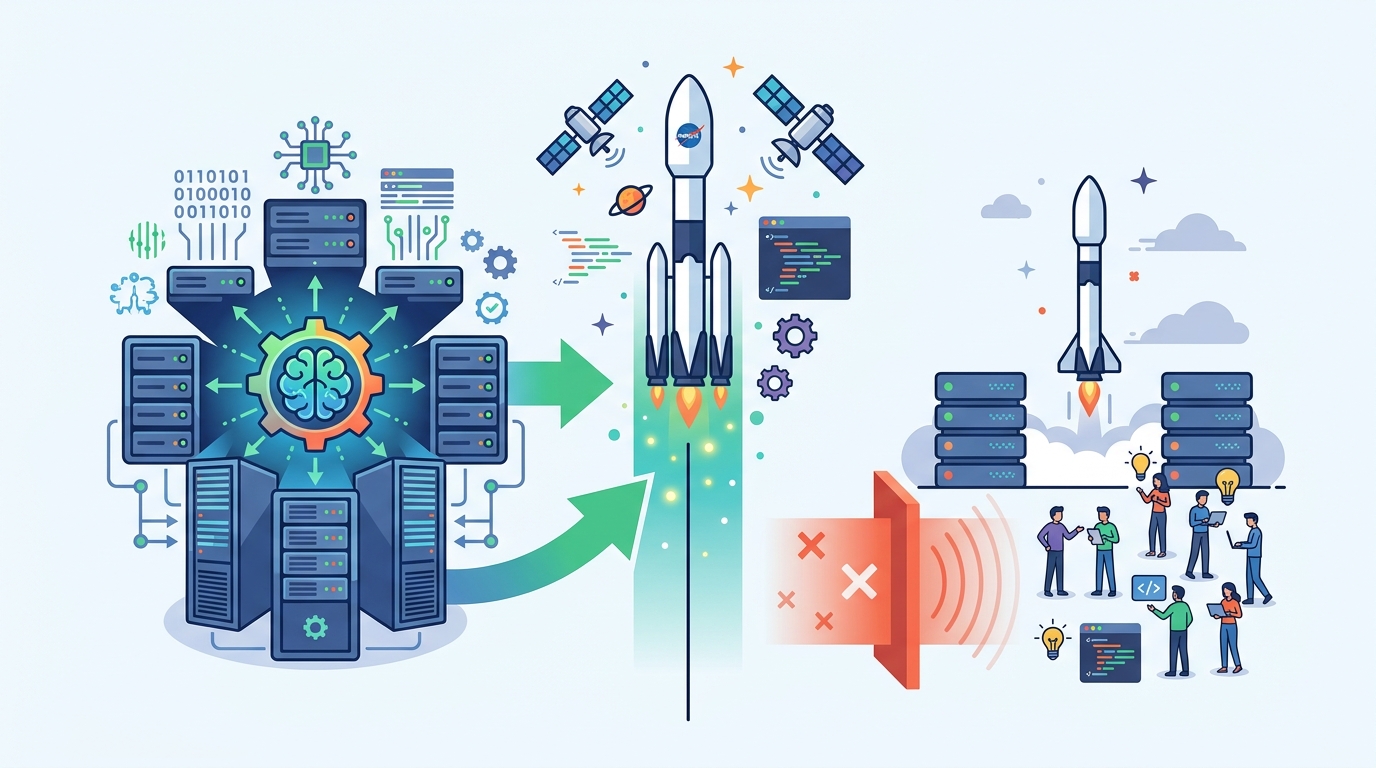
The industry keeps pretending that software quality is mostly a UX problem. It is not. When coding agents fail, they fail because the underlying model was not trained or evaluated enough on the right tasks, or because the system could not afford the cycles needed to improve. Anthropic’s SpaceX deal is a blunt reminder that the winners in AI coding will be the labs that can afford relentless experimentation, not the ones that merely package the best interface.
The counter-argument
Supporters of the more skeptical view will say this is just another example of the AI industry’s compute arms race, and that compute alone does not guarantee better products. They are right on one narrow point: throwing more infrastructure at a weak model does not magically create reliable agents. Product design, data quality, and evaluation discipline still matter. A company can waste enormous sums and still ship brittle tools.
But that critique misses the actual constraint. In frontier AI, compute is not a substitute for good engineering. It is the prerequisite that makes good engineering possible at scale. Anthropic is not buying GPU vanity. It is buying the ability to keep improving a coding system in a market where every serious competitor is doing the same. The limit is real, but it does not weaken the case for the deal. It strengthens it, because disciplined teams need enough capacity to test what works and discard what does not.
What to do with this
If you are an engineer, PM, or founder building AI products, stop treating compute as a back-office line item. Plan for it as a strategic dependency. Budget for evaluation runs, agent simulation, and post-training from day one. Choose partners and cloud contracts the way you choose model architecture: with an eye on scale, resilience, and optionality. The teams that win in AI coding will be the ones that design around infrastructure constraints instead of discovering them after launch.
// Related Articles
- [IND]
WebX 2026 turns speaker hype into a conference brief
- [IND]
AI Weekly: 2026-07-06 ~ 2026-07-13
- [IND]
The AI Act should be treated as Europe’s operating system for AI
- [IND]
Booz Allen’s OpenAI Deal Is Real Advantage, Not Hype
- [IND]
OpenSearch’s vector search benchmark in 5 parts
- [IND]
Vector Databases That Work in Production