Why the Clarity Act's stablecoin compromise is a win for banks and a …
The Clarity Act compromise protects bank-style yield while forcing crypto rewards to justify real activity.

The Clarity Act compromise protects bank-style yield while forcing crypto rewards to justify real activity.
The new stablecoin language is the right outcome because it blocks crypto firms from copying bank deposits while still allowing rewards tied to real platform use.
Friday’s text does exactly what regulators should have done months ago: it draws a line between payment stablecoins and interest-bearing deposits. The bill would ban yield that is “economically or functionally equivalent” to a bank deposit, but it leaves room for “bona fide activities or bona fide transactions.” That is the correct policy split. A company can reward users for spending, moving, or using a network. It should not be allowed to market a stablecoin as a de facto savings account and then insist it is just a loyalty program.
Stablecoin rewards become dangerous when they imitate deposits
Get the latest AI news in your inbox
Weekly picks of model releases, tools, and deep dives — no spam, unsubscribe anytime.
No spam. Unsubscribe at any time.
The most important detail in the text is the anti-substitution rule. The draft does not merely say “no yield”; it says no yield that behaves like bank interest. That matters because the stablecoin market has spent years blurring that line. If a customer can park dollars in a token, receive a return for doing nothing, and treat that product as a cash alternative, then the issuer is not building payments infrastructure. It is building a shadow deposit product without the same prudential rules.
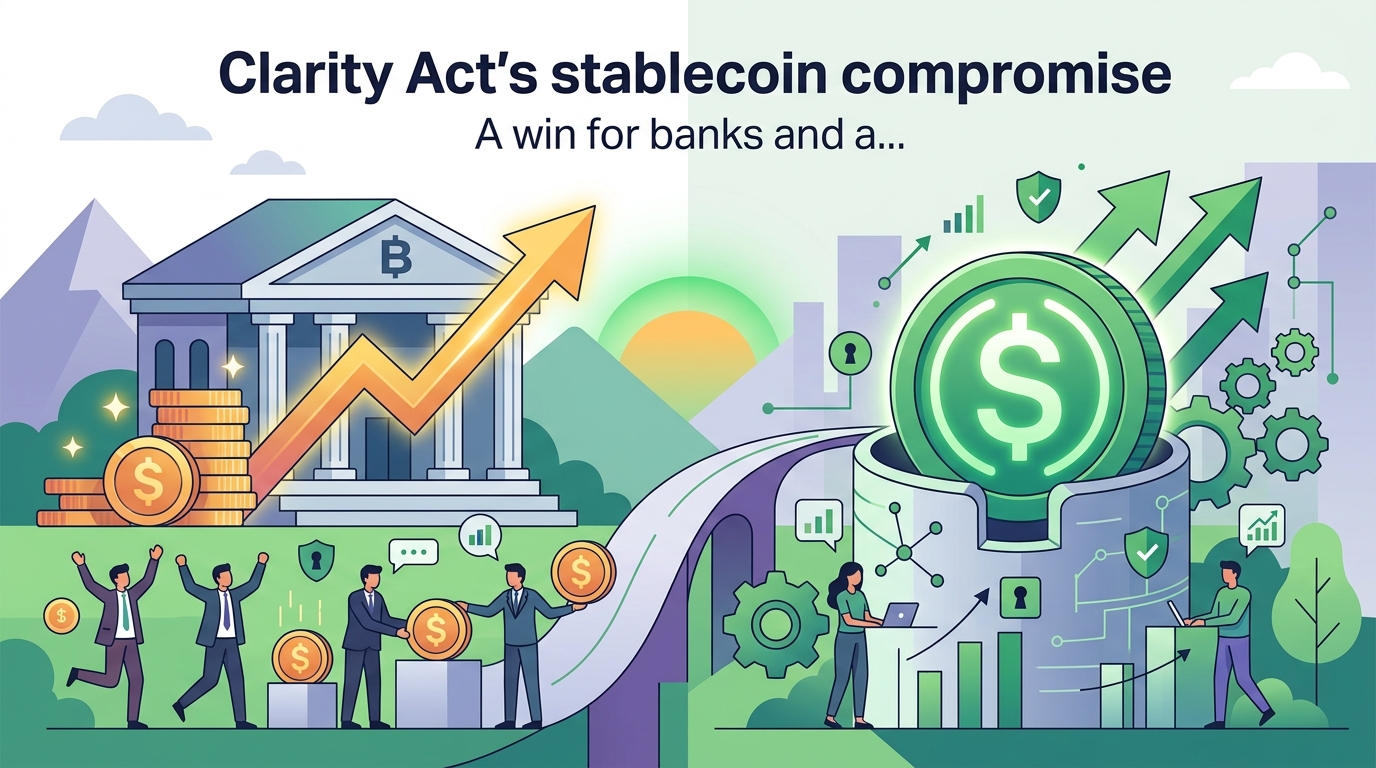
That is why the bank lobby’s argument is not just self-interested noise. Depository institutions fund lending, payment rails, and credit creation under a regulated framework. If stablecoin issuers can siphon off short-term balances by paying deposit-like rewards, they can hollow out a core banking function while avoiding the obligations banks carry. The compromise protects the system from that arbitrage. It does not ban competition. It bans regulatory cosplay.
Activity-based rewards are the only defensible crypto incentive model
The carve-out for “bona fide” activity is the best part of the text because it forces crypto firms to earn the reward with actual utility. A card network can pay cashback for purchases because the user is transacting. A stablecoin platform can do the same if the reward is tied to spending, settlement, or network participation. What it cannot do is call idle balance yield a consumer benefit and pretend the source of that return is irrelevant.
That distinction will push the industry toward healthier product design. One crypto executive in the story described the shift as moving from “buy and hold” to “buy and use.” That is exactly the point. If stablecoins are useful, they should win on speed, portability, and settlement efficiency, not on a disguised interest rate. The firms that can build real usage loops will still have a business. The firms whose only pitch is “hold this token and collect more tokens” will have to change or shrink.
The rulemaking process is a feature, not a loophole
The draft gives Treasury and the CFTC a year to write rules, and critics will call that an opening for gaming. It is not. It is the only practical way to police a fast-moving market without freezing every legitimate incentive into the same bucket as deposit interest. The text already signals the right factors for regulators to weigh: balance, duration, tenure, the nature of the activity, and whether the program is an incentive scheme. That gives agencies enough structure to separate genuine usage rewards from synthetic yield.
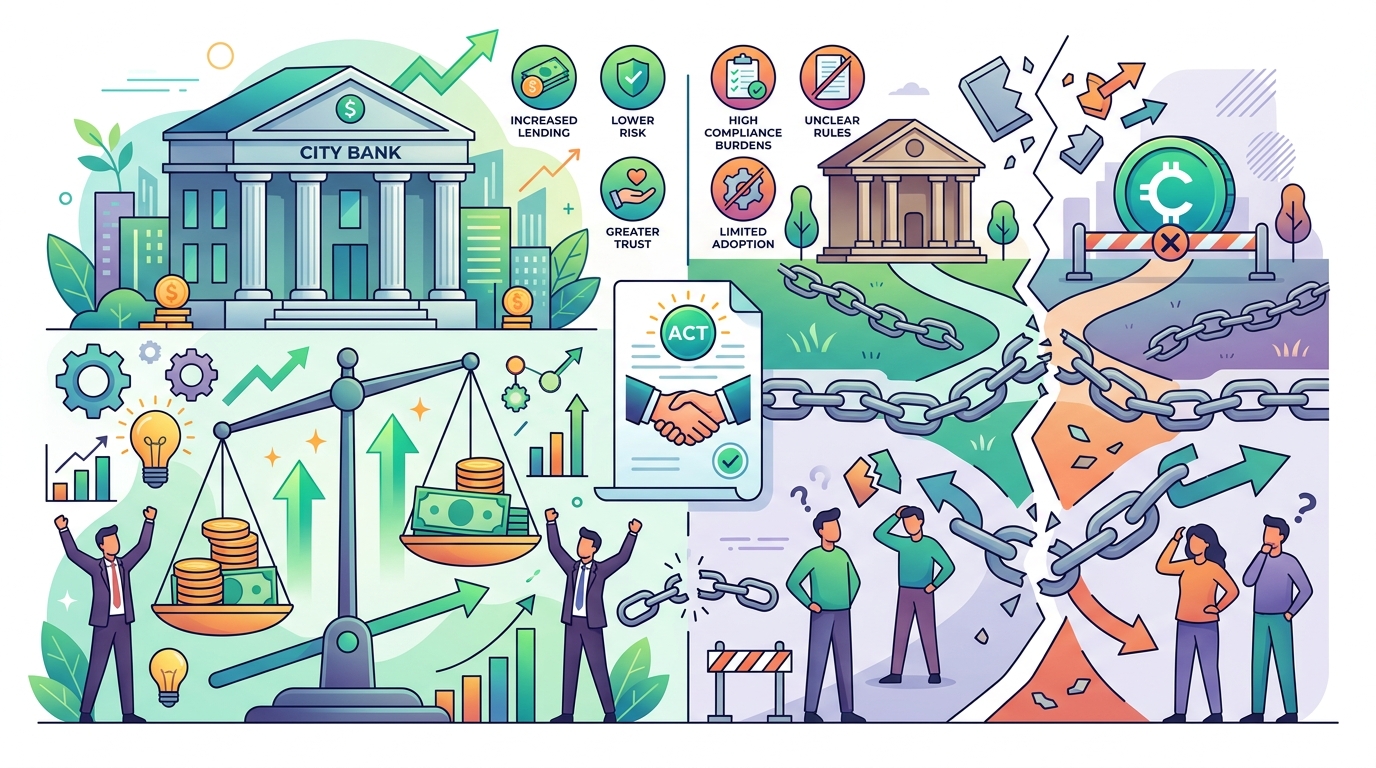
Corey Frayer’s warning that firms might try to do the activity first and pay returns later is worth taking seriously, but it does not sink the compromise. It proves the need for strong rulemaking and anti-evasion language, not a blanket ban on all rewards. The government is capable of drawing lines around substance over form. Securities law, banking law, and consumer protection law all do this every day. Crypto should not get a special exemption just because product engineers are creative with labels.
The counter-argument
The strongest objection is that this language entrenches banks by letting them keep the most valuable part of the relationship, which is cheap deposits, while limiting stablecoin issuers to a narrower set of incentives. Crypto advocates will say that this is protectionism dressed up as consumer protection. They will also argue that stablecoin rewards are a legitimate way to pass through value to users, especially in a market where payments infrastructure is still fragmented and expensive.
That criticism has force. The line between a loyalty reward and a disguised yield product can be blurry, and regulators will need to police it carefully. There is also a real risk that overly cautious rulemaking could chill useful product experimentation. But that is an argument for precision, not permissiveness. The compromise accepts the right tradeoff: let firms reward actual use, but stop them from selling a bank substitute under a crypto label. If a product depends on paying people to do nothing, it is not innovation. It is deposit competition without deposit discipline.
What to do with this
If you are a founder or product lead, redesign stablecoin incentives around measurable activity now. Tie rewards to payments, transfers, merchant usage, or network participation, and document why the program is not a deposit analog. If you are an engineer, build the telemetry and compliance hooks that let legal teams prove the difference. If you are a PM, stop pitching “yield” and start pitching utility. The market is being told, clearly, that passive stablecoin returns are out and real-use rewards are in.
// Related Articles
- [CHAIN]
UAE Web3 setup turns crypto rules into a checklist
- [CHAIN]
Five AI Futurist features shaping Futurist 2026
- [CHAIN]
Regulation Now Moves Bitcoin and Ethereum More Than War
- [CHAIN]
The SEC Crypto Rule Proposal Will Clean Up Crypto, Not Kill It
- [CHAIN]
Web3 platforms need fee discipline, not token theatrics, to make money
- [CHAIN]
Riyadh’s blockchain show proves Web3 is now infrastructure