OpenAI forms $4B unit for enterprise AI rollout
OpenAI formed a $4 billion deployment unit with 19 firms to speed enterprise AI adoption and support corporate rollouts.

OpenAI created a $4 billion deployment unit to speed enterprise AI rollouts with 19 partner firms.
OpenAI is putting real money behind its corporate push: a new deployment unit tied to a $4 billion commitment and a group of 19 firms. The move is aimed at the messy part of AI adoption that happens after the demo, when companies need integration, governance, and people who can actually get models into production.
The structure matters. This is not a one-off services contract or a simple financing headline. It is a multi-year committed partnership led by TPG, with Advent, Bain Capital, and Brookfield as co-lead founding partners, according to the company.
| Item | Figure | Why it matters |
|---|---|---|
| Investment commitment | $4 billion | Signals serious capital behind enterprise deployment |
| Partner firms | 19 | Shows broad support across the partnership |
| Partnership model | Multi-year | Suggests a long rollout window, not a short pilot |
| Lead partner | TPG | Private equity backing adds operating and distribution muscle |
Why OpenAI is building a deployment unit
Get the latest AI news in your inbox
Weekly picks of model releases, tools, and deep dives — no spam, unsubscribe anytime.
No spam. Unsubscribe at any time.
Enterprise AI is no longer about whether a model can answer questions. The harder question is whether it can fit inside a company’s systems, compliance rules, security reviews, and budgets. That is where deployment teams matter, and that is the gap OpenAI is trying to fill.
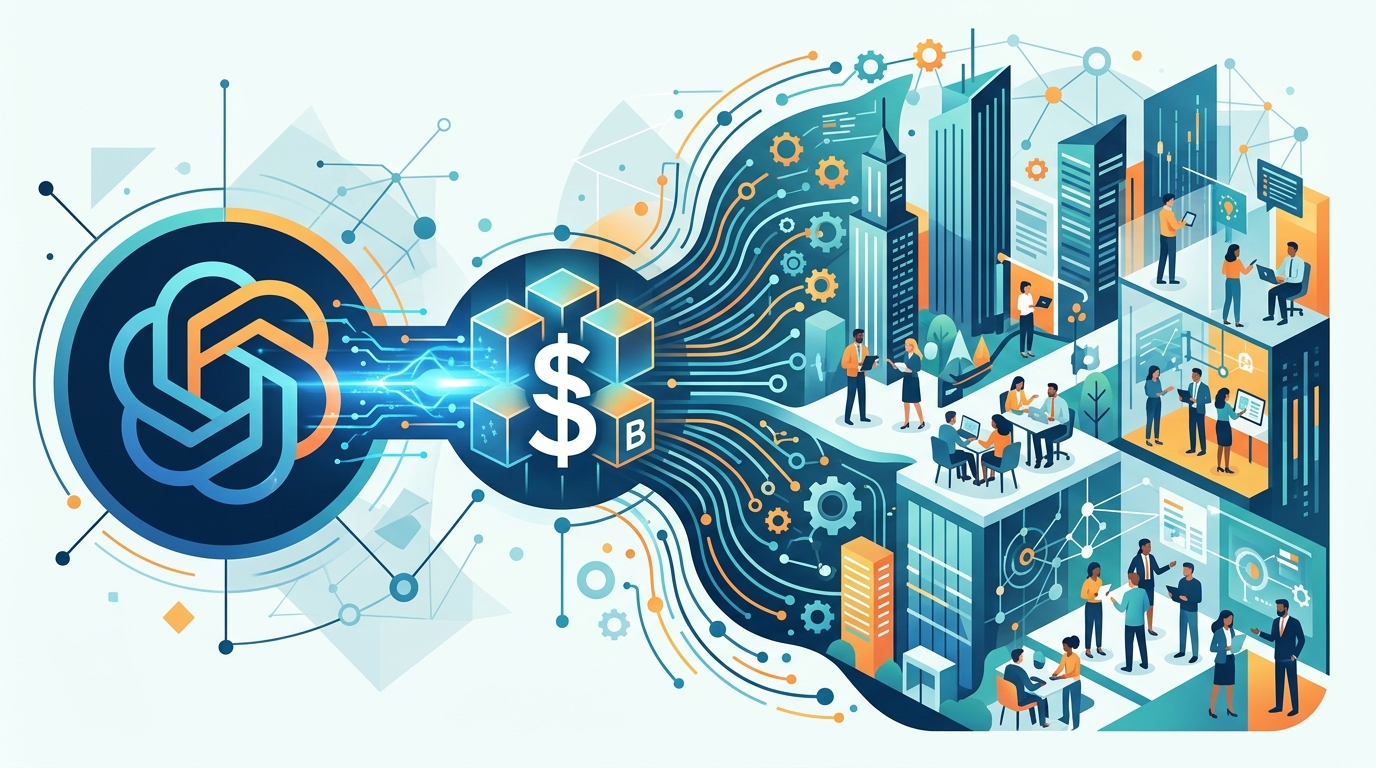
For OpenAI, the bet is simple: the next wave of growth comes from companies that need help turning AI from a promising pilot into an internal tool employees use every day. That means custom workflows, change management, and operational support, which are all things many buyers still struggle to do on their own.
- $4 billion is a large enough commitment to signal this is a strategic business line, not a side project.
- 19 participating firms suggest OpenAI wants distribution and implementation help, not just capital.
- A multi-year setup gives customers more confidence than a short-term consulting arrangement.
What the partner mix tells us
The partner list is revealing. TPG, Advent, Bain Capital, and Brookfield are not software vendors; they are capital and operating partners that know how to back large, slow-moving enterprise deals. That matters because corporate AI adoption often stalls at procurement, not product-market fit.
“The deployment of AI is the most important issue of our time.” — Sam Altman, OpenAI CEO, in a 2024 interview with The New York Times
That quote matches the strategy here. OpenAI is treating deployment as the main event. The company already has a strong consumer brand through ChatGPT, but enterprise buyers usually want more than a chat interface. They want support, accountability, and a path to measurable return on investment.
OpenAI also has to compete with other major AI vendors that are selling into the same CIO and COO budget lines. The difference is that the company is now pairing model access with a dedicated deployment structure, which could make it easier to win larger accounts that need hands-on implementation.
How this compares with other enterprise AI bets
OpenAI’s move fits a wider trend, but the size and framing make it stand out. Anthropic, Microsoft, and Google Cloud AI all sell enterprise AI products, yet the route to adoption often depends on services teams, partners, and integration work.

- Microsoft has already embedded AI into its cloud and productivity stack, which lowers friction for existing customers.
- Anthropic has leaned hard into enterprise trust and safety messaging, especially around business use cases.
- Google Cloud AI benefits from deep infrastructure reach, but large deployments still need custom rollout support.
- OpenAI’s $4 billion deployment unit is a more explicit bet on implementation as a product category.
The likely outcome is that OpenAI gets closer to the buying process inside large companies, where AI success is measured by adoption rates, workflow savings, and reduced manual work. That is a different sales motion from consumer subscriptions, and it usually rewards vendors that can stay involved after the contract is signed.
What to watch next
The key question is whether this unit turns into a repeatable enterprise motion or stays a high-profile partnership vehicle. If OpenAI can show that the deployment unit shortens sales cycles, improves retention, and helps customers get measurable business value, the model could become a template for other AI vendors.
If it cannot, the $4 billion commitment may look like an expensive way to buy time. For now, the signal is clear: OpenAI is telling corporate buyers that model quality alone is no longer enough, and the companies that win this market will be the ones that can ship AI into real workflows.
// Related Articles
- [IND]
WebX 2026 turns speaker hype into a conference brief
- [IND]
AI Weekly: 2026-07-06 ~ 2026-07-13
- [IND]
The AI Act should be treated as Europe’s operating system for AI
- [IND]
Booz Allen’s OpenAI Deal Is Real Advantage, Not Hype
- [IND]
OpenSearch’s vector search benchmark in 5 parts
- [IND]
Vector Databases That Work in Production