OpenAI’s New Policy Push Signals a Bigger Fight
OpenAI is pairing a new model push with policy papers on superintelligence, jobs, and regulation as 2026 elections loom.

OpenAI just got a fresh $122 billion funding announcement, and it is pairing that money with a policy campaign aimed at what it calls the era of superintelligence. The company is also preparing a new model, code-named Spud, while talking about how AI could force society to “rethink the social contract.”
That is a big swing for a company that has spent much of the last year shipping products, trimming side bets, and fighting public skepticism at the same time. The interesting part is not the hype cycle itself. It is that OpenAI now seems to be trying to shape the rules around the technology while also racing to build the next version of it.
OpenAI is mixing product launches with policy work
Get the latest AI news in your inbox
Weekly picks of model releases, tools, and deep dives — no spam, unsubscribe anytime.
No spam. Unsubscribe at any time.
According to the reporting, OpenAI plans to release a set of papers and proposals alongside Spud. The stated goal is to push fresh ideas on industrial policy, labor disruption, and the social effects of AI as systems get more capable.

That matters because the company is no longer talking only about model quality or product demos. It is talking about how governments, employers, and citizens should respond if AI keeps eating into white-collar work faster than institutions can adapt.
The company’s leadership has also been reorganizing around that message. The article points to Sam Altman, Joshua Achiam, and Chris Lehane leading the effort, which suggests OpenAI wants this to be a cross-functional push, not a side memo from the policy team.
- $122 billion fresh funding announced
- Spud is the reported code name for the next model
- Policy papers are expected to focus on industrial policy and economic disruption
- OpenAI Foundation plans to spend $1 billion over the next year on medical research, AI resilience, and community programs
The company is trying to talk about jobs before regulators do
OpenAI’s policy pitch lands in a year when AI job anxiety is getting harder to ignore. The company is openly floating the need to rethink the social contract, which is a polite way of saying that labor markets may not absorb AI shocks on their own.
That is where the debate gets more concrete. OpenAI-backed universal basic income research ended in 2024 with mixed results, and the article notes that the benefits of monthly payments tended to fade by the second and third years. So if OpenAI wants to talk about redistribution, it needs something more durable than cash transfers with a short half-life.
The company is also preparing for a political environment that looks less friendly than the one Silicon Valley enjoyed during the most pro-acceleration moments of the Trump era. With the 2026 midterms coming up, AI regulation could become a real campaign issue rather than a think-tank hobby.
“Things are moving faster than many of us expected.” — Sam Altman, in a company-wide meeting last Tuesday, as reported by Vanity Fair
That quote says a lot. It sounds like a CEO trying to keep employees aligned, but it also reads like a warning shot to policymakers who still think they have years to catch up.
OpenAI’s policy push also arrives while the company is making a series of operational changes that suggest a tighter focus. Those moves include closing some side projects, shifting safety teams, and putting more emphasis on deployment and preparedness.
OpenAI, Anthropic, and Google are all chasing bigger models
OpenAI is not the only lab moving this way. The article says Anthropic is working on a model code-named Mythos, and that the company described it to Fortune as a “step change” in capabilities. If both labs are preparing major releases at once, the race is clearly back on.
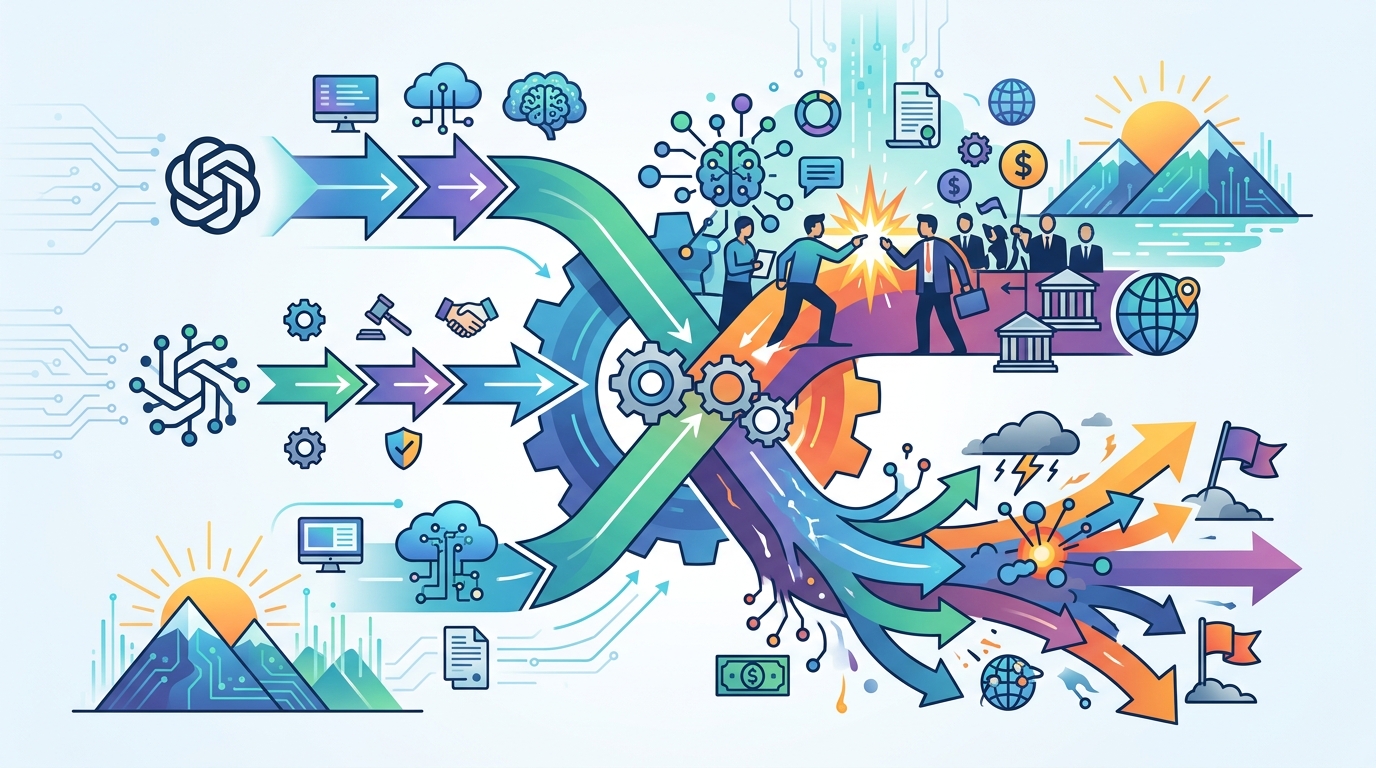
That race matters because the labs are now competing on two tracks at the same time: capability and credibility. A better model can win users, but a better public narrative can win regulators, policymakers, and enterprise buyers who worry about risk.
OpenAI’s own messaging shows that tension. It has been reorganizing safety work, hiring for frontier biological and chemical risks, cybersecurity, and “loss of control,” while also keeping the product machine moving. That is a hard balance to maintain when every move gets read as either caution or theater.
- OpenAI is pushing policy papers alongside a new model release
- Anthropic is reportedly preparing Mythos with cybersecurity concerns in mind
- Google DeepMind remains the other major pressure point in frontier model competition
- Future of Life Institute researcher Sabina Nong says companies are talking more about risk while offering fewer binding commitments
The public posture matters because these labs are now being judged less like software companies and more like institutions that may shape labor, defense, medicine, and elections. That is a much tougher standard, and it is one OpenAI seems eager to influence before outsiders impose their own version.
The real story is about power, not just models
OpenAI’s timing is telling. It is announcing major funding, teasing a new model, and preparing policy papers just as political pressure around AI is starting to harden. The company appears to understand that the next phase of AI debate will not be won by benchmark charts alone.
What happens next depends on whether OpenAI can turn “rethink the social contract” into policy ideas that survive contact with Congress, labor groups, and voters. If the company only offers broad language about shared prosperity, critics will dismiss it as branding. If it offers specifics on worker transition, safety enforcement, and public benefits, it could shape the debate in a real way.
My bet: the first serious test comes before the 2026 midterms, when candidates start treating AI as an election issue instead of a tech headline. The question is simple: will OpenAI help write the rules, or will it spend the next year reacting to them?
For more on how AI policy is colliding with politics, see our related coverage at OraCore’s AI policy coverage.
// Related Articles
- [IND]
WebX 2026 turns speaker hype into a conference brief
- [IND]
AI Weekly: 2026-07-06 ~ 2026-07-13
- [IND]
The AI Act should be treated as Europe’s operating system for AI
- [IND]
Booz Allen’s OpenAI Deal Is Real Advantage, Not Hype
- [IND]
OpenSearch’s vector search benchmark in 5 parts
- [IND]
Vector Databases That Work in Production