Sam Altman’s Exit: What It Means for OpenAI
Sam Altman’s exit from OpenAI shocked the AI world. Here’s what the board’s move means for governance, products, and rivals.
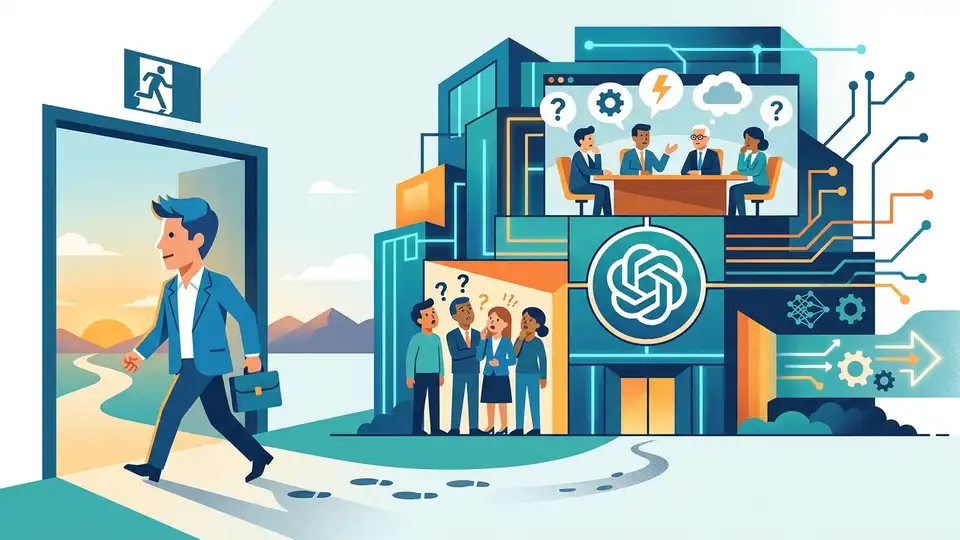
On November 17, 2023, OpenAI announced that Sam Altman would leave his role as CEO and also step off the board. That single decision jolted the AI industry because Altman was the public face of the company behind ChatGPT, a product that reached 100 million monthly active users in just two months after launch. Few leadership changes in recent tech history have moved this much money, talent, and attention in one afternoon.
The board said Altman was “not consistently candid in his communications,” which it argued made it harder to oversee the company. That wording matters. This was not a simple personality clash or a quiet transition plan. It was a governance break inside one of the most watched AI companies in the world, and it immediately raised a basic question: how much control should a nonprofit-style board keep over a company that now shapes the direction of commercial AI?
Why this resignation hit so hard
Get the latest AI news in your inbox
Weekly picks of model releases, tools, and deep dives — no spam, unsubscribe anytime.
No spam. Unsubscribe at any time.
Altman’s departure mattered because OpenAI is not a normal startup anymore. It is the center of a product ecosystem, a research lab, and a strategic partner to Microsoft, which has invested billions of dollars into the company. When the CEO leaves under pressure, the effect is bigger than a personnel change. It affects product roadmaps, investor confidence, employee retention, and the way rivals position themselves.
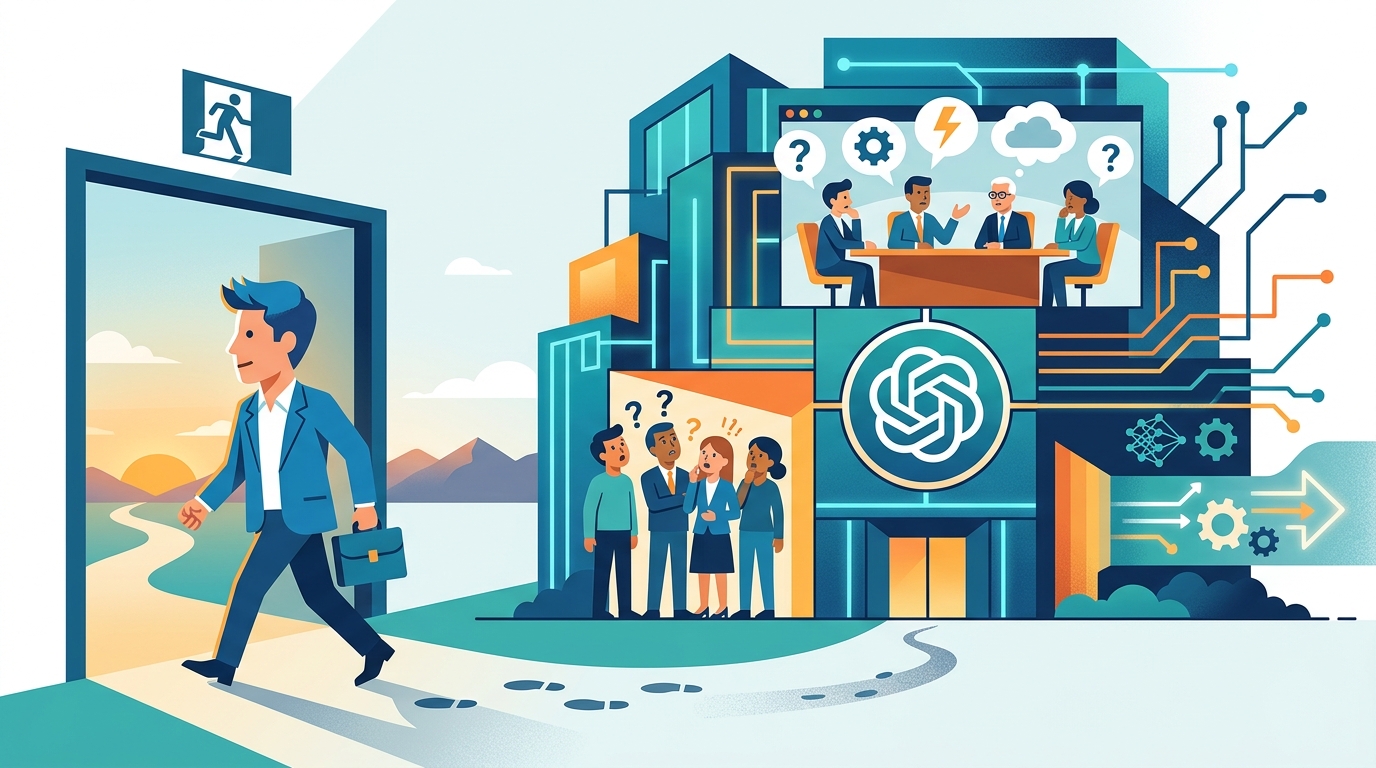
The timing also amplified the shock. OpenAI had just spent most of 2023 turning generative AI into a mainstream business category, with GPT-4 powering everything from coding assistants to enterprise search tools. By the time Altman exited, OpenAI was no longer a research curiosity. It was a company with a huge commercial footprint and an unusually complicated governance structure.
OpenAI’s structure has always been unusual. The company began as a nonprofit, then created a capped-profit arm to raise capital while keeping its stated mission in place. That arrangement was already hard to explain to outsiders. Once the board removed Altman, the structure became the story. People were no longer asking what model OpenAI would ship next. They were asking who actually controlled the company.
- Altman had become the most visible executive in generative AI
- ChatGPT reached 100 million monthly active users in about 2 months
- Microsoft tied its AI strategy closely to OpenAI’s models and products
- The board’s statement pointed to communication failures, not product failure
What the board likely wanted to signal
The board’s message was carefully worded, and that wording tells you a lot. It did not accuse Altman of fraud, technical failure, or public misconduct. Instead, it said he was not sufficiently candid. That suggests the board believed it had been kept out of the loop on decisions it needed to oversee. In plain English: the board thought it was being asked to approve a company it did not fully understand.
That matters in AI, where the stakes are higher than in many software businesses. OpenAI’s models can be embedded in search, coding, customer support, and content generation. A CEO who controls the product narrative also shapes how the world thinks about safety, capability, and deployment speed. If the board felt that narrative was drifting away from what it had approved, then removing the CEO was its strongest available move.
“The Board no longer has confidence in his ability to continue leading OpenAI,” OpenAI said in its November 17, 2023 announcement.
That line is blunt, and it was the center of the entire episode. It also explains why the news traveled so quickly beyond Silicon Valley. A board saying it has lost confidence in the CEO of a frontier AI company is a signal that governance inside the AI sector is still immature. The technology may be moving fast, but the institutions around it are still figuring out how to behave.
For a deeper look at how AI companies balance speed and oversight, see our related piece on AI governance and model risk.
How this compares with other AI leaders
Altman’s exit also looks different when you compare OpenAI with other major AI players. Anthropic has built its brand around safety and controlled deployment, while Google has folded AI into a much larger product and research organization. OpenAI sits in a more exposed position because it combines startup speed, public hype, and a governance model that can create hard stops when the board and management disagree.

The numbers show why the company drew such intense scrutiny. ChatGPT’s launch changed consumer expectations almost overnight. GPT-4 raised the bar for reasoning and coding tasks. Microsoft’s AI products, including Copilot, helped make OpenAI’s work part of everyday office software. Once a company reaches that level of influence, leadership continuity stops being a private matter.
- Anthropic markets Claude around safer deployment and enterprise use
- Google spreads AI across Search, Workspace, and its cloud products
- OpenAI became the consumer face of generative AI through ChatGPT
- Microsoft Copilot turned OpenAI models into a mainstream workplace tool
That contrast explains why the board move felt so dramatic. In a larger public company, a CEO departure often gets absorbed by a thick layer of process. OpenAI had no such cushion. The company’s brand, research agenda, and commercial momentum were tightly tied to one executive, so the removal looked like a structural shock rather than a routine change.
The episode also reminded the industry that AI leadership is about more than shipping models. It is about trust between founders, boards, investors, and employees. If that trust breaks, even a company with enormous technical momentum can look unstable in a matter of hours.
What this means for the AI market next
In the short term, the biggest risk was talent loss. OpenAI employees had strong reasons to worry about direction, culture, and mission drift. Rivals such as Meta AI, Anthropic, and Google could use the moment to recruit researchers and product leaders who wanted a steadier environment. That is how leadership crises spread in AI: not through one headline, but through a slow shift in who stays, who leaves, and who gets hired next.
There was also a product risk. OpenAI had to keep serving enterprise customers, API developers, and consumer users while the company’s top leadership was in flux. Even a short period of uncertainty can affect release timing, partnership talks, and strategic planning. For a company whose products are updated on a rapid cadence, that kind of uncertainty is expensive.
My read is simple: this was less about one man losing a job and more about OpenAI being forced to answer a question it had avoided for too long. Is it a mission-driven research lab with commercial products attached, or a commercial AI company with mission language on top? The answer will shape every major decision it makes from here.
If OpenAI keeps its current pace while tightening board oversight, the next big story will not be another CEO drama. It will be whether the company can keep shipping models while proving that its governance can survive pressure. If it cannot, the market will start treating leadership stability as an AI buying criterion, the same way it already treats latency, cost, and model quality.
That is the real takeaway from Altman’s exit. The industry is no longer asking whether AI products matter. It is asking who gets to control the companies building them, and what happens when that control breaks in public.
For more context on AI company structure and product strategy, read our coverage of OpenAI’s model roadmap and enterprise strategy.
Conclusion
Altman’s resignation was a governance event with product, investor, and talent consequences, all at once. The next question is whether OpenAI can keep its commercial momentum while rebuilding confidence inside the company. If the board and leadership cannot answer that cleanly, the AI market will start pricing in governance risk as seriously as model performance.
// Related Articles
- [IND]
WebX 2026 turns speaker hype into a conference brief
- [IND]
AI Weekly: 2026-07-06 ~ 2026-07-13
- [IND]
The AI Act should be treated as Europe’s operating system for AI
- [IND]
Booz Allen’s OpenAI Deal Is Real Advantage, Not Hype
- [IND]
OpenSearch’s vector search benchmark in 5 parts
- [IND]
Vector Databases That Work in Production