Why OpenAI’s Deployment Company is the right move
OpenAI’s Deployment Company is the right move because enterprise AI fails on integration, not model quality.

OpenAI’s Deployment Company is a partnership built to help enterprises turn model access into working systems.
OpenAI is right to launch the OpenAI Deployment Company because the hard part of enterprise AI is not getting a model to answer a prompt, it is making that model fit into real business operations. Most companies do not fail at the demo stage. They fail when AI has to connect to identity systems, data pipelines, compliance rules, procurement, and the messy handoffs between teams. A partnership with 19 investment firms, consultancies, and system integrators is a direct answer to that problem.
Enterprise AI breaks at implementation, not at capability
Get the latest AI news in your inbox
Weekly picks of model releases, tools, and deep dives — no spam, unsubscribe anytime.
No spam. Unsubscribe at any time.
For the last two years, the market has treated model quality as the main event. That is backwards. The real bottleneck is deployment: permissions, governance, change management, and integration into existing workflows. A model that can write code or draft a memo is not useful if it cannot safely touch the systems where work actually happens. OpenAI is acknowledging that the value sits one layer deeper than inference.

We have already seen this pattern in cloud software. The winning product is rarely the one with the strongest feature list. It is the one that lands inside the enterprise stack and survives security review, budgeting, and adoption. By creating a deployment-focused partnership, OpenAI is moving closer to the way enterprise software is actually bought and used. That is a practical shift, not a branding exercise.
Partners matter more than raw model performance
The number that matters here is 19. OpenAI is not building this alone; it is assembling a channel of firms that already know how to sell transformation, manage large accounts, and stitch new software into legacy environments. That matters because enterprise AI adoption is a trust business. A CIO will often listen more closely to a familiar integrator than to a model vendor promising general intelligence.
This also solves a distribution problem. Even the best model platform cannot scale enterprise adoption if every deal requires custom hand-holding from the core product team. Consultancies and system integrators do the translation work: they map business pain to technical design, they manage implementation risk, and they keep projects moving after the initial sale. OpenAI is not just expanding reach, it is outsourcing the hardest part of enterprise adoption to firms built for that job.
OpenAI is trying to capture the full value chain
The deeper strategic move is that OpenAI is no longer content to be only a model provider. It wants to sit at the center of how businesses build around intelligence. That is a stronger position than selling APIs alone, because APIs are easy to compare and easier to replace. A deployment company creates stickiness through process, relationships, and operational dependency.
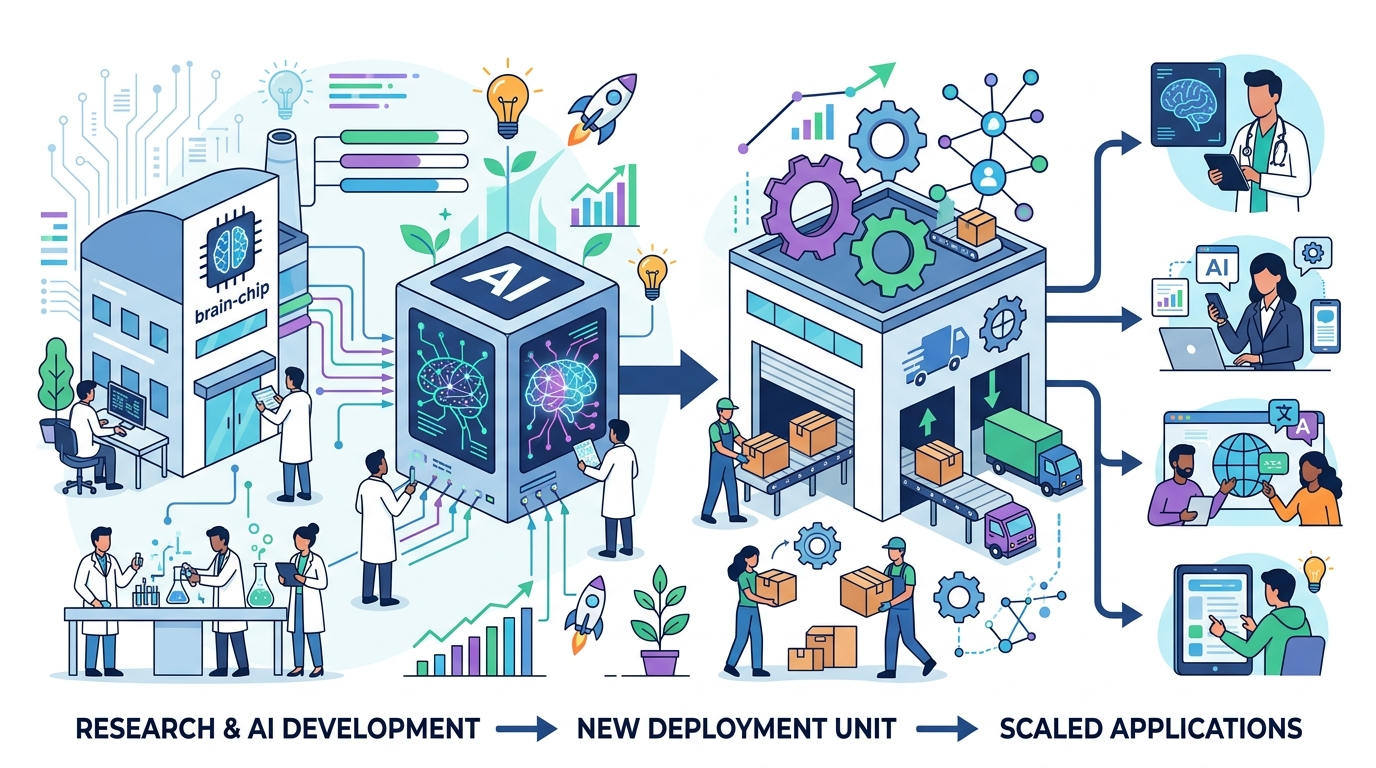
There is a clear precedent in enterprise technology. The companies that dominate long term are the ones that become part of the customer’s operating system, not just a component supplier. If OpenAI helps define the architecture, the rollout plan, and the implementation partners, it gains leverage across the whole stack. That is why this launch matters: it turns OpenAI from a product vendor into an ecosystem coordinator.
The counter-argument
The strongest objection is that this looks like channel theater. Big partnerships can create the appearance of momentum without fixing the underlying problem. Enterprises do not need more consultants attached to a model platform; they need better pricing, clearer controls, lower latency, stronger security, and reliable outcomes. If the deployment company becomes a sales wrapper, it will add complexity without delivering durable value.
There is also a real risk of fragmentation. Consultancies and integrators often introduce their own tools, preferred vendors, and implementation habits. That can slow standardization and make customers dependent on the partner rather than the platform. In that reading, OpenAI is trading product purity for a muddier services layer.
That criticism is fair, but it misses the state of the market. Enterprise AI is already fragmented, and customers are already paying for custom integration work, only now they are doing it without a coordinated framework. OpenAI is not creating complexity; it is organizing the complexity that already exists. If the company keeps the deployment motion tied to measurable outcomes, the partnership becomes an advantage instead of a distraction.
What to do with this
If you are an engineer, PM, or founder, treat this as a signal that the next wave of AI value will come from distribution, implementation, and governance, not from model demos. Build for systems integration, not isolated chat experiences. Design around permissions, auditability, and workflow fit. If you are selling AI into enterprises, stop leading with capability and start leading with deployment. OpenAI just showed where the market is headed.
// Related Articles
- [IND]
Why Nebius’s AI Pivot Is More Real Than Hype
- [IND]
Nvidia backs Corning factories with billions
- [IND]
Why Anthropic and the Gates Foundation should fund AI public goods
- [IND]
Why Observability Is Critical for Cloud-Native Systems
- [IND]
Data centers are pushing homeowners to solar
- [IND]
How to choose a GPU for 异环