Why severe weather outbreaks are becoming a planning problem, not a n…
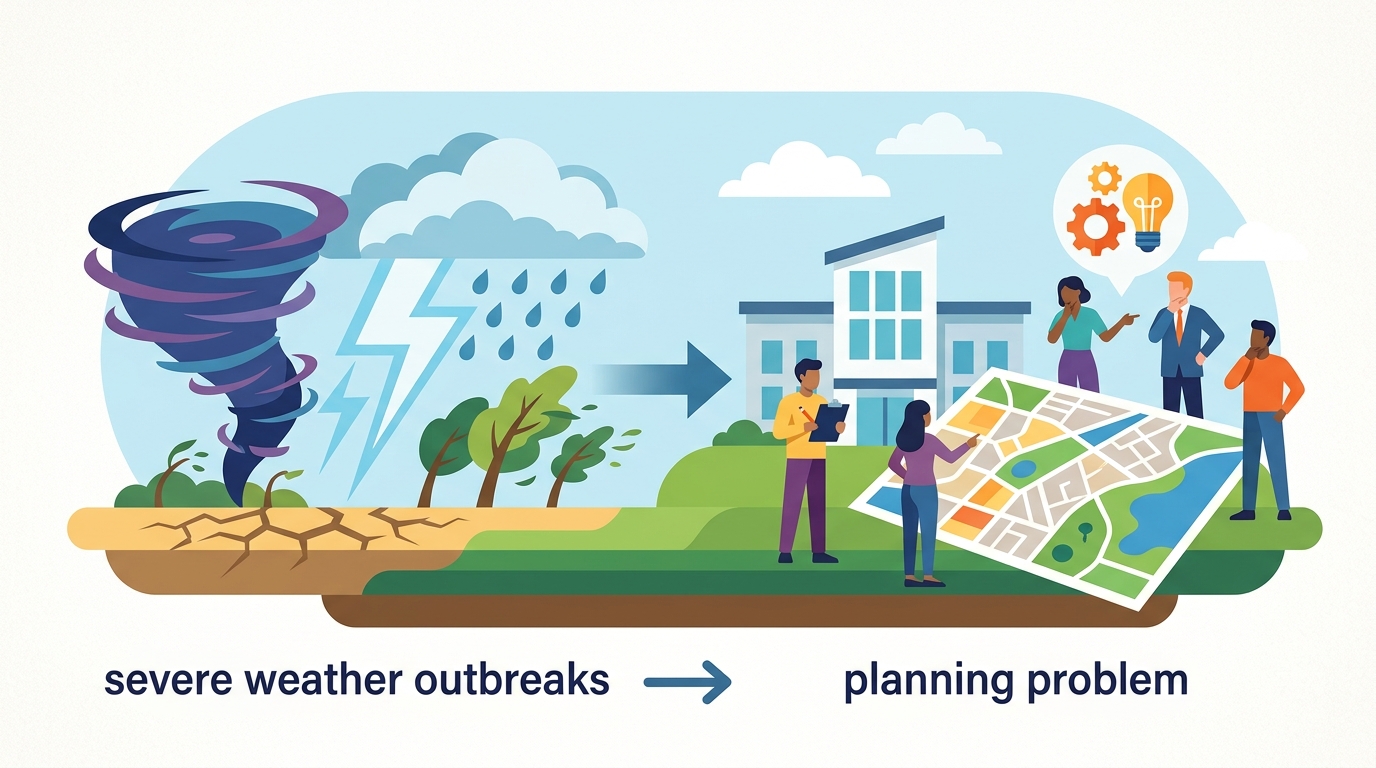
Late-April 2026’s tornadoes, hail, and wind damage prove severe weather is now a planning problem.
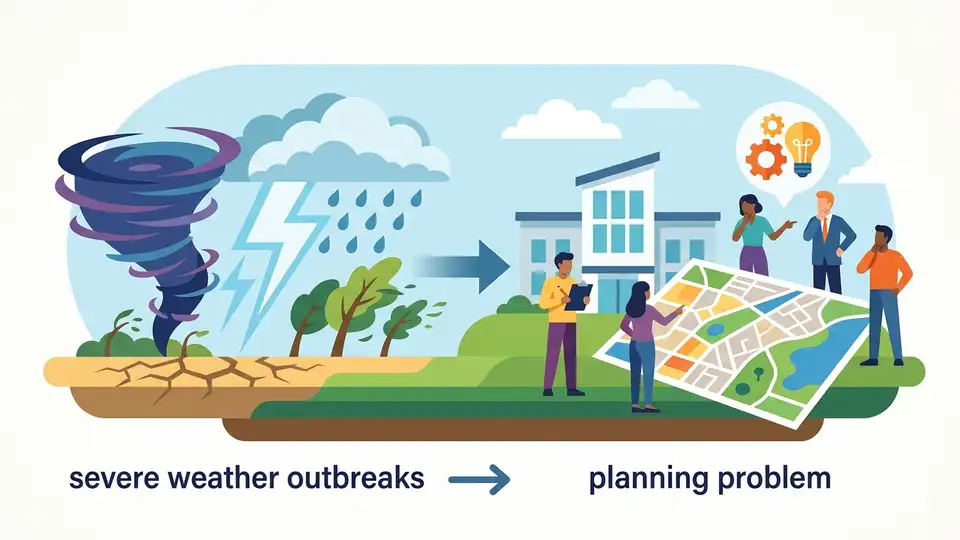
Late-April 2026’s tornadoes, hail, and wind damage prove severe weather is now a planning problem.
Severe weather outbreaks are no longer rare disasters to react to after the fact; they are recurring operational failures that businesses, cities, and households must plan around.
The late-April 2026 outbreak made that plain. From April 23 to 28, the National Weather Service logged more than 1,200 severe-thunderstorm reports across Texas, Minnesota, the Ohio Valley, and the Deep South, including over 500 wind reports, more than 500 hail reports, and over 80 tornado reports. That is not a single storm. That is a multi-day systems test that hit homes, businesses, schools, power lines, roads, and emergency services at once.
First, the damage pattern is too broad to treat as isolated bad luck
Get the latest AI news in your inbox
Weekly picks of model releases, tools, and deep dives — no spam, unsubscribe anytime.
No spam. Unsubscribe at any time.
The strongest tornado in the outbreak was an EF4 near Enid, Oklahoma, with estimated peak winds of 170 mph. It shredded homes and businesses, damaged parts of Vance Air Force Base, injured ten people, and triggered only the ninth tornado emergency ever issued by the NWS-Norman office. That is the kind of event that exposes whether alerts, sheltering, and building resilience actually work under pressure.
The same outbreak then kept moving. An EF2 near Runaway Bay, Texas, killed one person when a double-wide manufactured home was destroyed. An EF3 later hit Mineral Wells, Texas, heavily damaging homes and businesses. Another EF2 damaged homes and bent transmission towers near Caney, Oklahoma. The point is not that one town got unlucky. The point is that the same weather pattern produced lethal risk, infrastructure damage, and long-duration recovery across multiple states.
Second, hail and wind are not secondary impacts; they are the main economic punch
People still talk about tornadoes as the headline and hail as the footnote. That is wrong. On April 25 in Welsh, Arkansas, baseball-sized hail damaged roofs and vehicles. In Alpine, Arkansas, hail the size of grapefruit was recovered. Around Dallas Baptist University, baseball-sized hail smashed vehicle windshields. These are direct losses that hit insurers, fleets, homeowners, and small businesses immediately.
The wind damage was just as costly in aggregate. A roof was partially peeled back at the police jury building in Rayville, Louisiana. A school roof was damaged in Steele, Missouri. Wind gusts up to 77 mph knocked down trees and cut power in Milwaukee and parts of Lower Michigan. A carport was blown across a road in Lake Village, Arkansas. Add flash flooding in the Kansas City metro and you get the real picture: severe weather is a portfolio of failures, not a single hazard.
The counter-argument
The best argument against this view is that weather will always be weather. People cannot stop tornadoes, hail, or straight-line winds, so the right response is to improve warnings and let local responders handle the rest. That position has merit because not every community has the budget to harden every building or bury every line. It also recognizes that forecasts are probabilistic, not guarantees.
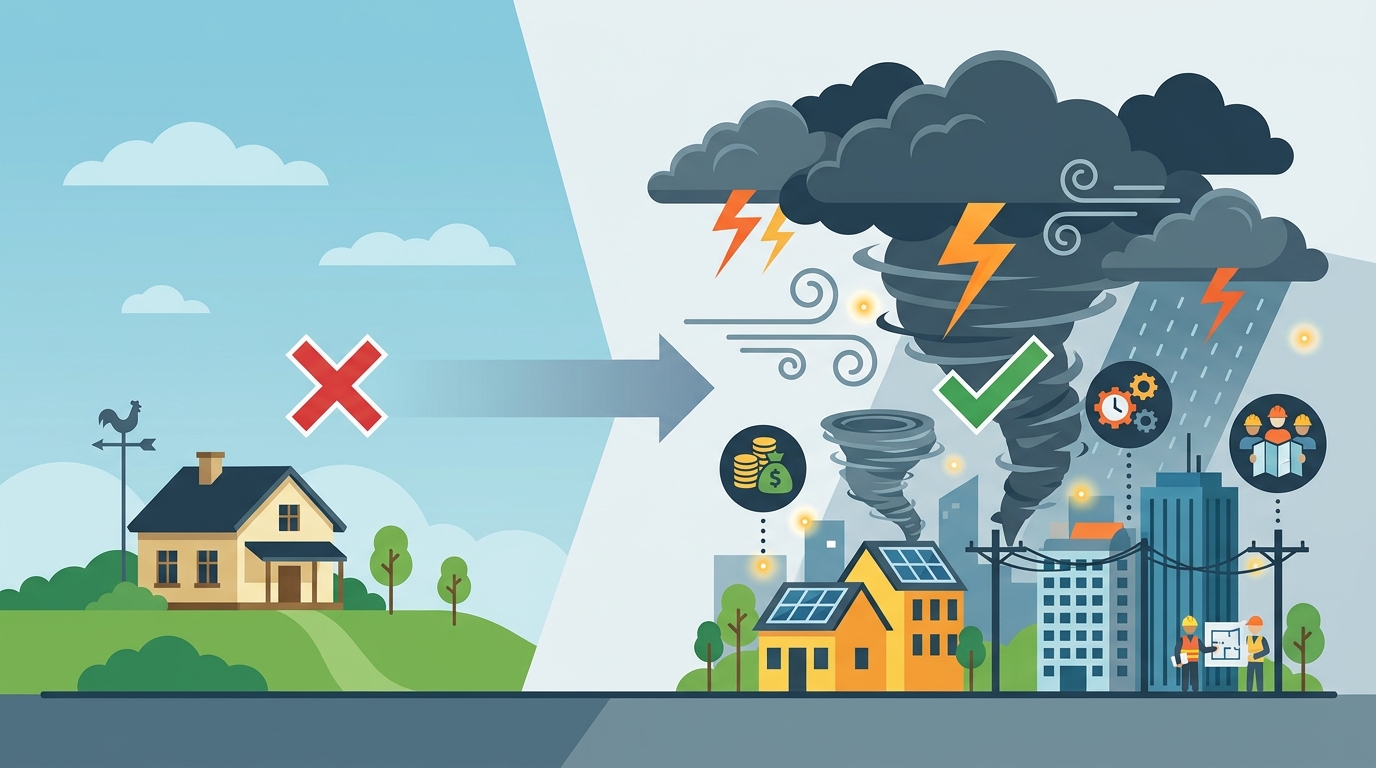
But that argument stops at the edge of reality. The outbreak delivered enough advance signal to justify action, yet it still produced repeated damage across a six-day stretch. When one event can generate over 1,200 severe reports and touch everything from air bases to schools to metro power grids, warning alone is not a strategy. It is a notification system. A notification system without structural planning just tells people how they are about to lose money, time, and in some cases lives.
What to do with this
If you are an engineer, PM, or founder, stop treating severe weather as an edge case in your continuity plan. Build for outage, not uptime theater: redundant power, remote work failovers, asset protection, weather-triggered incident workflows, and supplier backups in different storm corridors. If your business depends on physical sites, inventory, fleets, or field teams, map your exposure by hail, wind, flood, and tornado risk now, then budget for mitigation before the next outbreak forces the issue.
// Related Articles
- [IND]
Why Nebius’s AI Pivot Is More Real Than Hype
- [IND]
Nvidia backs Corning factories with billions
- [IND]
Why Anthropic and the Gates Foundation should fund AI public goods
- [IND]
Why Observability Is Critical for Cloud-Native Systems
- [IND]
Data centers are pushing homeowners to solar
- [IND]
How to choose a GPU for 异环