AutoMLOps: 4 investments for agentic ML
AutoMLOps is the next layer on top of MLOps: agents can run experiments unattended, but only if metrics and gates reflect business goals.
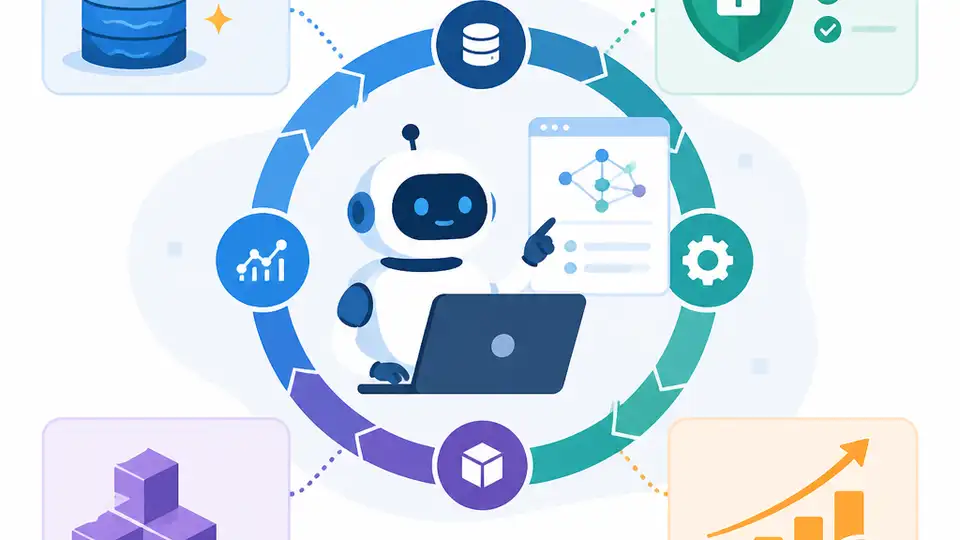
AutoMLOps adds agent-run experimentation on top of MLOps, but only when metrics and gates are production-ready.
May 21, 2026 - Jam with AI argues that the real bottleneck for AutoResearch in production is not the agent itself, but the quality of the metric and the maturity of the MLOps stack around it.
The post frames a new layer called AutoMLOps: an agent can edit training code, run short experiments, and keep changes only when they improve a frozen evaluator. In the article’s example, Jam with AI says this is useful only when the system can separate offline wins from business impact.
| 項目 | 數值 |
|---|---|
| 發布日期 | 2026-05-21 |
| Red Hat unattended experiments | 198 |
| Red Hat validation-loss improvement | 2.3% |
| Human review window in AutoResearch | overnight |
What changed
Get the latest AI news in your inbox
Weekly picks of model releases, tools, and deep dives — no spam, unsubscribe anytime.
No spam. Unsubscribe at any time.
The article starts with the AutoResearch contract: one editable training file, one frozen evaluator, one plain-language research brief, and one scalar metric. The agent can try changes, score them, and either keep or revert the result. That ratchet-style loop is what makes unattended experimentation possible.
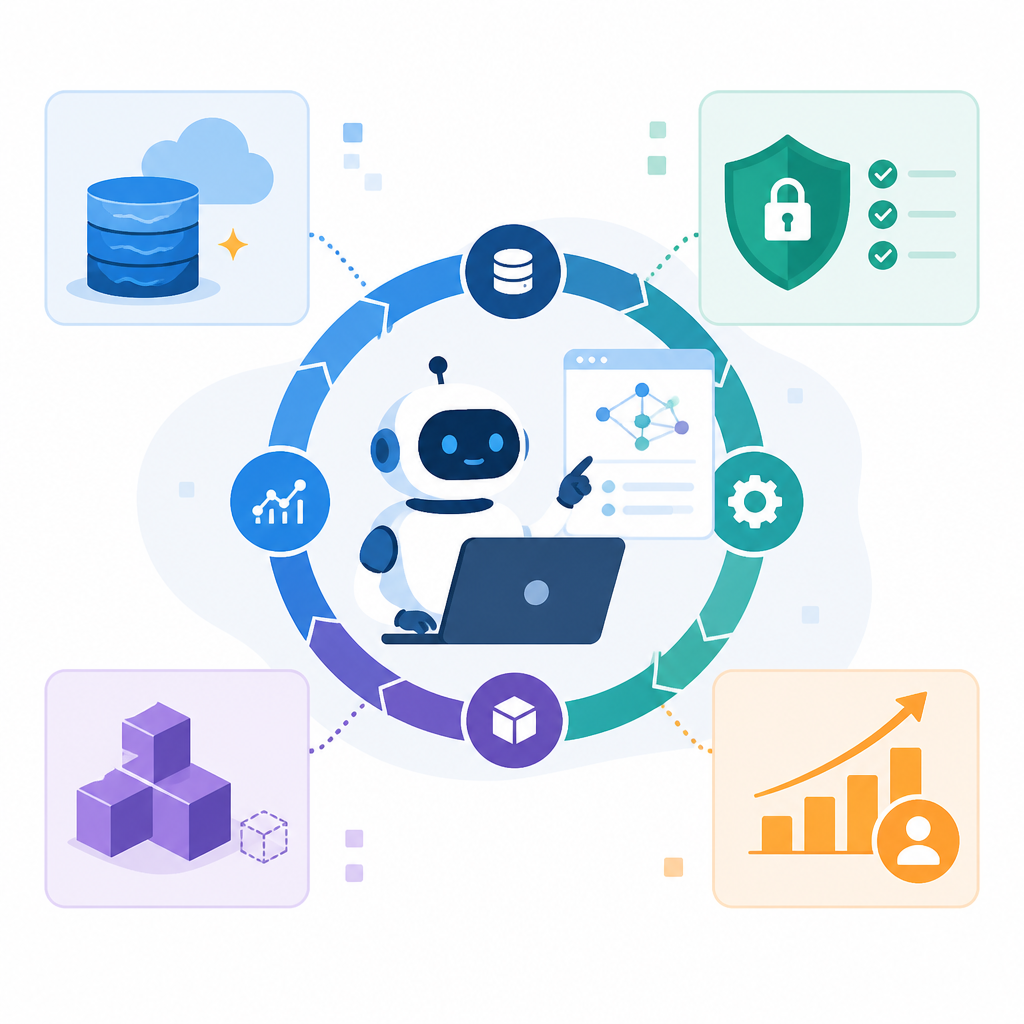
But the piece says the production version is harder. A search ranker, recommender, fraud model, or churn model usually has two scorecards: an ML metric and a business metric. nDCG, AUC, MRR, or F1 can improve while conversion, revenue, retention, or fraud loss stays flat.
- AutoResearch works best when the evaluator cannot be edited during a run.
- Offline gains can fail in A/B tests because of feedback loops, shift, and position bias.
- AutoMLOps should optimize a blended score or a constraint, not a single ML metric.
- The system needs reproducible pipelines before agents can safely explore changes.
The article maps MLOps into three stages. Stage 1 is notebook ML, where reproducibility is weak and an agent would mostly speed up the mess. Stage 2 is modern MLOps, with versioned data, experiment tracking, registries, deployment automation, and monitoring. Stage 3 is AutoMLOps, where the experimentation loop itself becomes partially automated.
In that third stage, the agent is not replacing ML engineers. Humans still define the problem, the metric, the evaluation gates, and the production limits. The agent just explores small implementation and optimization ideas inside those boundaries.
Why it matters
For developers, the message is practical: agentic ML will not succeed on top of weak pipelines. If the training run is not reproducible, the metric is not trusted, or the offline score is poorly tied to the business outcome, the overnight agent will only generate expensive noise.
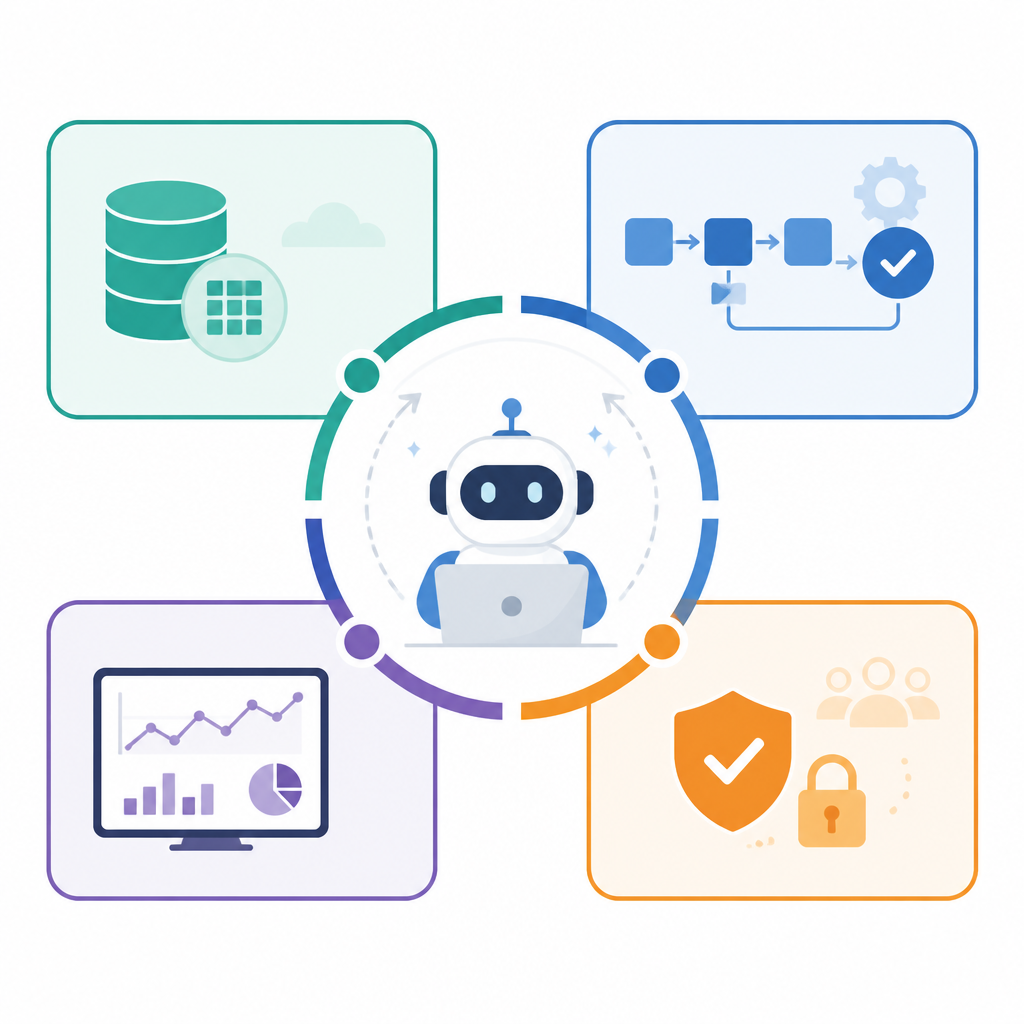
For the market, this shifts attention from model capability to system design. The winning teams will likely be the ones that can turn metrics into contracts, then wrap those contracts in guardrails, monitoring, and promotion rules that an agent can follow without drifting into overfit.
The sharp question is no longer “Can the agent improve the model?” It is “Can your MLOps stack tell the difference between a better score and a better product?”
// Related Articles
- [TOOLS]
Nvidia and LG turn AI plans into a playbook
- [TOOLS]
Ollama is the best free AI path in 2026 for real work
- [TOOLS]
This MLOps list turns chaos into a stack
- [TOOLS]
BentoML turns model serving into Python APIs
- [TOOLS]
Magenta RealTime 2 lets you score in the DAW
- [TOOLS]
Open-source AI tools beat Claude’s paid tiers on value