Awesome AI for Science Is Becoming a Real Research Map
This GitHub list pulls together AI tools, datasets, papers, and frameworks for science, giving researchers a practical starting point.
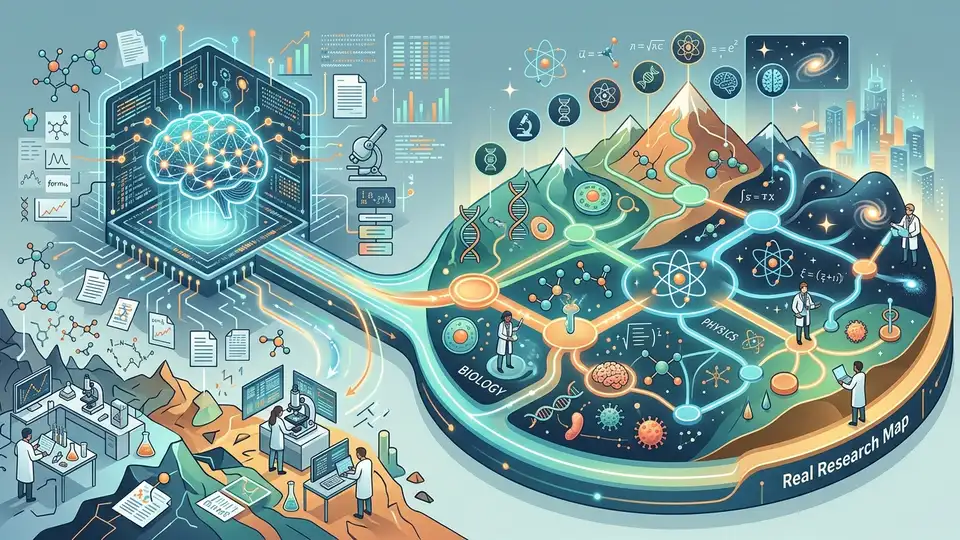
The awesome-ai-for-science repository has already reached 1,391 GitHub stars and 138 forks. That number matters less than what the list actually contains: a broad, well-organized index of AI tools for research across biology, chemistry, materials, physics, climate science, and more.
Plenty of “awesome lists” turn into link dumps. This one is more useful because it groups the ecosystem by real research tasks, from literature search and chart generation to reproducibility, agents, scientific machine learning, and domain-specific applications. If you work in research or build software for scientists, this repo is a solid shortcut.
A directory built around research work
Get the latest AI news in your inbox
Weekly picks of model releases, tools, and deep dives — no spam, unsubscribe anytime.
No spam. Unsubscribe at any time.
The main strength of the list is its structure. Instead of treating AI for science as one giant category, it breaks the space into workflows researchers actually deal with every week: finding papers, parsing documents, analyzing data, labeling datasets, generating visuals, and testing models against scientific benchmarks.
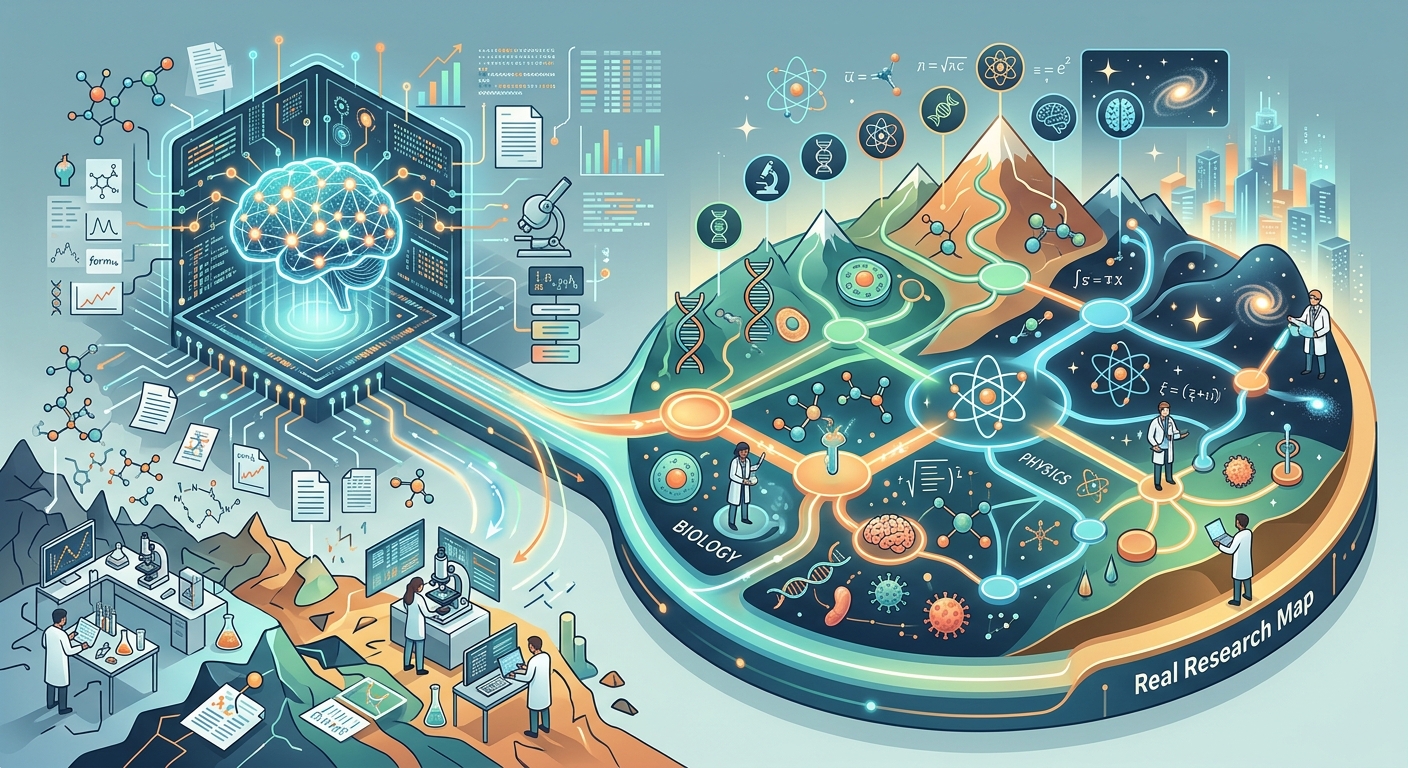
That makes it easier to move from curiosity to action. A computational biologist, for example, can jump into biology and medicine resources, while a data scientist building internal tools for a lab can browse charting, paper-to-code, and workbench sections without digging through unrelated links.
- The repository covers more than 20 sections, including literature tools, research agents, scientific ML, domain applications, datasets, and computing frameworks.
- It spans fields from biology and medicine to chemistry, materials, physics, astronomy, earth science, agriculture, and ecology.
- It includes both end-user tools and developer-facing infrastructure, which makes it useful for researchers, platform teams, and open-source contributors.
- The README is multilingual, with navigation for English, Deutsch, Español, français, 日本語, 한국어, Português, Русский, and 中文.
That breadth reflects what AI for science looks like in practice today. It is not one model and one benchmark. It is a messy stack of search engines, domain datasets, multimodal models, notebook tools, annotation systems, and evaluation suites.
Why this list matters now
AI for science has moved beyond generic chatbot demos. Labs now care about whether a tool can summarize papers accurately, extract structured data from PDFs, generate charts from raw tables, or help reproduce an experiment from code and methods sections. A curated index is useful because the tooling layer is growing faster than most researchers can track.
The repository also captures a shift in how scientific software is being built. Instead of one monolithic platform, teams are piecing together open tools like Semantic Scholar for discovery, OpenAlex for scholarly metadata, Label Studio for annotation, and Snorkel for weak supervision.
“AI is one of the most profound things we’re working on as humanity. It’s more profound than fire or electricity.”
That quote gets used often, but in science it lands differently. The real test is not whether AI sounds impressive. The test is whether it saves a postdoc six hours of manual figure cleanup, helps a chemist screen candidate materials faster, or makes a climate workflow easier to reproduce.
This GitHub project points toward that practical layer. It is less about hype and more about discoverability.
The most useful categories in the repo
Some sections feel especially timely. Literature and knowledge management is an obvious one, with links to arXiv, Semantic Scholar, OpenAlex, and CORE. Researchers still spend a huge amount of time finding and filtering papers, so better search and metadata tools remain a high-value part of the stack.
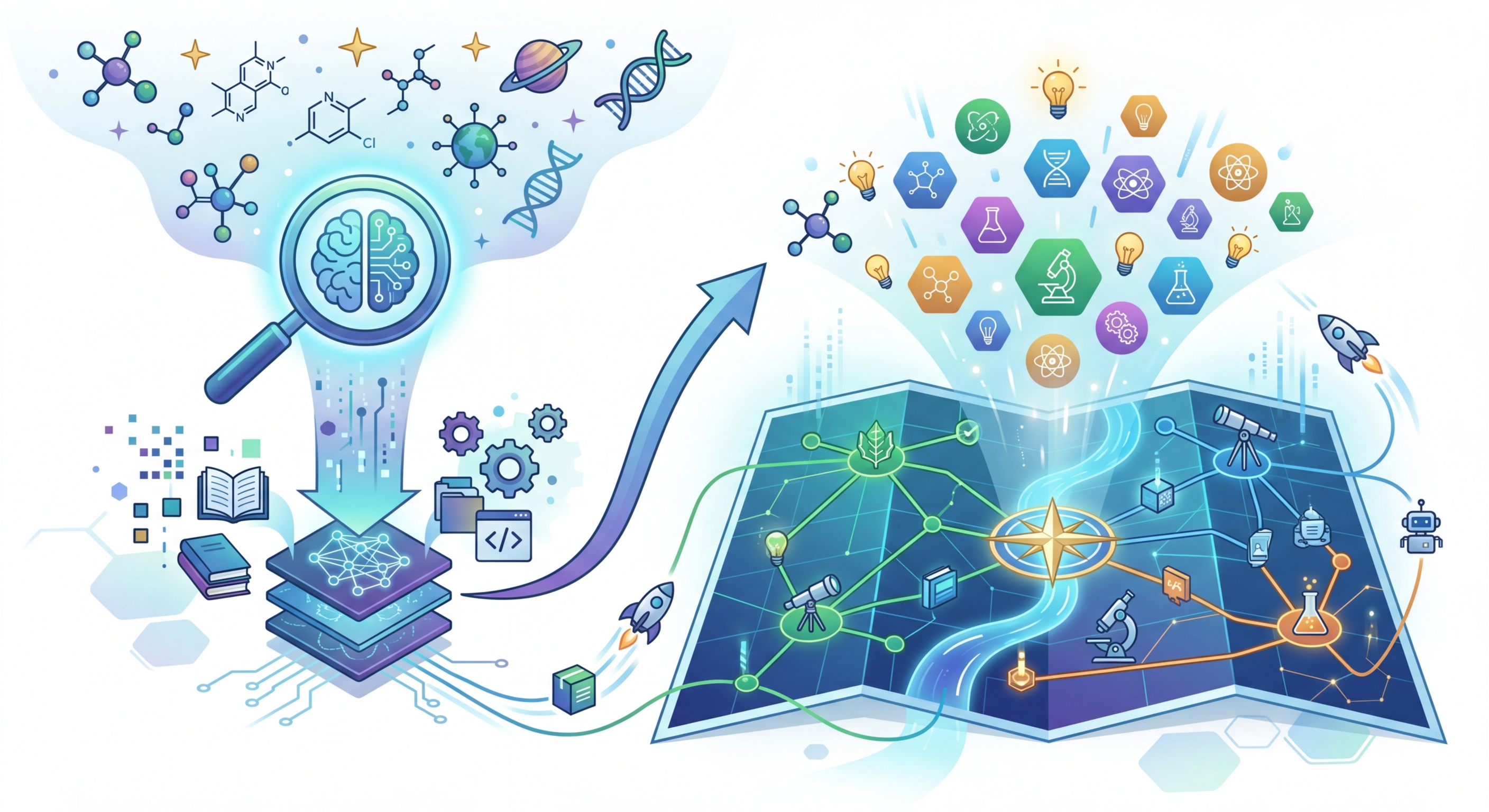
Another strong category is data analysis and visualization. The list includes projects like PandasAI, DeepAnalyze, AutoViz, and Chat2Plot. These tools target a common pain point in science: turning messy tables into interpretable outputs without spending half a day writing plotting code.
- Paper2Poster claims 87% fewer tokens than GPT-4o for converting papers into editable posters, according to the project README.
- Claude Scientific Skills packages more than 125 scientific skill modules for research tasks across multiple domains.
- ChartCoder is described as a 7B chart-to-code model that beats larger open-source multimodal models on its task.
- ChartAst focuses on chart comprehension and reasoning, which matters for scientific figures that mix text, legends, axes, and visual encodings.
I also like that the repo makes room for “paper-to-X” tools. Converting papers into posters, slides, websites, or videos may sound cosmetic, but it solves a real communication problem in research groups. Labs publish PDFs, then spend extra time repackaging the same work for talks, grant reviews, student onboarding, and public outreach.
That said, users should stay skeptical. Many repos in this category move fast, cite preprints, and depend on model quality that can change quickly. A curated list helps you find tools; it does not validate every claim inside them.
How it compares with narrower AI resource lists
What separates this repository from smaller collections is scope. A lot of GitHub lists focus on one slice of the stack, such as LLM agents, bioinformatics, or chemistry models. This one tries to connect those slices into a usable map for AI4Science as a whole.
That broader view matters because scientific workflows cross tool boundaries. A single project might start with literature search, move into document parsing, continue into weak labeling, then finish with model training and evaluation. If your resource list covers only one stage, it is less helpful in real work.
- The repo has 1,391 stars and 138 forks at the time of the source snapshot, which puts it in the healthy niche-project range on GitHub.
- Its topic tags include ai-for-science, ai4s, ai4science, bioinformatics, and scientific-ai, signaling a cross-domain audience instead of one field.
- The contents span research discovery, annotation, agents, benchmarks, frameworks, and education, while many comparable lists stick to papers or code only.
- The inclusion of domain sections for biology, chemistry, physics, climate, agriculture, and ecology makes it more usable for applied research teams.
If you want a narrower angle, you can pair this kind of repo with focused coverage of model tooling and agents. We have covered adjacent trends before on OraCore, including developer workflows that turn models into practical assistants at /news/claude-code-terminal-agent-workflows.
The bigger takeaway is simple: AI for science is now too large for any one person to track from memory. Curated indexes are becoming part of the infrastructure.
A useful starting point, with one obvious next step
The awesome-ai-for-science repo is worth bookmarking if you build research software, run experiments, or support scientists with data infrastructure. It gives newcomers a fast orientation and gives experienced users a way to spot tools they may have missed.
The next step for the maintainers is obvious: add stronger quality signals. A simple layer showing update frequency, paper links, benchmark status, license type, and reproducibility notes would make the list much more than a directory. If that happens, this repo could become a default reference for AI4Science teams choosing tools in 2026.
// Related Articles
- [TOOLS]
Aliyun Bailian Token Plan turns credits into agents
- [TOOLS]
One API gateway turns six AI APIs into one
- [TOOLS]
OpenAI FDEs turn broken agents into shipped systems
- [TOOLS]
Anthropic’s daily brief turns news into a workflow
- [TOOLS]
Claude Reflect turns usage into retention
- [TOOLS]
Midjourney turns prompt ideas into art