How RAG in 2026 is Transforming Enterprise AI
In 2026, real-time data integration is essential for enterprise RAG, connecting directly to live sources like databases and CRM systems.
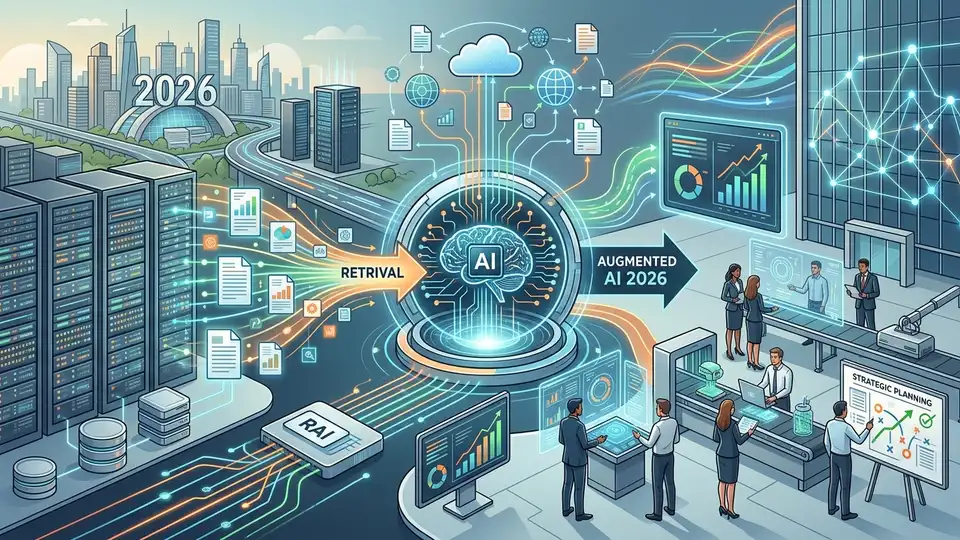
Imagine asking your company's AI system a complex question about last quarter's supply chain disruptions and receiving a precise, sourced answer in seconds. This is not a distant promise. Modern Retrieval Augmented Generation (RAG) is making this a reality. For teams frustrated by AI systems hallucinating facts or returning outdated information, RAG offers a practical fix. It bridges the gap between a language model's general knowledge and the specific, up-to-date information a business needs. In 2026, RAG is evolving rapidly, and the changes are significant enough that teams who haven't revisited their approach may already be falling behind.
Hybrid Models: A New Approach to Retrieval
Get the latest AI news in your inbox
Weekly picks of model releases, tools, and deep dives — no spam, unsubscribe anytime.
No spam. Unsubscribe at any time.
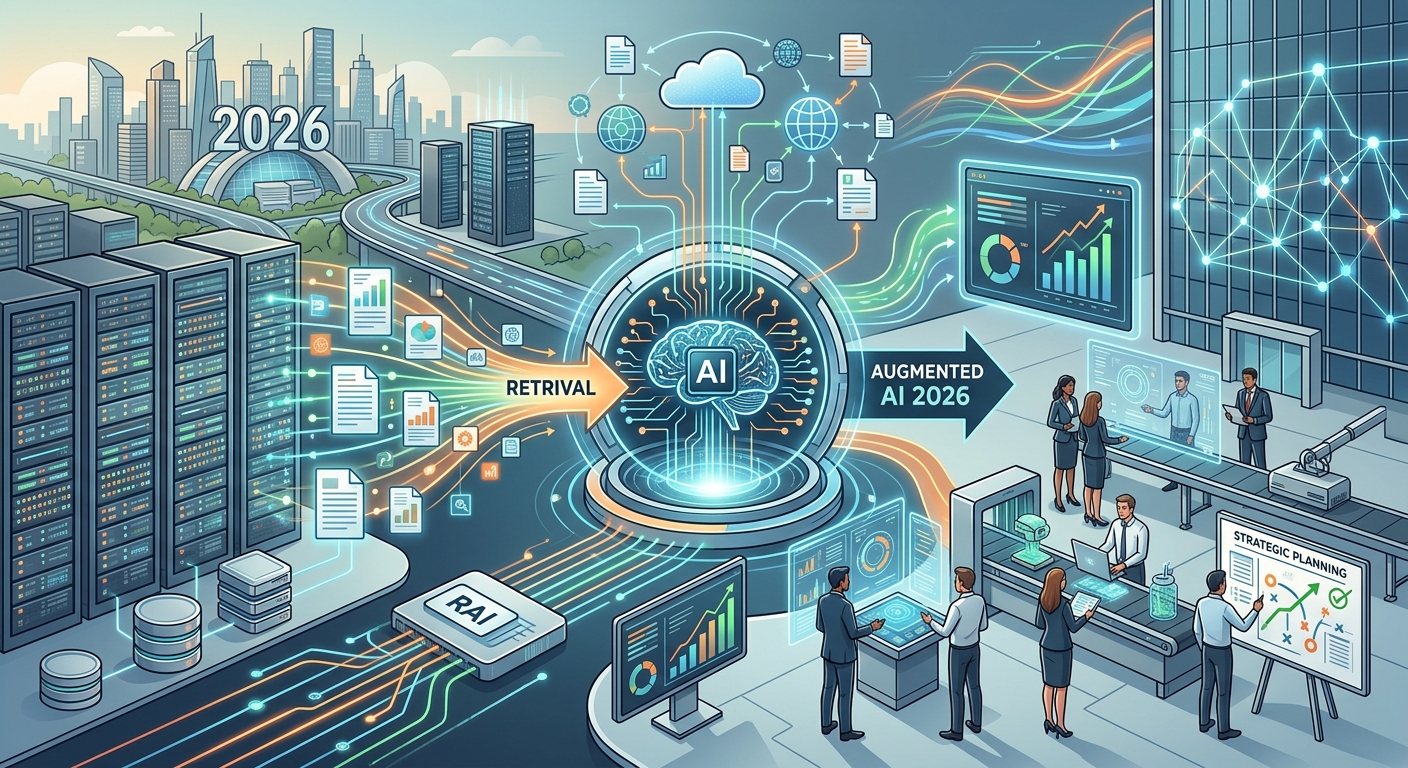
For a while, RAG relied heavily on pure neural approaches like dense vector search and embedding models. These tools, while effective, have limitations, especially when precision is crucial. In 2026, the shift towards hybrid retrieval models is a clear trend. These systems combine neural network-based semantic search with traditional keyword and symbolic retrieval methods, resulting in a more balanced approach that captures both the contextual nuance of neural search and the exact-match reliability of older techniques.
- Neural retrieval excels at understanding intent but misses specific terms, product codes, or proprietary jargon.
- Hybrid models improve retrieval accuracy in domains where precision is non-negotiable, such as legal, financial, and technical fields.
Advancements in Context-Aware Generation
Beyond retrieval, the generation side of RAG is also improving. Context-aware generation, which adjusts its output based on the specific retrieved documents, is becoming more sophisticated. Models are getting better at synthesizing conflicting sources, flagging uncertainty, and grounding responses in the actual retrieved content.
"Based on the Q3 internal report, the figure is X, though the external benchmark suggests Y." This kind of nuanced response is far more useful than a confident-sounding but ambiguous answer.
Real-Time Data Integration: A Necessity
One of the persistent frustrations with early RAG deployments was the lag between when information changed and when the system reflected that change. Static knowledge bases create a gap that can undermine trust in the system's outputs. In 2026, real-time data integration is a core design requirement for enterprise RAG systems.
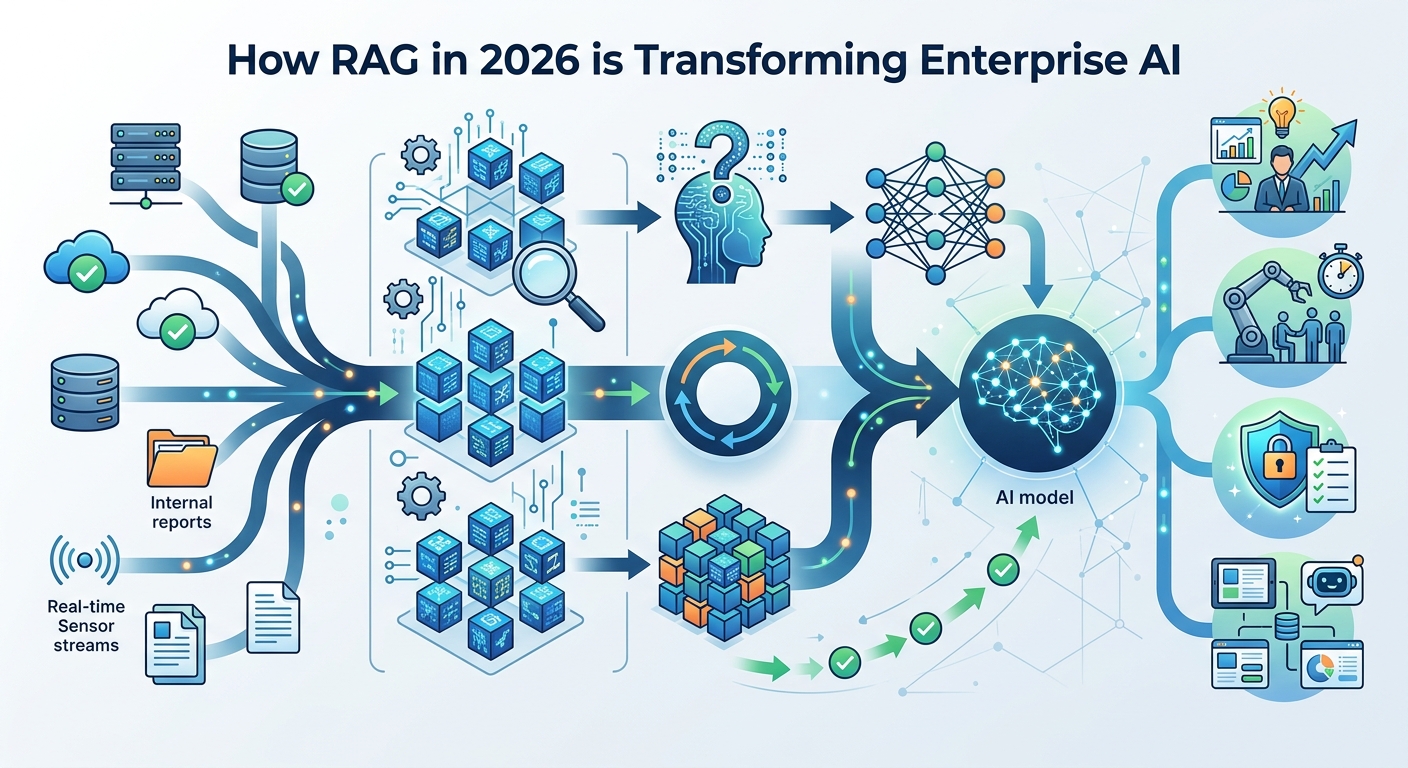
- Leading implementations connect RAG pipelines to live data sources like internal databases, CRM systems, and news feeds.
- Real-time integration requires robust indexing pipelines and careful handling of data freshness signals.
- Organizations treating RAG as a data engineering project with AI on top are getting it right.
Scalability and Domain-Specific Adaptations
Early RAG systems struggled under real enterprise conditions: large document corpora, high query volumes, and strict latency requirements. Scalability improvements in 2026 are addressing these gaps directly.
- Modern RAG architectures handle corpora in the hundreds of millions of documents without degradation in quality or speed.
- Permission-aware retrieval, where the system surfaces only documents a user is authorized to access, is becoming a standard feature.
- Domain-specific adaptations, tuning retrieval and generation pipelines for specific industries, create competitive advantages.
Conclusion: Strategic Deployment of RAG
RAG in 2026 is more capable, scalable, and accessible than ever. Organizations getting the most value from it are making deliberate choices about hybrid retrieval architectures, investing in real-time data infrastructure, and thinking carefully about domain adaptation. The technology has matured to the point that the question is no longer whether RAG can work at enterprise scale, but whether your team has the strategy and infrastructure to take full advantage of its capabilities. Consider whether your current RAG setup is optimized for your needs or if it's time to reevaluate your approach.
// Related Articles
- [TOOLS]
Aliyun Bailian Token Plan turns credits into agents
- [TOOLS]
One API gateway turns six AI APIs into one
- [TOOLS]
OpenAI FDEs turn broken agents into shipped systems
- [TOOLS]
Anthropic’s daily brief turns news into a workflow
- [TOOLS]
Claude Reflect turns usage into retention
- [TOOLS]
Midjourney turns prompt ideas into art