20 GitHub AI Projects to Watch in 2026
OpenClaw may top GitHub, but 2026’s AI list shows a bigger shift toward agents, workflow systems, RAG, and multimodal tools.

OpenClaw has surged to roughly 302,000 GitHub stars, putting it ahead of many older open-source AI names. That headline matters, but the more interesting story sits underneath the ranking: the center of gravity in open-source AI has moved away from chat demos and toward software that can act, connect systems, and fit into real work.
That shift shows up clearly in the projects getting attention in 2026. The biggest repositories are no longer only model wrappers or glossy chat front ends. The momentum is going to agent runtimes, workflow builders, data pipelines for RAG, terminal tools, and multimodal interfaces that developers can actually plug into a stack.
What the GitHub rankings really say
Get the latest AI news in your inbox
Weekly picks of model releases, tools, and deep dives — no spam, unsubscribe anytime.
No spam. Unsubscribe at any time.
The list in the source article mixes a few different kinds of projects, and that is exactly why it is useful. OpenClaw, AutoGPT, n8n, Dify, LangChain, Firecrawl, Stable Diffusion WebUI, ComfyUI, Open WebUI, and Gemini CLI are solving different problems, yet they point in the same direction: AI is becoming infrastructure.
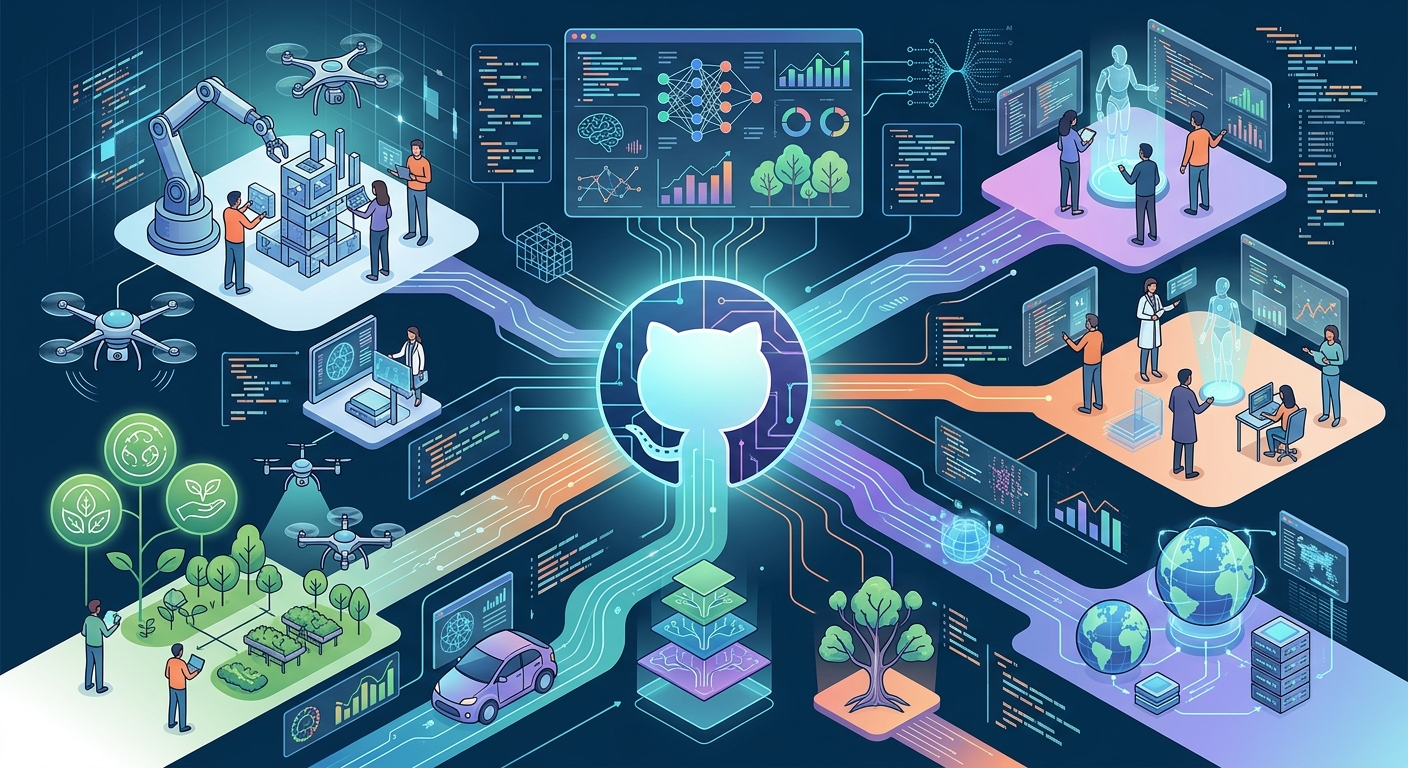
Last year, many popular repositories were judged by a simpler question: can this feel close to a closed-source assistant? In 2026, the better question is whether a project can sit inside a workflow, call tools, read context, stay online, and produce output that someone can trust enough to use in production.
- OpenClaw: about 302k stars, positioned as an open-source AI assistant for personal environments
- AutoGPT: about 182k stars, still one of the best-known autonomous agent projects
- n8n: about 179k stars, a workflow automation platform with native AI hooks
- Stable Diffusion WebUI: about 162k stars, still a major entry point for image generation
- Dify: about 132k stars, focused on production AI app building with workflows, RAG, and observability
- LangChain: about 129k stars, a framework for connecting models, tools, memory, and external systems
- Open WebUI: about 127k stars, an interface layer for Ollama, OpenAI-compatible APIs, and local setups
- ComfyUI: about 106k stars, a node-based visual system for image generation pipelines
- Gemini CLI: about 97.2k stars, bringing Gemini into terminal-based developer workflows
- Firecrawl: about 91k stars, turning websites into structured data or Markdown for LLM use
My read is simple: stars still matter, but category matters more. A flashy assistant can spike fast. A tool that becomes part of a team’s daily workflow tends to stick around longer.
OpenClaw is the signal, not the whole story
OpenClaw gets the attention because it packages a very attractive idea: put an AI assistant into channels people already use, keep it close to the user’s own environment, and make self-hosting part of the pitch. That combination lands well with developers who want control over rules, deployment, and integrations.
But OpenClaw is more important as a marker than as a lone winner. Its rise tells us that people want AI systems that live inside existing tools instead of asking users to adopt yet another destination app. That same instinct explains why terminal agents, workflow builders, and AI-ready automation platforms are climbing.
“We think the most exciting opportunities are at the application layer.”
Sam Altman, OpenAI CEO, in an interview with Stratechery in 2023
That quote has aged well. The application layer now includes orchestration, permissioning, context retrieval, observability, and human review. In other words, the projects getting traction are the ones that treat AI as part of a system rather than a chatbot in a box.
The four clusters that matter most
If you strip away the hype, the top open-source AI projects in this list fall into four practical clusters. Each one maps to a real bottleneck teams hit when they move from demo to deployment.
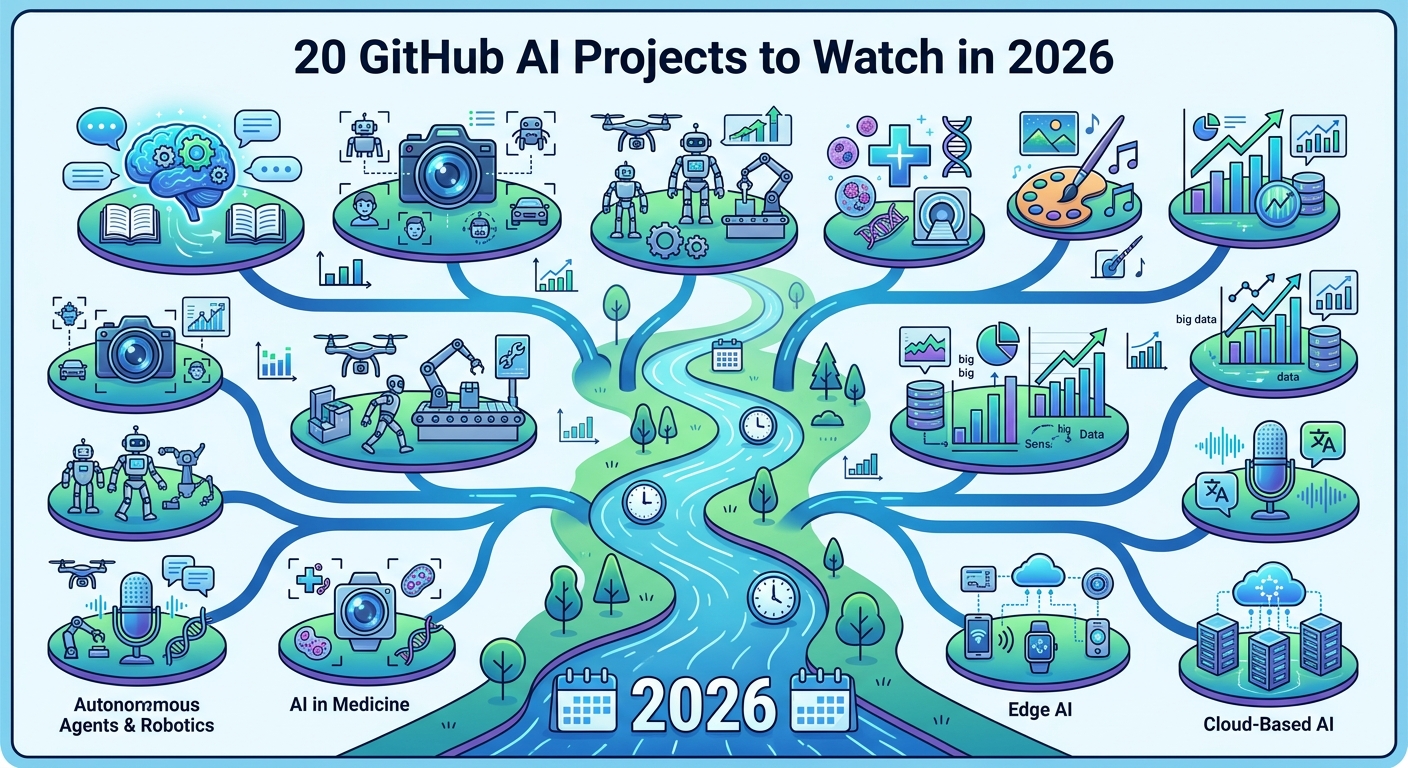
Agent execution. OpenClaw, AutoGPT, and Gemini CLI all point to the same demand: people want software that can do work, keep context, and operate in an environment over time. The difference is packaging. OpenClaw aims at personal channels and self-hosted usage. AutoGPT remains the classic reference point for autonomous agents. Gemini CLI pushes the agent model into the terminal, where many developers already spend their day.
Workflow orchestration. n8n, Dify, and LangChain represent the plumbing layer. n8n is attractive because it combines visual automation with code extensibility. Dify tries to package workflow building, model management, RAG, and app monitoring into one product surface. LangChain remains the toolkit mindset: connect models, tools, and memory with code-level control.
Data and context. RAGFlow and Firecrawl address a problem that every team learns the hard way: model quality drops quickly when the context layer is weak. Firecrawl’s value is concrete and boring in the best sense. It pulls web content into formats LLM systems can actually use. RAGFlow focuses on parsing, preprocessing, and building a more dependable retrieval chain.
Multimodal generation. Stable Diffusion WebUI, ComfyUI, and Deep-Live-Cam show that image and video tooling still pull huge interest, but the center has moved from one-click novelty to repeatable pipelines. ComfyUI in particular has become popular because node-based workflows make complex generation setups easier to reuse and tweak.
- Agent tools focus on action inside an environment, often with persistent tasks
- Workflow platforms focus on orchestration, approvals, triggers, APIs, and business logic
- RAG and data tools focus on ingestion, parsing, retrieval quality, and context formatting
- Multimodal apps focus on repeatable visual pipelines rather than one-off prompts
How these projects compare in practice
Developers often ask which project to bet on, but that is the wrong framing. Most teams will combine several of these. A common stack might use Firecrawl for ingestion, RAGFlow for retrieval, LangChain or Dify for orchestration, n8n for business process automation, and Open WebUI or a custom app as the user-facing layer.
The numbers in the ranking help show maturity and mindshare, though they do not tell the full story. n8n at roughly 179k stars says workflow automation with AI now has mainstream developer attention. Dify at around 132k suggests there is a large market for opinionated AI app platforms. LangChain at about 129k confirms that code-first orchestration still has a strong audience despite complaints about complexity.
On the multimodal side, Stable Diffusion WebUI at around 162k and ComfyUI at about 106k show an interesting split: one project wins on accessibility, the other on composability. That is a useful pattern across the whole list. Simpler interfaces pull broader adoption, while more modular tools often become the favorite among power users.
Gemini CLI at about 97.2k is also worth watching because terminal-native AI feels much more natural than web chat for many engineering tasks. If Google keeps investing there, command-line agents could become a standard part of local development workflows, much like linters, package managers, and test runners already are.
One more point that deserves attention: self-hosting keeps showing up. OpenClaw, Open WebUI, Stable Diffusion WebUI, ComfyUI, and many RAG-related tools all benefit from the same user preference. Teams want control over data, cost, integration points, and model choice. That preference is not a niche concern anymore. It is becoming a default requirement in a lot of developer-led adoption.
What to watch next
If I had to make one specific prediction, it is this: by the end of 2026, the most valuable open-source AI projects on GitHub will look less like standalone assistants and more like operating layers for work. The winners will connect identity, permissions, retrieval, automation, human review, and model switching in one deployable system.
So if you are evaluating this space, do not ask which repo has the loudest buzz this month. Ask a harder question: which tool can survive contact with your actual stack, your messy data, your approval flows, and your security rules? That filter will cut through most of the noise fast.
// Related Articles
- [TOOLS]
Aliyun Bailian Token Plan turns credits into agents
- [TOOLS]
One API gateway turns six AI APIs into one
- [TOOLS]
OpenAI FDEs turn broken agents into shipped systems
- [TOOLS]
Anthropic’s daily brief turns news into a workflow
- [TOOLS]
Claude Reflect turns usage into retention
- [TOOLS]
Midjourney turns prompt ideas into art