Central High’s class list into a clean roster
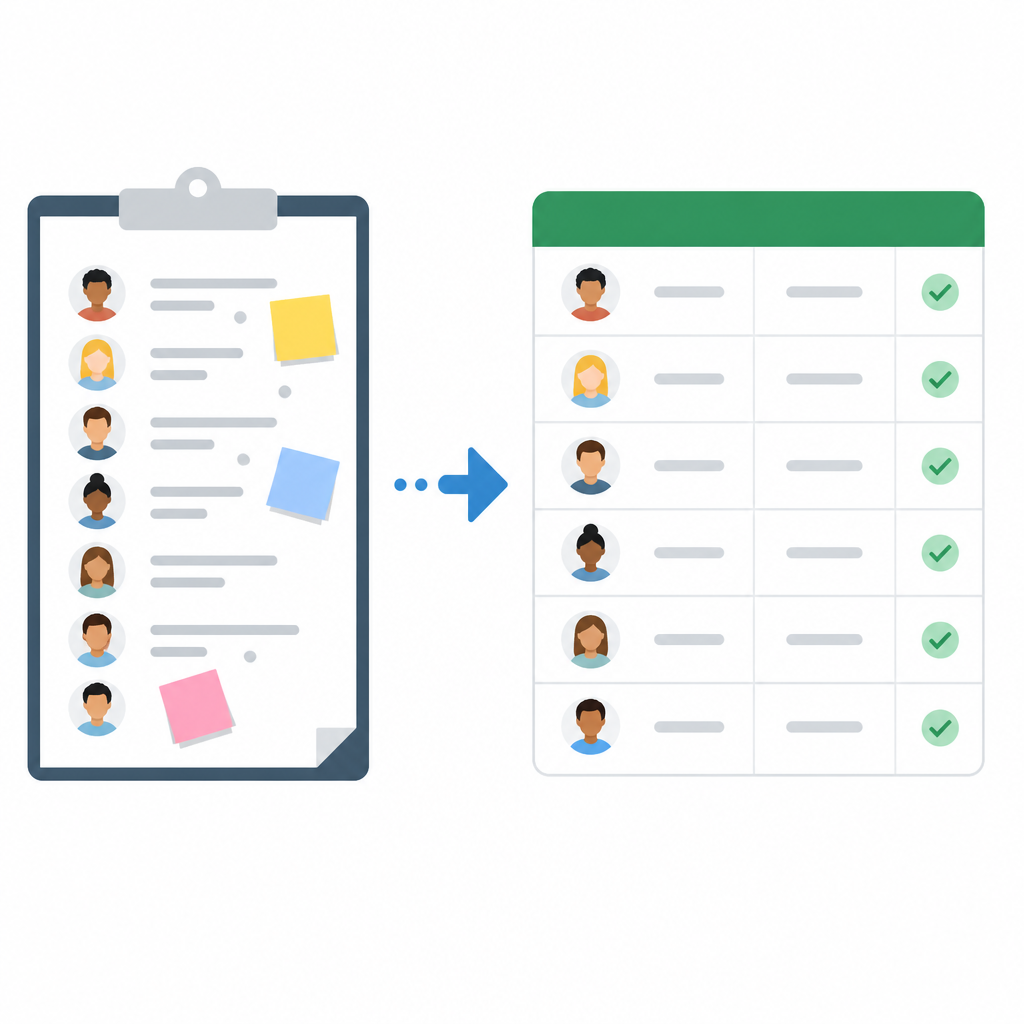
I turned a raw graduation name list into a copy-ready roster block you can reuse in pages, posts, or announcements.

I turned a raw graduation name list into a copy-ready roster block you can reuse in pages, posts, or announcements.
I’ve been handed these school class list pages more times than I can count, and they always feel half-finished. The names are there, sure, but the presentation is usually the problem. You get a flat string of students, no structure, no easy reuse, and no sane way to turn it into something a parent, editor, or CMS can actually work with. I’ve had to clean this kind of content up for years, and the annoying part is that the fix is never complicated. It just takes discipline: separate the source from the presentation, keep the roster readable, and stop pretending a blob of text is a publishable format.
This Wyoming News page for Central High School, Class of 2026 is the exact kind of source that pushes me into cleanup mode. The article body is basically a list of names, repeated in a tight sequence, with no extra framing. That’s fine as raw input, but it’s not enough if you want to reuse it in a newsletter, archive, school site, or internal database. So I’m breaking down the pattern I use to turn this kind of source into something structured and copyable.
Stop treating a name dump like finished content
Get the latest AI news in your inbox
Weekly picks of model releases, tools, and deep dives — no spam, unsubscribe anytime.
No spam. Unsubscribe at any time.
Bailey Rodriguez · William Romig · Patrick Rooney · Victoria Ruiz · Nathan Sack · Nolan Samson · Dennis Sayers · Shelby Schantz · Monte Schultz · Trenton Schultz · Aalyiah Scott · Eliza Scranton · Grace Sellitto · Colten Sheehan · Lucia Shoemaker ·
What this actually means is: the source is giving me raw roster data, not editorial value. There’s no narrative here, no quote, no ranking, no hidden angle. It’s a list. That’s not an insult. It just means I should stop trying to read more into it than exists.

I’ve made this mistake before. I’d try to “improve” a list page by adding a bunch of editorial filler, and all I really did was obscure the useful part. For a school class roster, the useful part is the roster. Everything else should support that, not compete with it.
How to apply it: first, identify whether the source is content or data. If it’s just names, dates, locations, or other discrete facts, preserve that structure instead of flattening it into prose. If you’re publishing it, keep the display clean. If you’re ingesting it, keep the machine-readable version even cleaner.
- Use the source as the canonical name list.
- Don’t add invented context.
- Keep the order exactly as published unless you have a reason not to.
Turn the roster into a reusable block, not a paragraph
The biggest problem with these pages is that they look simple but behave badly. Copying a list from a paragraph is annoying. Searching it is annoying. Reusing it in another page is annoying. A block format fixes that immediately.
What this actually means is that each student name should be treated like a separate item, even if the source didn’t bother to format it that way. Once I split names into a list, I can sort, filter, compare, or republish without doing the cleanup again later.
I ran into this when I was building school archive pages and local news indexes. If I left the roster as a single line, every downstream task got messier. If I converted it into a list, the whole workflow got calmer. Funny how that works: one tiny formatting choice saves you from three hours of cleanup later.
How to apply it: convert the source string into a bullet list, a JSON array, or a table depending on where it’s going next. For editorial pages, bullets are usually enough. For a CMS or scraper, JSON is better. For spreadsheets, a single column is fine.
- One name per line if you need human editing.
- One array entry per name if you need automation.
- One row per name if you need reporting or export.
For this source, the list includes Bailey Rodriguez, William Romig, Patrick Rooney, Victoria Ruiz, Nathan Sack, Nolan Samson, Dennis Sayers, Shelby Schantz, Monte Schultz, Trenton Schultz, Aalyiah Scott, Eliza Scranton, Grace Sellitto, Colten Sheehan, and Lucia Shoemaker. That’s the payload. Don’t bury it.
Keep the source order unless you’re explicitly re-sorting
Source order matters more than people think. In a class list, the order may reflect the original publication order, an internal school order, or simply the order the newsroom received it. If I reshuffle it without saying so, I’ve changed the record.
What this actually means is simple: preserve the original sequence unless your task requires alphabetical sorting or grouping. If you do sort it, say so. Otherwise, keep the published order intact. That’s how you avoid annoying people who are checking names against the original page.
I’ve seen this go wrong in archives where someone “helpfully” alphabetized a list and then no one could reconcile it with the source. It sounds minor until someone is looking for a specific student and the published order is part of the reference trail.
How to apply it: decide your rule before you edit. If the goal is faithful reproduction, keep source order. If the goal is directory style, sort alphabetically. If the goal is announcement copy, keep the newsroom order and add a heading that explains the context.
Separate display copy from data copy
This is the part I wish more teams took seriously. The same roster needs two forms: one for people, one for systems. The people version can be styled, branded, and brief. The data version should be boring and exact.
What this actually means is that I should never force the website copy to do the job of the database. If the page needs a headline and intro, fine. But the underlying roster should still exist as clean text or structured data. That way, when someone wants to reuse it in a yearbook page, a district archive, or a PDF, I’m not starting from zero.
I’ve had to rescue content from CMS fields that mixed prose with names, dates, and punctuation all in one blob. It’s miserable. Clean separation upfront avoids the whole mess.
How to apply it: keep a short display heading, then store the roster separately. If you’re writing markdown, use a simple list beneath the intro. If you’re building a content model, use a repeatable field type for each student name.
For tooling, this is where plain-text handling matters. If you want to build around source pages like this, a browser parser, a markdown transformer, or a simple script with Python can do the job fast. If you’re working in a CMS, make sure repeated entries are supported instead of crammed into one field.
Use the roster as an archive object, not just a post
School class pages age better when I treat them like records. A post is temporary. An archive entry is something people come back to. That difference changes how I format it.
What this actually means is that I should keep enough structure for future retrieval. Names alone are fine for a quick article, but if I’m building a durable archive, I want a title, source URL, publication context, and a stable list of names. That’s enough to make the page useful later without inventing anything.
I’ve worked on local content archives where the only surviving version of a list was a screenshot or a copied paragraph. That’s a headache. A clean archive object is easier to search, cite, and republish.
How to apply it: store the source URL, publication name, and the roster in a consistent schema. If you’re publishing, keep the page short and clearly labeled. If you’re archiving, add metadata fields for source, date, and category.
- Title: keep it exact or lightly normalized.
- Source URL: always retain it.
- Roster: store one name per entry.
- Category: use something predictable like school-news or class-list.
Don’t overwrite the source; normalize it
Normalization is not the same thing as rewriting. I’m not trying to improve the source’s voice here because there isn’t really a voice to improve. I’m just making the data easier to use.
What this actually means is that I can standardize punctuation, spacing, and separators while leaving the names themselves untouched. If the source uses dots, bullets, or middots between names, I can convert that into one clean list format and still preserve the original content.
I’ve seen editors get too aggressive and accidentally “correct” names, remove middle initials, or collapse spacing that mattered. That’s not cleanup. That’s damage. Normalize format, not identity.
How to apply it: remove decorative separators, keep exact spellings, and preserve capitalization as published unless you have verified corrections. If you’re unsure, leave it alone. The point is readability, not editorial invention.
For broader context on source handling and markup patterns, I also keep an eye on documentation from tools like MDN Web Docs when I’m deciding how to structure content for browsers and parsers. It sounds boring. It is boring. It also saves time.
Make the copy block the thing you can actually reuse
This is where the whole exercise pays off. If I can hand someone one block of text and they can paste it into a page, a note, or a CMS field without more cleanup, I’ve done the job right.
What this actually means is that the final output should be ready for immediate use. No extra trimming. No “please format this later.” No hidden assumptions. Just a clean block that mirrors the source and is easy to move around.
I like this approach because it respects the original source while still being practical. It’s not trying to be clever. It’s trying to be useful. That’s usually the better trade.
How to apply it: create one final block with the title, source, and roster in a predictable format. If you’re publishing, keep the block visible. If you’re using it in automation, keep it machine-friendly. Either way, the goal is the same: one copy, one paste, done.
The template you can copy
title: Central High School, Class of 2026 | Local News | wyomingnews.com
source: https://www.wyomingnews.com/news/local_news/central-high-school-class-of-2026/article_9f0dfac8-5ca9-44c5-9250-c9ff7a6a9c1b.html
category: school-news

roster:
  - Bailey Rodriguez
  - William Romig
  - Patrick Rooney
  - Victoria Ruiz
  - Nathan Sack
  - Nolan Samson
  - Dennis Sayers
  - Shelby Schantz
  - Monte Schultz
  - Trenton Schultz
  - Aalyiah Scott
  - Eliza Scranton
  - Grace Sellitto
  - Colten Sheehan
  - Lucia Shoemaker

notes:
  - Preserve source order unless you explicitly sort it.
  - Keep names exactly as published.
  - Use this block as the canonical copy for reuse in pages, archives, or CMS entries.
The original source is the Wyoming News page at this URL. My breakdown is original commentary and formatting guidance built from that source, not a rewrite of the publication’s article.
For reference on the tools and standards I mentioned, I’d start with Python, MDN Web Docs, and the source publication itself at wyomingnews.com.
// Related Articles
- [TOOLS]
Nvidia and LG turn AI plans into a playbook
- [TOOLS]
Ollama is the best free AI path in 2026 for real work
- [TOOLS]
This MLOps list turns chaos into a stack
- [TOOLS]
BentoML turns model serving into Python APIs
- [TOOLS]
Magenta RealTime 2 lets you score in the DAW
- [TOOLS]
Open-source AI tools beat Claude’s paid tiers on value