Why Figure’s $1 billion month proves tokenized credit is ready
Figure’s $1 billion month shows tokenized credit is moving from crypto theory into real financial infrastructure.

Figure’s $1 billion month shows tokenized credit is moving into real financial infrastructure.
Figure’s March milestone is not a curiosity, it is proof that tokenized credit has crossed from pilot project to working market infrastructure.
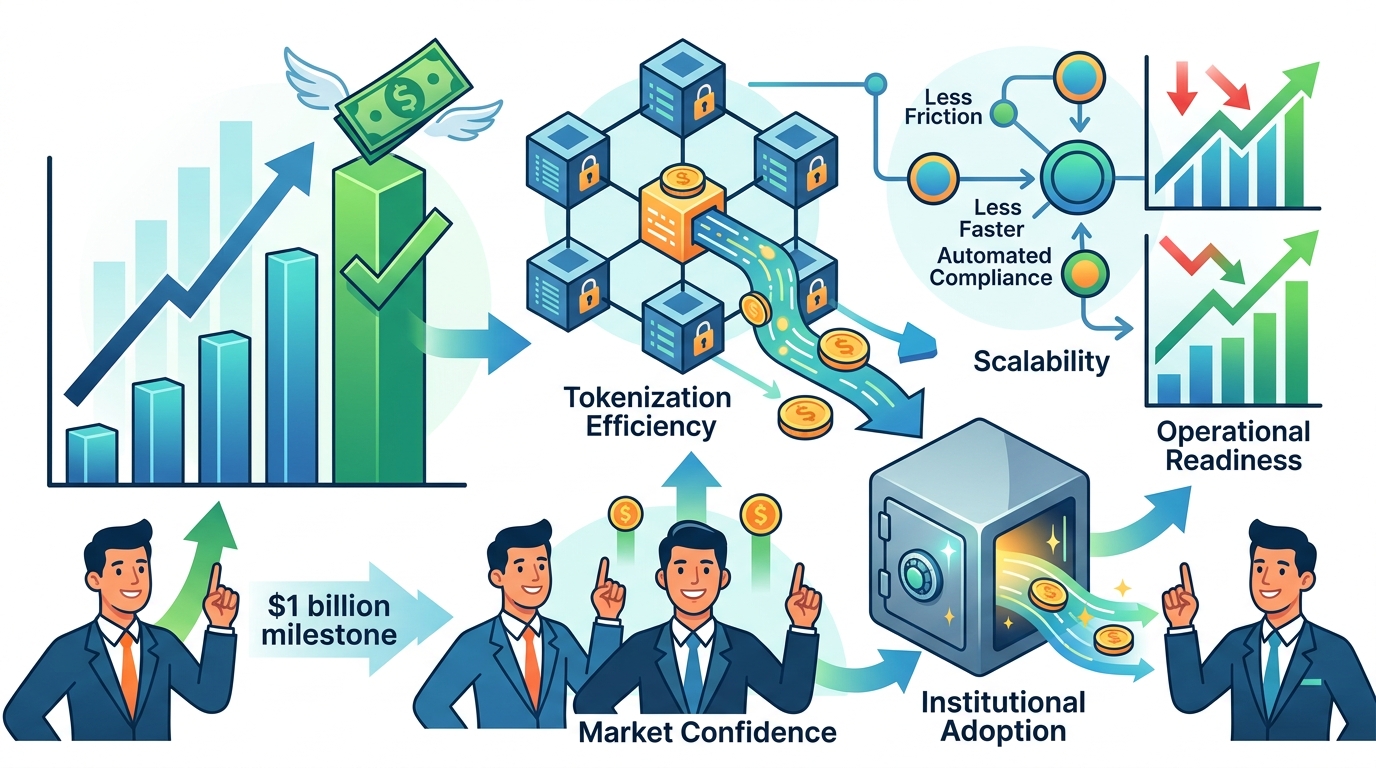
When a lender clears $1 billion in monthly originations and $2.9 billion in a quarter, the argument that onchain credit is only a demo collapses. Figure is now running at roughly $12 billion in annualized volume and approaching $30 billion in cumulative originations, which is real scale in a business that lives or dies on trust, funding efficiency, and repeat usage. Mike Cagney is not selling a crypto narrative here. He is selling a cheaper, faster way to move loans through securitization, borrowing, and secondary markets.
Tokenized credit wins because it removes costly middle layers
Get the latest AI news in your inbox
Weekly picks of model releases, tools, and deep dives — no spam, unsubscribe anytime.
No spam. Unsubscribe at any time.
The first reason Figure matters is simple: it attacks cost. Traditional credit markets are full of toll booths, from servicing and securitization to brokerage and settlement layers that each take a slice of the spread. Figure’s pitch is that tokenizing loans collapses those layers into a more direct market structure. If that sounds abstract, the economics are not. Every basis point stripped from a loan pipeline improves returns for originators and investors alike.

That matters most in markets where fee drag is persistent and invisible. Cagney pointed to stock lending, where borrow rates can exceed 30% while the asset owner receives only a fraction of the yield. That is a textbook example of a market where intermediaries capture too much of the value. Figure’s model says blockchain is useful when it makes the asset easier to price, move, and finance without changing the underlying risk. That is the right use case, and it is why tokenized credit has a stronger business case than most tokenized everything pitches.
Liquidity is the real breakthrough, not the token
The second reason Figure’s growth matters is liquidity. Cagney described Figure as one of the only continuously updating marketplaces for consumer credit outside government-backed mortgage systems. That is the key distinction. The value is not that a loan sits on a blockchain. The value is that the asset can be repriced, pooled, collateralized, and traded in a system that behaves more like a live market and less like a batch-processing warehouse.
Figure’s Forge platform makes that logic concrete by turning loan pools into standardized vaults that can serve as collateral in DeFi protocols. Standardization is what makes the asset legible to new buyers and lenders. It also explains why Figure is expanding across networks like Solana and planning Ethereum support. The chain is not the product. The product is a more liquid balance sheet. In finance, liquidity is power, and any company that can manufacture it at scale will matter.
Access is where tokenized credit escapes crypto’s niche
The third reason Figure is breaking out is access. By putting credit assets onchain, the company can open them to broader classes of investors and borrowers who were previously locked out of prime-style strategies. Cagney called this “democratized prime,” and that phrase is not just branding. It points to a real shift in who can participate in yield generation and collateralized borrowing when the asset is standardized and transparent enough for DeFi rails.
Figure’s yield-bearing stablecoin, YLDS, reportedly has about $600 million in balances, and the company is experimenting with tokenized equities that can be lent against directly. Those are not side quests. They are evidence that the same infrastructure can support multiple financial products once the plumbing exists. That is why tokenized credit is more important than tokenized collectibles or speculative meme assets. It plugs into an actual economic need: access to yield, collateral, and financing at lower friction.
The counter-argument
The best objection is that this is still tiny next to traditional finance. Even $30 billion in cumulative originations is a rounding error beside the scale of consumer credit, securitization, and capital markets overall. Skeptics also have a fair point that tokenization can become a solution in search of a problem, especially when regulation, custody, and market structure already work well enough for many asset classes. Crypto has a long history of overpromising on efficiency and underdelivering on adoption.
That critique is valid in the abstract, but it misses where Figure is operating. Cagney is not trying to put every asset onchain or tokenize real estate for the sake of it. He is targeting financial abstractions that are already mobile, standardized, and dependent on intermediaries. Loans, securities, stock lending, and collateral are exactly the places where better plumbing creates measurable economic value. The limit is real: not every asset belongs onchain. But that is a reason to focus harder, not a reason to dismiss the category.
What to do with this
If you are a founder, stop asking whether blockchain is useful in theory and ask whether you can remove a fee layer, improve liquidity, or widen access to a financial product that already has demand. If you are a PM or engineer, design for standardization first, then portability, then composability. Figure’s breakout shows that tokenized credit wins when it behaves like infrastructure, not a stunt. Build for markets that already move money, and the token will matter because the economics do.
// Related Articles
- [IND]
WebX 2026 turns speaker hype into a conference brief
- [IND]
AI Weekly: 2026-07-06 ~ 2026-07-13
- [IND]
The AI Act should be treated as Europe’s operating system for AI
- [IND]
Booz Allen’s OpenAI Deal Is Real Advantage, Not Hype
- [IND]
OpenSearch’s vector search benchmark in 5 parts
- [IND]
Vector Databases That Work in Production