Flink Operator 1.15 turns status into signals
I break down Flink Kubernetes Operator 1.15.0 and turn its release notes into a copy-ready ops template.

Flink Operator 1.15.0 turns status, logging, metrics, and recovery into cleaner ops signals.
I've been running Flink on Kubernetes long enough to know when an operator release is actually useful and when it's just paperwork with a version bump. This one felt off in the old way: too much of the signal lived in ad hoc status checks, too much logging setup lived in tribal knowledge, and too many “it should recover” stories ended with me staring at a stuck finalizer at 2 a.m. The annoying part was never one giant failure. It was the pile-up. A deployment says it’s fine, but the job isn’t really ready. A savepoint looks recorded, but the file cleanup got weird. A session job gets deleted, and suddenly the operator is waiting on something that is never going to happen. I’ve seen that movie enough times.
The Apache Flink community’s Flink Kubernetes Operator 1.15.0 release announcement is the kind of post I like because it doesn’t hide the boring stuff. It calls out Conditions in FlinkDeployment, Logback support, bundled metric reporters, Flink 2.2 compatibility, and a batch of fixes around savepoints and session jobs. The release notes and download artifacts are linked from the announcement itself, and the operator docs are the other anchor worth keeping open while you read this. For the runtime side, I also cross-checked the broader Flink docs at apache.org, the operator project pages, and the Kubernetes docs for Conditions and kubectl wait.
Stop treating deployment status like a blob of JSON
Get the latest AI news in your inbox
Weekly picks of model releases, tools, and deep dives — no spam, unsubscribe anytime.
No spam. Unsubscribe at any time.
The operator now exposes a standard Kubernetes Condition in the status field of FlinkDeployment resources. The Running condition gives tooling a consistent, machine-readable signal of whether the deployment is up and running, directly usable with kubectl wait, GitOps controllers, and any tool that speaks Kubernetes conditions.
What this actually means is simple: the operator is speaking Kubernetes in a way other tools can understand without special casing. That matters because a custom status field is fine for humans reading YAML, but it’s a pain for automation. A Condition gives you a standard shape, a standard lifecycle, and a standard wait path. No more writing little scripts that scrape status text and guess what “healthy-ish” means.
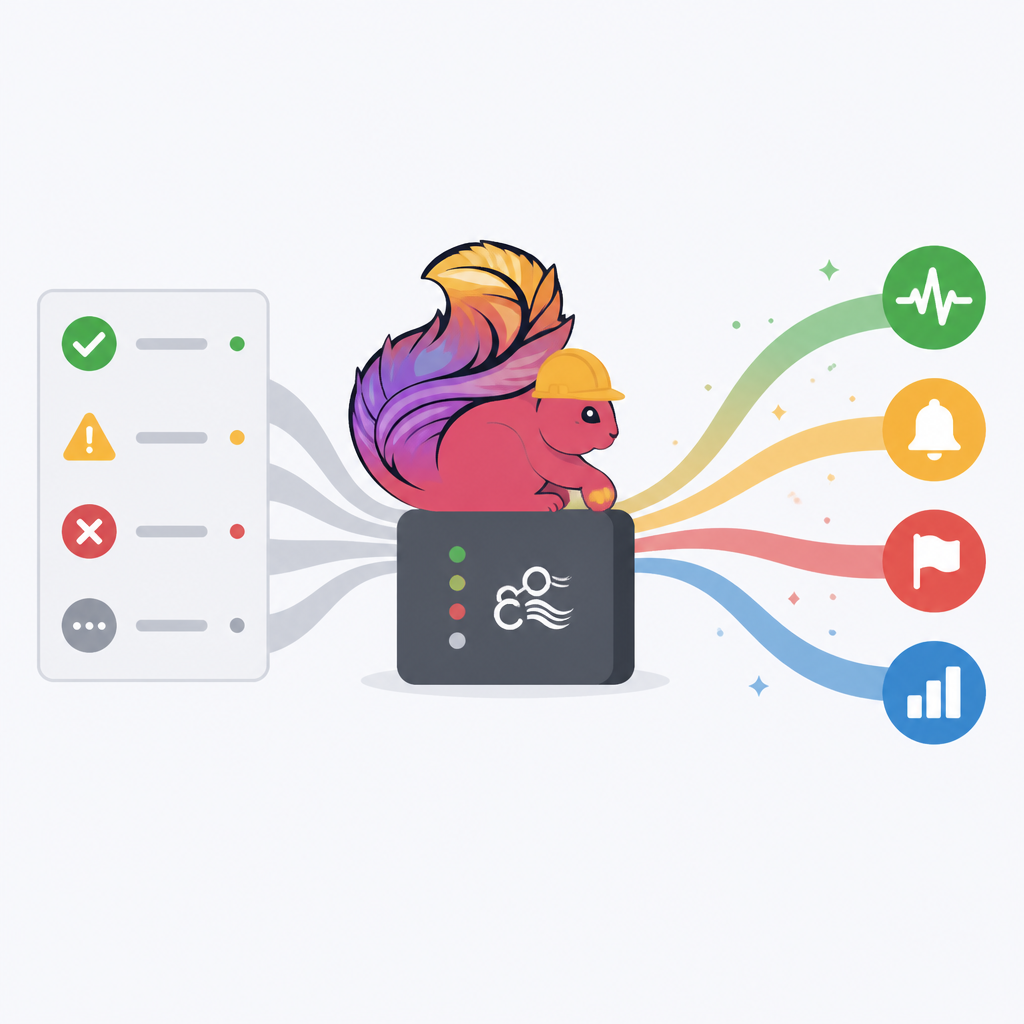
I ran into this exact mess with operators before. We had a deployment object that looked “ready” in one field and “not ready” in another because each controller had its own opinion. Once you’ve lived through that, you stop trusting free-form status. Conditions are boring in the best way. They let kubectl wait do the waiting and let GitOps tools react without inventing a new contract.
How to apply it: stop building readiness around string matching. If your workflow depends on a Flink deployment being live before another job starts, key off the Running Condition. If you’re using Argo CD, Flux, or a plain CI pipeline, wire the wait step to the condition and delete the brittle shell parsing. If you maintain your own controllers, read the Kubernetes Conditions docs and treat this as the baseline, not a special feature.
- Use Conditions for machine checks.
- Use human logs for debugging.
- Never mix the two and pretend it’s observability.
Logging support is not a footnote when your org standardized on Logback
The release adds Logback as an alternative to the default Log4j2 path, selected at install time with the new logging.framework Helm value. The announcement says the chart bundles logback-operator.xml and logback-console.xml, and that they can be customized the same way as the existing Log4j2 properties files.
This is one of those changes that sounds small until you work in a company that already picked a logging stack years ago. Then it becomes the difference between “drop the chart in and move on” and “spend half a day making the operator fit our platform defaults.” I’ve had to patch charts just to stop one more app from inventing a bespoke logging setup. It’s dumb work, and it never shows up in architecture diagrams.
What this actually means is that the operator is less opinionated about one of the most annoying integration points in Java infrastructure. If your platform standard is Logback, you can keep that standard instead of making an exception for the operator. That’s good for consistency, but it also matters for appenders, routing, and any internal logging conventions you already depend on.
How to apply it: decide on the logging framework before installation, not after. If you’re distributing Helm values across environments, make the logging choice explicit in your base chart values. Then document which config file gets edited for operator logs and which one applies to console output. If your team still mixes Log4j2 and Logback without a reason, this release is a decent moment to clean that up.
For the operator chart itself, the relevant knobs live in the Helm install path from the release notes and the chart docs on the Flink Kubernetes Operator documentation site.
Bundled metrics are the difference between observability and guesswork
Flink Operator 1.15.0 bundles the flink-metrics-dropwizard reporter so you don’t have to manually add the JAR when you want Dropwizard-style metrics. The announcement also says the metrics docs were reworked to explain operator-scoped metric identifiers, the kubernetes.operator.metrics.* prefix, and an end-to-end Prometheus setup. More importantly, the operator now documents every exposed metric in one place.
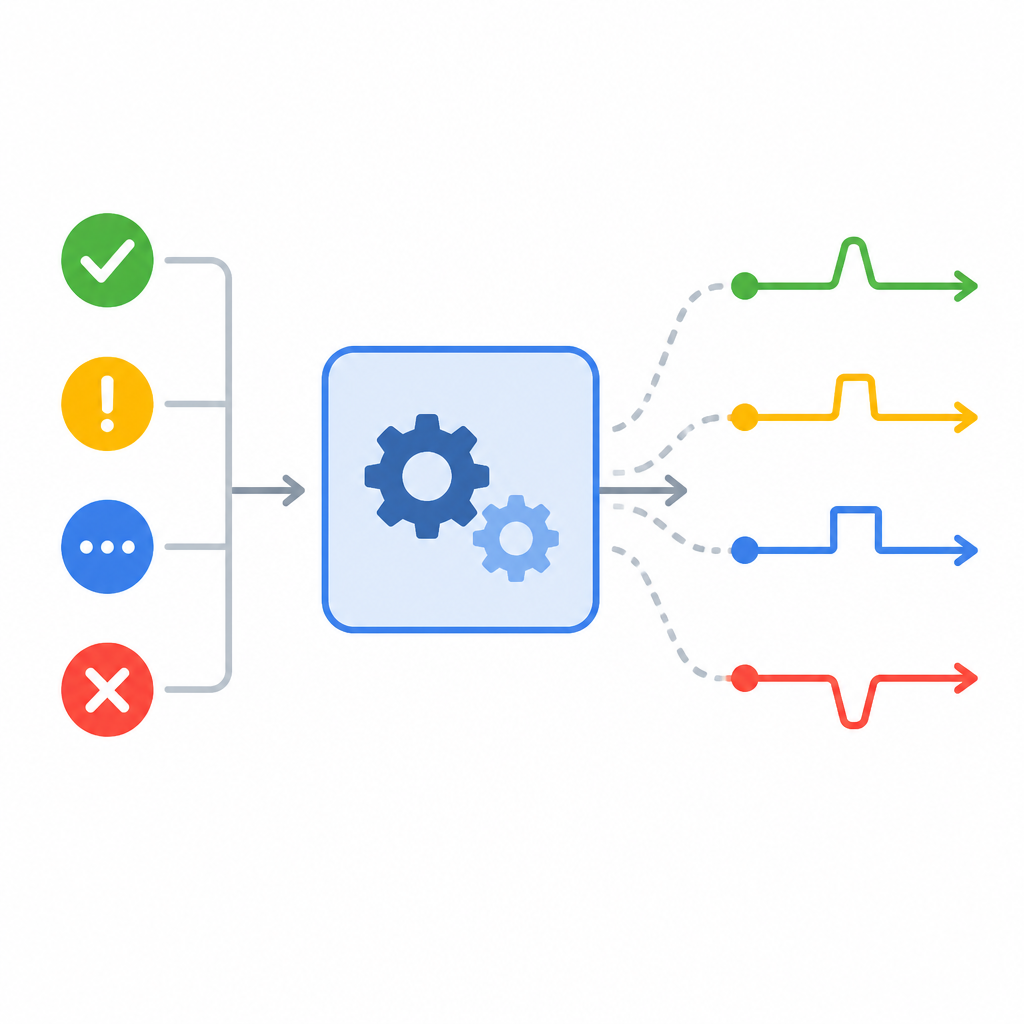
I like this change because metrics docs are usually where projects quietly fail their users. You get a list of names, maybe a few examples, and then you’re left reverse-engineering what actually matters. That’s not observability. That’s scavenger hunting. When a project documents lifecycle, job status, blue-green deployment, state snapshot, and autoscaler metrics in one place, it saves real time. It also stops the “is this metric emitted here or only there?” nonsense.
What this actually means is that the operator is trying to make monitoring setup predictable. Bundling the reporter removes one manual step, and the doc rewrite makes it easier to connect the operator’s own metrics to Prometheus or whatever else you’re using. If you’ve ever had to explain to a teammate why a metric exists but isn’t showing up, you know why this matters.
How to apply it: start by inventorying which metrics your team actually alerts on. Then map those metrics to the operator’s documented names and prefixes instead of relying on old dashboards that may have drifted. If you use Prometheus, copy the operator-scoped configuration pattern into your deployment values. If you use Dropwizard downstream, confirm the reporter is now already present before you add any custom packaging work.
- Document the metrics you alert on.
- Do not assume the chart already includes the reporter you need.
- Rebuild dashboards from the operator docs, not from memory.
Flink 2.2 compatibility is useful because upgrades are where teams get stuck
The release says Operator 1.15.0 is fully validated against Apache Flink 2.2, with support for 2.2.x, 2.1.x, 2.0.x, 1.20.x, and 1.19.x. That matrix is the part I care about, because version support is where upgrade plans live or die.
I’ve seen teams get trapped in a weird middle state where the application runtime is ready to move, but the operator or chart isn’t. Then the upgrade gets split into two projects, and both get slower. A clear compatibility matrix reduces that nonsense. It gives platform teams a direct answer when someone asks whether the operator is safe to roll forward with the new Flink line.
What this actually means is that the operator is keeping pace with the runtime in a way that lets you plan upgrades instead of gambling on them. That doesn’t remove testing, obviously. It just means you’re not starting from a compatibility fog.
How to apply it: if you’re on 1.19 or 1.20, map your next upgrade against this matrix before you touch production. If you’re already testing 2.2, pin the operator version in the same change set so you can validate the pair together. And if you maintain internal platform docs, add the matrix there in plain language. People do not read release notes twice.
The savepoint fixes are really about trust
The announcement calls out a race condition where a savepoint or last-state upgrade could lose job state when the JobManager was slow to start. It also fixes an issue where savepoint history entries were removed from status before the savepoint file was successfully disposed, which could leave orphaned files behind. That’s the kind of bug that makes operators look haunted.
What this actually means is that the operator is getting more careful about the order of operations around state. If you run stateful Flink jobs, the difference between “status updated” and “artifact actually cleaned up” is not academic. That gap is where data loss stories and filesystem junk come from.
I ran into a similar problem once where a controller reported success before the underlying storage had really settled. Everything looked fine until the next maintenance window, when old artifacts and half-finished transitions started piling up. That’s when you learn that state management isn’t just about correctness in the happy path. It’s about refusing to lie about completion.
How to apply it: review any automation that assumes a savepoint record means the file is gone or safe. If you have cleanup jobs, retention policies, or disaster recovery scripts, make sure they don’t trust status too early. Also, if your team uses slow-starting JobManagers in some environments, add that to your test matrix. The bug fix here is nice, but your workflows should still be honest about timing.
Session job deletion finally behaves like a cleanup flow, not a hostage situation
The release adds a configuration option to cancel a running session job when the FlinkSessionJob resource is deleted, instead of blocking on the finalizer indefinitely. It also improves deletion when the session cluster is temporarily unreachable, fixes a stuck finalizer case, and restores missing ownerReferences on recreated JobManager Deployments during session cluster recovery.
This is the part of the release that reads like someone on the team has personally stared at a deletion that would not finish. I respect that. Finalizers are useful right up until they become a parking brake you forgot to release. If the cluster is down or unreachable, deletion flows should degrade gracefully instead of turning into a deadlock disguised as safety.
What this actually means is that the operator is making teardown less fragile. That matters in real life because deletion is not an edge case. It’s how you recover from bad deploys, how you rotate workloads, and how you keep test clusters from becoming junk drawers.
How to apply it: decide whether your platform should cancel active session jobs on delete or preserve them until cleanup finishes. Then encode that decision in config, not in operator lore. Test deletion while the cluster is healthy, then test it again while the session cluster is unreachable. If you only test the happy path, the finalizer will remind you later that you were optimistic.
The template you can copy
# Flink Kubernetes Operator 1.15.0 rollout template

## 1) Installation values
logging:
  framework: logback   # or log4j2 if your platform standard says so

webhook:
  create: false        # only if you intentionally manage webhooks elsewhere

# Metrics: keep the operator-scoped prefix in your config
# kubernetes.operator.metrics.*

## 2) Readiness gate
# Use Kubernetes Conditions instead of parsing status text.
# Example:
# kubectl wait flinkdeployment/my-job --for=condition=Running --timeout=120s

## 3) Monitoring checklist
- Confirm flink-metrics-dropwizard is present in the chart
- Map operator metrics to Prometheus scrape rules
- Verify lifecycle, JobStatus, autoscaler, and snapshot metrics
- Update dashboards to use documented metric names only

## 4) Upgrade compatibility
- Target Flink version: 2.2.x / 2.1.x / 2.0.x / 1.20.x / 1.19.x
- Validate operator version: 1.15.0
- Test upgrade + rollback with slow JobManager startup

## 5) State and savepoint safety checks
- Verify savepoint creation during rolling upgrades
- Confirm savepoint history is not removed before artifact disposal
- Watch for orphaned files after cleanup
- Audit any scripts that assume status == completion

## 6) Session job deletion policy
sessionJobDeletion:
  cancelOnDelete: true

## 7) Pre-prod validation steps
- Create a FlinkDeployment and wait on Running Condition
- Trigger a savepoint and verify cleanup ordering
- Delete a FlinkSessionJob while the session cluster is healthy
- Repeat deletion while the session cluster is unreachable
- Confirm JobManager Deployments get correct ownerReferences on recovery

## 8) Notes for operators
- Keep logging framework choice consistent across environments
- Treat metrics docs as the source of truth
- Do not rely on finalizers alone for user-visible deletion timing
This is the part I’d actually hand to a platform team. It’s not fancy. It’s the stuff that keeps you from rediscovering the same pain every quarter. If you want the release announcement itself, read the original post and the linked release notes, because I’m only translating the operational meaning here.
For the upstream references, start with the Apache Flink announcement at flink.apache.org, then check the operator docs, the GitHub repository, and the Kubernetes docs for Conditions and kubectl wait. What I’ve written here is my breakdown and template, not the official announcement.
// Related Articles
- [TOOLS]
Nvidia and LG turn AI plans into a playbook
- [TOOLS]
Ollama is the best free AI path in 2026 for real work
- [TOOLS]
This MLOps list turns chaos into a stack
- [TOOLS]
BentoML turns model serving into Python APIs
- [TOOLS]
Magenta RealTime 2 lets you score in the DAW
- [TOOLS]
Open-source AI tools beat Claude’s paid tiers on value