GitHub skills repos turn AI coding into workflows
I break down the GitHub weekly trending report and turn the skills-wave into a copyable workflow for AI coding agents.
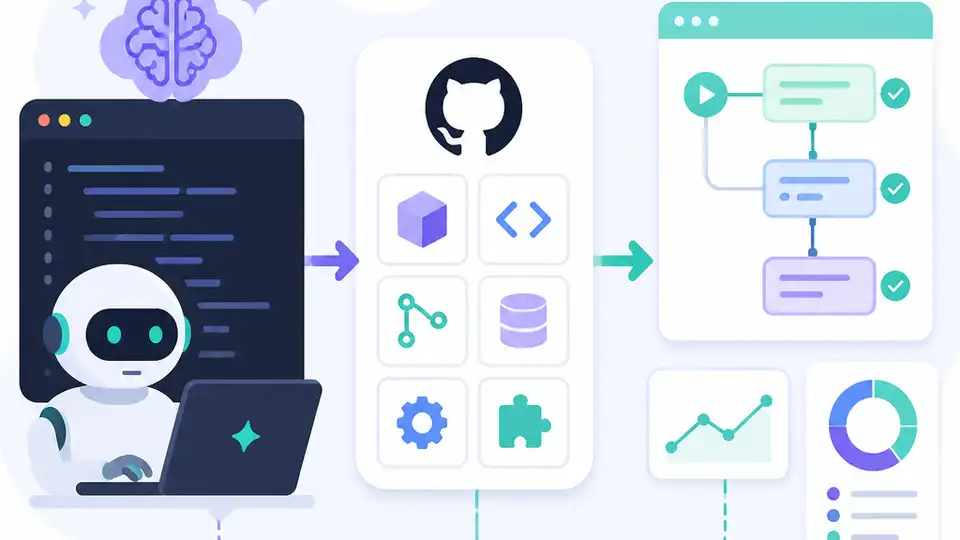
I break down the GitHub trending report into a copyable AI-agent workflow.
I've been watching AI coding tools for a while, and honestly, the part that kept bugging me was how quickly they drifted into mush. You ask for a feature, they nod along. You ask for tests, they promise. You ask them to stop doing something risky, and half the time they just keep going like a caffeinated intern with root access. So when I read this week's GitHub trending report on DEV Community, I didn't see a hype cycle. I saw developers trying to fix the exact thing that keeps making these tools annoying: the lack of structure.
The report that kicked this off is CodeWanderer's GitHub Weekly Trending Repositories Report on DEV Community. It's based on star-history.com data for May 9 to May 15, 2026, and the headline is blunt: AI agent skills frameworks are everywhere. The top repo, mattpocock/skills, gained +1,618 stars in a week, and the top 20 together picked up nearly 14,600 stars. That's not a random spike. That's developers voting with stars for more control, better context, and fewer dumb agent mistakes.
The real story is not stars, it's control
Get the latest AI news in your inbox
Weekly picks of model releases, tools, and deep dives — no spam, unsubscribe anytime.
No spam. Unsubscribe at any time.
“AI agent skills frameworks have taken over the open-source ecosystem.”
What this actually means is that people are done treating AI agents like magic chat boxes. They want repeatable behavior. They want the agent to know when to write tests first, when to stop and ask, when to avoid dangerous commands, and when to follow a project-specific workflow instead of freelancing.
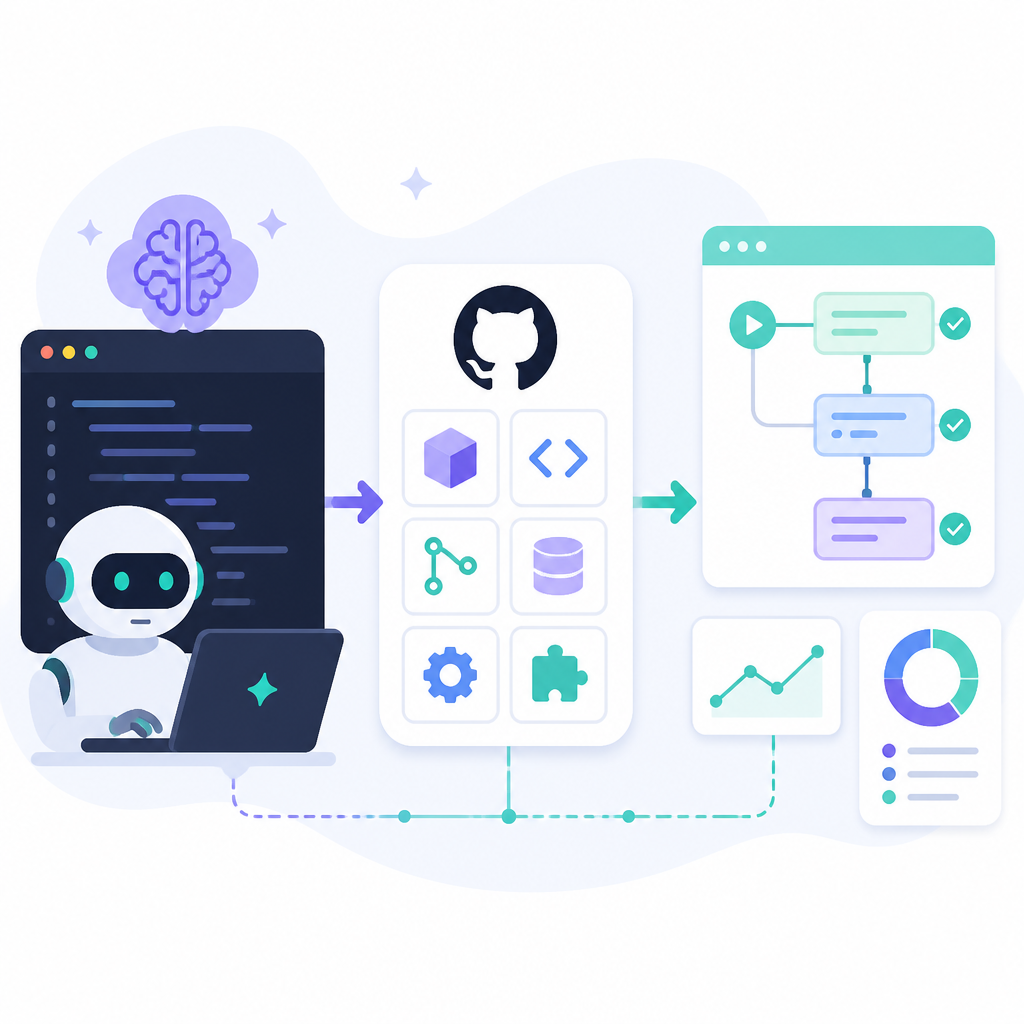
I ran into this exact problem when I tried to use a code assistant across multiple repos. In one repo I wanted strict TDD. In another I wanted migration safety and no schema churn without review. In a third I wanted the agent to stay in a narrow lane and not invent architecture because it felt creative that day. The model wasn't the issue. My instructions were too vague, and they disappeared the moment the conversation got long.
The report points to a pattern developers are now packaging as “skills.” That word matters. A skill is not a prompt dump. It's a reusable behavior bundle: rules, examples, guardrails, and workflows that an agent can keep applying.
How to apply it: stop writing one-off prompts for recurring tasks. If you keep repeating the same instruction, turn it into a file, a checklist, or a small agent-specific rule set. If your tool supports it, wire those into the agent's startup context. If it doesn't, keep them in the repo and make them part of your team workflow anyway.
Matt Pocock's .claude directory is the template everyone copied
The report's top entry is mattpocock/skills, described as “Skills for Real Engineers. Straight from my .claude directory.” That line is doing a lot of work, and for once the hype is deserved. Matt Pocock didn't just publish a list of clever prompts. He opened up the practical scaffolding he uses with Claude Code.
That matters because the repo is not trying to sound smart. It is trying to make the agent behave better in real engineering conditions. The report calls out four examples: TDD skills, guardrail skills, structured debugging skills, and TypeScript-specific patterns. That's the useful part. It turns abstract advice into agent instructions that can actually be reused.
What this actually means is that the best AI workflows are starting to look less like “prompt engineering” and more like operational playbooks. If you want a model to act like a decent senior engineer, you don't keep begging it in chat. You give it rules it can follow every time.
I like this shift because it removes the weird theater around AI usage. I don't need a model to sound brilliant. I need it to write a test before the implementation, stop when it sees a dangerous command, and explain its debugging path when something fails.
How to apply it: build a small skills folder in your repo. Keep each skill narrow. One for tests. One for debugging. One for safe shell behavior. One for your stack-specific patterns. Name them like commands, not essays. The goal is fast recall, not a manifesto.
- Put the behavior in a file the agent can actually read.
- Keep each skill tied to one recurring engineering task.
- Include examples of good and bad outputs.
- Update the skill when the team discovers a failure mode.
The Claude Code ecosystem is now a tooling market
The report doesn't just show one viral repo. It shows a cluster. cc-switch is a Claude Code environment switching tool. everything-claude-code is a resource collection for Claude Code users. addyosmani/agent-skills is another skills repo from Addy Osmani, who works at Google. And anthropics/skills shows Anthropic itself is in on the pattern.
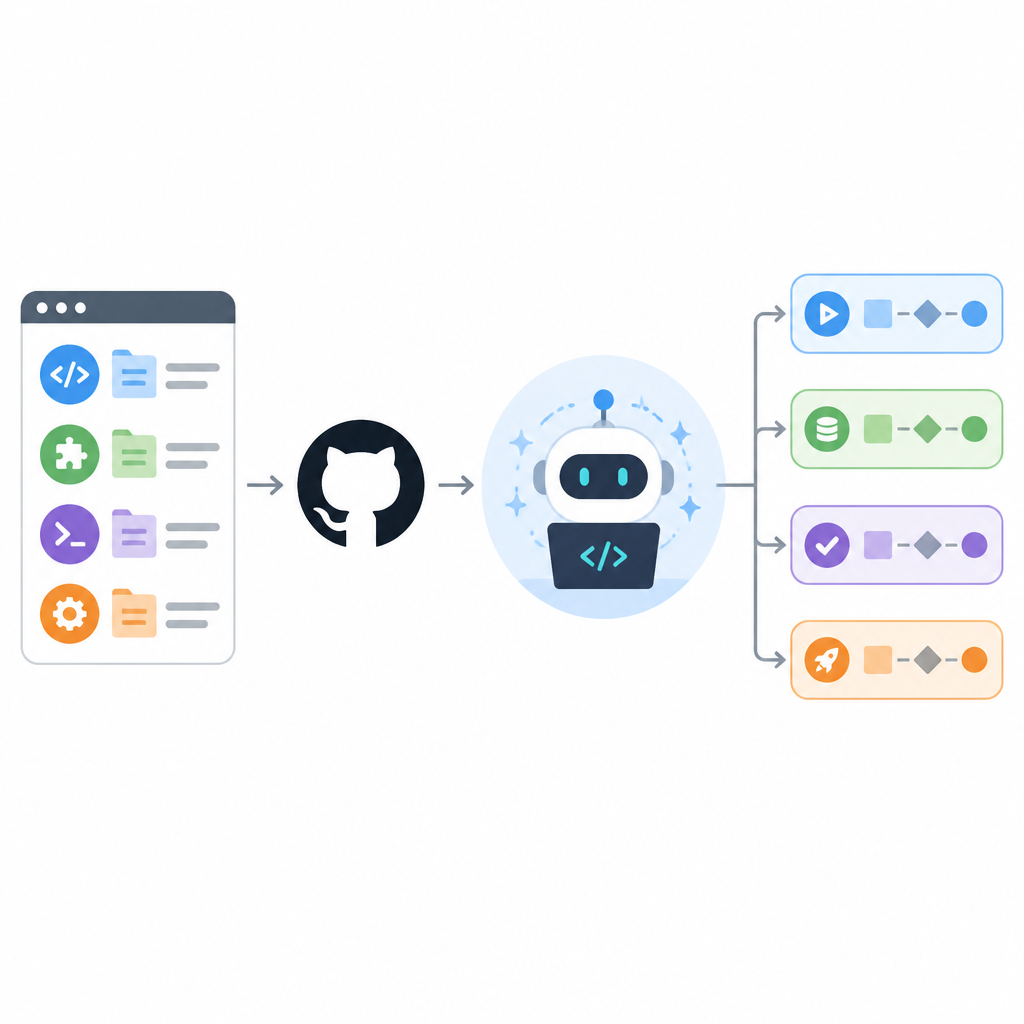
What this actually means is that Claude Code stopped being “just a product” and started becoming a platform people build around. That happens when a tool crosses from novelty into daily use. Then the ecosystem shows up: switchers, libraries, templates, curation hubs, and opinionated workflows.
I ran into this with every serious developer tool I use. The moment I need to juggle environments, keys, project-specific rules, and team conventions, I stop caring about the core feature set and start caring about the glue. That's where these repos live. They are not glamorous, but they are the difference between “I tried it once” and “I actually use this every day.”
How to apply it: if your team uses an AI coding tool, don't stop at onboarding. Build the surrounding utilities. Make switching environments dead simple. Make the common workflows discoverable. Make it easy to share a known-good setup instead of every developer inventing their own private mess.
Spec-kit is the anti-vibe-coding move
One of the most interesting entries in the report is github/spec-kit, GitHub's toolkit for spec-driven development. The report lays out the workflow clearly: specification, plan, tasks, implementation. That is the whole point. You write what you want, let the agent help break it down, then move into execution with something more durable than a half-baked prompt.
What this actually means is that developers are pushing back on “vibe coding.” I don't blame them. Vibe coding is fine until the first edge case, then you spend your afternoon untangling code the model confidently produced without enough constraints.
I like spec-driven workflows because they force the conversation to happen in the right order. First the requirement. Then the plan. Then the task list. Only then do you let the agent write code. That sequence cuts down on rework and makes review much easier.
How to apply it: before you let an agent touch implementation, make it produce a spec summary and a task breakdown. If the task list is wrong, stop there. If the spec is fuzzy, fix that first. This sounds slow until you compare it with debugging three layers of hallucinated logic later.
- Write the “what” and “why” before asking for code.
- Make the agent restate the constraints in plain English.
- Split implementation into reviewable chunks.
- Reject code that skips the plan.
Hermes Agent shows where the next fight is
The report gives NousResearch/hermes-agent a big spot near the top, and the description says it is “The agent that grows with you.” That phrase matters because it points to persistent memory and long-running context. The report also notes self-improving memory and a Python-based, MIT-licensed architecture.
What this actually means is that people are no longer satisfied with stateless assistants. If the agent is going to help with real engineering work, it has to remember patterns, learn preferences, and carry context across sessions. Otherwise every session starts from zero, and zero is a terrible place to build from.
I have the same complaint with a lot of AI tools: they are brilliant for five minutes and forgetful for five days. That is fine for quick one-off questions. It is not fine for software work, where the same constraints repeat for weeks.
How to apply it: whether you use Hermes or not, design for memory. Store project rules in the repo. Keep a running decision log. Capture debugging patterns that worked. If your agent supports persistent memory, use it intentionally instead of hoping it learns by osmosis.
The report's broader point is simple: the ecosystem is moving from prompt craft to workflow design. That is the part I trust more, because workflows survive mood swings. Prompts don't.
The skills wave is really a documentation wave
There is a quieter thing happening underneath all these repos. Skills are documentation, but better. They are documentation that can be executed against. The report's examples, from multica-ai/andrej-karpathy-skills to anthropics/financial-services, show people packaging expertise into something an agent can follow.
What this actually means is that the best teams will stop hiding their process in tribal knowledge. They will write it down in a way the tool can consume. That's a big deal for onboarding, consistency, and reducing the “only one person knows how this works” problem.
I ran into this when teams tried to scale AI help without writing anything down. Every developer got a different experience. Every repo had a different unwritten rule. The agent was only as good as the last person's memory, which is a terrible dependency.
How to apply it: treat agent skills like living docs. Review them with the same seriousness you give API docs or runbooks. If a skill causes confusion, rewrite it. If a workflow keeps failing, encode the fix. If a domain has compliance or safety constraints, put those constraints in the skill instead of in someone's head.
The template you can copy
# AI Agent Skills Pack

Use this as a repo-level starting point for Claude Code, Cursor, Codex, or any agent that can read project files.

## 1) repo-skills/README.md

# Agent Skills for This Repo

This repo uses small, task-specific skills to keep AI assistance predictable.

## Rules
- Prefer tests before implementation.
- Ask before dangerous commands.
- Summarize the plan before editing files.
- Keep changes small and reviewable.
- If a task touches production behavior, explain the risk first.

## 2) repo-skills/tdd.md

# Skill: Test-Driven Development

When asked to add or change behavior:
1. Identify the smallest failing test.
2. Write the test first.
3. Implement the minimum code to pass.
4. Refactor only after tests pass.
5. Never skip the test step unless the user explicitly says so.

Good output:
- "I'll write the failing test first, then implement the smallest change."

Bad output:
- "Here's the code, and I'll add tests later."

## 3) repo-skills/debugging.md

# Skill: Structured Debugging

When something breaks:
1. Restate the symptom.
2. List the most likely causes.
3. Check the cheapest cause first.
4. Change one variable at a time.
5. Record what was ruled out.

Always explain:
- what failed
- what you checked
- what you changed
- why the fix is likely correct

## 4) repo-skills/safety.md

# Skill: Safety and Guardrails

Before running risky commands, stop and ask for confirmation.

Examples of risky commands:
- git push --force
- rm -rf
- database migrations on production
- destructive file operations

If a risky command is requested, respond with:
"This command can cause data loss or overwrite work. Confirm before I run it."

## 5) repo-skills/spec-driven-workflow.md

# Skill: Spec-Driven Development

Before implementation, produce:
1. A short spec summary
2. Constraints
3. Assumptions
4. Task breakdown
5. Implementation plan

Workflow:
- Spec: what and why
- Plan: how to approach it
- Tasks: small reviewable steps
- Implementation: only after the plan is approved

## 6) repo-skills/stack-specific.md

# Skill: Stack-Specific Conventions

Add project conventions here.

Examples:
- TypeScript: prefer explicit types for public functions
- Python: keep functions small and testable
- React: avoid unnecessary state
- API work: include request/response examples

## 7) agent-instructions.md

# Agent Operating Instructions

When working in this repo:
- Read the relevant skill file first.
- Follow the repo rules before generating code.
- If the request is ambiguous, ask one clarifying question.
- If the request is large, break it into tasks.
- If the request touches tests, security, or deployment, slow down and explain the tradeoffs.

## 8) Example prompt to start the agent

Use the repo skills and follow the workflow in repo-skills/spec-driven-workflow.md.
For this task:
- restate the goal
- list assumptions
- propose a task breakdown
- wait for confirmation before implementation

## 9) Suggested folder layout

repo/
  agent-instructions.md
  repo-skills/
    README.md
    tdd.md
    debugging.md
    safety.md
    spec-driven-workflow.md
    stack-specific.md

## 10) Copyable operating rule

If the agent starts improvising, stop it.
If the agent skips tests, make it go back.
If the agent produces risky commands, require confirmation.
If the agent cannot explain its plan, do not let it write code.
This template is not fancy on purpose. It is the minimum structure I would put in a real repo if I wanted AI assistance to stop freelancing. The report from DEV Community is basically telling us that this is where the energy is going: small, reusable behavior bundles that make agents act like tools instead of slot machines.
My advice is to start tiny. Pick one task where the agent annoys you every week. Write one skill for it. Then another. By the time you have three or four, you'll notice the difference immediately.
That is the original idea behind the report, and the rest is just implementation detail. The source article is GitHub Weekly Trending Repositories Report on DEV Community, and the repo examples I referenced are original to the linked projects. My template above is a derivative workflow built from the report's patterns, not a copy of the source text.
// Related Articles
- [TOOLS]
Aliyun Bailian Token Plan turns credits into agents
- [TOOLS]
One API gateway turns six AI APIs into one
- [TOOLS]
OpenAI FDEs turn broken agents into shipped systems
- [TOOLS]
Anthropic’s daily brief turns news into a workflow
- [TOOLS]
Claude Reflect turns usage into retention
- [TOOLS]
Midjourney turns prompt ideas into art