Qdrant adds vector search for AI apps
Qdrant is a Rust-based vector database for semantic search, hybrid retrieval, and AI apps, with cloud, edge, and agent tools.

Qdrant is a Rust vector database for semantic search, hybrid retrieval, and AI apps.
Qdrant has grown into one of the most practical open-source choices for vector search, and the repo tells you why in plain terms: it is built for production, written in Rust, and tuned for large-scale AI workloads. The project currently has 31.5k stars, 2.3k forks, 419 open issues, and 133 pull requests, which is a healthy signal that people are using it, testing it, and pushing it forward.
| Metric | Value |
|---|---|
| GitHub stars | 31.5k |
| GitHub forks | 2.3k |
| Open issues | 419 |
| Open pull requests | 133 |
| Commits | 6,041 |
| Container port | 6333 |
What Qdrant actually does
Get the latest AI news in your inbox
Weekly picks of model releases, tools, and deep dives — no spam, unsubscribe anytime.
No spam. Unsubscribe at any time.
At its core, Qdrant is a vector similarity search engine and a vector database. That means it stores embeddings, searches by distance, and keeps extra payload data attached to each point so you can filter results by metadata instead of treating every vector like an isolated blob.
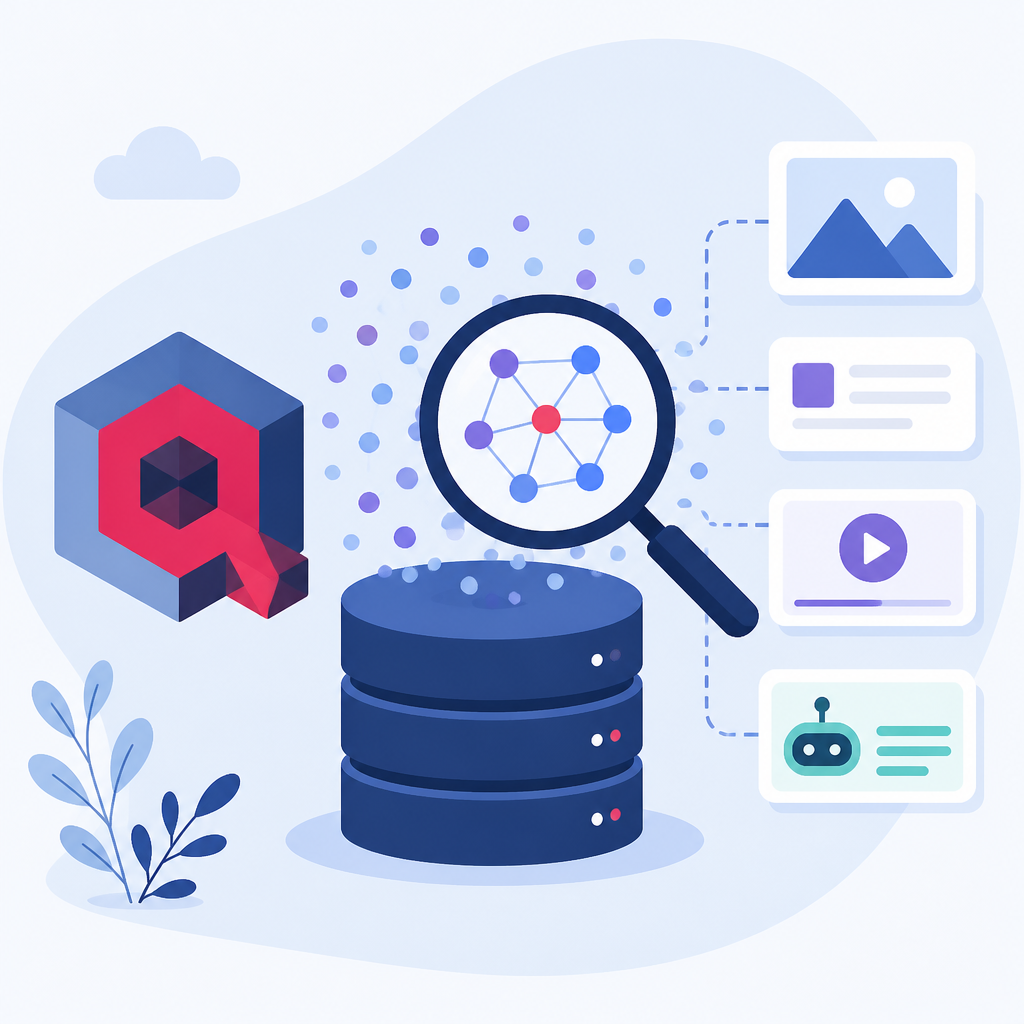
This matters because most AI products need more than nearest-neighbor search. A recommendation system wants similarity plus business rules. A semantic search box wants meaning plus filters. A retrieval pipeline wants fast lookups plus payload-aware ranking. Qdrant is built around those needs rather than bolting them on later.
The project also makes its production intent obvious. The README points to REST and gRPC APIs, client libraries in Go, Rust, JavaScript/TypeScript, Python, .NET/C#, and Java, plus a managed cloud option at Qdrant Cloud.
- Written in Rust for speed and reliability under load
- Supports payload filtering with keyword, numeric, and geo conditions
- Offers both self-hosted and managed deployment paths
- Provides REST, gRPC, and multi-language client support
Why the feature set is more interesting than the pitch
Qdrant’s feature list is where the project gets concrete. It supports dense vectors for semantic similarity, sparse vectors for text-style retrieval, and multivector search for models like ColBERT. It also includes hybrid search, which mixes semantic and keyword signals in one query.
That combination is important because real search systems rarely rely on a single retrieval method. Dense vectors are good at meaning. Sparse vectors are good at exact terms. Hybrid search gives teams a way to use both without forcing users to choose one style of search forever.
Another detail that matters is quantization. Qdrant says built-in quantization can reduce RAM usage by up to 97%, which is a big deal for teams trying to keep vector search affordable at scale. It also supports on-disk storage, sharding, replication, and zero-downtime collection updates.
- Dense, sparse, and multivector search are all first-class features
- Hybrid search uses fusion methods such as RRF and DBSF
- Quantization can cut RAM use by up to 97%
- Distributed deployment includes sharding, replication, and zero-downtime resizing
Rust, edge deployments, and the agent angle
Qdrant is written in Rust, and that choice shows up everywhere in the project’s design. Rust gives the team a strong story for performance and memory safety, but the more interesting part is how Qdrant applies that foundation across different deployment modes.
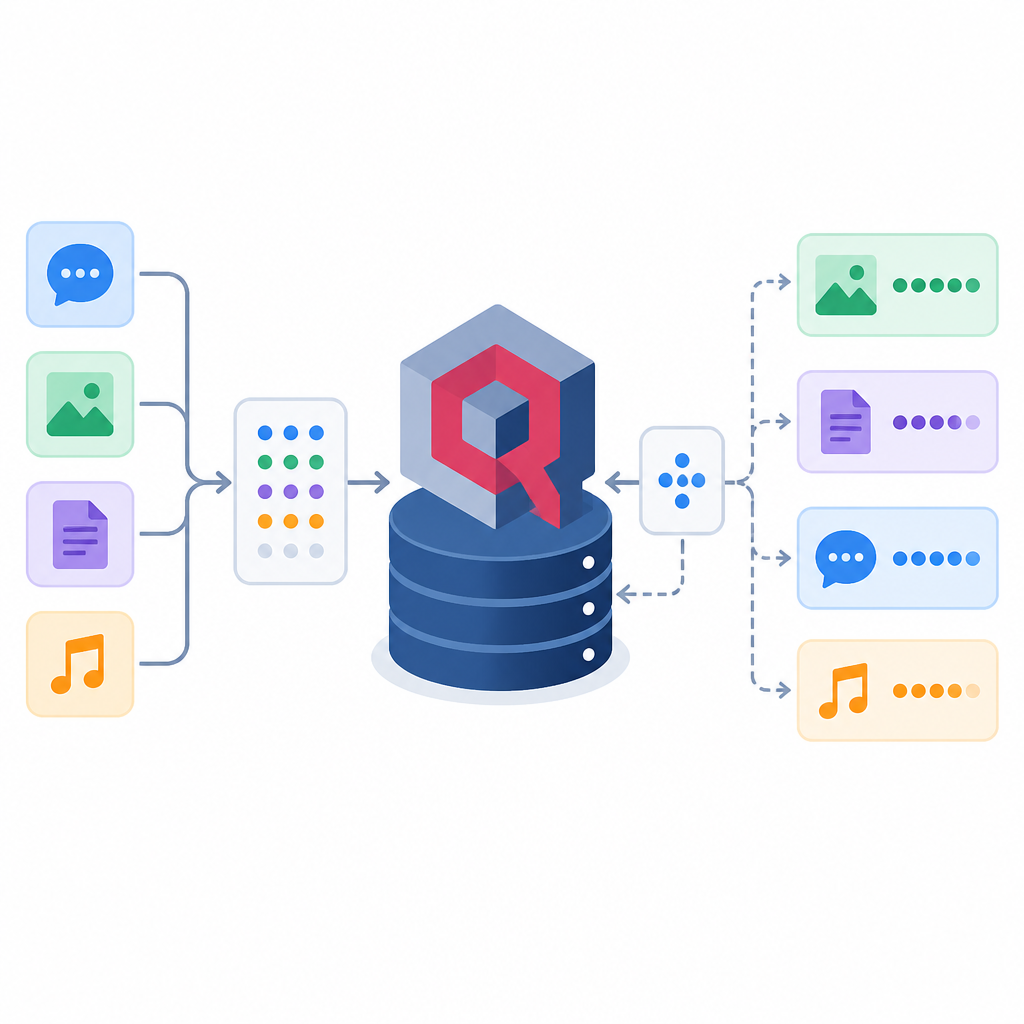
There is the standard client-server setup, where you can run a container with docker run -p 6333:6333 qdrant/qdrant and connect from a Python client or any other supported SDK. There is also Qdrant Edge, a lighter version that runs inside the application process for low-latency and offline use cases.
The repo also highlights agent skills that plug vector search into AI coding assistants. The listed skills include quantization, sharding, tenant isolation, hybrid search, and model migration. That is a smart move because developers building agentic systems often need retrieval decisions made inside the workflow, not in a separate dashboard later.
“Qdrant is a vector database and similarity search engine designed to store embeddings and payloads, and to provide fast filtering and search.” — Qdrant README
That quote gets to the point better than most product pages do. Qdrant is not trying to be a general-purpose database with vector search glued on. It is built around retrieval, filtering, and operational control for AI systems.
How it compares in practice
If you are choosing infrastructure for semantic search, the useful comparison is not “who has the flashiest demo.” It is about how much control you get over retrieval, how expensive the system is to run, and how easy it is to move from prototype to production.
Qdrant’s positioning is stronger than many vector tools because it covers a wide range of deployment and query patterns. It is open source, it has a managed cloud, and it supports edge use cases. That gives teams a path from local experiments to production without switching products midstream.
Here is the practical split:
- Qdrant focuses on payload-aware vector search, filtering, and hybrid retrieval
- Pinecone is a managed-first vector database with a strong hosted story
- Weaviate combines vector search with schema-driven data modeling
- PostgreSQL plus pgvector is attractive when teams want vectors inside an existing SQL stack
For teams already deep in Postgres, pgvector can be the least disruptive path. For teams building retrieval-heavy AI products from scratch, Qdrant gives more purpose-built controls than a database extension usually does. That is the tradeoff, and Qdrant makes a strong case for specialization.
There is also a developer-experience angle here. The project includes a Web UI, integration support across embedding providers and AI frameworks, and a clear quick-start path. Those details matter because vector databases fail quietly when setup friction gets too high.
Why this repo matters now
Qdrant’s GitHub activity suggests a project that has already moved past novelty. With more than 6,000 commits, a large contributor base, multiple client libraries, and cloud and edge options, it is solving the boring parts of vector search that teams actually struggle with: filtering, scaling, memory use, and deployment choices.
My read is simple: if your AI app needs semantic retrieval plus real operational constraints, Qdrant deserves a serious look before you commit to a generic search layer. The next question is whether your team wants a hosted service, a self-managed cluster, or an embedded edge setup, because Qdrant now covers all three.
If you are comparing vector stores this quarter, start by testing payload filtering, hybrid queries, and RAM usage on your own data. Those three checks will tell you more than any marketing page ever will.
// Related Articles
- [TOOLS]
Nvidia and LG turn AI plans into a playbook
- [TOOLS]
Ollama is the best free AI path in 2026 for real work
- [TOOLS]
This MLOps list turns chaos into a stack
- [TOOLS]
BentoML turns model serving into Python APIs
- [TOOLS]
Magenta RealTime 2 lets you score in the DAW
- [TOOLS]
Open-source AI tools beat Claude’s paid tiers on value