Why the 2026 AI engineer roadmap is the wrong starting point
The 2026 AI engineer roadmap is too broad to be the first plan you follow.
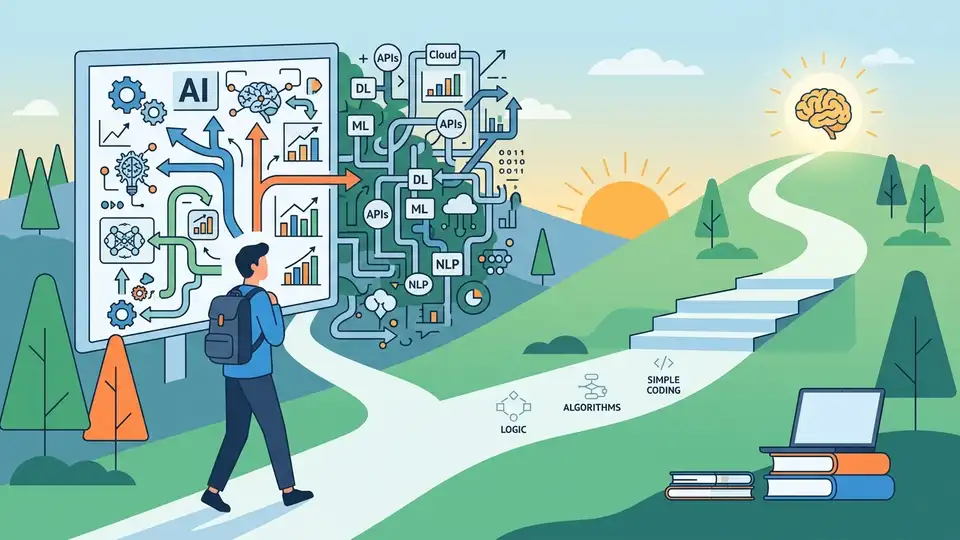
The 2026 AI engineer roadmap is too broad to be the first plan you follow.
This roadmap is impressive, but it is the wrong default for most engineers because it treats the path to production AI as one long ladder when the real job is a sequence of narrow decisions. A single README that spans Python, math, ML, LLM APIs, orchestration, RAG, agents, fine-tuning, MLOps, system design, SQL, quantization, RL, and governance looks comprehensive on GitHub, yet comprehensiveness is not the same as usefulness. The strongest signal in the repository is also the problem: 17 phases and 51 projects create the illusion that progress comes from coverage, when production teams win by mastering the smallest set of tools that solve the next concrete problem.
First argument: breadth creates false confidence
Get the latest AI news in your inbox
Weekly picks of model releases, tools, and deep dives — no spam, unsubscribe anytime.
No spam. Unsubscribe at any time.
The roadmap asks a learner to move from Python basics to multi-LLM orchestration, then to RAG, agents, fine-tuning, MLOps, and governance. That sequence sounds logical, but in practice it encourages people to collect topics instead of shipping systems. A developer who can explain `np.linalg.eig()` and DPO is still not ready to debug a bad retrieval layer, control latency, or reduce token spend in a live product. The repository’s own structure proves the point: 17 phases is curriculum design, not a build plan.

GitHub stars and forks also distort the lesson. This repo has 146 stars and 29 forks, which is enough to show interest, not authority. Popular roadmaps spread because they feel complete, and completeness flatters beginners. But the market does not hire for “completed roadmap.” It hires for a narrow outcome: a search feature that returns grounded answers, an agent that does not loop forever, a routing layer that chooses the cheapest model that still meets quality targets. Those are focused engineering problems, not checklist milestones.
Second argument: production AI rewards sequencing by product need, not curriculum order
The README says freshers should follow Phase 1 to 4, mid-level engineers should start at Phase 3, and experts should jump to Phase 5 to 8. That advice is tidy, but it still assumes skill should climb in a fixed academic order. In real teams, the order comes from the product. If you are building an internal support assistant, you need retrieval quality, prompt control, evaluation, and observability before you need fine-tuning or reinforcement learning. If you are building a multi-LLM router, you need latency budgets, fallback logic, and cost policy before you need deep math review.
The roadmap itself accidentally supports this critique by listing the capstone as a full multi-LLM platform architecture. That is the right end goal, but it should be the starting constraint, not the final trophy. A founder, PM, or engineer gets more value by defining the target system first and then learning only the layers that affect that system. For example, a team shipping AskAI or a global search product should learn embedding strategy, reranking, hybrid search, and eval harnesses before spending weeks on fine-tuning theory. The fastest route to competence is not “cover everything.” It is “learn what the product will actually use.”
The counter-argument
The best defense of the roadmap is that beginners need a map wide enough to prevent blind spots. AI work does span software engineering, model behavior, infrastructure, and product judgment, and many people fail because they learn one slice and ignore the rest. A single roadmap can save time by showing the full shape of the field, especially for self-taught engineers who do not have a manager to point out missing fundamentals.
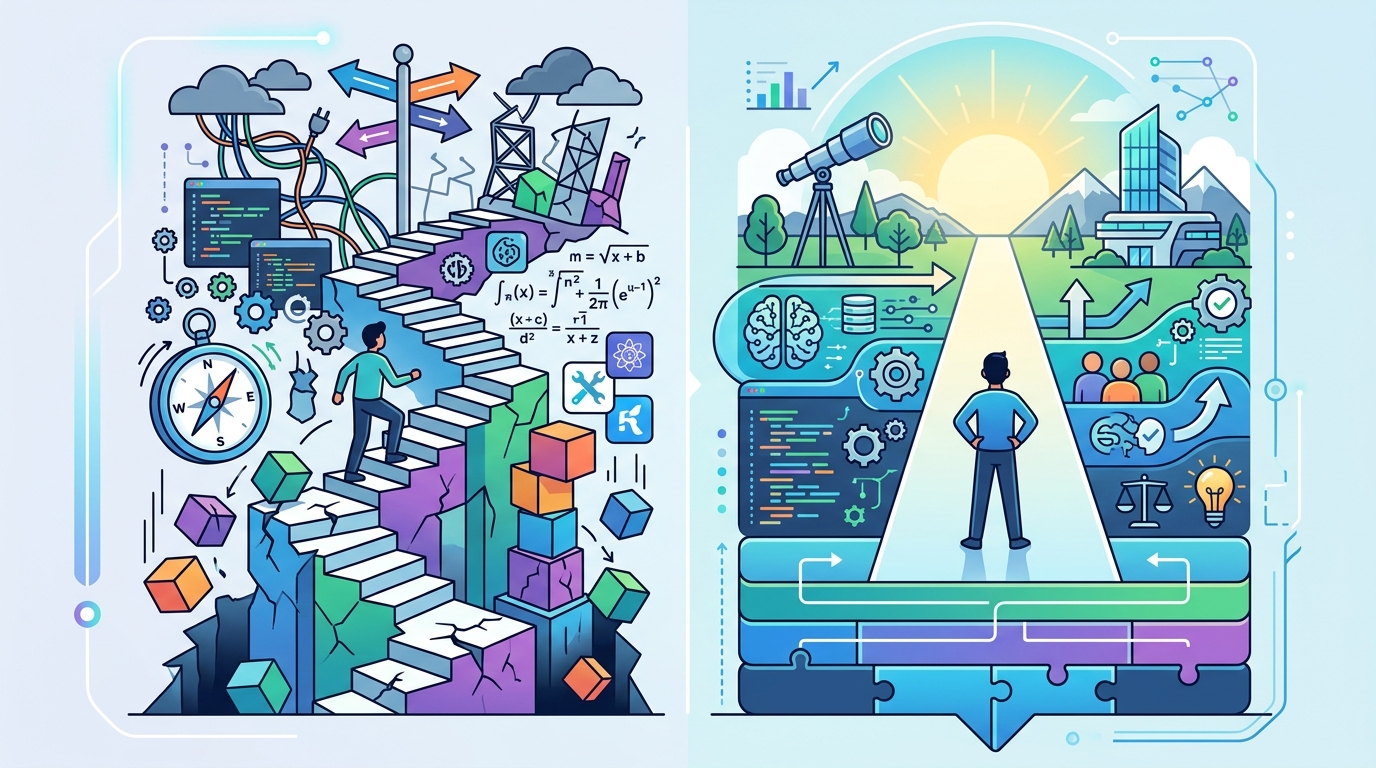
That is true, and the repository does one thing well: it makes the field legible. It also gives ambitious builders a vocabulary for conversations with recruiters, teammates, and customers. But legibility is not the same as priority. The problem is not that the roadmap includes too much; the problem is that readers treat every phase as equally urgent. A good map is useful only when you know where you are going. Without a target product, the roadmap becomes a museum tour of AI topics instead of a path to shipping.
So the right move is not to reject the roadmap. The right move is to demote it from master plan to reference shelf. Use it to identify gaps after you define a real product and a real deadline. If you are not building a retrieval system, do not start with vector databases. If you are not serving multiple models, do not start with orchestration frameworks. If you do not have production traffic, do not start with MLOps theater. Sequencing by product need beats sequencing by syllabus every time.
What to do with this
If you are an engineer, choose one product surface and one failure mode, then learn only the stack needed to fix it. If you are a PM, force the team to name the user outcome, the latency budget, the cost ceiling, and the evaluation metric before anyone opens a roadmap. If you are a founder, use this repository as a scouting document, not a curriculum: pick the smallest winning system, ship it, instrument it, and expand only when the next bottleneck is real. In 2026, the advantage goes to teams that narrow fast and learn in production, not teams that finish the longest checklist.
// Related Articles
- [IND]
WebX 2026 turns speaker hype into a conference brief
- [IND]
AI Weekly: 2026-07-06 ~ 2026-07-13
- [IND]
The AI Act should be treated as Europe’s operating system for AI
- [IND]
Booz Allen’s OpenAI Deal Is Real Advantage, Not Hype
- [IND]
OpenSearch’s vector search benchmark in 5 parts
- [IND]
Vector Databases That Work in Production