Why Gemini-powered Siri will be Apple’s best AI move
Gemini will make Siri useful faster than Apple’s own models would.
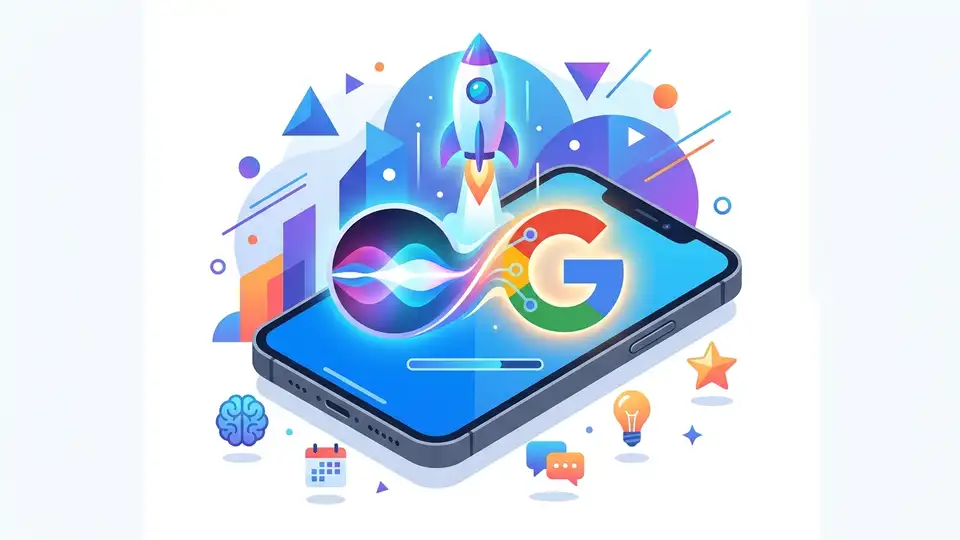
Gemini will make Siri useful faster than Apple’s own models would.
Apple made the right call by putting Gemini under Siri, because shipping a genuinely useful assistant matters more than protecting a vanity model roadmap. The evidence is already visible: Apple confirmed in January that Google’s Gemini will power new Siri features, and Google has since shown the kind of personal context, task automation, smarter input, and generative UI that Apple can now borrow instead of reinventing from scratch. That is not a compromise. It is the fastest path to an assistant that can finally do real work.
Apple needs capability now, not a years-long model race
Get the latest AI news in your inbox
Weekly picks of model releases, tools, and deep dives — no spam, unsubscribe anytime.
No spam. Unsubscribe at any time.
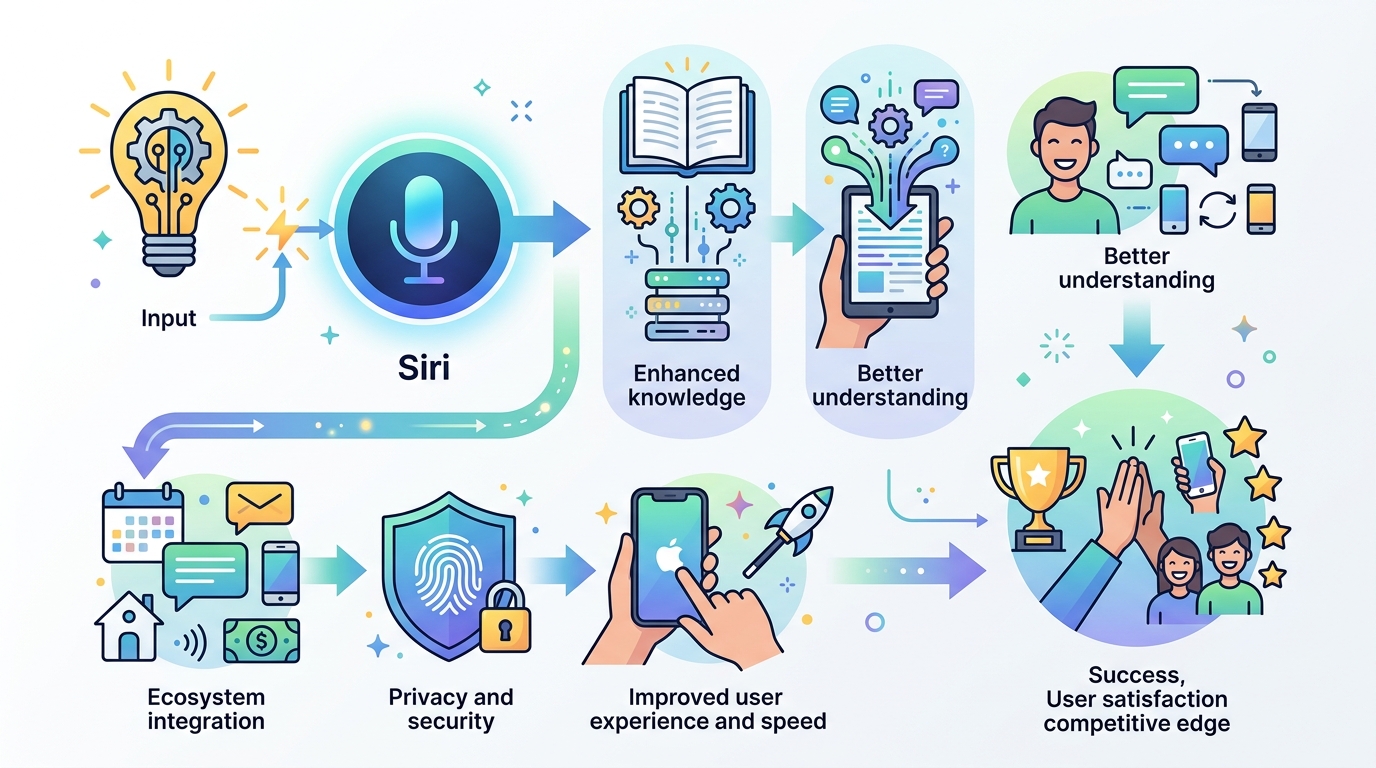
Apple spent too long trying to make Siri competitive with its own stack, and the result was predictable: a product that lagged behind the market while competitors shipped. By choosing Gemini, Apple sidesteps that bottleneck. Google’s own framing was blunt: its technology offers “the most capable foundation” for Apple’s new AI experiences. That matters because assistant quality is not an abstract benchmark. It is whether the phone can understand what you mean, use your data, and complete the task without forcing you into a loop of taps and clarifications.
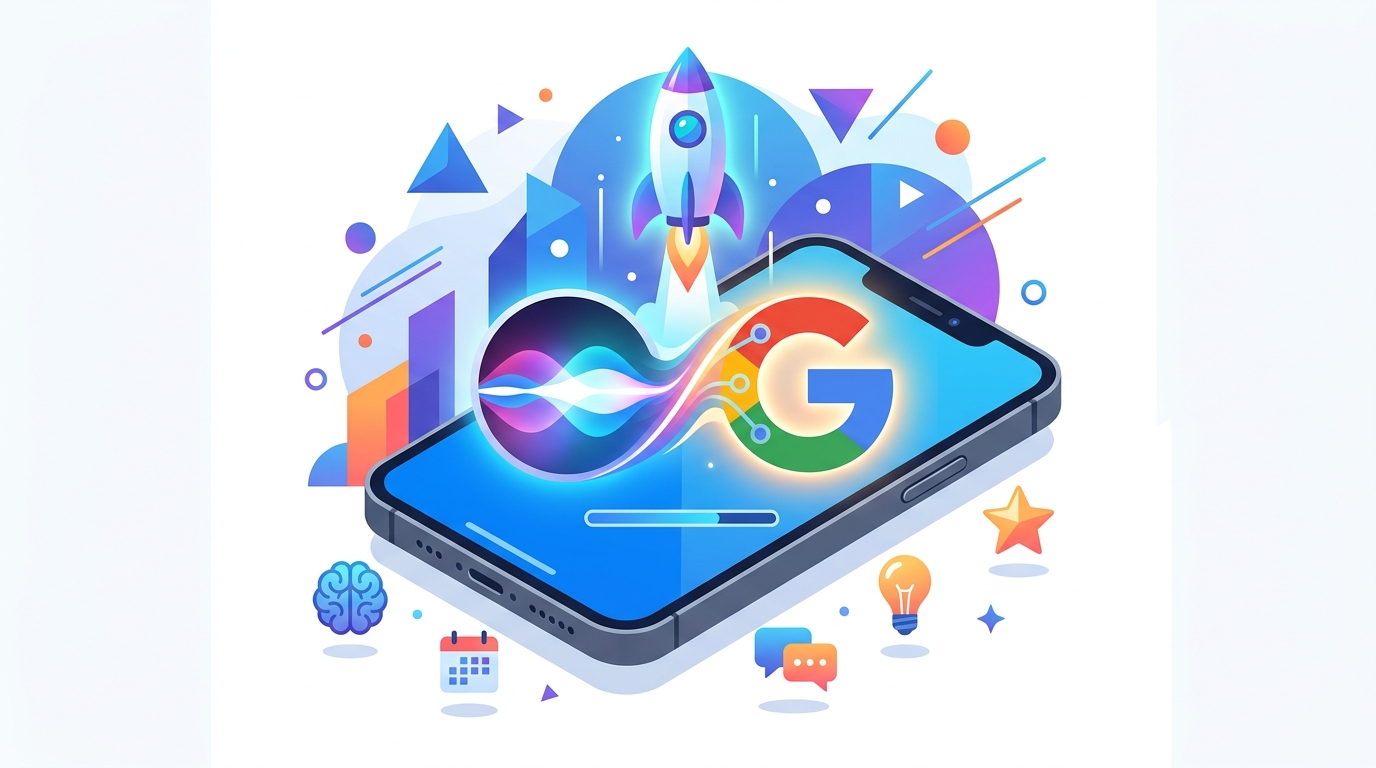
The practical payoff is obvious in the features already on display. Gemini Personal Intelligence can pull details from mail, calendars, photos, Drive, search history, and more to tailor responses. On Apple’s side, the equivalent becomes Mail, Calendar, Photos, and Notes. That is the difference between a chatbot and a real assistant. If Siri can answer a question by using the appointment in your calendar, the photo in your library, and the note you wrote yesterday, users will feel the upgrade immediately. No one cares that the model behind it is Apple-branded if the result is useful.
Context-aware automation is the feature that finally makes Siri matter
The strongest case for Gemini-powered Siri is not better chat, it is better action. Google’s demo of long-pressing the power button over a grocery list and asking Gemini to build a shopping cart is the right idea because it collapses intent, context, and execution into one step. Apple has talked for years about intelligence that understands what is on screen. Gemini gives Siri a credible path to that future now, including screen and image context, which is exactly what an assistant needs to move from answering questions to completing tasks.
This is where the old Siri failed most visibly. It could set alarms and dictate texts, but it rarely understood the thing in front of you. A screen-aware Siri that can read a note, inspect a receipt, or act on a message thread changes the product from a voice command layer into an operating system agent. That is the real prize. When Apple eventually extends this across apps, the assistant stops being a novelty and becomes infrastructure.
Smarter input and generative surfaces are the next logical step
Google’s other Gemini features point to a broader shift that Apple should embrace, not resist. Voice input that strips filler words, pauses, and self-corrections is not a gimmick. It is the kind of quality-of-life improvement that makes AI feel natural instead of fragile. Anyone who has dictated a messy sentence knows the pain of cleaning up transcription errors. If Siri can infer the core intent and polish the output automatically, people will use it far more often.
The same goes for generative UI. Google is already experimenting with custom homescreen widgets and Wear OS Tiles populated by web and app data. On Apple platforms, that idea is even more powerful because widgets and system surfaces are already central to the user experience. Imagine Siri generating a travel widget from your flight, hotel, and calendar data, or a Notes-based summary surface that updates itself before a meeting. That is not a toy feature. It is a way to make the OS feel alive and responsive to the user’s actual life.
The counter-argument
The strongest objection is that Apple is surrendering too much strategic control to Google. Siri is one of Apple’s most visible system features, and depending on Gemini could deepen a relationship that Apple would rather keep at arm’s length. There is also a legitimate privacy concern in any system that draws on personal data to generate responses, especially when that data spans mail, photos, search, and app activity. If Apple gets this wrong, users will blame the assistant, not the model vendor.
That concern is real, but it does not defeat the decision. Apple is not outsourcing the product, only the model layer, and that distinction matters. Apple still controls the UI, the permissions model, the on-device protections, and the integration with its apps. The alternative was slower progress and a weaker Siri, which would have been worse for users and worse for Apple. The only acceptable limit is that Apple must keep the data boundary tight and the user controls explicit. If it does that, the partnership is a strength, not a weakness.
What to do with this
If you are an engineer, PM, or founder, treat this as a reminder that the winning AI product is not the prettiest model demo. It is the system that can see context, take action, and fit into real workflows without friction. Build for retrieval, permissions, and task completion before you obsess over novelty. Apple’s Siri move shows the market has already moved past “chat” and into “do.” The products that win next will be the ones that make that shift feel effortless.
// Related Articles
- [IND]
WebX 2026 turns speaker hype into a conference brief
- [IND]
AI Weekly: 2026-07-06 ~ 2026-07-13
- [IND]
The AI Act should be treated as Europe’s operating system for AI
- [IND]
Booz Allen’s OpenAI Deal Is Real Advantage, Not Hype
- [IND]
OpenSearch’s vector search benchmark in 5 parts
- [IND]
Vector Databases That Work in Production