AI-FaceSWAPPER-2026 Review: What This 3-Star GitHub Face Swap Tool Actually Does
AI-FaceSWAPPER-2026 is a small GitHub face-swap tool for photos and videos, aimed at creators, editors, and deepfake research.

AI-FaceSWAPPER-2026 is tiny by GitHub standards, but the idea behind it is easy to understand: swap faces in photos and videos using deep learning and computer vision. The repo shows 3 stars and 1 fork, which tells you this is still an early project, not a polished mainstream app.
That matters because face-swap tools live in a tricky space. They can help with editing, parody, research, and visual effects, but they also raise obvious questions about consent and misuse. So the real question is not whether the tech works in theory. It is how much quality, control, and speed this particular project can actually deliver.
What AI-FaceSWAPPER-2026 is trying to do
Get the latest AI news in your inbox
Weekly picks of model releases, tools, and deep dives — no spam, unsubscribe anytime.
No spam. Unsubscribe at any time.
The repo description is direct: replace faces in photos and videos with realistic results. It also says the tool is meant for content creators, video editors, AI enthusiasts, machine learning developers, and deepfake research. That is a broad target audience, which usually means the project is trying to be useful across casual editing and technical experimentation.

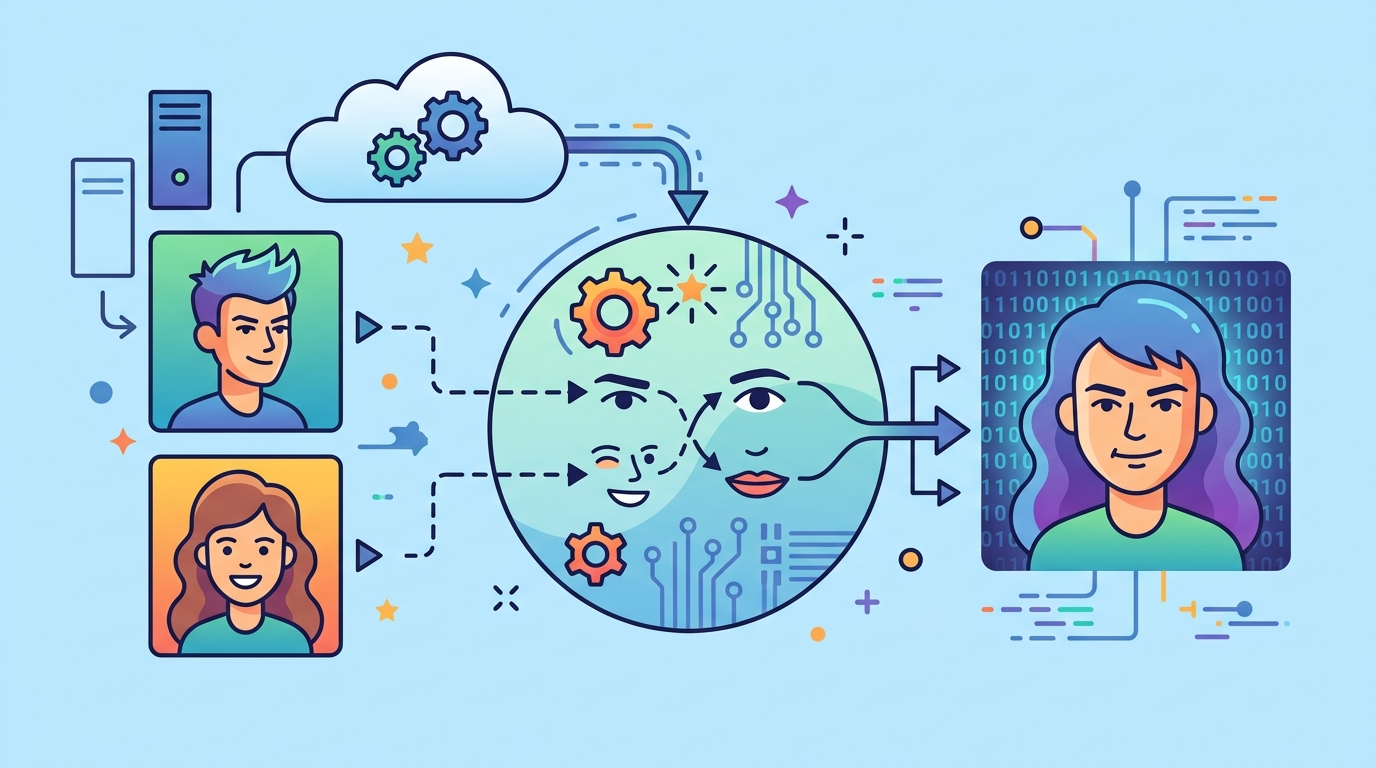
On paper, the feature list covers the basics you would expect from a face-swap package: photo face swap, video face swap, deepfake generation, GPU acceleration, and an easy interface. The inclusion of GPU acceleration is important, because face replacement pipelines often get slow fast when they move from still images into video frames.
The repository also uses a stack of tags that point to a fairly standard modern AI workflow: Python environments, neural network-based face swapping, computer vision processing, and AI model handling. That suggests the project is built around the same broad approach used by many open-source face-swap tools, even if the implementation details are not fully documented in the excerpt we have.
- GitHub stars: 3
- GitHub forks: 1
- Supported media: photos and videos
- Core methods: deep learning and computer vision
- Performance note: GPU acceleration is listed
- Primary use cases: editing, creator tools, and research
Why the technical details matter
Face-swap software is one of those categories where the marketing sentence can sound better than the actual output. A tool can claim high accuracy, but the real test is whether it keeps facial structure, lighting, skin tone, and motion stable across frames. If it fails on any of those, the result looks uncanny fast.
The repo does not publish benchmark numbers, model architecture notes, or before-and-after samples in the text provided here, so we cannot judge output quality from the README alone. That makes the project hard to compare with better documented tools such as faceswap, a long-running open-source project that has a much larger public footprint and years of community testing behind it.
"Technology is neither good nor bad; nor is it neutral." — Melvin Kranzberg
Kranzberg’s line fits this category perfectly. A face-swap tool can be a creative utility or a misuse vector, depending on who uses it and how much control the software gives them. The software itself does not decide that part.
That is why documentation matters so much here. If a project says it is easy to use, the useful follow-up questions are simple: does it expose mask controls, frame-by-frame review, model selection, and export settings? Does it let users inspect failures before they publish a clip? Without those details, “easy” can mean anything from genuinely friendly to barely configurable.
How it compares with better-known options
AI-FaceSWAPPER-2026 is small enough that the most honest comparison is with established projects and commercial tools that already have public track records. The repo’s 3 stars put it in a very early stage, while mature open-source tools often have thousands of stars, active issue trackers, and detailed installation guides.
That gap does not automatically make AI-FaceSWAPPER-2026 bad. It just means the burden of proof is higher. A small repo can still be useful if it is lightweight, easy to run, or tailored to a narrow workflow. But if you want reliability for production editing, you usually start with tools that have visible community feedback and repeatable documentation.
- faceswap: mature open-source project with a large community history
- DeepFaceLab: another widely known open-source face-swap project
- Adobe Premiere Pro: video editor with professional post-production tools, but no native open face-swap focus
- AI-FaceSWAPPER-2026: early-stage repo with minimal public traction
- Public signal: 3 stars and 1 fork
- Documentation signal: short README, no visible benchmark data in the provided text
The other comparison worth making is ethical, because face-swap tools sit close to deepfake workflows. If a project does not explain consent, watermarking, or provenance checks, users should assume those responsibilities sit outside the tool. That is fine for a research toy, but it is a weak posture for anything meant to be shared widely.
Who should care about this repo
If you are a creator who wants to test face replacement on a few clips, the project may be interesting as a lightweight experiment. If you are a developer who likes poking at AI pipelines, it may also be a good way to inspect how a simple face-swap workflow is packaged.
For everyone else, the current signal is mixed. The repo’s public footprint is small, the README text is brief, and there are no visible technical benchmarks in the material provided. That makes it hard to recommend as a serious production tool without more proof.
Still, the project fits a pattern we keep seeing in open-source AI: a narrow tool arrives first, then the community decides whether it becomes a real utility or just another experiment. Projects in this category often live or die on three things: documentation quality, sample outputs, and how much control they give users over the pipeline.
For readers tracking adjacent AI tooling, this is the same reason we pay attention to small repos before they get popular. Some disappear. Some become useful niche tools. A few get rebuilt into something far more capable. If you want more on that pattern, see our coverage of open-source AI tools to watch.
Bottom line: watch the docs before the hype
AI-FaceSWAPPER-2026 is an early GitHub face-swap project with a clear pitch: swap faces in photos and videos using deep learning, computer vision, and GPU acceleration. The idea is familiar, but the public evidence is thin, so the repo currently reads more like a prototype than a finished product.
My take is simple: if you are evaluating it, ask for sample outputs, model details, and controls before you trust the “fast and accurate” claim. If those pieces show up in a future release, this could become a practical niche tool. If they do not, it will stay in the long list of repos that hint at useful AI ideas without proving them.
For now, the most useful question is whether the maintainer can turn a short README into a well-documented workflow. That answer will decide whether this project is worth a test run or just a bookmark.
// Related Articles
- [TOOLS]
OpenClaw with Ollama turns Telegram into a bot
- [TOOLS]
Aliyun Bailian Token Plan turns credits into agents
- [TOOLS]
One API gateway turns six AI APIs into one
- [TOOLS]
OpenAI FDEs turn broken agents into shipped systems
- [TOOLS]
Anthropic’s daily brief turns news into a workflow
- [TOOLS]
Claude Reflect turns usage into retention