Aliyun Bailian Token Plan turns credits into agents
I break down Aliyun Bailian Token Plan’s credits, region lock, and agent/tool compatibility into a copy-ready setup.

Token Plan turns credits, region limits, and agent tools into one setup.
I've been using model APIs long enough to know when a product looks simpler on the surface than it is in practice. Aliyun Bailian’s Token Plan had that exact vibe for me. On paper, it sounds tidy: one pre-paid subscription, one Credits system, a bundle of models, and support for AI coding tools plus agent frameworks. Nice. Then I hit the part that always trips people up: the region constraint, the API credential split, and the fact that “compatible” does not mean “drop it anywhere and forget about it.”
That’s where the friction starts. I’ve seen teams wire up a workflow in one environment, then discover the billing path, endpoint region, or tool integration doesn’t behave the same way in another. So I went back to the source post on Zhuanlan Zhihu and pulled out the parts that matter for actual implementation, not just product marketing. I’m focusing on what this means for developers who want to use it with agents, coding tools, and a predictable spend model.
Credits are the real contract, not the model list
Get the latest AI news in your inbox
Weekly picks of model releases, tools, and deep dives — no spam, unsubscribe anytime.
No spam. Unsubscribe at any time.
“阿里云百炼Token Plan团队版是百炼平台面向企业、开发团队推出的预付费大模型订阅服务,整体以统一Credits信用点作为全模型调用计量单位,整合通义千问、DeepSeek、Kimi、GLM、MiniMax等多厂商文本、视觉、图像生成大模型。”
What this actually means is that Token Plan is not really selling you “a model.” It’s selling you a usage envelope. The credits are the contract, and the model catalog is just what sits inside that envelope. That matters because developers tend to think in endpoints, but finance and ops think in consumption units. This product pushes you toward the second mindset.

I like that, honestly. It reduces the weird internal debates about whether one team should use Qwen while another uses DeepSeek. If the credit system is shared, then the question becomes: what is the cheapest model that still gets the job done, and which workflows deserve higher-quality output? That is a much healthier conversation than arguing over brand names.
How to apply it:
- Define a credit budget before you connect any tool or agent.
- Map each workflow to a model tier: cheap for extraction, stronger for reasoning, strongest for final generation.
- Track usage by task type, not just by team, because credits disappear by behavior, not org chart.
I’d also recommend treating the credit pool like a shared runtime dependency. If you let every prototype burn credits freely, you’ll end up with the classic “why did the demo cost more than the project?” conversation. Been there. It’s not fun.
The region lock is the part people ignore until it breaks
“仅支持华北2(北京)地域的资源调用,其他地域服务器、环境无法正常使用Token Plan专属API凭证。”
This is the detail I would put in bold in every internal note. The plan is region-bound to North China 2, Beijing. If your server is elsewhere, your environment may be perfectly healthy and still fail when you try to use the Token Plan credential. That’s not a bug you debug in code first. That’s a deployment mistake.
I’ve run into this kind of issue when teams test from one cloud region, then move to another for cost or latency reasons and assume the API key will behave the same way. It won’t. Region-specific credentials are a contract with the platform, and the platform gets to be picky.
How to apply it:
- Pin your runtime to the Beijing region before you start integration work.
- Document the region in the repo README and deployment checklist.
- Add a startup check that fails fast if the app is running outside the supported region.
If you’re building an agent service, this matters twice: once for the app server and once for any worker or sandbox that calls the API. I’d rather spend ten minutes writing a region guard than spend half a day chasing a credential error that was baked into the deployment topology from the start.
“Compatible with tools” is not the same as “zero setup”
The source says Token Plan is natively compatible with AI coding tools and autonomous agent frameworks. That sounds easy, but I never read “compatible” as “no configuration.” In practice, compatibility usually means the service speaks the right API shape well enough that common tools can connect without a custom adapter. That still leaves auth, base URLs, model names, and rate behavior.
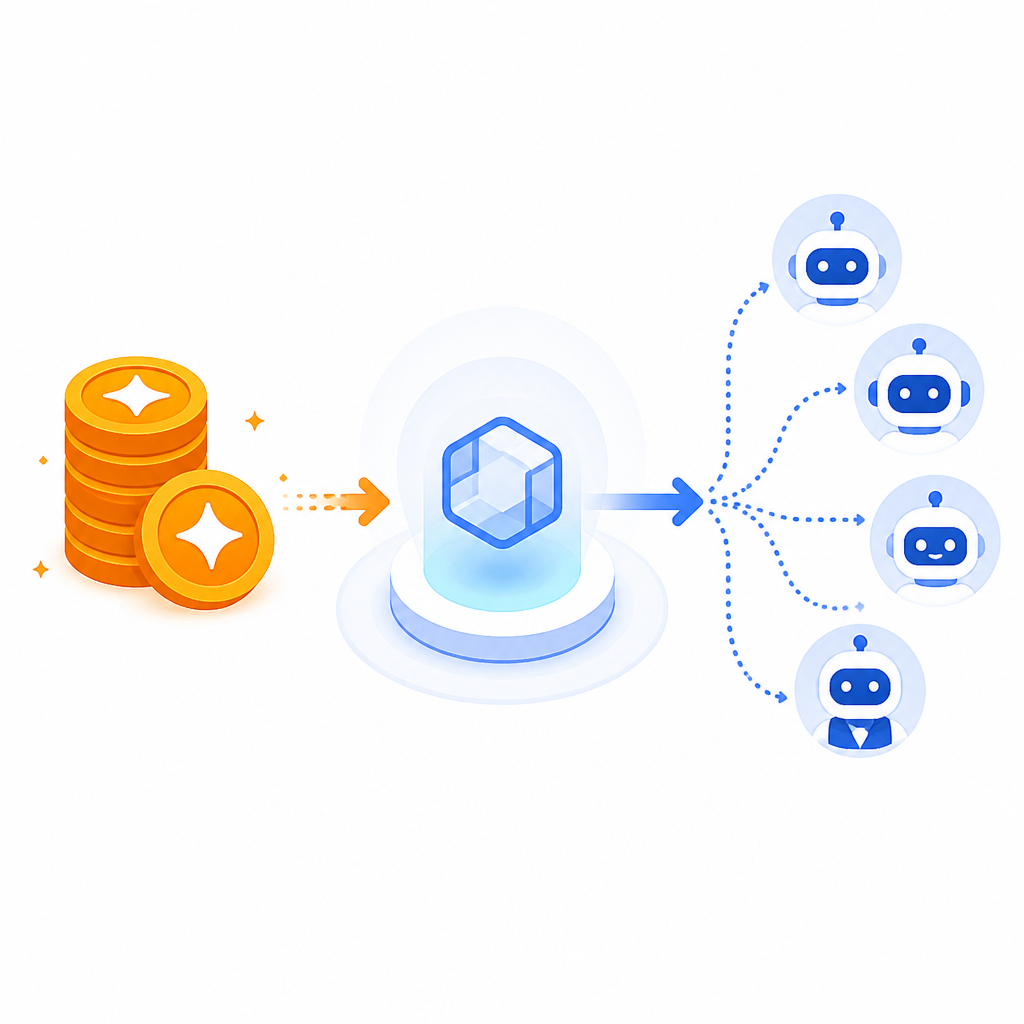
For developer workflows, the useful part is obvious: if the service fits into tools like Cursor, agent frameworks, or custom SDK-based pipelines, I don’t need to build a whole translation layer. But I still need to verify whether the tool expects OpenAI-style endpoints, custom headers, or a provider-specific configuration file.
How to apply it:
- Test one coding tool first, not five.
- Write down the exact connection settings that work: endpoint, region, auth method, model mapping.
- Keep a fallback path for tools that assume a different provider format.
I’ve seen people waste days trying to make a framework “just work” because they skipped the boring part: checking the provider contract line by line. Compatibility is a starting point. It is not a guarantee.
Agent workflows need predictable spend, not just model access
Once you move from chat usage to agents, the billing model matters more than the model catalog. Agents can call tools repeatedly, retry steps, and branch into multiple sub-tasks. If your pricing is opaque, you have no idea whether the agent is productive or just expensive.
That’s why the Credits model is interesting for agent design. It gives you one accounting unit across multiple models, so your orchestration layer can make decisions based on budget, not vendor. I’d use that to set hard limits per agent run, per user session, and per background job.
How to apply it:
- Set a maximum credit burn per agent execution.
- Use smaller models for planning, larger models for final synthesis.
- Log every model call with task name, credits consumed, and outcome quality.
If you’re building something like a coding assistant, that split is especially useful. The agent can use cheaper calls to inspect files, then spend more on the final patch or summary. That’s the kind of cost control that keeps a prototype from becoming a budget problem.
For frameworks, I’d keep the orchestration layer provider-agnostic where possible. That way, if you later swap models inside the same credit pool, your agent logic does not need a rewrite. The provider should be a plug-in, not the center of your architecture.
The model mix is useful only if you assign jobs properly
The source mentions a mix of Tongyi Qianwen, DeepSeek, Kimi, GLM, MiniMax, and multimodal models. That’s a lot of names, but the important part is not the list itself. It’s the fact that the platform bundles different strengths under one billing structure. That lets you assign tasks by function.
I’d break it down like this: extraction and classification can use lighter models, structured reasoning can use stronger text models, and image or visual tasks can go to the multimodal options. This is basic architecture, but people still ignore it and throw the same model at everything because it’s convenient.
How to apply it:
- Make a routing table for tasks: extract, reason, generate, inspect, visualize.
- Benchmark each route on your own prompts, not vendor examples.
- Keep a “quality override” for cases where the cheap route fails.
That routing table is the difference between a system that feels intentional and one that feels like a pile of prompts. I always prefer the first one, even if it takes a little more setup.
Interactive human use and agent use are not the same thing
The source frames Token Plan as being designed for interactive human scenarios. That’s an important clue. Human chat usage is bursty, forgiving, and easy to recover from. Agent usage is automated, repetitive, and much less forgiving. If a human gets a weird response, they rephrase. If an agent gets a weird response, it may loop, retry, or fail downstream.
So when I read “interactive use,” I don’t translate that into “agent-first architecture.” I translate it into “good for human-in-the-loop systems, but you still need guardrails if automation is involved.” That means output validation, retry limits, and a clear separation between user-facing conversations and background execution.
How to apply it:
- Put schema validation on any model output that feeds code or tools.
- Separate chat sessions from agent runs in logs and metrics.
- Use human approval for high-impact actions, even if the model is confident.
I’ve had enough “the model said it was fine” incidents to know that confidence is not a control mechanism. Validation is.
The template you can copy
# Aliyun Bailian Token Plan setup checklist for agents and tools

## 1) Decide the billing unit
- Use Credits as the only cost unit in planning.
- Assign a monthly or project-level credit budget.
- Split usage by task type: extract, classify, reason, generate, multimodal.

## 2) Lock the deployment region
- Deploy the app, workers, and sandboxes in China North 2 (Beijing).
- Add a startup check that fails if the runtime is outside the supported region.
- Document the region in README, ops notes, and CI/CD config.

## 3) Map each task to a model tier
- Cheap model: parsing, extraction, short summaries.
- Mid model: drafting, structured reasoning, tool planning.
- Strong model: final output, complex reasoning, multimodal tasks.

## 4) Connect one tool first
- Pick one AI coding tool or one agent framework.
- Configure endpoint, auth, region, and model name.
- Verify a full request/response cycle before adding more tools.

## 5) Add guardrails for agents
- Set max credits per run.
- Set max retries per step.
- Validate output before tool execution.
- Log task name, model, credits used, and result.

## 6) Keep the architecture provider-agnostic
- Put provider details in a config file.
- Keep orchestration logic separate from the API vendor.
- Make model routing swappable without changing agent code.

## Sample config
provider: aliyun_bailian
billing_unit: credits
region: cn-beijing
runtime_region_check: true
agent_limits:
  max_credits_per_run: 500
  max_retries_per_step: 2
model_routing:
  extract: qwen-lite
  reason: deepseek-reasoner
  generate: qwen-plus
  multimodal: miniMax-vision

## Sample operating rule
If a request can be completed with a cheaper model and passes validation,
use the cheaper model first.
If the output affects code, money, or external actions,
require validation or human approval before execution.
That is the version I’d actually hand to a team. It keeps the billing model visible, forces the region constraint into ops, and makes agent behavior measurable instead of magical.
If you want the shortest possible summary, it’s this: Token Plan is useful when you treat credits as architecture, not just billing. The moment you do that, the product makes more sense.
Source attribution: I based this breakdown on the Zhihu post at https://zhuanlan.zhihu.com/p/2058251501059962713. The template and implementation advice here are my own synthesis, not copied from the original article.
// Related Articles
- [TOOLS]
One API gateway turns six AI APIs into one
- [TOOLS]
OpenAI FDEs turn broken agents into shipped systems
- [TOOLS]
Anthropic’s daily brief turns news into a workflow
- [TOOLS]
Claude Reflect turns usage into retention
- [TOOLS]
Midjourney turns prompt ideas into art
- [TOOLS]
Ultralytics YOLO26 powers fast vision tasks