Anthropic Accidentally Exposes Claude Agent Code
Anthropic accidentally exposed internal code for Claude’s coding assistant, raising fresh questions about how the company protects its own tools.
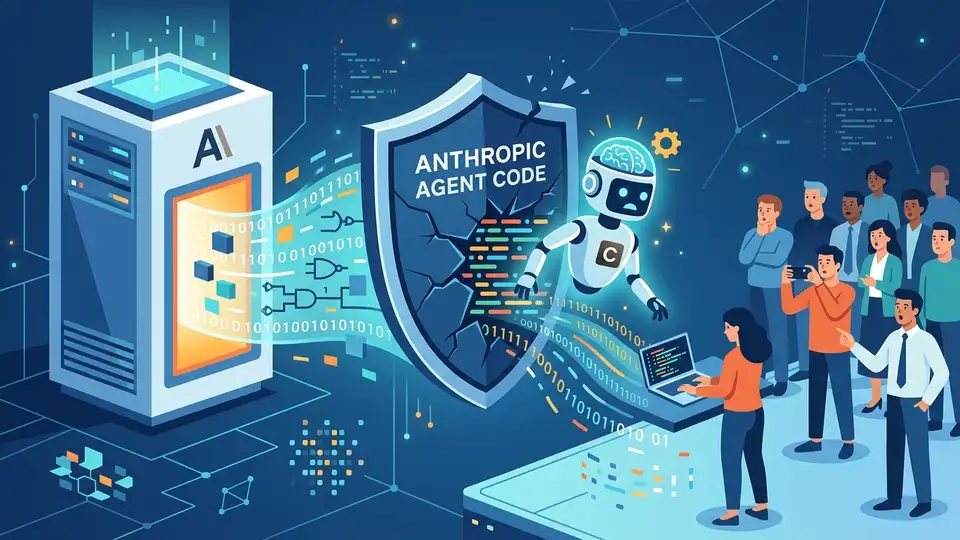
Anthropic accidentally exposed internal source code for the AI coding assistant behind Claude, the company’s flagship assistant with millions of users and a growing developer audience. The slip matters because Anthropic has built much of its brand on safety, control, and careful release practices.
When a company that sells trust makes a public mistake with its own code, people notice. This one is especially awkward because the product involved is tied to software development, where access control, supply-chain hygiene, and repo discipline are supposed to be second nature.
What Bloomberg reported
Get the latest AI news in your inbox
Weekly picks of model releases, tools, and deep dives — no spam, unsubscribe anytime.
No spam. Unsubscribe at any time.
Bloomberg reported that Anthropic PBC inadvertently released internal source code for the coding assistant linked to Claude. The report says the code was internal, not a consumer-facing feature dump, which makes the incident more sensitive than a routine documentation mistake.
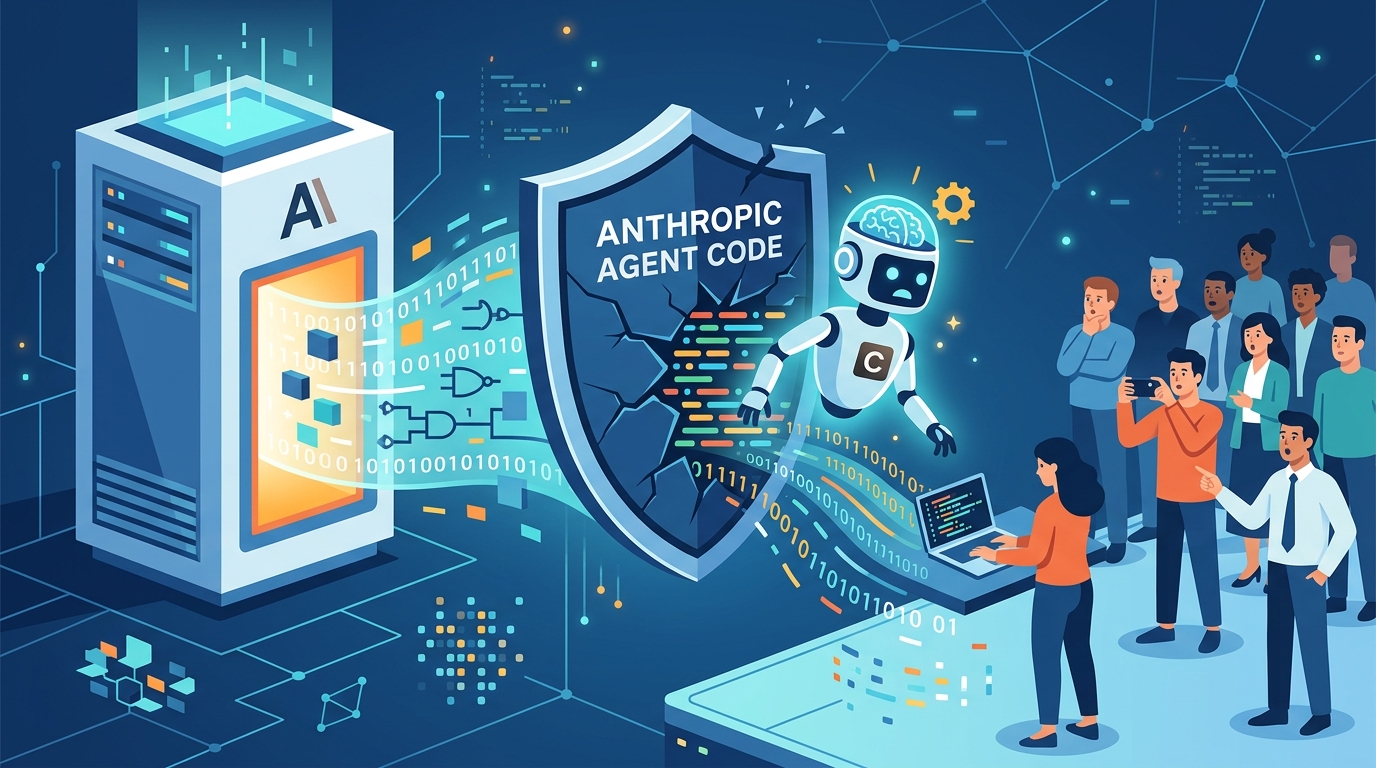
Anthropic has not framed this as a product launch or a transparency move. It reads like a plain operational error, and that matters because internal code can reveal architecture choices, prompts, tool integrations, guardrails, and the assumptions engineers make about how the agent should behave.
- Source code exposure can reveal internal workflows and hidden dependencies.
- Agent code often includes tool-calling logic and policy checks.
- Even partial repo leaks can help outsiders map a system’s design.
- For AI vendors, release discipline is part of the product story.
Why this hits Anthropic harder than most
Anthropic is one of the few AI companies that consistently markets safety as a product feature, not a side note. Its public messaging around Anthropic often centers on responsible deployment, model behavior, and controlled access.
That makes an internal code exposure more than an embarrassing Git mistake. It invites a simple question: if the company is selling careful AI behavior to customers, how carefully is it handling the code that makes that behavior possible?
The coding assistant itself matters too. Claude is used by developers who care about reliability, code quality, and how the assistant interacts with their own repositories. If the exposed code contained agent logic, the leak could help outsiders understand how Claude decides when to call tools, when to refuse actions, and how it formats outputs.
“Safety is a system property.” — Dario Amodei, Anthropic cofounder and CEO, in his 2023 essay Our Approach to AI Safety
That line lands differently after a code exposure. If safety depends on the whole system, then internal code handling is part of the safety story too, not just model training or policy docs.
What this kind of leak can expose
Internal AI agent code is often more revealing than people expect. Modern coding assistants are not a single model call wrapped in a chat box. They usually combine prompts, retrieval, permissions, tool use, and post-processing steps. A leak can expose how those pieces fit together.
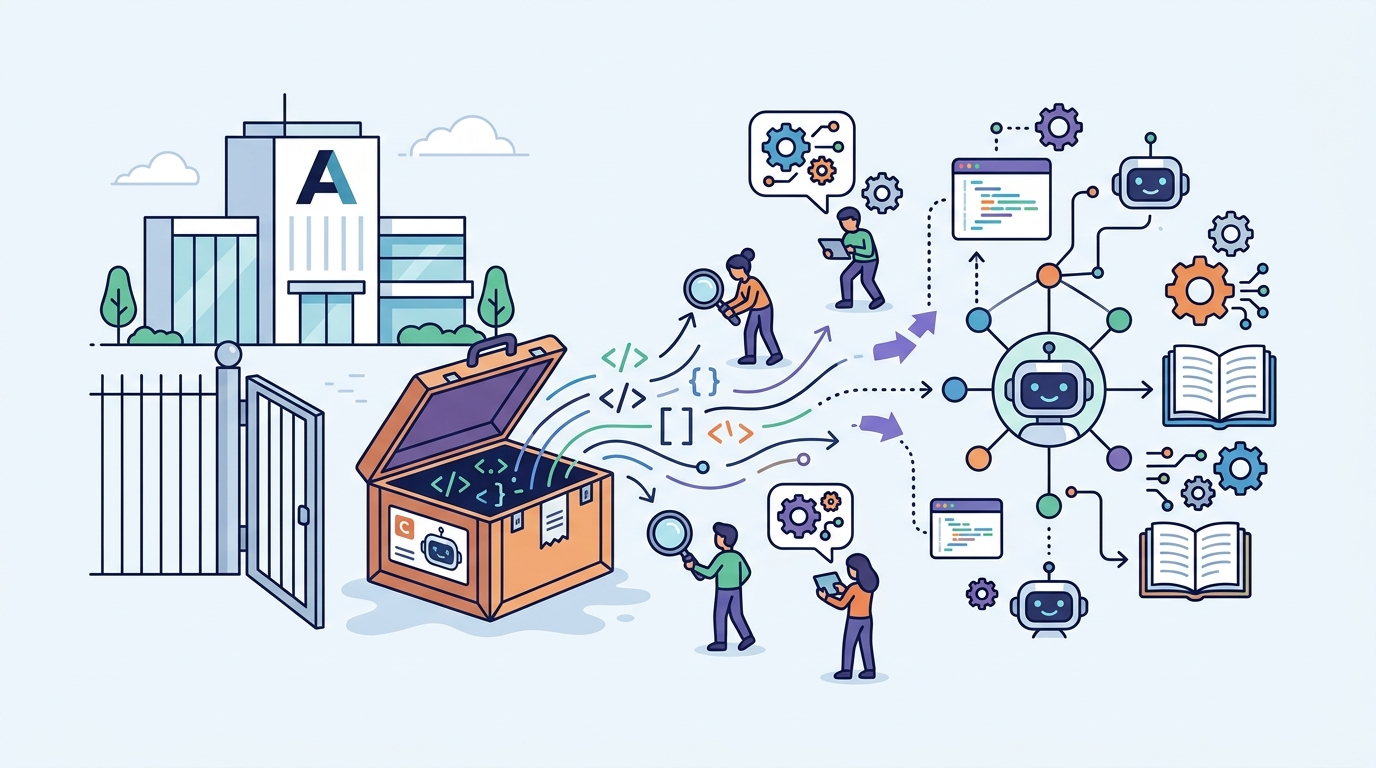
For a product like Claude Code, that could mean details about how Anthropic structures tasks, how it handles file access, or how it limits risky operations. Even if the leak is short-lived, the information can be copied, indexed, and analyzed quickly.
- Prompt templates can show the company’s preferred assistant behavior.
- Tool-routing code can reveal which actions the agent can trigger.
- Permission logic can expose what the system blocks by default.
- Telemetry hooks can show what the company measures and logs.
- Internal comments can hint at unresolved bugs or planned changes.
That is why source code exposure in AI is different from a marketing slide leak. Slides reveal intent. Code reveals implementation.
How this compares with other AI security mistakes
Anthropic is not the first AI company to make a public security blunder, and it will not be the last. OpenAI, OpenAI, Google, and Microsoft have all dealt with security issues in products or integrations over time, though not all of them involve source code exposure.
The difference here is the optics. Anthropic’s pitch is tied tightly to trust, so even a one-off mistake can echo more loudly than it would for a vendor that markets speed or scale first.
- Public AI incidents often split into model failures, data leaks, and access-control mistakes.
- Source code leaks usually create longer-tail risk than a single bad response.
- Developer tools are attractive targets because they sit close to valuable IP.
- Security reviews matter more when the product can touch private repositories.
For developers, the takeaway is practical: if a vendor’s agent can read your codebase, that vendor’s own security posture deserves scrutiny. The trust boundary runs both ways.
What Anthropic likely has to do next
Anthropic will probably need to audit the path that exposed the code, remove any public copies it can reach, and review whether any secrets, tokens, or internal references were included. If the release happened through a public repository, package artifact, or documentation bundle, the cleanup effort may take longer than the initial fix.
It also needs to explain the incident in plain language. Silence would make the story worse. A clear incident summary, a fix timeline, and a description of what was exposed would do more to protect credibility than vague reassurance.
For users, the lesson is simple: AI companies are still software companies, and software companies make mistakes. The useful question is not whether errors happen. It is whether the company can find them quickly, explain them honestly, and stop them from repeating.
My read is that this incident will push more customers to ask for tighter vendor security reviews before they connect coding agents to private repos. If Anthropic wants to keep winning those deals, it now has to prove that its internal controls are as careful as its public messaging suggests.
// Related Articles
- [TOOLS]
Aliyun Bailian Token Plan turns credits into agents
- [TOOLS]
One API gateway turns six AI APIs into one
- [TOOLS]
OpenAI FDEs turn broken agents into shipped systems
- [TOOLS]
Anthropic’s daily brief turns news into a workflow
- [TOOLS]
Claude Reflect turns usage into retention
- [TOOLS]
Midjourney turns prompt ideas into art