Anthropic Opens Claude Security Public Beta
Anthropic opened Claude Security to Enterprise customers, using Opus 4.7 to find flaws and propose fixes faster.
Anthropic opened Claude Security to Enterprise customers for faster vulnerability finding and patching.
Anthropic says Claude Security is now in public beta for Claude Enterprise customers, and the pitch is simple: scan code, find flaws, propose fixes, and cut the time between discovery and patching. The company says the tool has already been tested by hundreds of organizations, and it is now moving from a limited research preview into a wider rollout.
| Item | Detail |
|---|---|
| Current status | Public beta |
| Eligible users | Claude Enterprise customers |
| Earlier testing | Hundreds of organizations |
| Model used | Claude Opus 4.7 |
| Original launch window | Late February |
| Related model access | Claude Mythos Preview stays in Project Glasswing |
What Anthropic actually launched
Get the latest AI news in your inbox
Weekly picks of model releases, tools, and deep dives — no spam, unsubscribe anytime.
No spam. Unsubscribe at any time.
Claude Security is Anthropic’s security-focused product for code review, vulnerability discovery, and remediation suggestions. It used to be called Claude Code Security, and the new name makes the product’s purpose easier to understand without digging through a product page.
The big change is access. Anthropic moved it out of a limited research preview and into public beta, which means more enterprise teams can try it in real workflows instead of waiting for a closed pilot slot.
That matters because security tools often fail in the handoff between findings and fixes. A scanner that produces a long list of issues is useful, but a system that can also draft patches and reduce back-and-forth between security and engineering teams is more interesting for real operations.
- Public beta is live now
- Available to Claude Enterprise customers
- Claude Team and Max access is still pending
- The product began as Claude Code Security in February
Why Opus 4.7 matters more than the name change
Anthropic says Claude Security is built on Claude Opus 4.7, not the unreleased Claude Mythos Preview. That distinction matters because Mythos Preview remains tied to the company’s Project Glasswing initiative, while Claude Security is meant for a much wider set of organizations.
"Today’s models are already highly effective at finding flaws in software code," Anthropic said in a blog post Thursday. "The next generation will be more capable still, and will be particularly effective at autonomously exploiting these flaws."
That quote tells you how Anthropic is framing the product: not as a static scanner, but as a step toward agentic security work. The company is openly saying model capability is moving fast enough that vulnerability discovery and exploitation are becoming more automated.
Anthropic also says Opus 4.7 is strong at finding and patching complex, context-dependent issues that human reviewers might miss. In practice, that is the kind of claim that gets security leaders interested and skeptical at the same time, which is exactly where a product like this should be evaluated.
- Claude Security uses Opus 4.7
- Mythos Preview is excluded from this product
- Mythos stays limited to Project Glasswing
- Anthropic says Opus 4.7 is among its strongest models for this work
The real selling point is remediation speed
Anthropic is pushing Claude Security as a fix-generation tool as much as a detection tool. The company says early users kept pointing to one metric: time from scan to fix. That is a much more operationally useful measure than raw vulnerability counts.
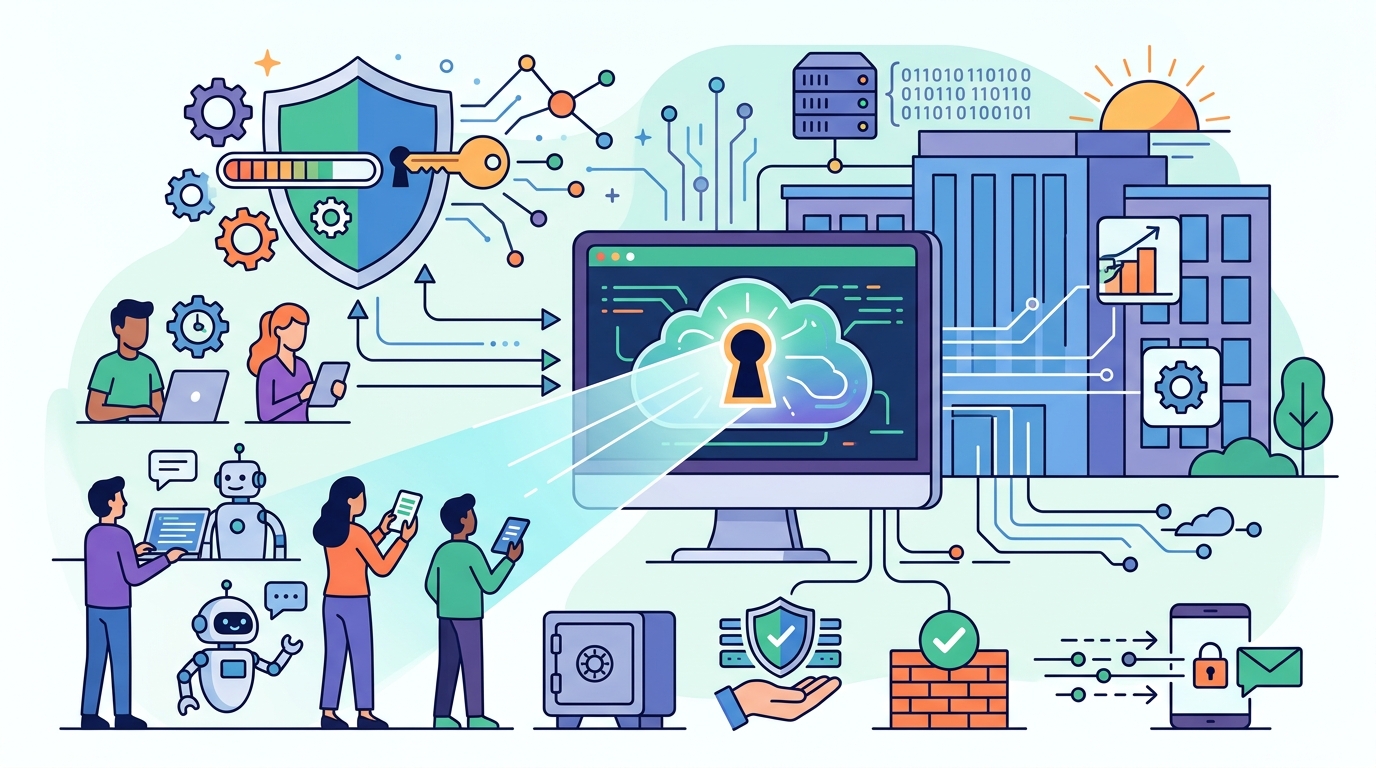
According to Anthropic, some teams moved from scan to applied patch in a single sitting. That is a meaningful workflow change, especially for security teams that usually spend days coordinating with developers before a fix lands.
The company says the product includes scheduled and targeted scans, easier integration with audit systems, and better tracking of triaged findings. Those details matter because enterprise buyers rarely want a clever demo; they want something that fits into compliance, ticketing, and code review routines.
- Scheduled scans are included
- Targeted scans are included
- Audit system integration is improved
- Triaged finding tracking is improved
Who is already using it
Anthropic named several early users: Accenture, Infosys, Deloitte, and PwC. It also pointed to integrations with CrowdStrike, Microsoft, Palo Alto Networks, SentinelOne, Google Cloud, and Wiz.
That partner list is telling. Anthropic is not trying to replace enterprise security platforms; it is trying to slot Claude into the tools companies already use. If that works, the product becomes less of a standalone assistant and more of a layer inside existing security workflows.
For readers tracking where this fits in the broader AI security story, the move echoes the direction covered in OraCore’s recent piece on how CISOs should prepare for Claude Mythos-era attacks. The difference here is that Anthropic is shipping a defensive product while the industry is still arguing about offensive risk.
- Early users include Accenture and Infosys
- Deloitte and PwC are also listed
- Security vendors are integrating the model into existing platforms
- Partnerships span endpoint, cloud, and code review workflows
What this launch says about enterprise AI security
Claude Security is a sign that enterprise AI security is moving from chat-based assistance to task-specific automation. The important question is no longer whether a model can summarize a vulnerability report. It is whether the model can help reduce the number of human handoffs before a patch ships.
That is where Anthropic’s launch gets interesting. If the company can prove that AI shortens remediation cycles without creating new risk, security teams will have a practical reason to adopt it. If it cannot, Claude Security will end up as another impressive demo that security teams admire and then ignore.
My read: the next six months will tell us whether Claude Security becomes a standard part of enterprise vulnerability response or stays a niche add-on for early adopters. The fastest way to judge it is simple: measure how often a scan turns into an applied patch before the next meeting starts.
// Related Articles
- [TOOLS]
OpenClaw with Ollama turns Telegram into a bot
- [TOOLS]
Aliyun Bailian Token Plan turns credits into agents
- [TOOLS]
One API gateway turns six AI APIs into one
- [TOOLS]
OpenAI FDEs turn broken agents into shipped systems
- [TOOLS]
Anthropic’s daily brief turns news into a workflow
- [TOOLS]
Claude Reflect turns usage into retention