Claude adds creative app connectors for pros
Anthropic added Claude connectors for Blender, Fusion, Adobe apps, and Ableton, letting creators control pro tools from chat.
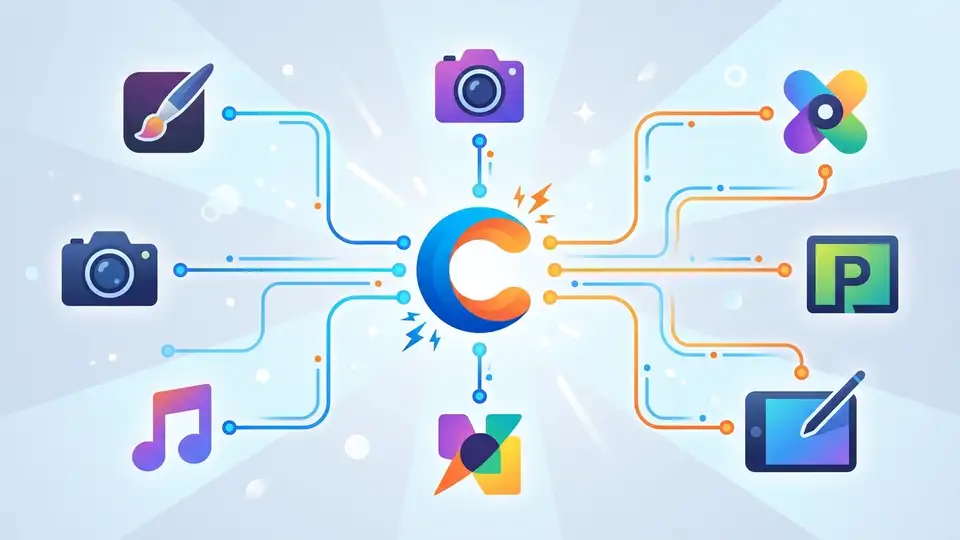
Anthropic added creative software connectors that let Claude control pro tools from chat.
Anthropic has added a new set of connectors for Claude that target creative work, and the list is unusually practical: Blender, Autodesk Fusion, Adobe Creative Cloud, and Ableton. The pitch is simple. Instead of copying instructions between a chat window and half a dozen apps, creators can ask Claude to work inside the tools they already use.
That matters because creative software is usually where AI ideas hit friction. A model can describe a 3D edit, a compositing change, or a music arrangement in seconds, but the user still has to translate that into clicks, shortcuts, and menu hunting. Connectors reduce that translation layer. If they work well, Claude becomes less of a text-only assistant and more of a control surface for real production software.
| Item | What Anthropic announced | Why it matters |
|---|---|---|
| Claude | Chat interface with new creative connectors | Moves AI from advice to direct tool control |
| Blender | 3D creation and animation support | Useful for modeling, scene edits, and rendering workflows |
| Autodesk Fusion | CAD and product design support | Targets engineering-heavy creative work |
| Adobe Creative Cloud | Design and media workflow support | Touches image, video, and layout tasks |
| Ableton | Music production support | Brings AI into audio arrangement and editing |
Why this connector set is interesting
Get the latest AI news in your inbox
Weekly picks of model releases, tools, and deep dives — no spam, unsubscribe anytime.
No spam. Unsubscribe at any time.
This is a smart list because it maps to real workflows instead of generic office tasks. Blender covers 3D artists and animators. Fusion reaches product designers and engineers. Adobe Creative Cloud spans a huge chunk of visual production. Ableton Live pulls in musicians and audio producers.
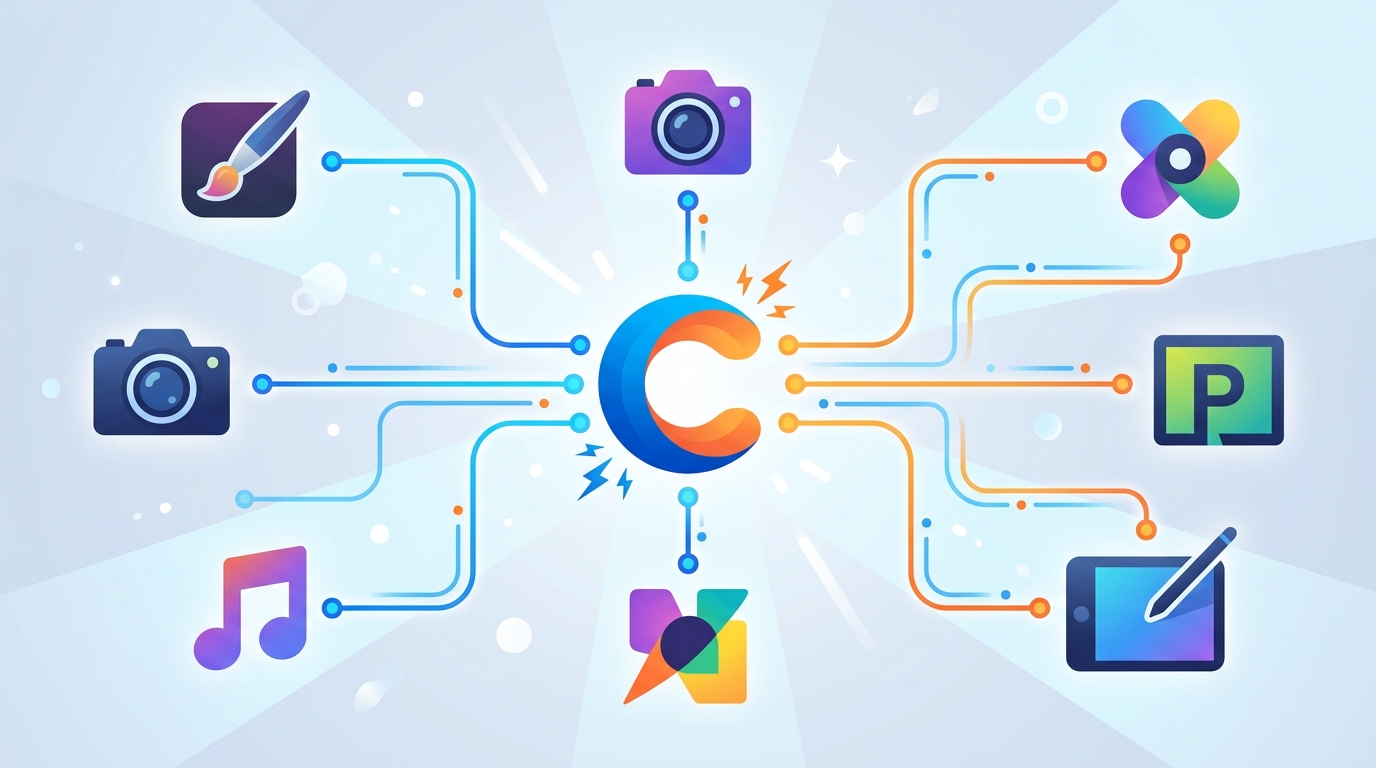
That mix suggests Anthropic is not trying to impress with novelty. It is targeting software where a small reduction in friction can save real time. A designer who can ask for a variant, a 3D artist who can automate repetitive scene changes, or a producer who can manage audio edits through chat will feel the difference quickly.
- Creative tools are harder to automate than text editors because they depend on visual state.
- Connectors can reduce repetitive actions such as switching apps, applying preset edits, and moving assets.
- The value rises when Claude can understand project context instead of isolated prompts.
- Professional users care more about precision than flashy demo output.
What Anthropic is really betting on
Anthropic is betting that the next useful AI interface is not a blank prompt box. It is a chat layer that can reach into the software people already trust. That is a different strategy from building a standalone creative app and asking users to change habits around it.
There is also a business angle here. Creative software has deep ecosystems, expensive subscriptions, and users who already spend hours inside the same tools every week. If Claude can become the assistant that sits across those tools, it gets a shot at becoming part of the daily workflow instead of a one-off experiment.
“The future of creativity is going to be a collaboration between humans and machines,” Adobe CEO Shantanu Narayen said during Adobe Summit 2024.
That quote fits this move well, even if the implementation is still early. Anthropic is making Claude feel less like a chatbot that comments on creative work and more like a system that can participate in it.
How this compares with other AI tool moves
Most AI integrations in creative software have followed one of two patterns. They either add a small assistant inside one app, or they generate assets and hand them back to the user for manual cleanup. Claude’s connector approach goes after a wider band of work because it can act across multiple tools.
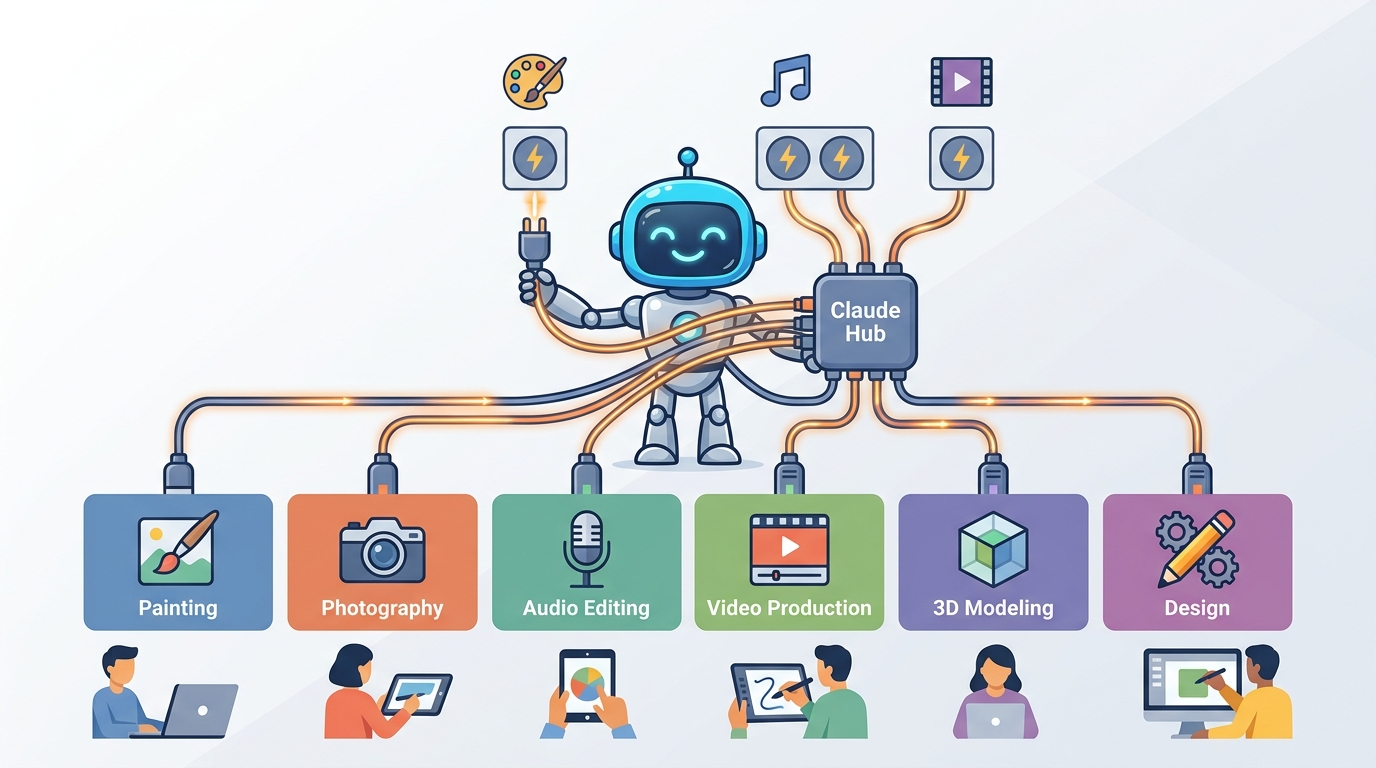
That difference matters when you compare the workflow impact. A single-app assistant can help with one step. Cross-app connectors can help with the handoff between steps, which is where a lot of time disappears.
- Single-app AI features usually stay inside one vendor’s product suite.
- Claude connectors can span 3D, design, and audio tools in one chat flow.
- Manual export-import loops are still a major pain point in creative production.
- Cross-tool control is more useful for professionals than generic content generation.
There is still a big question hanging over this rollout: how much control will Claude actually get, and how safely will it operate inside high-value projects? Creative teams will care about permissions, versioning, and whether the model can make a mess faster than a human can fix it. Those details will decide whether these connectors become a daily habit or just another demo.
What to watch next
If Anthropic expands this connector model, the next obvious step is tighter support for file state, project history, and repeatable workflows. That would make Claude much more useful for teams that live in Adobe, Blender, Fusion, or Ableton every day.
My read: this is less about a flashy feature and more about where AI adoption is heading. The winner in creative software will be the assistant that can sit inside the tools people already know and make them faster without forcing a new workflow. The next thing to watch is whether Anthropic publishes enough detail on permissions and supported actions for teams to trust it on real projects.
// Related Articles
- [TOOLS]
OpenClaw with Ollama turns Telegram into a bot
- [TOOLS]
Aliyun Bailian Token Plan turns credits into agents
- [TOOLS]
One API gateway turns six AI APIs into one
- [TOOLS]
OpenAI FDEs turn broken agents into shipped systems
- [TOOLS]
Anthropic’s daily brief turns news into a workflow
- [TOOLS]
Claude Reflect turns usage into retention