Cursor CEO warns vibe coding builds shaky software
Cursor CEO Michael Truell says skipping code review with AI makes software brittle, while Cursor keeps engineers in the loop.
Cursor’s Cursor has crossed 1 million daily users, pulled in a $2.3 billion round at a $29.3 billion valuation, and is reportedly circling a $50 billion price tag. That kind of growth makes CEO Michael Truell’s warning worth hearing: if you let AI write code while you ignore the details, the software can start to fail under its own weight.
Truell’s message is simple and a little uncomfortable for the current AI hype cycle. He is not rejecting AI coding tools. He is drawing a line between assistants that keep engineers involved and “vibe coding,” where the developer stops checking what the model built.
What Truell means by vibe coding
Get the latest AI news in your inbox
Weekly picks of model releases, tools, and deep dives — no spam, unsubscribe anytime.
No spam. Unsubscribe at any time.
At Fortune Brainstorm AI, Truell described vibe coding as a workflow where someone asks an AI to build an app or feature without really examining the code. That can work for a quick prototype, a demo, or a weekend project. It gets risky when that same habit is used for production software that has to survive months of changes, users, and bugs.
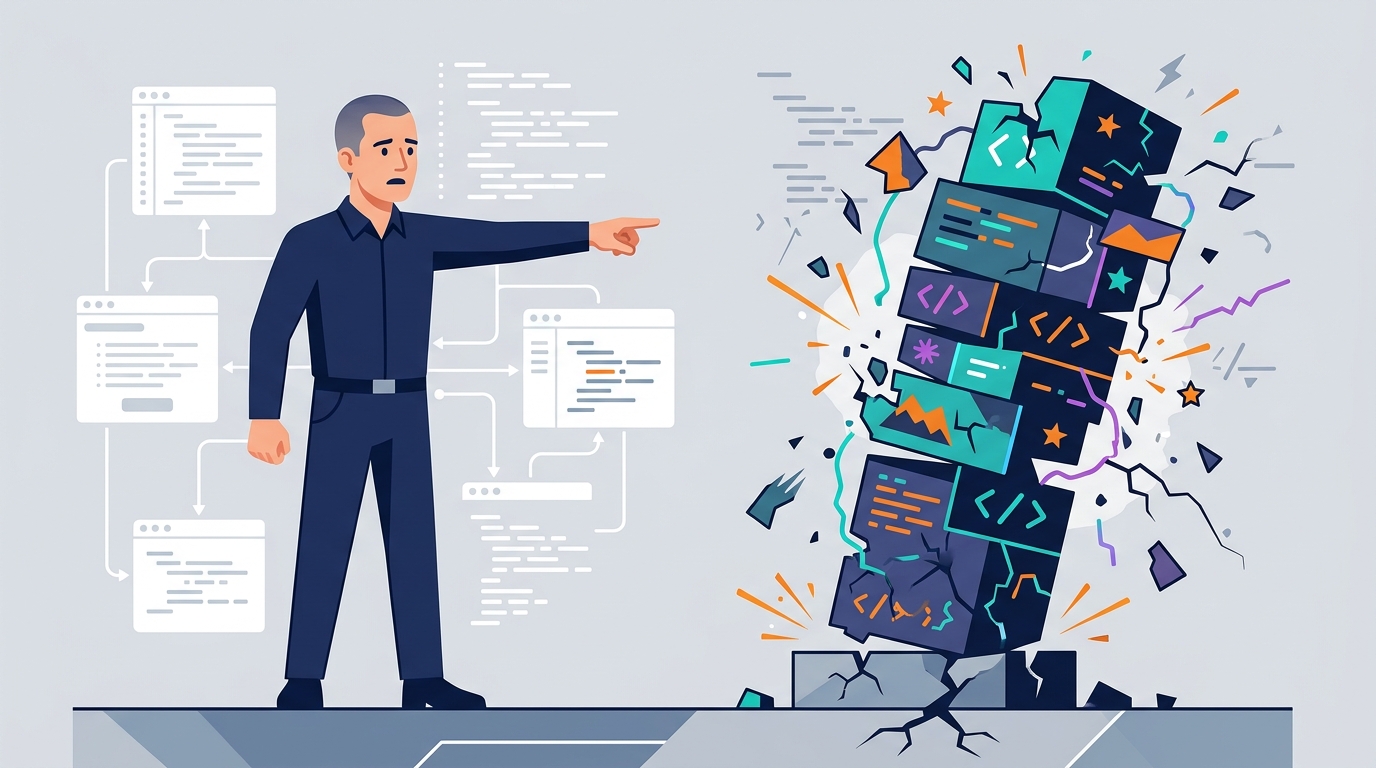
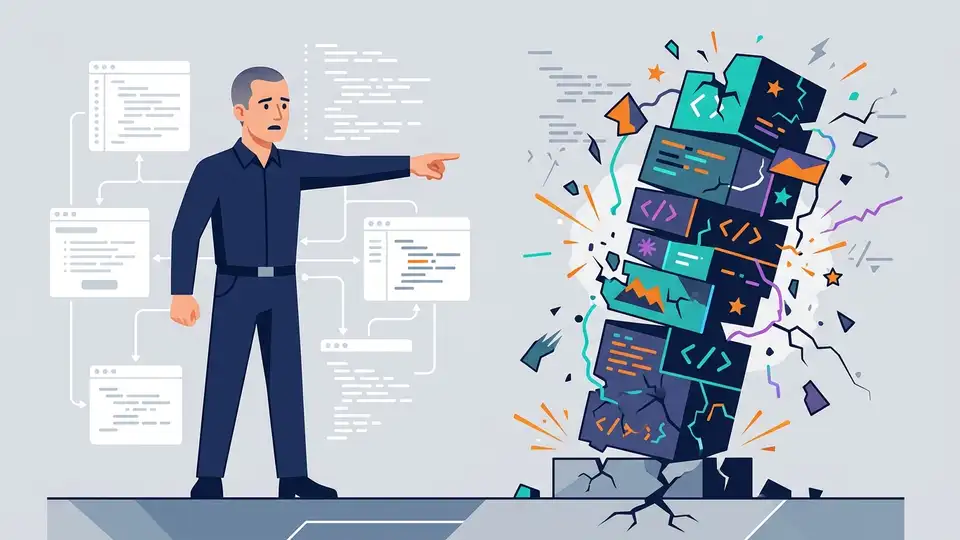
His house analogy is the right one. If you do not inspect the wiring, the floorboards, or the load-bearing walls, the structure may look fine until you add more weight. Software behaves the same way. A small mistake in authentication, data handling, or state management can sit quietly for weeks before it turns into a real outage.
That matters because AI coding tools are getting better at producing code that looks convincing on first read. The hard part is that “looks convincing” is not the same thing as “is maintainable,” especially once a codebase grows and more engineers touch it.
- Cursor says it has more than 1 million daily users.
- The company has reached $1 billion in annualized revenue, according to CNBC.
- It closed a $2.3 billion round in 2025 at a $29.3 billion post-money valuation.
- Bloomberg reported that Cursor was in talks for a round valuing it near $50 billion.
Why Cursor’s model is different
Cursor is built around the Cursor editor, which puts AI inside the development environment instead of outside it. The point is not to replace the engineer’s judgment. It is to keep the code, the context, and the editing experience in one place so the model can help with autocomplete, function generation, debugging, and explanations.
That distinction matters more than the marketing language around AI coding. A tool that writes code while the developer stays engaged is a very different product from a prompt box that spits out a full app and asks for blind trust. Truell’s argument is that the first approach scales better because the engineer still sees the failure modes before they become expensive.
Cursor’s own history explains why Truell talks about this with confidence. He co-founded the company with three MIT classmates in 2022, and the product has since become one of the most visible AI coding tools in the market. The company also drew early backing from OpenAI’s Startup Fund, then later from firms including Andreessen Horowitz.
“If you close your eyes, and you don’t look at the code, and you have AIs build things with shaky foundations as you add another floor, and another floor, and another floor, and another floor, things start to kind of crumble.” — Michael Truell, CEO of Cursor
That quote matters because it cuts through the usual AI coding optimism. Truell is not saying the tools are bad. He is saying the bad habit is treating them like magic and skipping the part where humans verify the work.
The numbers behind the hype
The pitch for AI coding tools is that they make engineers faster. The numbers around Cursor help explain why investors and users keep paying attention. But the same numbers also show why discipline matters: when a product grows this quickly, the temptation is to automate everything and worry about quality later.
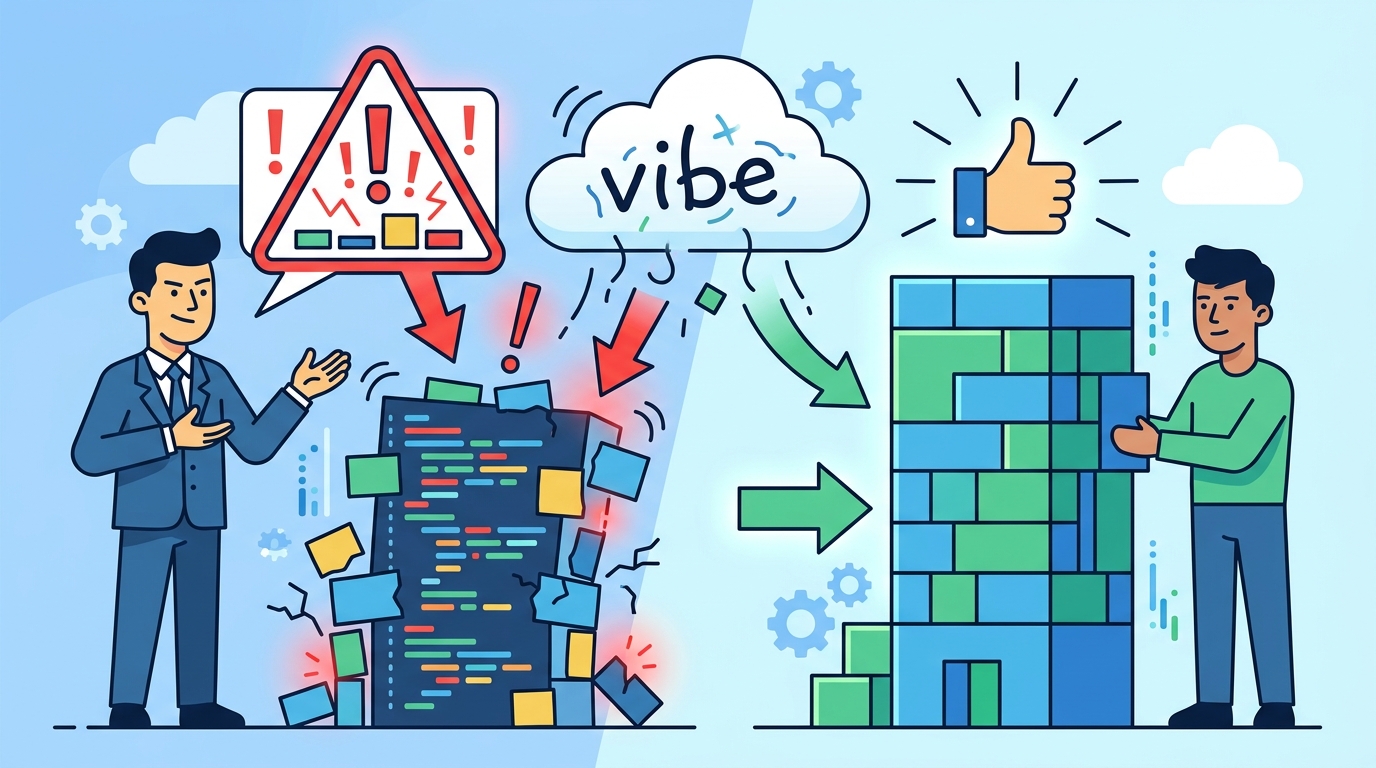
Here is the practical comparison:
- Cursor keeps the developer inside the editor, with code context available for autocomplete, refactors, and debugging.
- GitHub Copilot focuses on inline assistance and code completion across common IDEs.
- Claude Code from Anthropic pushes further into agentic coding tasks, where the model can plan and edit across files.
- Cursor’s reported annualized revenue of $1 billion is far above what most developer tools reach this early in their life cycle.
Those differences are not academic. A tool that helps with one line at a time asks for a different level of trust than a tool that can create or modify large chunks of a codebase. The more autonomy you give the model, the more you need tests, code review, and architectural discipline.
That is also why “vibe coding” is such a useful term. It captures the behavior, not the technology. The issue is not AI assistance. The issue is surrendering understanding.
What developers should take from this
Truell’s warning lands at a time when AI coding is becoming normal inside startups and enterprise teams. A lot of teams now use AI for boilerplate, test generation, refactors, documentation, and bug triage. That is the sane middle ground: let the model move faster, but keep humans close enough to catch the mistakes that only show up after the second or third change.
For developers, the takeaway is pretty practical. Use AI to draft code, then inspect the edges: inputs, outputs, permissions, state changes, and error handling. If the model touches a large system, run tests and read the diff. If it writes a new abstraction, ask whether that abstraction actually simplifies the code or just hides complexity one layer deeper.
For founders, the lesson is sharper. A demo built through vibe coding can impress in a pitch meeting, but a product that survives real customers needs structure. The more your app depends on AI-generated code, the more your team needs review habits, testing culture, and people who understand the stack well enough to spot drift before it becomes a rewrite.
My bet: the next phase of AI coding will reward teams that treat models like fast junior assistants, not invisible engineers. The startups that win will be the ones whose codebases still make sense after the tenth feature, the fifth hotfix, and the first serious incident. If your team is already using AI to write production code, the question is simple: who is actually reading it?
// Related Articles
- [TOOLS]
Aliyun Bailian Token Plan turns credits into agents
- [TOOLS]
One API gateway turns six AI APIs into one
- [TOOLS]
OpenAI FDEs turn broken agents into shipped systems
- [TOOLS]
Anthropic’s daily brief turns news into a workflow
- [TOOLS]
Claude Reflect turns usage into retention
- [TOOLS]
Midjourney turns prompt ideas into art