GCC Gets a New WebAssembly Back-End Proposal
A new RFC patch series proposes a GCC back-end for WebAssembly, reviving a long-dormant effort in the GNU compiler world.

A new RFC patch series proposes a GCC back-end for WebAssembly.
WebAssembly has spent years as LLVM country, and the numbers in this story show why: the new GCC effort is only about 3,000 lines of code, still lacks several major features, and has not been approved by the GCC Steering Committee. Even so, it is the first real WASM activity in GCC in years.
| Fact | Detail |
|---|---|
| Patch size | About 3,000 lines of code |
| Status | RFC, not yet approved |
| Missing features | Reference types, tables, exceptions, debug info, data sections |
| Last known effort | Nearly a decade ago |
Why this proposal matters
Get the latest AI news in your inbox
Weekly picks of model releases, tools, and deep dives — no spam, unsubscribe anytime.
No spam. Unsubscribe at any time.
The new patch series matters because it gives GCC a fresh shot at WebAssembly support after a long silence. For developers who build C and C++ code for the browser or for WASM runtimes, that matters more than the mailing-list drama around it.

Today, most serious WebAssembly compiler work flows through Clang and the broader LLVM toolchain. That dominance has been practical, not ideological. LLVM has had the head start, the active backend work, and the ecosystem momentum.
GCC has not been absent from the conversation forever. A proposal for a GCC WebAssembly back-end appeared nearly a decade ago, but it never merged. This new RFC is the first sign that someone is trying again with enough code to discuss in public.
- WebAssembly is already a production target for browser and server-side workloads
- GCC support could widen compiler choice for C and C++ developers
- The current patch series is early enough that feature gaps are still expected
What the patch series includes, and what it does not
The current work is still very early. The author posted it as a request for comments, which is the right label for something that wants feedback before anyone treats it like a finished backend.
According to the report, the backend still lacks WebAssembly reference types, tables, exceptions, debug info, and data sections. Those are not tiny omissions. They are the sort of features that decide whether a compiler backend is useful for real projects or just a proof of concept.
The good news is that the code has reached a point where it can be announced on the GCC patches mailing list and documented on the GCC Wiki WebAssembly page. That means the work has moved beyond a private experiment and into the part of development where maintainers can argue about architecture, ABI details, and target support.
"Nearly a decade ago there was a proposal for a GCC WebAssembly back-end that ultimately never ended up being merged." — Michael Larabel, Phoronix
That line from Phoronix captures the history well. GCC is not starting from zero, but it is also not picking up a mature backend and polishing it for release. It is trying to revive a path that stalled once already.
GCC versus LLVM in WebAssembly
The real comparison here is simple: LLVM has been the default choice for WebAssembly compilation, while GCC has been mostly absent from the space. If this backend grows up, it gives developers a second major compiler stack for WASM instead of one dominant path.
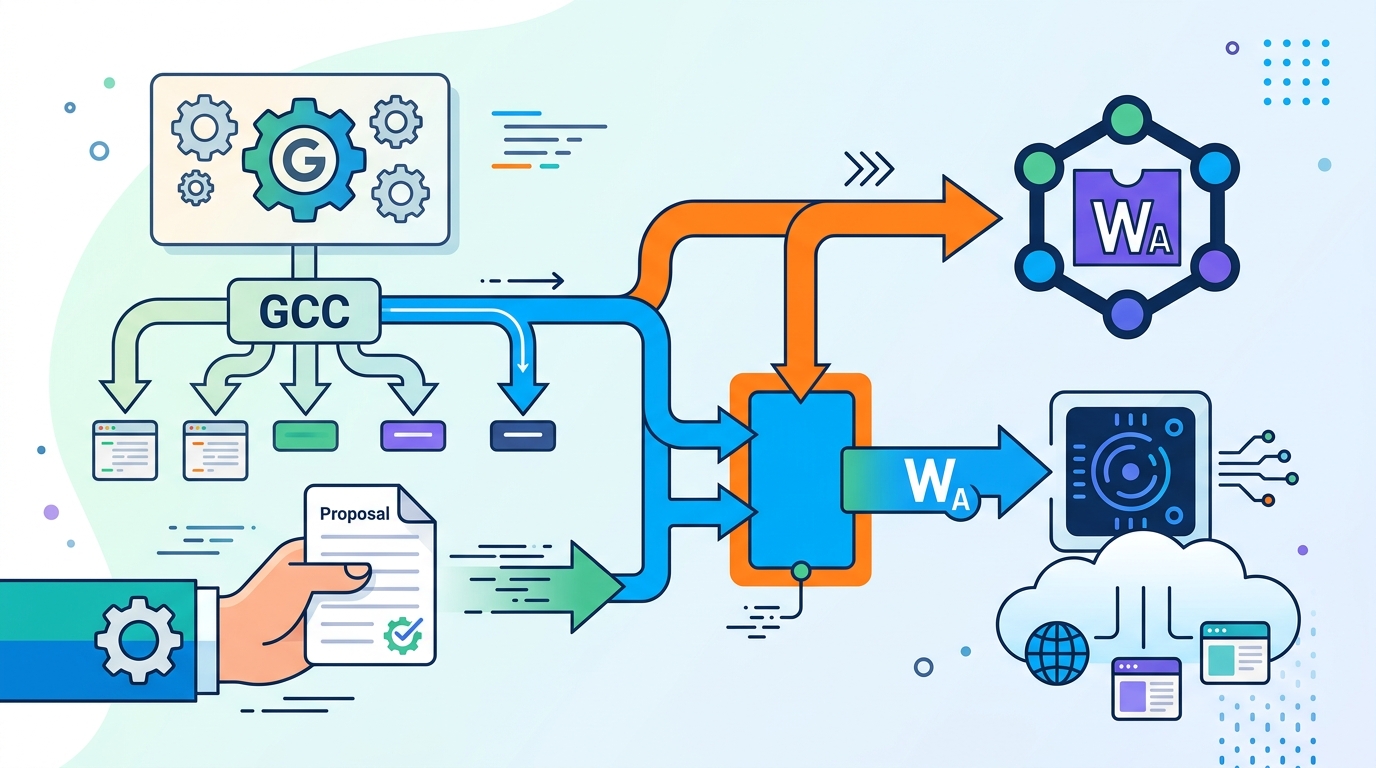
That matters for three reasons. First, compiler diversity reduces the risk of one ecosystem making all the decisions. Second, GCC still matters deeply in Linux and embedded development. Third, a viable WASM backend in GCC could make it easier for some projects to keep using familiar GCC workflows instead of switching toolchains just to target WebAssembly.
- LLVM/Clang already has mature WASM support and wider adoption
- GCC has a long history in native code generation, especially on Linux
- A working GCC backend could help teams compare codegen, diagnostics, and build integration
There is also a practical question hiding under the technical one: does anyone want to maintain this long enough to finish it? A backend can be posted in a week, but support for exceptions, debug info, and the rest of the platform glue takes sustained work from people who care about the target.
That is where the RFC status matters. This is not a release announcement. It is a signal that someone believes GCC should have a seat at the WebAssembly table again, and they are asking the community whether the project should invest there.
What to watch next
The next milestone is whether the GCC Steering Committee accepts the direction and whether the patch series gets enough review to grow beyond its current size. If that happens, the interesting question is not whether GCC can compile to WebAssembly at all. It is whether it can become a real alternative to LLVM for teams that already trust GCC for native builds.
For developers, the takeaway is straightforward: if you care about compiler choice in WebAssembly, keep an eye on the GCC mailing lists and the wiki page. If the backend picks up momentum, the debate will quickly shift from “can GCC do this?” to “how far behind is it, and how fast can it catch up?”
And if the proposal stalls again, that will say something too. WebAssembly may stay an LLVM-led space for a while longer, which is still a useful data point for anyone tracking how compiler ecosystems divide up new targets.
// Related Articles
- [TOOLS]
Aliyun Bailian Token Plan turns credits into agents
- [TOOLS]
One API gateway turns six AI APIs into one
- [TOOLS]
OpenAI FDEs turn broken agents into shipped systems
- [TOOLS]
Anthropic’s daily brief turns news into a workflow
- [TOOLS]
Claude Reflect turns usage into retention
- [TOOLS]
Midjourney turns prompt ideas into art