Why HighTec and SiFive are right to push safety-critical RISC-V
HighTec and SiFive are right: safety-critical automotive and industrial software needs qualified RISC-V toolchains, not more proprietary lock-in.
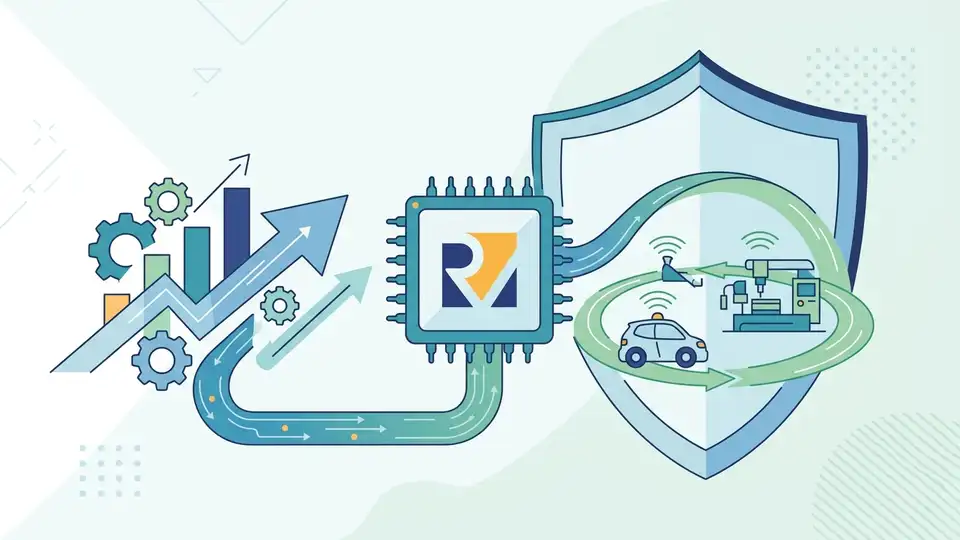
HighTec and SiFive are betting that safety-ready RISC-V will speed automotive and industrial software development.
HighTec and SiFive are right to push safety-critical RISC-V because the real bottleneck in automotive and industrial software is no longer raw compute, it is certification-ready flexibility. The collaboration pairs HighTec’s LLVM-based Rust and C/C++ toolchains with SiFive’s safety-focused RISC-V processor IP, and that combination targets exactly the pain point manufacturers face: they need long-lived platforms that can pass functional-safety audits without trapping them in a single vendor’s CPU roadmap. In a market where software-defined vehicles and industrial controllers must survive decade-long lifecycles, that is not a nice-to-have. It is the operating requirement.
Qualified tooling matters more than another fast core
Get the latest AI news in your inbox
Weekly picks of model releases, tools, and deep dives — no spam, unsubscribe anytime.
No spam. Unsubscribe at any time.
Safety-critical teams do not fail because they lack processor choices. They fail because every tool in the chain must be qualified, documented, and repeatable. HighTec says its Rust and C/C++ toolchains are qualified to ISO 26262 up to ASIL D and support ISO 21434 cybersecurity requirements. That is the kind of detail that changes procurement decisions, because a great architecture without qualified tooling is just a lab demo.
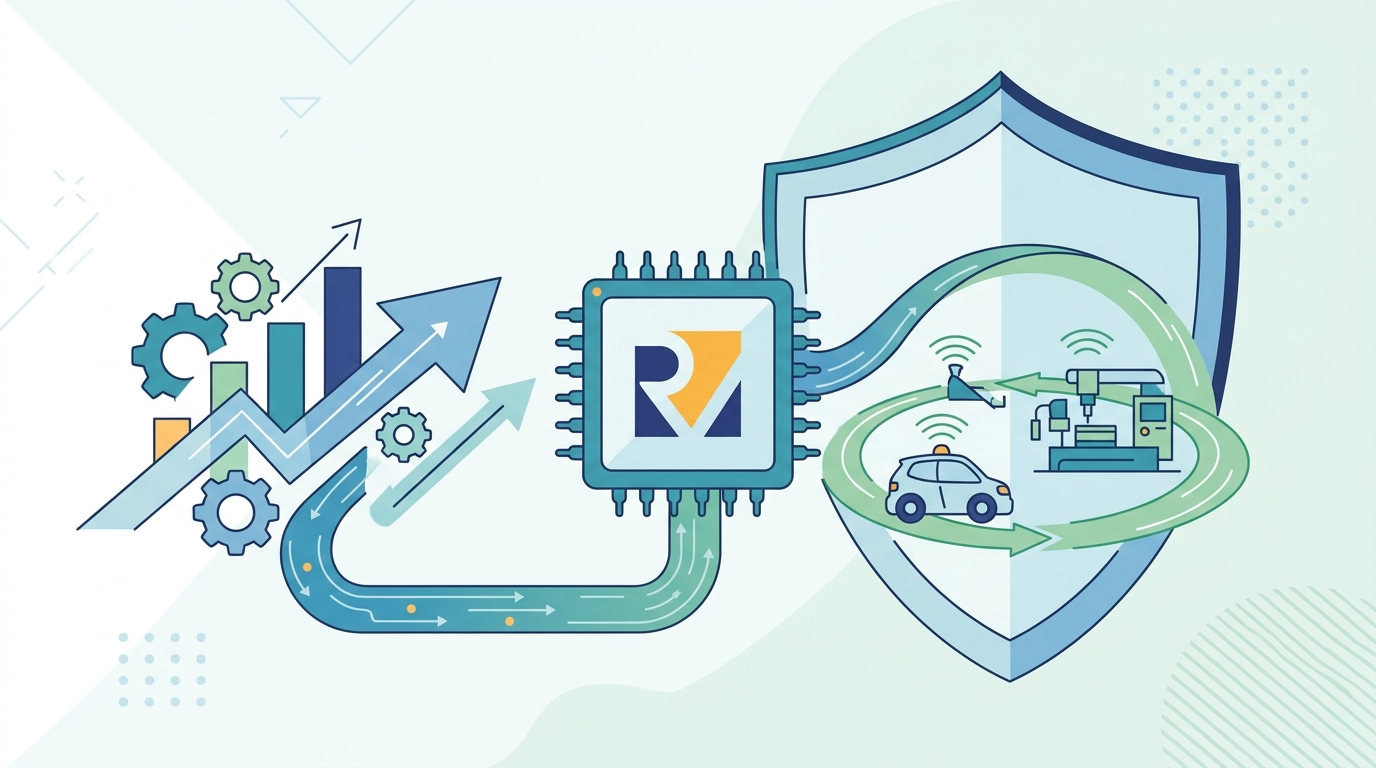
The practical value is simple: if engineers can build with a compiler stack that already fits safety workflows, they spend less time proving the basics and more time validating the application. HighTec’s Qualification Kit is important for that reason. It lowers the friction around tool qualification, which is one of the most expensive and least glamorous parts of bringing automotive and industrial embedded systems to market. Tooling that shortens certification work is worth more than marketing about performance alone.
Open ISA strategy fits the lifecycle problem
RISC-V matters here because safety-critical systems are not bought on a two-year refresh cycle. They are designed for long product lifetimes, spare-part availability, and software portability across generations of hardware. A proprietary CPU stack can lock a manufacturer into a narrow vendor path just when the business needs platform continuity. RISC-V’s open instruction set gives teams a cleaner way to preserve software investment while still scaling performance.
That lifecycle advantage becomes more obvious in software-defined vehicles and industrial automation, where the control stack keeps expanding after launch. A platform that can move across processor variants without rewriting the entire software base is a strategic asset, not just an engineering convenience. SiFive’s automotive-oriented RISC-V portfolio is relevant because it is aimed at deterministic behavior, functional safety, and security mechanisms, which are the three things buyers actually ask for when the system is going into a braking controller, a factory line, or a safety monitor.
Rust and C/C++ together are the right compromise
The strongest part of this collaboration is not that it introduces Rust. It is that it supports hybrid development, combining legacy C/C++ software with Rust-based application development. That is the only serious way to modernize safety-critical embedded software at scale. Automotive and industrial vendors already have huge codebases in C and C++; pretending they will rewrite everything is fantasy. A mixed workflow is the credible path.
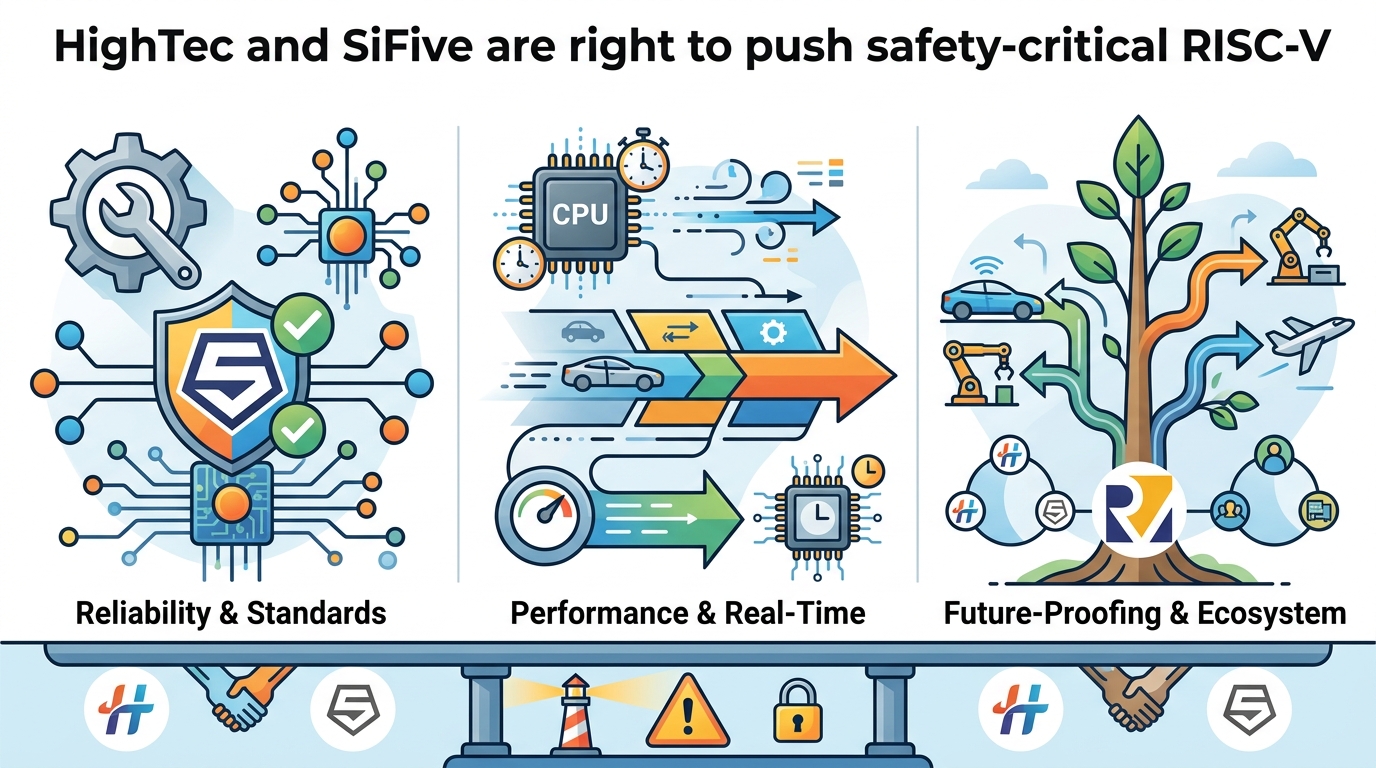
Rust adds value where memory safety and tighter correctness guarantees matter, while C and C++ remain necessary for existing stacks, vendor libraries, and deeply embedded code. HighTec’s LLVM-based approach makes that blend more practical, especially when paired with SiFive’s optimized RISC-V architectures and performance extensions. The result is not ideological purity. It is a workable migration path that lets teams improve safety posture without blowing up validation schedules or freezing product roadmaps.
The counter-argument
The best objection is that safety-critical customers do not need a new ISA ecosystem when Arm already dominates automotive and industrial embedded design. Arm has mature tooling, broad supplier support, and years of production proof. From that perspective, RISC-V looks like an integration risk dressed up as openness. Buyers who live and die by certification timelines are understandably wary of betting on a platform that still has to prove broad ecosystem depth.
That objection is real, and it should not be waved away. Safety markets do not reward novelty for its own sake. They reward predictable certification paths, stable vendor support, and long-term availability. If RISC-V cannot match those basics, openness is irrelevant. The burden is on HighTec and SiFive to show that qualified tooling, processor IP, and support contracts can reduce risk rather than add it.
But that is exactly why this collaboration matters. It does not ask customers to adopt RISC-V because it is trendy. It asks them to adopt it where the open model solves a structural problem: vendor dependence in systems that must evolve over long lifecycles. Arm’s maturity is a strength, but maturity also means entrenched assumptions and less architectural freedom. In safety-critical markets, freedom to standardize software across platforms is not a luxury. It is how manufacturers avoid rebuilding the same stack every time hardware changes.
What to do with this
If you are an engineer, treat this as a signal to design for portability and qualification from day one: separate safety-relevant modules, choose toolchains with clear certification artifacts, and test whether Rust can take on the high-risk parts of the stack without breaking your integration model. If you are a PM or founder, stop evaluating embedded platforms on peak benchmark claims alone. Ask whether the vendor can support ISO 26262, ISO 21434, long-term availability, and a migration path that preserves software investment. That is where the real cost and value live.
// Related Articles
- [IND]
WebX 2026 turns speaker hype into a conference brief
- [IND]
AI Weekly: 2026-07-06 ~ 2026-07-13
- [IND]
The AI Act should be treated as Europe’s operating system for AI
- [IND]
Booz Allen’s OpenAI Deal Is Real Advantage, Not Hype
- [IND]
OpenSearch’s vector search benchmark in 5 parts
- [IND]
Vector Databases That Work in Production